Where to Buy a Gen 2 Image Intensifier from a Trusted Supplier
If you are sourcing a Gen 2 image intensifier for OEM integration, distribution, or defense-grade system builds, the supplier you choose defines the outcome. A genuine, Grade A-rated intensifier tube delivers 64 lp/mm resolution, SNR of 25, and EBI < 0.25 μlx — specifications that separate field-ready optics from substandard components. This guide walks B2B procurement managers, engineers, and distributors through the technology fundamentals, supplier vetting criteria, and procurement strategies needed to secure a reliable supply chain. Whether you need a single benchmark sample or a full production run, understanding where to buy matters as much as what you buy.
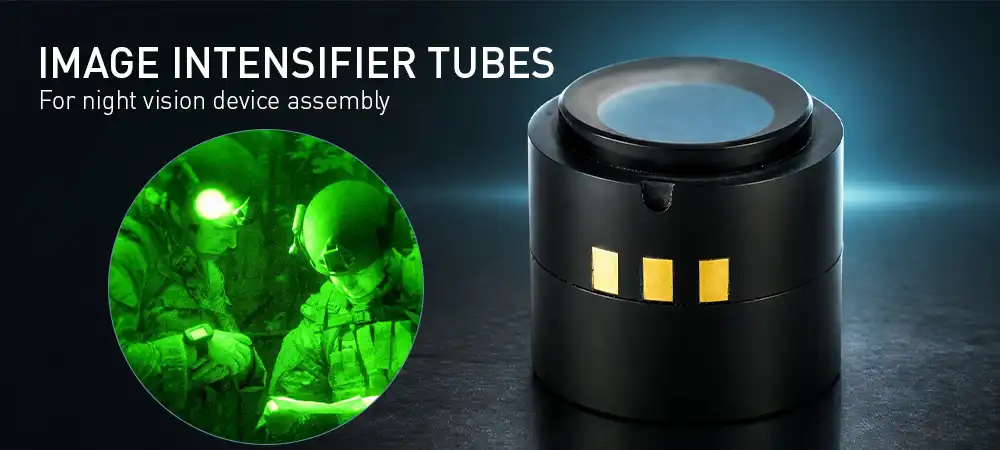
Understanding Gen 2 Image Intensifiers: Technology and Benefits
What Sets Gen 2 Apart from Earlier Generations
One type of Gen 2 Image Intensifier is an optoelectronic device that is vacuum-sealed and built around a Microchannel Plate (MCP). The MCP works as an electron multiplier, turning photons picked up by the photocathode into an image that can be seen. This is a big step forward that got rid of the serious geometric distortion and edge blur that were problems with Gen 1 devices. These days' Gen 2+ designs, like MHNV®'s Na2KSb(Cs) photocathode platform, can increase brightness to over 8,000 cd/m²/lx and photocathode sensitivity to over 750 μA/lm (Grade A), all while keeping the weight below 75g for use on helmets and weapon mounts.
Performance Metrics That Procurement Teams Must Verify
In real life, there are four things that matter the most when judging an intensifier tube:
- Resolution: The MHNV® Gen 2+ tube has a center resolution of 64 lp/mm, which keeps small target details clear at long range.
- SNR (Signal-to-Noise Ratio): An SNR of 25 keeps picture noise below the level where operators mistake targets for something else.
- EBI (Equivalent Background Illumination): This tube makes a really dark background at ≒0.25¼lx, which is important in high-temperature or near-zero-lux settings where thermal noise normally lowers contrast.
- Operational Range: The tube can work in temperatures ranging from -45°C to +55°C and can be stored in temperatures ranging from -55°C to +70°C. It can be used for both Arctic patrols and desert deployments.
These are not just marketing claims; each MHNV® tube comes with a unique QC data sheet that lists SNR, FOM, resolution, halo diameter, and EBI, and each one has been calibrated in a Class-10,000 cleanroom.
How to Choose the Right Gen 2 Image Intensifier for Your Business Needs
Matching Tube Specifications to Application Segments
Having a clear use case in mind helps with making better procurement choices for Gen 2 image intensifier tubes. Law enforcement and tactical defense developers who make NVGs need high SNR and a small body weight. This tube's < 75 g body and auto-gating supply module meet both needs. Maritime search-and-rescue platforms prefer passive operation without active IR emission. The 750μA/lm photocathode sensitivity lets them be found in starlight without showing where the operator is. For example, in fluorescence microscopy and ballistics tests, exact photon capture with low temporal lag is needed. The> 17.5 mm photocathode useful diameter is a good fit for this task.
Gen 2 vs. Gen 3 and Thermal: When Gen 2+ Wins
Gen 3 tubes have GaAs photocathodes that are more sensitive, but they cost a lot more per unit and have stricter export rules, which means they can't be used for many business OEM projects. thermal imaging is great at finding heat signatures, but at close range, it loses fine structural detail compared to a picture intensifier. A Gen 2+ tube with P43 or P45 phosphor, a circular SR40 or flat output window that can be inverted or not, and an input voltage range of 2.2 to 3.4V can be easily installed into existing optical housings and offers better value for money than a Gen 3 tube for mass OEM production.
Where to Buy Gen 2 Image Intensifiers: Finding Trusted Suppliers and Brands
Key Trust Indicators Every Buyer Should Audit
It takes more than looking through a catalog to find a reliable Gen 2 Image Intensifier source. Manufacturers you can trust post certificates that can be checked. These include ISO 9001:2015 for quality management, CE and RoHS compliance for entering the EU and US markets, and MIL-STD-810 environmental ratings for shock, vibration, humidity, and altitude. MHNV® meets all three levels and includes a unique QC data sheet with every tube, which is a level of openness that most common dealers don't offer.
Check to see if the supplier does its own vacuum electronics research and development in addition to certifications. Controlling the deposition and activation processes in-house is what makes photocathode uniformity possible. This is what makes sure that the image quality is the same across a production batch. The full-stack engineering team at MHNV® works on algorithms, hardware, integrated software, FPGAs, optical design, mechanical engineering, and tests. They are one of only a few Chinese companies that have this much control over the whole tube production process.
Here are the main things that set a reliable Image Intensifier Tubes seller apart from a wholesaler who repackages stock from other companies:
- Cleanroom production: The Class-10,000 setting keeps photocathode contamination below the level that would hurt EBI or leave marks that the user can see.
- Serialized data sheets: The SNR, FOM, halo, and EBI numbers on each tube can be tracked; these are not batch means.
- OEM/ODM capability: You should be able to change the output window layout (inverting spherical SR40, inverting flat, non-inverting spherical SR40, non-inverting flat), the phosphor choice (P43/P45), and the look of the housing to fit your product plan.
- Established export history: Since 2013, MHNV® has supplied OEM and distribution partners in more than 60 countries. The company also exhibits at DSA Malaysia, IDEX UAE, Enforce Tac Germany, and SHOT Show USA.
Because of these qualities, incoming inspection rejection rates are lower, and OEM programs can get their products to market faster.
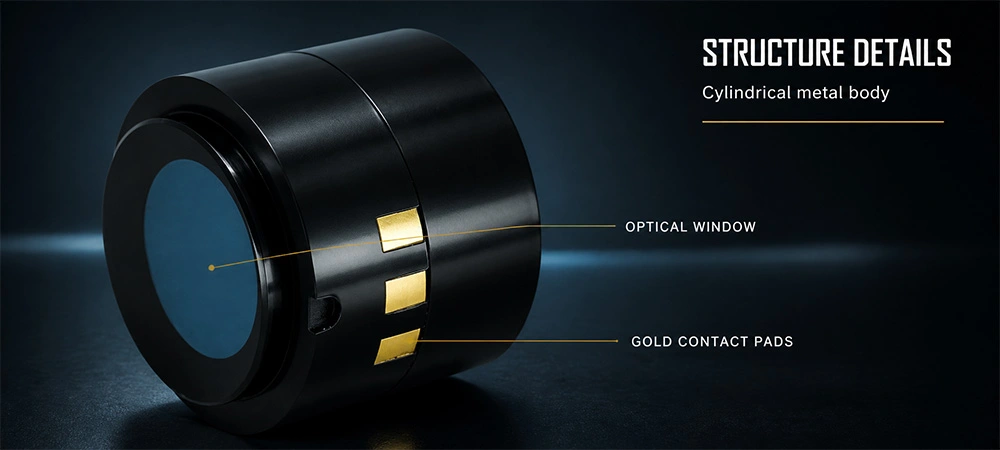
Procurement Strategies: Purchasing Gen 2 Image Intensifiers Efficiently and Safely
It is possible to predict how long new production Gen 2 Image Intensifier tubes will last. Professional-grade picture Image Intensifier Tubes can work for 10,000 to 15,000 hours with normal photon loads. Reconditioned or pulled tubes introduce photocathode depletion uncertainty that can't be fully removed by retesting. This makes them a bad choice for OEM builds that need to be careful about product liability.
When you buy in bulk from a qualified maker, you can get discounts based on the amount you buy, priority scheduling for production, and framework deals that lock in prices even if the cost of materials goes up or down. MHNV® keeps common IIT models like the MX10130, MX10160, and MX11769 in stock and can ship them within 3–7 days. The lead time for a custom ODM model is 15–25 days, and the wait time for mass production is 30–45 days. Logistics are handled by DHL, FedEx, UPS, and EMS, and deliveries are made door-to-door around the world in 5–8 days. A Los Angeles transit warehouse helps with this for returning US bulk buyers.
Building a Long-Term Partnership with Your Gen 2 Image Intensifier Supplier
A bad spot buy on Gen 2 Image Intensifier tubes might save you money in the short term, but it costs a lot to requalify, comes with guarantee risk, and causes line downtime when the next batch doesn't work right. Your buying team will be less at risk if their suppliers offer maker guarantees that last for one year, free IIT benchmarking services, and remote technical support. MHNV® offers a dedicated video demo feature that lets procurement engineers see side-by-side low-light comparisons between rival brands and a 24-hour pre-sales response across CN, EU, and US time zones. This gives them the trust they need before committing to a production volume.
When distributor partners and technology developers work with MHNV®, they get signed NDAs and non-compete agreements for ODM projects. After passing production runs, tooling ownership can be transferred. That structure gets rid of the worry about IP exposure that often slows down OEM talks with Chinese manufacturers.
Conclusion
To find a Gen 2 Image Intensifier in large quantities, you need a source with proven manufacturing depth, quality paperwork that can be tracked, and the ability to meet your OEM configuration needs. A Grade A tube that works in the field has 64 lp/mm resolution, an SNR of 25, an EBI of < 0.25 μlx, a Na2KSb(Cs) photocathode, an auto-gating module, and a mass of < 75 g. Each unit from MHNV® comes with a QC data sheet, ISO 9001:2015 certification, and MIL-STD-810 environmental testing.
FAQ
1. What is the expected lifespan of a Gen 2 intensifier tube?
The Gen 2+ line from MHNV® and most professional-grade tubes last between 10,000 and 15,000 hours of use. How long it actually lasts depends on how bright the scene is on average and whether the tube is protected by auto-gating when it suddenly comes into contact with bright light.
2. What is the difference between Gen 2 and Gen 2+?
Gen 2+ has a better photocathode formulation and more efficient MCP processing, which makes it possible to get measurably higher SNR and better images in almost zero-lux situations compared to Gen 2 tubes.
3. Does the tube require an external IR illuminator?
The tube works quietly in starlight with a photocathode sensitivity of 750μA/lm. For the most part, an IR illuminator should only be used in completely dark, enclosed spaces, like underground buildings.
4. Can output window configuration be customized for OEM builds?
Yes, MHNV® has four output window choices: inverting spherical SR40, inverting flat, non-inverting spherical SR40, and non-inverting flat. You can choose the one that works best for your optical housing design when you place your order.
5. How does auto-gating protect the tube?
The built-in auto-gating supply module checks the amount of photons coming in and changes the MCP voltage on the fly. This keeps the photocathode from getting too hot and burning out when the scene changes from deep darkness to normal lighting.
Request a Quote from MHNV® — Your Gen 2 Image Intensifier Manufacturer
MHNV® sends Grade A-rated, MIL-STD-810-tested, and individually numbered Gen 2 Image Intensifier tubes straight from our factory in Xi'an to your warehouse. As a Gen 2 Image Intensifier source with 12 years of OEM/ODM experience, we can handle pilot orders as low as 10 units and easily grow to full production levels. To get a price or a standard sample right away, email our technical sales team at sarah@mh-elec.com to see all of our products.
References
1. Holst, G. C. — Electro-Optical Imaging System Performance, SPIE Press, 2008.
2. Bhanu, B. & Pavlidis, I. — Computer Vision Beyond the Visible Spectrum, Springer, 2005.
3. NATO Standardization Agency — STANAG 4347: Measurement of the Minimum Resolvable Temperature Difference, 2012.
4. U.S. Department of Defense — MIL-STD-810H: Environmental Engineering Considerations and Laboratory Tests, 2019.
5. Csorba, I. P. — Image Tubes, Howard W. Sams & Co., 1985.
6. SPIE — Proceedings of SPIE Vol. 11402: night vision Technology and Applications, 2020.
YOU MAY LIKE