Thermal Fusion Night Vision Systems
Thermal Fusion Night Vision Systems – Dual-Tube Stereoscopic Goggle with 640×512 Thermal Integration for Professional Observation
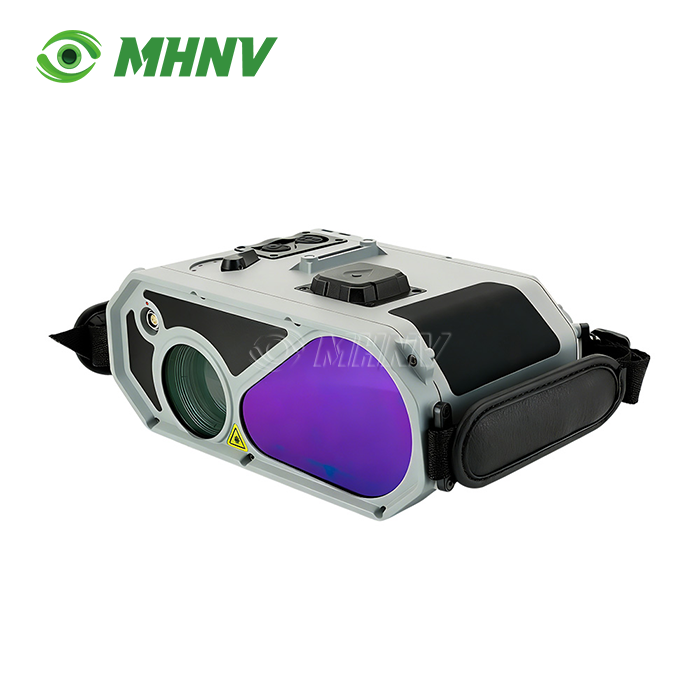
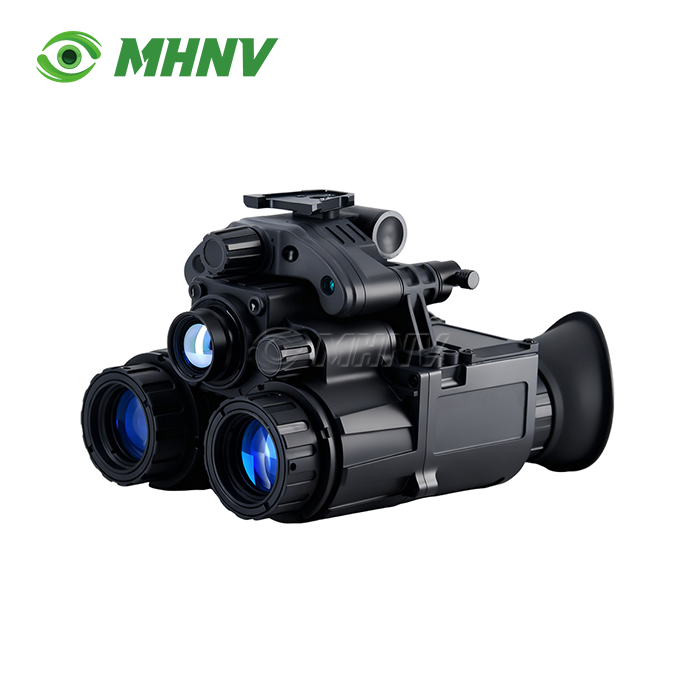
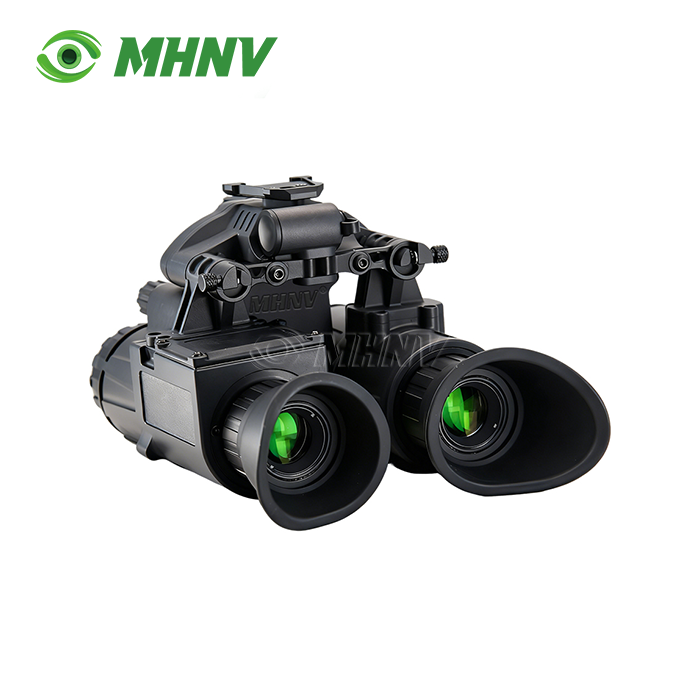
Xi'an MH Electronics And Technology Co., Ltd. presents the MHNV® MH-F-PVS31, a helmet-ready dual-tube stereoscopic imaging system engineered for professional observation and tactical reconnaissance, featuring Thermal Fusion Night Vision Systems. This platform integrates twin autogating Gen 2+/Gen 3 image intensifier tubes with a 640×512 uncooled thermal microbolometer, delivering natural depth perception alongside heat-signature detection in a single head-mounted unit.
With verified performance metrics of 400 m human identification and 1000 m vehicle identification, the system combines 40° low-light field of view, 24°×18° thermal overlay, and IP67 environmental sealing. Operating across -40°C to +50°C temperature ranges, the goggle weighs 660 g and supports 58–78 mm interpupillary adjustment.

Advanced Dual-Channel Architecture for Enhanced Situational Awareness
The products rely on synchronized optical channels to deliver comprehensive environmental data. The MH-F-PVS31 employs twin image intensifier tubes that preserve stereoscopic vision, enabling accurate distance estimation during navigation and target assessment.
Simultaneously, the 640×512 VOx microbolometer generates real-time thermal imagery with NETD <40mK sensitivity. This dual-channel approach ensures operators detect concealed heat sources—whether human, vehicular, or mechanical—while maintaining spatial context through the low-light pathway.
The architecture supports four viewing configurations: low-light only, thermal only, blended fusion, and overlay presets optimized for stalking, search, and positive identification workflows.
Enterprise-Grade Technical Specifications
| Parameter | Specification |
|---|---|
| Model | MHNV MH-F-PVS31 |
| Architecture | Dual-tube stereoscopic IIT + single thermal fusion channel |
| IIT Class | Gen 2+ / Gen 3 selectable |
| IIT FOM | 1200 standard; 1400 / 1600 / 1800 upgrade options |
| Autogating | Standard across all grades |
| IIT Field of View | 40° |
| IIT Focus Range | 250 mm – infinity (manual) |
| IIT Diopter Adjustment | -4 to +2 per eye |
| Thermal Detector | Uncooled VOx microbolometer |
| Thermal Resolution | 640×512 pixel |
| Pixel Pitch | 12 μm |
| Thermal NETD | <40 mK |
| Thermal FOV | 24°×18° |
| Display Resolution | ≥1024×768 HD |
| Interpupillary Distance | 58–78 mm |
| Human Detection Range (1.7 m) | ID 400 m / Detection 1000 m |
| Vehicle Detection Range (5 m) | ID 1000 m / Detection 2500 m |
| Weight (without battery) | 660 g |
| Dimensions | 125×105×94 mm |
| IP Rating | IP67 |
| Operating Temperature | -40°C to +50°C |
| Power Supply | External 2×18650 battery box |
| Mounting | Helmet mount (PVS-31 / Ops-Core shroud compatible) |

Verified Performance Metrics for Mission-Critical Operations
Long-range detection capability defines the operational envelope of Thermal Fusion Night Vision Systems. The MH-F-PVS31 achieves 1000 m humanoid detection and 400 m positive identification on a 1.7 m target, while vehicle-sized objects (5 m) register at 2500 m detection and 1000 m identification.
These published performance numbers enable direct comparison against established platforms in the fusion-imaging category. The dual-tube IIT configuration provides natural binocular depth cues, eliminating the parallax errors and flat perception common in monocular designs.
Combined with the thermal overlay, users gain simultaneous access to spatial geometry and thermal signatures—essential for vehicle-based patrol, close-quarter movement, and search-and-rescue missions where accurate range estimation determines tactical success.
Integrated Function Suite and Real-Time Connectivity
The goggle housing incorporates a complete digital feature set: electronic zoom, electronic compass, pitch indication, WiFi streaming, intelligent target tracking, photo/video capture, and playback—all accessible without helmet removal.
WiFi connectivity enables real-time video streaming to command posts or mobile devices, supporting remote decision-making and training documentation. The intelligent tracking function locks onto moving heat signatures, maintaining target focus while the operator repositions or navigates complex terrain.
This embedded capability suite eliminates the need for external recording devices or secondary displays, reducing total system weight and integration complexity for fleet-wide deployments.
Ruggedized Construction for Extreme Environments
Internal optical and electronic components are protected from immersion, salt spray, dust ingress and moisture condensation by an anti-corrosion coating with IP67 sealing. The -40°C to +50°C working range enables use in arctic, desert, marine and jungle conditions without thermal drift or fog development.
MH Electronics performs a multi-stage quality validation process. Optical axis alignment to <1 MOA precision Recoil shock test to over 1000 g Thermal uniformity screening to remove fixed pattern noise Environmental stress screening with temperature cycles
Every unit is shipped with serialised quality-control documentation certifying signal-to-noise ratio, figure of merit, resolution, halo measurement and EBI testing findings.
Helmet Integration and Ergonomic Compatibility
The MH-F-PVS31 is designed to attach directly to standard dovetail shrouds on Ops-Core, Team Wendy, and similar helmet systems, maintaining existing training procedures and accessory investments.
The interpupillary adjustment is 58–78 mm, covering the 5th to 95th percentile range of adult head-widths. Exit Pupil Distance: 20 mm for use with prescription eyeglasses Diopter adjustment: -4 to +2 to adapt for individual variances in vision without external optics.
The goggle weighs 660 g (without battery). When used with counterweight systems intended for PVS-31 form factors, the weight distribution is balanced.

FAQ
Q: What is the advantage of a stereoscopic dual-tube architecture over a monocular fusion system?
A: The stereoscopic dual-tube architecture maintains natural binocular depth perception by presenting separate optical paths to each eye, allowing precise distance estimation for navigation, obstacle avoidance, and close-quarters operations. Such 3D spatial awareness cannot be physically reproduced by monocular systems, which display the same image to both eyes, resulting in a flat experience. This reduces performance in difficult terrain or in vehicle driving where safety margins are determined by depth judgement.
Q: Can the thermal channel detect heat signatures through glass surfaces?
A: The thermal (LWIR) channel cannot see through glass due to the longwave infrared absorption characteristics of common window materials, but the image intensifier channel can see through transparent surfaces by detecting reflected near-infrared ambient light. The fusion overlay allows operators to preserve structural awareness through windows and to detect heat sources around the glass border and enables urban observation and vehicle-based surveillance scenarios.
Q: How does the intelligent tracking work when the operator moves?
A: The smart tracking system applies edge-detection algorithms to the thermal sensor data to detect and lock onto heat-signature outlines, so the target can be automatically focused on even as the operator is walking, driving, or repositioning. When active, the tracking overlay will follow the selected thermal target across the display field, lowering the operator's cognitive load for dynamic observation tasks and permitting the operator to continuously track moving subjects without manual re-acquisition.
Q: What are the battery life expectations for different fusion modes?
A: The battery life can vary from 3 to 8 hours depending on the selected fusion mode, brightness settings of the display and use of additional capabilities like WiFi streaming or video recording. The low-light-only mode has minimum power consumption, thermal-only mode takes moderate processing energy, and blended fusion with active tracking consumes highest power, as real-time sensor synchronisation and digital overlay calculation is conducted by the onboard processor of the system.
Q: Are there field requirements for manual Non-Uniformity Correction?
A: The MH-F-PVS31 incorporates automated Non-Uniformity Correction (NUC) that calibrates the thermal sensor without user interaction to retain image clarity throughout temperature changes and extended observation times. This elimination of the brief image blackout associated with manual shutter-based NUC on older thermal devices preserves continuous situational awareness in time sensitive applications where any loss of sensor sight is unacceptably risky even for a millisecond.
Contact Us
Ready to integrate advanced dual-channel fusion technology into your operational fleet? Reach our engineering team at sarah@mh-elec.com for Thermal Fusion Night Vision Systems technical specifications, customization options, and quotation support.
YOU MAY LIKE