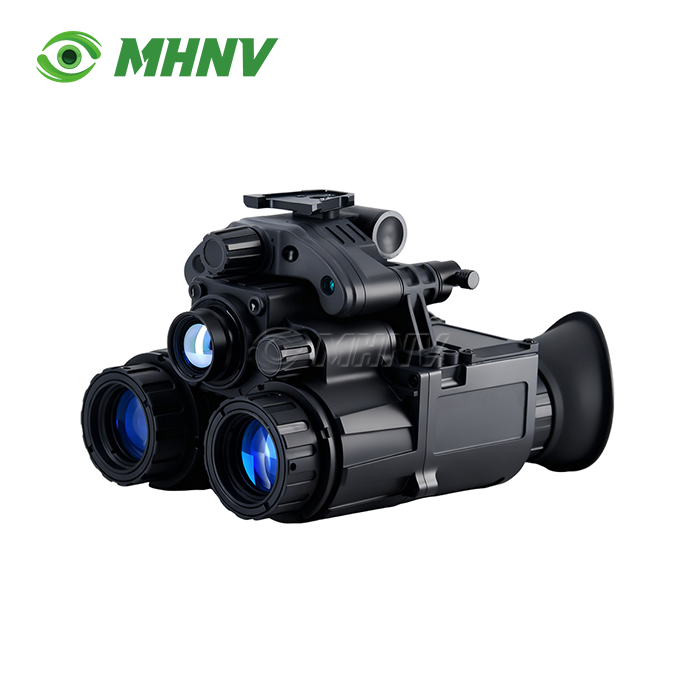
Fusion Night Vision Goggle
Premium Fusion Night Vision Goggle | Dual-Tube Stereoscopic Thermal Imaging System for Professional Observation
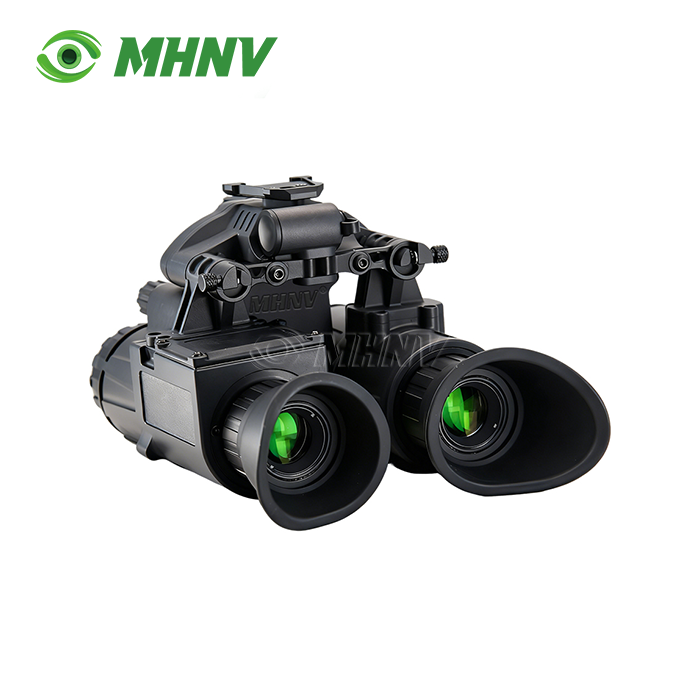
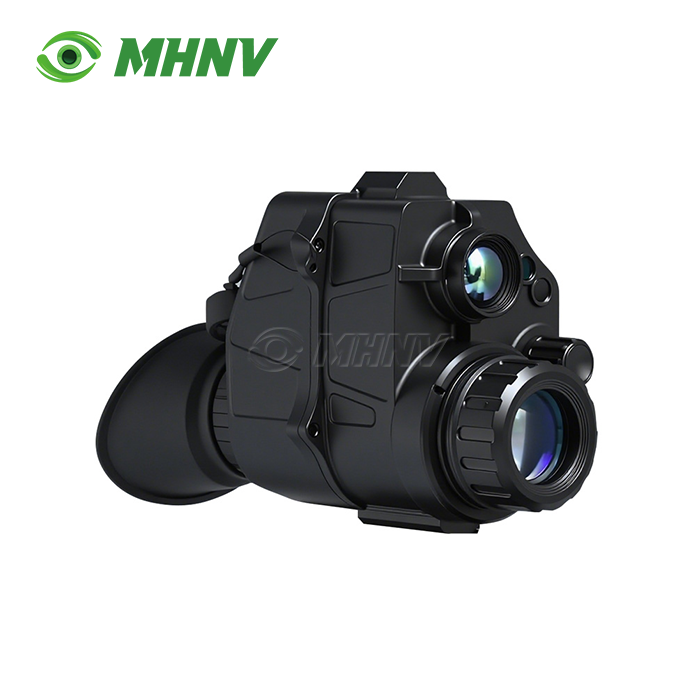
Fusion Night Vision Goggle technology represents the evolution of low-light observation systems. The MHNV MH-F-PVS31 delivers enterprise-grade performance by integrating dual autogating Gen 2+/Gen 3 image intensifier tubes with a 640×512 uncooled thermal channel in a helmet-compatible stereoscopic goggle platform. This architecture achieves verified 400 m identification on humanoid targets and extends vehicle detection to 2500 m, enabling professional operators to maintain both natural depth perception and thermal alerting across coastal, arctic, desert and jungle environments rated from -40°C to +50°C.
Why Dual-Tube Stereoscopic Fusion Outperforms Single-Channel Systems?
Stereoscopic vision architecture transforms tactical observation workflows. Unlike monocular fusion devices that compress both channels into a single eyepiece, the MHNV MH-F-PVS31 preserves natural binocular depth cues through twin IIT tubes while overlaying co-registered thermal data across both eyes. This dual-path design eliminates the eye strain and distance-estimation errors common in single-tube platforms.
Each IIT channel delivers a 40° field of view with manual focus from 250 mm to infinity. The autogating system protects both tubes against sudden light exposure while maintaining target contrast. Operators select Gen 2+ base models or upgrade to Gen 3 tubes across FOM 1200, 1400, 1600 or 1800 performance tiers. Diopter adjustment spans -4 to +2 per eye, and 20 mm exit pupil distance accommodates prescription eyewear without vignetting.
The thermal channel deploys a 640×512 pixel VOx microbolometer at 12 µm pitch with NETD under 40 mK. This resolution tier captures sub-degree temperature gradients that 384×288 budget sensors miss. The 24°×18° thermal FOV registers precisely with the IIT FOV, ensuring heat signatures appear exactly where the operator expects them in the low-light scene.
Verified Long-Range Detection Performance
Performance claims mean nothing without published test data. The product achieves measurable results on standardized targets under controlled conditions.
| Target Type | Size | Identification Range | Detection Range |
|---|---|---|---|
| Humanoid | 1.7 m | 400 m | 1000 m |
| Vehicle | 5 m | 1000 m | 2500 m |
These figures reflect real-world utility for vehicle-mounted patrol, perimeter observation and forward reconnaissance missions. The thermal channel detects heat signatures beyond the IIT's photon-limited ceiling, while the IIT resolves fine spatial detail that pure thermal imaging cannot render.
Field-selectable viewing modes adapt to changing mission phases. Low-light-only mode conserves thermal battery draw during dusk transitions. Infrared-thermal-only mode functions as a dedicated LWIR viewer when ambient light is absent. Blended fusion and overlay presets optimize contrast for stalking, wide-area search and positive identification tasks.
Technical Specifications
| Parameter | Specification |
|---|---|
| Model | MHNV MH-F-PVS31 |
| Architecture | Dual-tube stereoscopic IIT + single-channel thermal fusion |
| IIT Class | Gen 2+ or Gen 3 selectable |
| IIT FOM | 1200 standard; 1400 / 1600 / 1800 upgrade options |
| IIT Autogating | Standard on every grade |
| IIT Field of View | 40° |
| IIT Focus Range | 250 mm to infinity, manual |
| IIT Exit Pupil Distance | 20 mm |
| IIT Diopter Adjustment | -4 to +2 per eye |
| Thermal Detector | Uncooled VOx microbolometer |
| Thermal Resolution | 640×512 pixel |
| Thermal Pixel Pitch | 12 µm |
| Thermal NETD | <40 mK |
| Thermal Field of View | 24°×18° |
| Thermal Focus Range | 500 mm to infinity, manual |
| Display Resolution | ≥1024×768 pixel |
| Viewing Modes | Low-light only, infrared thermal only, fusion, overlay presets |
| Function Suite | Electronic zoom, electronic compass, pitch indication, WiFi, intelligent tracking, photo, video, playback |
| Interpupillary Distance | 58–78 mm |
| Humanoid Target (1.7 m) | Identification 400 m, detection 1000 m |
| Vehicle Target (5 m) | Identification 1000 m, detection 2500 m |
| Weight | 660 g (without battery) |
| Dimensions | 125×105×94 mm |
| IP Rating | IP67 |
| Operating Temperature | -40°C to +50°C |
| Power Supply | External 2×18650 battery box |
| Mounting | Handheld, head mount, helmet mount (PVS-31 / Ops-Core shroud compatible) |
Complete Function Suite Without Helmet Removal
Modern observation platforms must deliver actionable intelligence, not just images. The MH-F-PVS31 integrates electronic zoom, electronic compass, pitch indication, WiFi streaming, intelligent target tracking, photo capture, video recording and playback into the goggle body. Every control remains accessible under the helmet.
WiFi streaming enables real-time view sharing to smartphones or command posts. Commanders mirror the operator's perspective without radio narration. The intelligent tracking algorithm locks onto moving targets while the operator drives, walks or repositions, maintaining continuous observation even during dynamic maneuvers.
Electronic compass and pitch indication provide geo-spatial awareness without consulting handheld devices. Operators record photo and video evidence directly to onboard storage, then review playback in-field to confirm target details before radio transmission. This self-contained workflow reduces communication latency and operational signature.
Drop-In Compatibility with Existing Helmet Ecosystems
Fleet integration costs matter as much as unit performance. The Fusion Night Vision Goggle mounts via standard dovetail shrouds compatible with PVS-31, Ops-Core and Team Wendy helmet systems. Organizations already trained on dual-tube workflows reuse existing shrouds, mounts and counterweights without re-training or accessory purchases.
Interpupillary distance adjusts from 58 mm to 78 mm, covering 5th to 95th percentile adult head widths. The ergonomic housing measures 125×105×94 mm and weighs 660 g without battery, balancing weight distribution when paired with standard counterweight pouches. An external 2×18650 battery box extends runtime beyond internal-cell limitations, and hot-swappable power ensures uninterrupted operation during multi-hour missions.
IP67 Sealed Construction for Extreme Environments
If the environmental protection is not in line with the deployment conditions, the observation equipment will fail. IP67 immersion certification and anti-corrosion coating, proven spanning -40°C to +50°C operating range. Salt spray for coastal border teams. Condensation freeze for polar patrols. Dust storms for desert operators. The sealed housing is only one, so you do not need several versions of the goggle for different temperature zones.
Thermal drift compensation ensures accurate thermal calibration over the whole temperature range. Both IIT and thermal optics are coated with moisture resistant coatings to prevent internal fogging during rapid environment changes. These engineering details drive down fleet-wide warranty return rates and guarantee mission-ready status independent of the deployment theatre.

MHNV Full-Stack Manufacturing and Customization
Xi'an MH Electronics And Technology Co., Ltd. has a vertically integrated production facility that includes optical design, IIT integration, FPGA processing, embedded firmware, mechanical assembly and quality testing under one roof. The full-stack capacity reduces ODM sample delivery to 15-25 days and mass production to 30-45 days. Ready-stock items can be shipped within 3-7 days.

OEM customisation includes IIT tube choice, firmware interface, logo branding, housing material (aluminium alloy, magnesium alloy, polymer) and packaging design. Direct connection between engineers and customers prevents miscommunications frequent in trading-company procedures. Customer specific tooling and intellectual property is protected under NDA agreements and non-compete protection.
Each item sent is tested for SNR, FOM, resolution, halo, EBI, shock, vibration and environmental conditions. Each goggle is accompanied by a serialised QC data sheet which outlines performance on standardised parameters for traceability and quality responsibility.
FAQ
Q: What are the benefits of stereoscopic fusion compared to digital monocular fusion systems?
A: Stereoscopic fusion maintains the natural binocular depth perception by providing independent image enhanced channels to each eye, but superimposing synchronised temperature data across the two tubes, leading to correct calculation of distance, and less eye fatigue in prolonged observation times. Digital monocular fusion reduces the spectral bands to one eyepiece and removes all depth cues, forcing the brain to interpret the flattened image . This increases cognitive strain and decreases spatial awareness during navigation and target ranging tasks .
Q: How does the thermal channel increase performance in high-contrast lighting environments?
A: The thermal sensor is not affected by the presence of bright light sources that cause halo or bloom artefacts in the IIT channel, and it works independently of visible and near-infrared light sources. Operators can overlay thermal silhouettes on low light scenes to detect targets near street lights, vehicle headlights or sources of fire where conventional image intensification alone would wash out critical information, maintaining constant awareness across mixed lighting conditions.
Q: Can you switch between low-light and thermal modes without powering down the goggle?
A: Yes. Field selectable vision modes allow the user to switch instantly between low light only, infrared thermal only, blended fusion and custom overlay presets utilising accessible controls on the goggle body. This real-time mode switching saves battery life when light conditions are good, by turning off unused sensors, and allows quick adaption when environmental circumstances such as fog, smoke or total darkness demand thermal focus over image intensification.
Q: What is the upkeep for the thermal microbolometer and germanium optics?
A: The VOx microbolometer is a solid-state sensor and does not require tube replacement or high-voltage maintenance, but the germanium lens requires specific cleaning with isopropyl alcohol and lint-free optical tissue to maintain the infrared transmission efficiency. Routine inspection comprises checks of thermal calibration accuracy, seal integrity on the IP67 housing and autogating response on the IIT tubes. Annual factory recalibration is suggested for units deployed in corrosive salt-spray or extreme temperature conditions.
Q: Can the WiFi streaming function be used on encrypted communication networks?
A: The onboard WIFI module supports standard WPA2/WPA3 encryption protocols to provide secure point-to-point streaming to authorised smart phones or command tablets. MHNV provides ODM firmware customisation to integrate with classified or proprietary communication networks. Customer-specific encryption standards, custom authentication handshakes, and network-topology requirements can be implemented to ensure the streaming function complies with your operational security policies without sacrificing real-time video transmission performance.

Contact Us for Customization and Quotation
Contact our engineering team at sarah@mh-elec.com for technical specifications, OEM customization options and volume pricing tailored to your Fusion Night Vision Goggle deployment requirements.
YOU MAY LIKE