Multi-Spectral Fusion Target Detector
Advanced Multi-Spectral Fusion Target Detector with 10 km Laser Rangefinder and Five-Channel Observation System
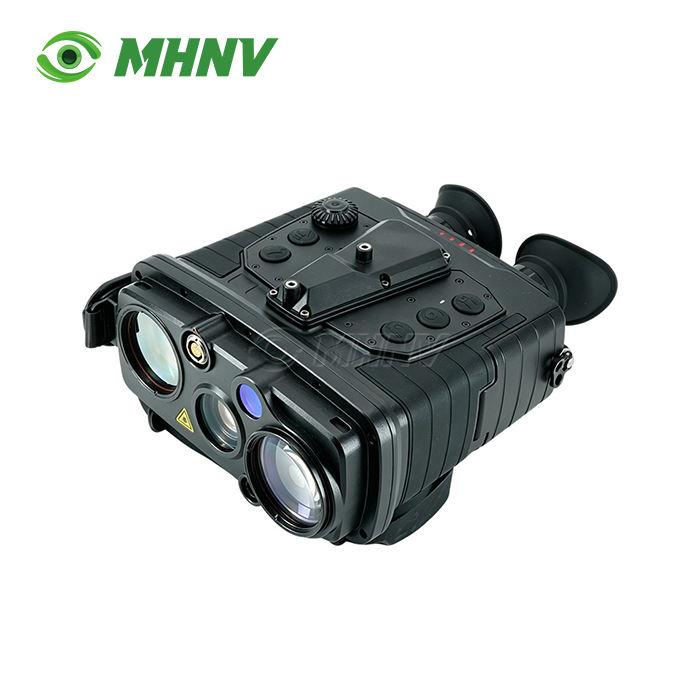
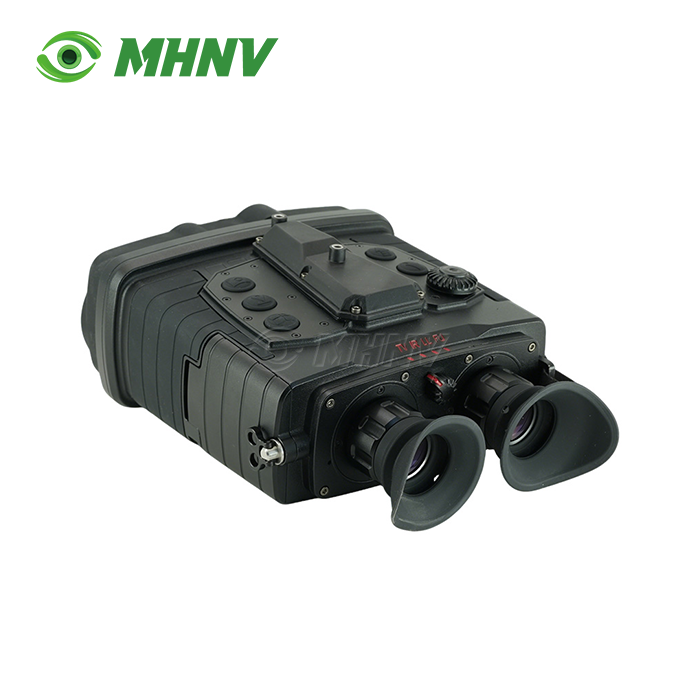
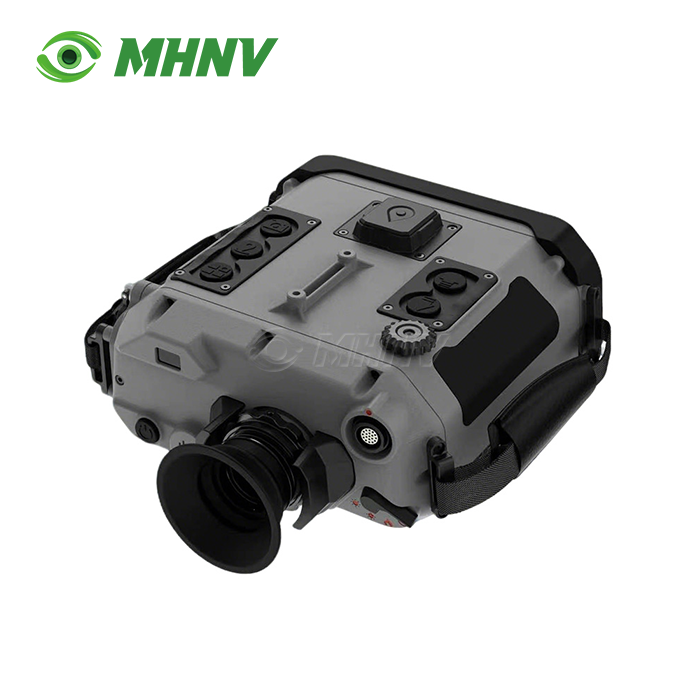
Xi'an MH Electronics And Technology Co., Ltd. has introduced the MHNV MH-MST5-TI Multi-Spectral Fusion Target Detector, an enterprise-class portable reconnaissance device that brings five independent observation channels into a single rugged 1.75 kg package. The solution is very advanced and includes 7x direct view optics, 800×600 low-light nite vision sensor, 640×512 thermal detector at 12 µm pitch, 10 km eye-safe laser rangefinder (1535 nm) and 850 nm laser target indication with multi-GNSS location. Built for forward surveillance and essential perimeter security, the system provides IP67-sealed reliability over an operating temperature range of –40 °C to +60 °C. The MH-MST5-TI combines 1.0x to 8.0x continuous zoom on nite vision and thermal channels, RS232, USB 2.0, CVBS, HDMI interfaces and up to 2 TB of onboard storage, replacing multi-device kits and reducing field-carry weight by 60% to 70%.

What Is a Multi-Spectral Fusion Target Detector?
A product is a sophisticated opto-electronic sensing system that combines data from many bands of the electromagnetic spectrum. Usually integrating Visible (EO), Near-Infrared (NIR) and Thermal Infrared (LWIR/MWIR) into a single unified data stream. The technology addresses pain points in industry with state of the art pixel level registration and deep learning fusion methods. These include poor visibility in unfavourable weather circumstances, such as fog, smoke or heavy rain, and high false-alarm rates due to ambient clutter.
The detector delivers complete situational awareness, day or nite and in all weather conditions, beyond the constraints of typical monochrome photography. It allows operators to detect low-contrast or camouflaged targets that single-band sensors would have completely missed.
Five-Channel Architecture for All-Weather Target Acquisition
The MHNV MH-MST5-TI has five channels of observation: direct view optics, low light nite vision, thermal imaging, laser rangefinder and laser target indication. With this setup no need to carry different devices for each function.
Direct-view optical channel: 7× magnification with a 5.86° field of view (97 mil in the 6000-mil system) delivers zero-latency real-scene observation and reticle-based ranging even on a dead battery. In the absence of electronic channels the system will operate in passive mode.
Nite vision channel: The low-light CMOS sensor has 800 by 600 pixels, 8 µm pixel pitch, continuous zoom from 1.0× to 8.0×, and a field-of-view of 7.3° by 5.5°. The device provides for starlight and moonless observation, giving recon teams an asset for the blackest hours of nite operations.
Thermal channel: 640×512 pixels detector with 12 µm pitch, 40 mm F1.0 germanium objective lens, 50 Hz frame rate. The continuous zoom from 1.0 to 8.0 and a field of vision of 11.0° by 8.2° enables the operator to dial in exact magnification levels without losing target lock during zoom transitions.
10 km Laser Rangefinder and 850 nm Target Indicator
The inbuilt eye-safe laser rangefinder at 1535 nm is providing a measurement envelope from 30 m to 10 000 m. It provides validated target class performance against person, vehicle, aeroplane, and structure targets. The operator gets instant range information and doesn't have to switch to another device.
The output power of the 850nm laser target indicator is not less than 30 mW. It allows covert IR pointer designation for hand-off to night-vision-equipped shooters, drone strike coordination, and multi-observer target confirmation. The indication avoids voice-call ambiguity on time-critical encounters by enabling the observer to point precisely at a target.
Technical Specifications at a Glance
| Parameter | Specification |
|---|---|
| Model | MHNV MH-MST5-TI |
| Optical Magnification | 7× |
| Optical Field of View | 5.86° (97 mil) |
| Night Vision Sensor | 800×600 pixel CMOS at 8 µm |
| Night Vision Magnification | 1.0× to 8.0× continuous zoom |
| Night Vision Field of View | 7.3° × 5.5° (122 × 92 mil) |
| Thermal Detector | 640×512 pixel at 12 µm |
| Thermal Focal Length | 40 mm F1.0 germanium |
| Thermal Refresh Rate | 50 Hz |
| Thermal Magnification | 1.0× to 8.0× continuous zoom |
| Thermal Field of View | 11.0° × 8.2° (183 × 137 mil) |
| Laser Rangefinder Wavelength | 1535 nm eye-safe |
| Laser Rangefinder Range | 30 m to 10 000 m |
| Laser Target Indicator | 850 nm, ≥30 mW |
| Display Resolution | 1024×768 pixel OLED |
| On-Board Storage | ≥128 GB (optional 256 GB to 2 TB) |
| Interfaces | RS232, USB 2.0, CVBS (PAL), HDMI, 12 V ±3 V external power |
| Battery Type | 4×18650 lithium-ion 3.7 V |
| IP Rating | IP67 |
| Operating Temperature | –40 °C to +60 °C |
| Storage Temperature | –45 °C to +70 °C |
| Dimensions (L×W×H) | ≤187×171×82 mm |
| Weight (including batteries) | ≤1.75 kg |
Multi-GNSS Positioning and Advanced Interface Suite
The Multi-Spectral Fusion Target Detector features a multi-GNSS receiver that can lock onto satellites in the GPS, GLONASS, Galileo and BeiDou constellations. This assures a strong positioning in any operation location. Target coordinates derived from own-position, compass and laser range are output in the numerical format required by fire direction centers.
The full range of interfaces includes RS232 for command-laptop data streaming, USB 2.0 for storage download, CVBS (PAL) for older video displays, HDMI for high-definition output and an external 12 V ±3 V power input. On-board storage from 128 GB base to 2 TB optional records from 40 to 700 hours of dual-channel video. The external power input is compatible with conventional car DC and allows indefinite-duration static observation without draining the internal battery pack.
Key Applications and Operational Scenarios
Perimeter Security and Critical Infrastructure Protection: The program offers 24/7 monitoring of power plants, airports and industrial facilities. The device detects human intrusions in dense vegetation or complete darkness by merging thermal heat signals with visual anatomical traits. Operators can monitor fence lines and access points with a low false alarm rate.
Reconnaissance and Forward Observation: The five channel design is useful for dismounted recon teams. One 1.75 kilogram device replaces multi-device kits (5 to 8 kg). The continuous zoom on both nite vision and thermal channels keeps identification-quality imagery from close-in scanning to long-range detection.
Search and Rescue (SAR): With UAV and ground platforms, the detector can identify human heat signatures from solar reflections on water or burning debris. SAR teams can detect survivors in maritime or forest fire situations where single-spectrum sensors are inadequate.

FAQ
Q: What is the difference between pixel-level and feature-level fusion in a product?
A: Pixel-level fusion combines the raw data from each of the sensor channels at the pixel level, retaining as much detail and texture information as possible to provide increased operator situational awareness. Feature level fusion combines and extracts higher level attributes of objects, e.g. edges, contours and thermal intensity clusters after a first stage of processing. Feature level fusion works better in very noisy situations since the low level clutter is filtered out before the fusion process. Your decision will rely on whether maximal raw fidelity or noise-robust detection is the primary need of your operating scenario.
Q: What is the performance of the product in extreme air turbulence?
A: The technology employs electronic image stabilisation (EIS) algorithms together with atmospheric correction models that account for air density gradients and thermal distortion in real time. With the use of temporal change in pixel displacement and adaptive filtering, target lock is maintained and identification quality imagery is preserved even in the presence of heat shimmer or wind-induced vibrations that decrease single channel performance. This feature is crucial for long-range observation in desert or urban heat-island conditions.
Q: How often does the detector need recalibration?
A: Internal NUC correction is automatic and performed on-the-fly during operation. A professional radiometric calibration is recommended every 12 to 24 months to maintain thermal correctness over the whole temperature span. Field operators don't need to execute regular calibration operations, which cuts down on downtime and simplifies maintenance plans.
Q: Does it interact with existing Video Management Systems?
A: Yes, most of the units are ONVIF Profile S/G/T and RTSP protocol compliant for easy B2B integration. Stream live video to command centers, record to networked storage, and overlay metadata like GPS locations and laser range directly over your existing VMS platform.
Q: What happens when the system is operating in a white-out blizzard?
A: By giving priority to the LWIR band, the detector may ignore optical obscurants like snow and fog. It gives a sharp thermal silhouette of the subject that would be lost altogether with visible-light sensors. This feature offers ongoing surveillance in extreme cold conditions.

Contact Us
For detailed technical datasheets, custom integration support, or OEM inquiries for the Multi-Spectral Fusion Target Detector, contact our engineering team at sarah@mh-elec.com. Experience the MHNV advantage today.
YOU MAY LIKE
.webp "Portable Target Acquisition System (TAS)")