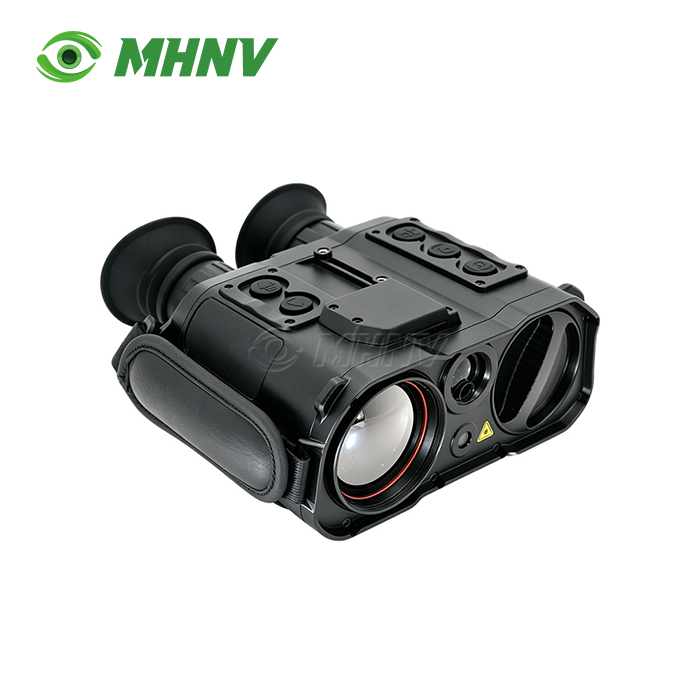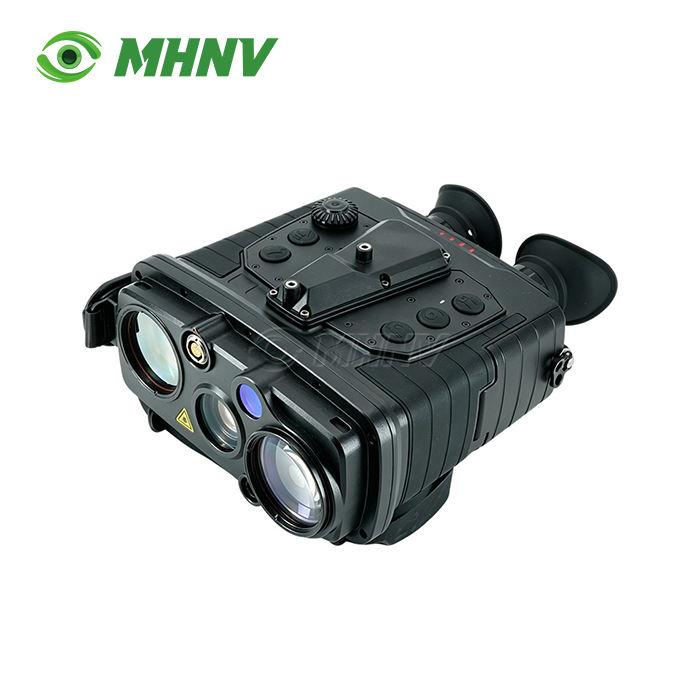
Dual-Spectrum Fusion Binocular
Advanced Dual-Spectrum Fusion Binocular with Multi-Sensor Integration | Professional All-Weather Observation System | 640×512 Thermal + Low-Light + FHD Daylight Solution
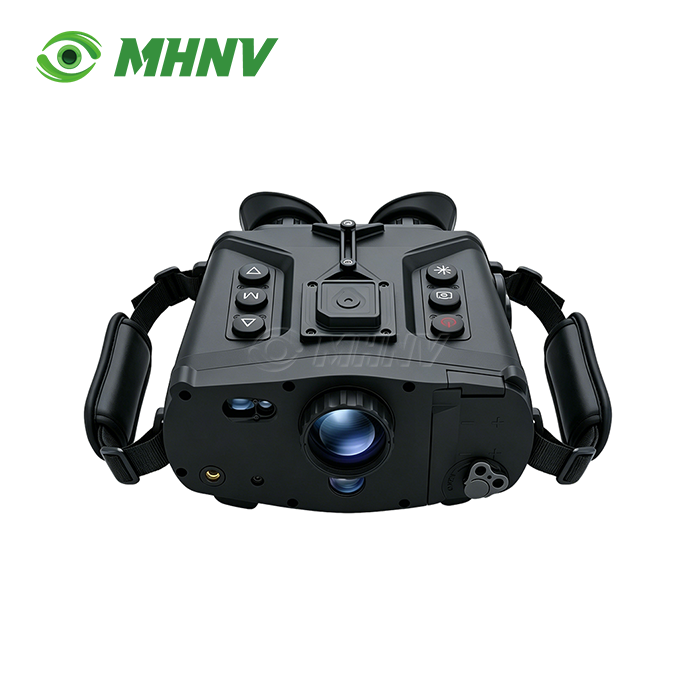
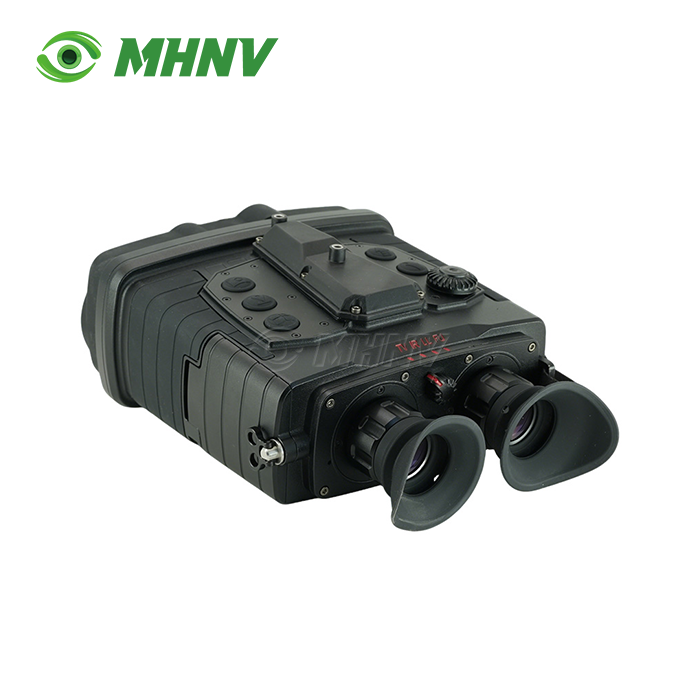
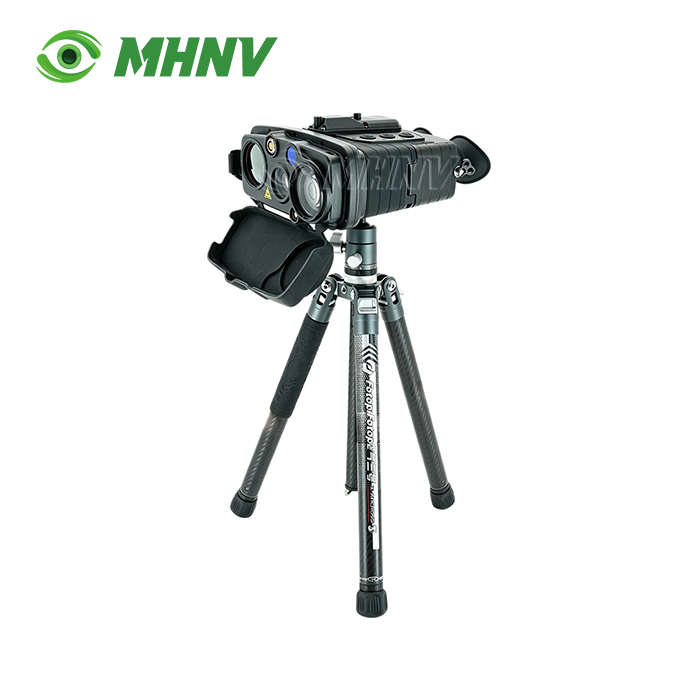
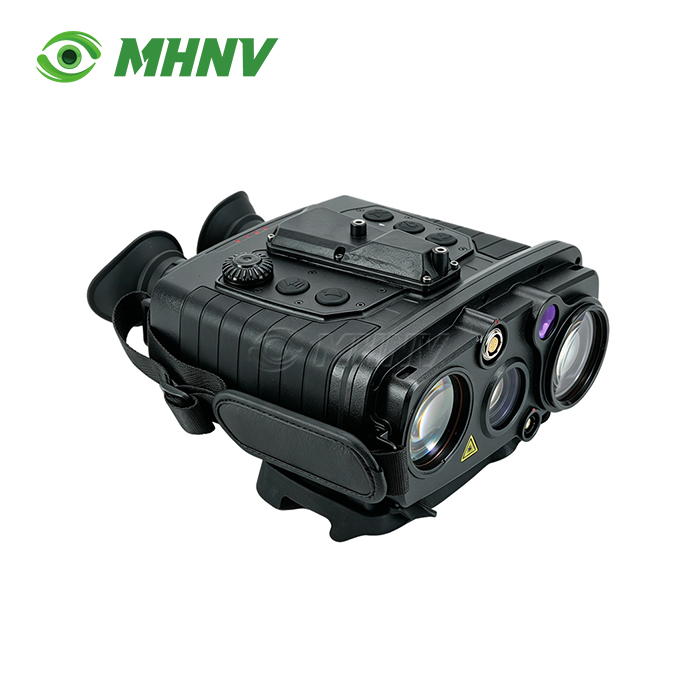
Xi'an MH Electronics And Technology Co., Ltd. presents the MHNV MH-MST4-L Dual-Spectrum Fusion Binocular, a professional-grade observation system engineered for 24/7 operational readiness. This handheld device integrates four independent sensor channels—640×512 VOx thermal imaging, 800×600 low-light detection, 1920×1080 full-HD daylight capture, and 1535nm laser rangefinder—into a single IP67-sealed platform with real-time multi-spectral fusion processing.
Detection performance reaches 3000+ meters for human targets and 5000+ meters for vehicles through the thermal channel alone, while fusion algorithms combine thermal heat signatures with structural detail from low-light and daylight sensors to deliver actionable intelligence across fog, smoke, total darkness and camouflaged environments. Multi-frequency BeiDou positioning and digital compass provide target grid computation for tactical coordination.
What Defines a High-Performance Dual-Spectrum Fusion Binocular?
A product represents advanced electro-optical engineering that merges long-wave infrared thermal detection with high-definition visible and low-light CMOS sensors in binocular configuration. Unlike single-sensor night vision or standalone thermal monoculars, this technology performs real-time pixel-level image registration across multiple spectral bands. The composite view overlays heat detection from thermal sensors with structural resolution from optical channels, solving critical field challenges where thermal imaging alone cannot identify clothing colors, text or facial features, and traditional night vision fails in absolute darkness or obscured conditions.
Binocular architecture provides essential depth perception and spatial orientation that monocular systems fundamentally lack. Operators can judge distance to targets, navigate uneven terrain and maintain situational awareness during extended observation missions—capabilities that prove decisive in search-and-rescue operations, perimeter surveillance and reconnaissance tasks.
Technical Specifications
| Parameter | Specification |
|---|---|
| Model | MHNV MH-MST4-L |
| Architecture | Handheld multi-sensor fusion binocular |
| Thermal Detector | 640×512 VOx microbolometer |
| Thermal Pixel Pitch | 12 μm |
| Thermal Spectral Band | 8–14 μm |
| Thermal Frame Rate | 50 Hz |
| Thermal NETD | ≤30 mK |
| Thermal Zoom | 1.0×–8.0× electronic |
| Thermal FOV | ≥10°×8° |
| Thermal Focus Range | 5 m to infinity |
| Daylight Sensor | 1920×1080 CMOS |
| Daylight FOV | ≥4.5°×3.5° |
| Low-Light Sensor | 800×600 pixels, 8 μm pitch |
| Low-Light FOV | 7.32°×5.86° |
| Laser Wavelength | 1535 nm (Class 1 eye-safe) |
| Laser Range | 30–6000 m |
| Laser Accuracy | ±5 m |
| Human Detection (IR) | ≥3000 m |
| Human Recognition (IR) | ≥1500 m |
| Vehicle Detection (IR) | ≥5000 m |
| Vehicle Recognition (IR) | ≥3500 m |
| Fusion Modes | Highlighting, Edge, Blending |
| Positioning | Multi-frequency BeiDou + digital compass |
| Display | 1080p FHD OLED |
| Connectivity | WiFi, CVBS, HDMI, USB |
| Environmental Rating | IP67 |
| Battery Life | ≥7 hours at 25°C |

Four-Channel Sensor Architecture for True All-Weather Capability
Thermal Image Core
640×512 pixel VOx microbolometer, 12µm pitch with 8-14µm spectral response and 50Hz frame rate. Noise-equivalent temperature differential (NETD) below 30 mK allows the identification of modest thermal signatures through camouflage, foliage and atmospheric obscurants. Black-hot and colour polarity modes and white-hot adjust to different picture conditions. Electronic zoom from 1.0× to 8.0× preserves image quality at every level of magnification. Field of view greater than 10°x8° to provide a compromise between wide situational awareness and target resolution.
Low Light Enhancement Module
The residual starlight and moonlight are captured using an 800×600 pixel sensor with 8μm pitch, covering a 7.32°×5.86° field. This channel provides scene detail and fine outline recognition under conditions where thermal imaging loses structural contrast, thereby enabling tasks like as text reading, garment pattern identification and equipment classification that pure thermal sensors cannot resolve.
Full HD, Daylight Channel
The 1920x1080 CMOS sensor delivers colour imagery with evidence-grade detail in daylight and bright environments. Field of View is > 4.5°x3.5°. The channel enables positive identification of persons, vehicle license plates and facility marks – crucial data that cannot be collected by monochrome thermal or low-light channels.
Integrated Laser Range Finder
Laser: 1535nm Class 1 eye-safe laser for distance measurement from 30m to 6000m with an accuracy of ±5m. Instantaneous range reduces manual estimating mistakes and provides target-grid calculation when paired with positional data.
Real-Time Fusion Processing Delivers Operational Superiority
The MHNV MH-MST4-L simultaneously processes all four sensor streams through three fusion presets: Highlight mode overlays thermal hot-spots onto visible image; edge mode captures thermal boundaries and overlays them onto optical detail; blending mode creates weighted composites that maintain both thermal contrast and structural clarity.
This multi-spectral technique is a solution for the fundamental restriction of single-sensor devices. Thermal alone can reveal body heat via vegetation, but lacks fine detail in homogenous temperature situations. Low-light imaging still requires some illumination, and is not effective in total darkness. No good after dark, daylight sensors. Fusion takes advantage of the benefits of each channel, while adjusting for the limitations of separate channels.
Field verification validates detection of humans beyond 3000 m and recognition beyond 1500 m on thermal channel. The vehicle is detected at ranges over 5000m and recognised at ranges over 3500m. These ranges allow for early threat detection, perimeter surveillance and long-range reconnaissance over coastal borders, open desert, dense woodland and mountain landscapes.
Multi-Frequency BeiDou Positioning for Global Deployment
The location stack merges multi-frequency BeiDou satellite reception with a magnetically-compensated digital compass. The dual-source design provides accurate own-position coordinates and calculates the grid references of targets for command coordination. The system works reliable for polar, equatorial, coastal and mountain locations without any region specific hardware modifications.
Target location data moves from target to command posts through connection interfaces, shortening the observation-to-action timescale from minutes to seconds. Maritime patrol units and distant outpost operators and border surveillance teams get common situational knowledge without having to do a manual radio relay.
Professional-Grade Display and Connectivity Integration
1080p FHD OLED Screen
The full-HD OLED screen displays each pixel from the 640×512 thermal, 800×600 low-light and 1920×1080 daylight channels without downscaling. On-screen overlays are reticle, compass rise, range readout and target grid co-ordinates. The high contrast ratio allows working in bright ambient light and preserves nite adapted vision in the dark.
Multi-Interface Connectivity
WiFi streaming sends live video to cellphones and tablets for team-leader coaching and management of several operators. CVBS and HDMI outputs drive external displays in vehicle command posts and forward operating bases. The USB link allows the downloading of firmware upgrades and recorded footage for evidence documentation and training evaluation.
This connectivity set utilises the Dual-Spectrum Fusion Binocular to network-centric operations, eliminating the manual data hand-off delays of legacy observation equipment.
Environmental Protection and Extended Runtime
IP67 sealing offers full protection against dust ingress and resistance to submersion up to 1 metre for 30 minutes. Its ruggedised casing can endure exposure to coastal salt spray, monsoon rain, dust storms and immersion during river crossings, all without degrading performance.
Battery life: more than 7 hours of continuous operation at 25°C. The enhanced run duration enables full-shift deployment without battery swap interruptions, which is vital for surveillance missions, patrol operations and search-and-rescue jobs where downtime can affect mission effectiveness.
The operating temperature range is -40°C to +60°C, meaning that it may be used in arctic, desert or tropical situations without having to alter the equipment with the seasons.

FAQ
Q: Why is the configuration of binocular important to fusion observation systems?
A: A binocular product offers you with stereoscopic depth perception, which allows you to judge distance and traverse terrain accurately, something flat, monocular perspectives cannot do. Operators maintain spatial orientation for long missions and may reliably estimate the distance to targets without relying primarily on laser rangefinder data, thus improving the decision-making speed in changing field conditions.
Q: How does NETD below 30mK improve real-world performance?
A: NETD (Noise Equivalent Temperature Difference) ≤ 30 millikelvin suggests the thermal sensor can distinguish between objects with temperature differences as tiny as 0.03°C. This sensitivity, in practical terms, allows faint heat signals to be seen through fog, light rain and atmospheric haze that overwhelm higher-NETD sensors, allowing prolonged operation in poor weather conditions that take rival systems offline.
Q: Can operators adjust fusion settings in the field?
A: Yes. The MHNV MH-MST4-L has three fusion presets, highlighting, edge and blending, which are selected using the control interface. Operators choose the mode most appropriate to current lighting, weather and target characteristics without returning to base for reconfiguration, preserving operating tempo across changing mission conditions.
Q: What prevents image washout from sudden bright light exposure?
A: CMOS sensors for daylight and low-light conditions feature auto-gating circuits and electronic shutters to guard the imaging elements against overexposure damage. The system will automatically reduce the sensor gain to avoid white-out when headlights, searchlights or muzzle flash enters the field of view, but keep the thermal channel function to guarantee a continuous observation through a varied illumination condition.
Q: What is the battery replacement time for field operations?
A: The battery compartment supports quick-swap without tools. Trained operators swap out the batteries in under 15 seconds, without changing the position of the gadget or the target track. The system stores its configuration settings when the power is off so you won’t need to re-calibrate the device after a battery change.

Contact Xi'an MH Electronics And Technology Co., Ltd.
Contact our engineering team at sarah@mh-elec.com for Dual-Spectrum Fusion Binocular technical specifications, customization options and delivery schedules tailored to your mission requirements.
YOU MAY LIKE