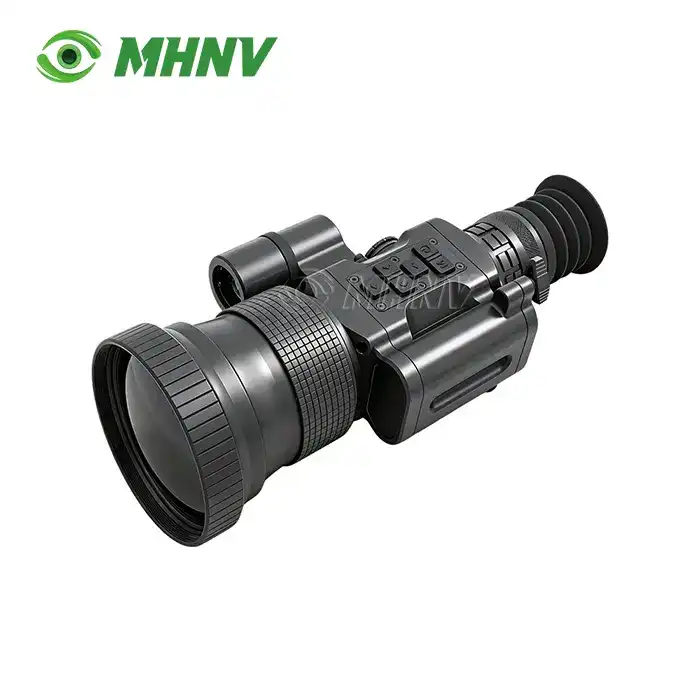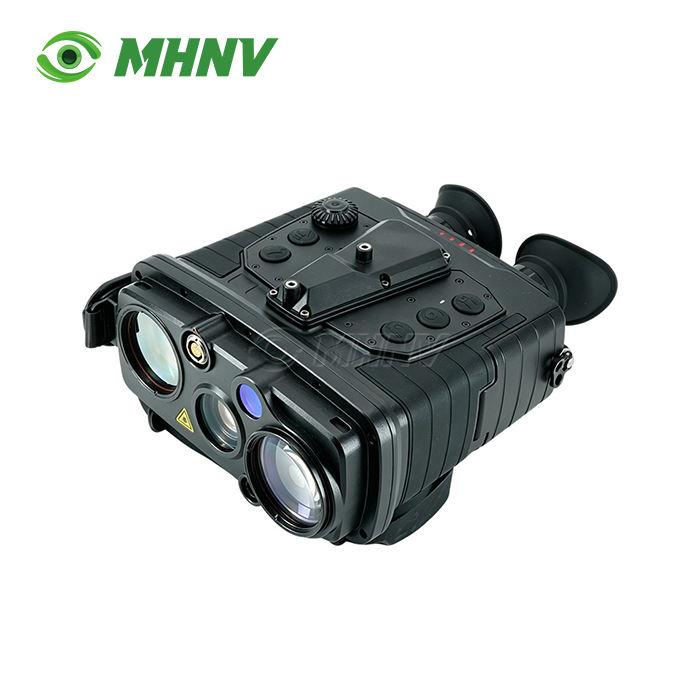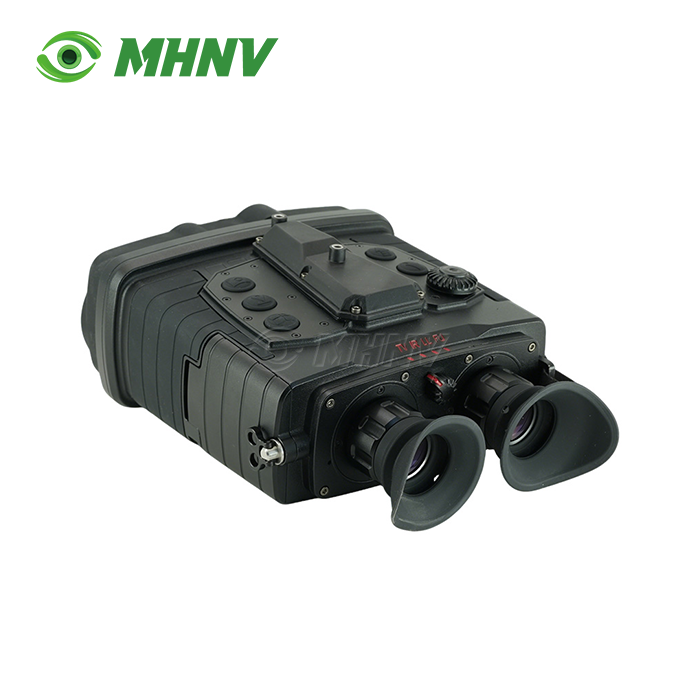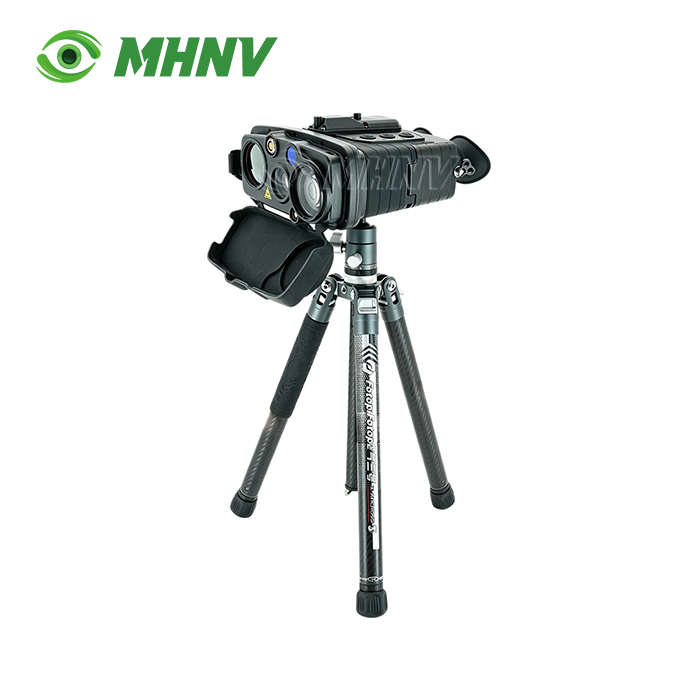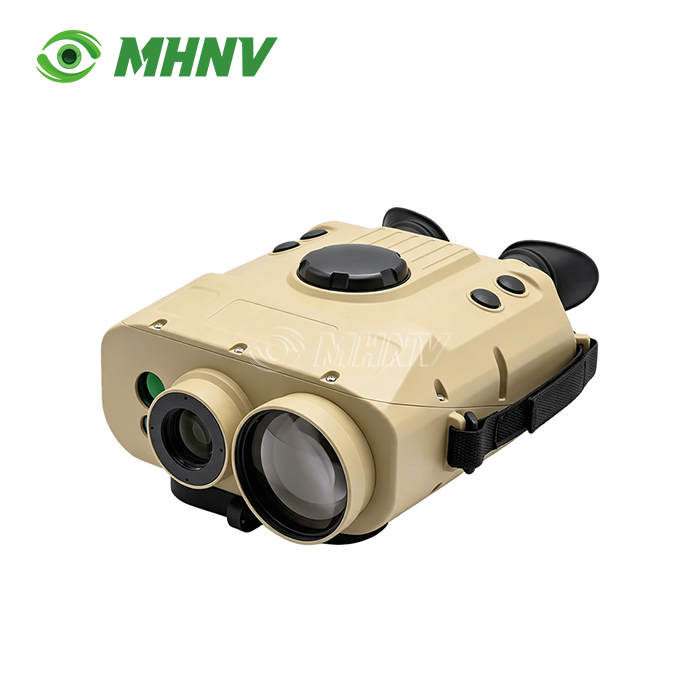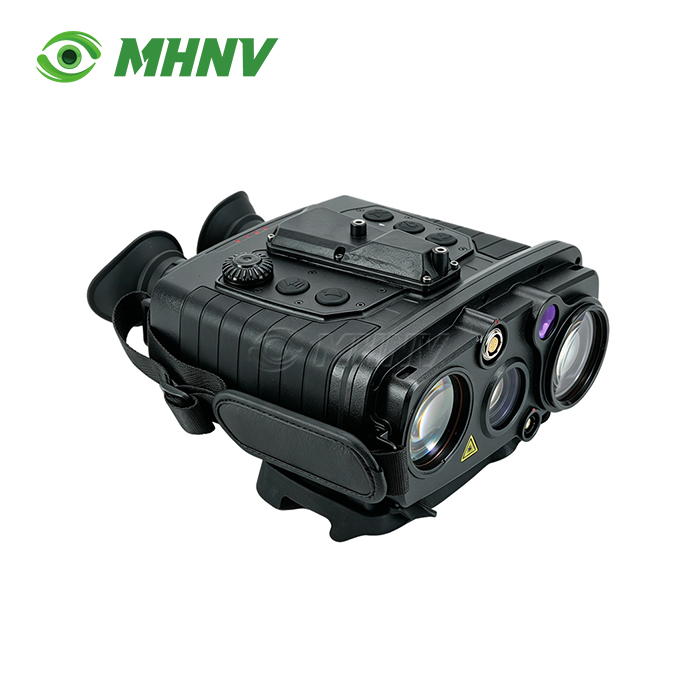
Multi Sensor Fusion Binocular
Advanced Multi Sensor Fusion Binocular – Quad-Channel All-Weather Observation System with Thermal, Low-Light, Daylight & Laser Ranging
MHNV® MH-MST4-L represents a professional-grade Multi Sensor Fusion Binocular engineered for extended reconnaissance missions across extreme environmental conditions. This enterprise observation system integrates a 640×512 pixel VOx thermal detector (12 µm pitch, <30 mK NETD), an 800×600 pixel low-light sensor, a 1920×1080 full HD daylight camera, and a 6 km Class 1 laser rangefinder into a single IP67-sealed handheld body. The four-channel fusion pipeline delivers verified human detection beyond 3000 meters and vehicle detection exceeding 5000 meters on the thermal channel, while multi-frequency BeiDou positioning and digital compass compute target grids in real time. With 50 Hz thermal refresh, 1080p FHD OLED display, and seven-hour continuous runtime, this system provides persistent all-weather surveillance capability where single-sensor devices fail.
Why Quad-Channel Fusion Outperforms Single-Sensor Observation?
Traditional observation systems force operators to choose between thermal heat-signature detection and optical scene detail. Thermal imagers expose targets through camouflage and vegetation but lose fine outline and color identification. Low-light cameras preserve spatial detail under starlight but cannot penetrate fog or detect concealed heat sources.
The product architecture eliminates this compromise through real-time multi-spectral blending. The thermal channel highlights body heat through smoke and darkness. The low-light channel preserves scene structure under starlight conditions where daylight sensors go blind. The full HD daylight camera delivers evidence-grade color imagery. The laser rangefinder measures precise distance and enables computed target coordinates when paired with BeiDou positioning.
Three fusion presets—highlighting, edge enhancement, and blending—adapt the composite image to mission requirements. Highlighting mode emphasizes thermal hotspots over optical context for rapid threat detection. Edge mode overlays thermal edges onto optical detail for structural navigation. Blending mode combines both channels proportionally for balanced situational awareness.
This capability proves decisive during coastal patrols in sea fog, border surveillance through dust storms, and search operations in dense forest canopy where no single sensor delivers actionable intelligence.

Technical Specifications
| Parameter | Specification |
|---|---|
| Model | MHNV MH-MST4-L |
| Architecture | Handheld quad-channel fusion binocular |
| Thermal Detector | 640×512 VOx microbolometer |
| Thermal Pixel Pitch | 12 µm |
| Thermal Spectral Band | 8–14 µm LWIR |
| Thermal Frame Rate | 50 Hz |
| Thermal NETD | ≤30 mK @ 25°C |
| Thermal Field of View | ≥10° × 8° |
| Thermal Electronic Zoom | 1.0× to 8.0× continuous |
| Thermal Focus Range | 5 m to infinity |
| Daylight Sensor | 1920×1080 CMOS |
| Daylight Field of View | ≥4.5° × 3.5° |
| Low-Light Sensor | 800×600 @ 8 µm pitch |
| Low-Light Field of View | 7.32° × 5.86° |
| Laser Wavelength | 1535 nm Class 1 eye-safe |
| Laser Range | 30 m to 6000 m |
| Laser Accuracy | ±5 m |
| Human Detection (IR) | ≥3000 m |
| Human Recognition (IR) | ≥1500 m |
| Vehicle Detection (IR) | ≥5000 m |
| Vehicle Recognition (IR) | ≥3500 m |
| Positioning | Multi-frequency BeiDou + digital compass |
| Display | 1080p FHD OLED |
| Fusion Modes | Highlighting / Edge / Blending |
| Connectivity | WiFi, CVBS, HDMI, USB |
| Ingress Protection | IP67 sealed |
| Battery Life | ≥7 hours @ 25°C |
Verified Long-Range Detection for Perimeter and Coastal Surveillance
Published detection ranges directly determine mission effectiveness for border patrol, coastal watch, and critical infrastructure protection. The product achieves human detection beyond 3000 meters and recognition beyond 1500 meters on the thermal channel. Vehicle detection exceeds 5000 meters with recognition beyond 3500 meters.
These ranges reflect real-world performance under controlled atmospheric conditions. Detection means the operator identifies that a target is present. Recognition means the operator classifies target type—human versus animal, civilian vehicle versus utility truck—without closing range or waiting for improved light.
The 640×512 VOx detector at 12 µm pitch and sub-30 mK thermal sensitivity resolves subtle temperature differences across long sight lines. The 10° × 8° thermal field of view balances detection range with situational context. One-to-eight-times electronic zoom magnifies distant targets without losing real-time frame rate.
For comparison, legacy single-channel thermal monoculars at 384×288 resolution typically achieve human detection near 1500 meters. Upgrading to 640×512 resolution doubles effective patrol radius and cuts the frequency of repositioning or vehicle-based approach, which reduces operational tempo and exposure risk on extended missions.
Multi-Frequency BeiDou Positioning and Target Grid Computation
Observation without position is incomplete intelligence. The integrated multi-frequency BeiDou receiver acquires satellite signals across arctic, desert, coastal, and mountain environments. The digital magnetic compass compensates for local magnetic deviation.
The system computes own-position in real time and overlays coordinates on the OLED display. When the operator ranges a target with the laser, the binocular calculates target grid using own-position, compass azimuth, and measured distance. This computed target location feeds directly into command-post mapping and dispatch systems.
Legacy observation binoculars require the operator to manually record range and bearing, then hand-transcribe coordinates over radio or paper map. The Multi Sensor Fusion Binocular streams target grids automatically via WiFi, CVBS, or HDMI outputs, cutting the reconnaissance-to-action timeline from minutes to seconds on time-critical intercept and response missions.

Smart Connectivity for Command-Post Integration
Professional reconnaissance demands more than handheld observation. The connectivity suite—WiFi, CVBS, HDMI, and USB—integrates the binocular into ground-station, vehicle-mounted, and evidence-capture workflows.
WiFi streams live video to smartphones or tablets, enabling team-leader coaching and remote monitoring. CVBS and HDMI outputs drive external monitors in mobile command posts and forward operating bases. USB provides firmware update paths and recorded video download for mission debrief and forensic analysis.
Streaming live multi-spectral fusion video into the command ecosystem eliminates information bottlenecks. Officers monitor multiple observation posts simultaneously. Analysts review recorded sequences frame-by-frame. Training coordinators critique operator technique without field presence.
Legacy single-sensor binoculars force manual radio hand-off of target descriptions, introducing latency, transcription errors, and interpretation ambiguity. Real-time video streaming removes these friction points entirely.
Rugged IP67 Construction and Seven-Hour Continuous Runtime
Field reconnaissance environments punish electronics. Salt spray corrodes coastal surveillance equipment. Dust storms infiltrate desert patrol systems. Monsoon rain drowns inadequately sealed devices.
The IP67-rated body withstands full immersion and dust ingress across all operating environments. Operators cross rivers, deploy during heavy rain, and work in coastal zones without derating system performance or risking equipment failure.
Seven-hour battery life supports full-shift operation without mid-mission recharge or battery swap. The FHD 1080p OLED display renders every pixel of the 640 thermal, 800 low-light, and 1080p daylight channels without downscaling or information loss. Competing fusion binoculars with 800×600 displays sacrifice daylight and low-light resolution before the image reaches the operator, losing identification-critical detail.
FAQ
Q: What is a product and how does it differ from single-channel thermal or night vision devices?
A: It is a modern optoelectronic observation system that combines several imaging spectrum such as thermal infrared, low-light visible and daylight sensors into one real-time visual output by means of pixel-level mixing algorithms. Fusion binoculars are different from conventional single-spectrum devices in that they provide thermal heat signatures rather than high-resolution optical image detail, eliminating environmental limits such as total darkness, dense fog, smoke and concealment. The dual-capability technique offers detection across obscurants via thermal while maintaining identification-grade spatial and colour detail via optical channels. Single channel devices force operators to choose between heat detection and scene identification; fusion design delivers both simultaneously, boosting speed of choice and accuracy of target categorisation in all-weather circumstances.
Q: How does the device perform in thick smoke compared to standard night vision?
A: Standard image amplified nite vision intensifies ambient visible and near infrared light reflected from objects in the scene. The dense particles of the smoke deflect and absorb the laser light, thereby blinding typical nite vision devices. The fusion binocular has a thermal channel working in the long-wave infrared spectrum 8-14 µm, which records the emitted heat, not the reflected light. Most of the air particles and smoke are transparent to LWIR hence the thermal sensor can see through conditions that fail optical equipment. Fusion overlay unites thermal heat-signature detection with any remaining optical detail, preserving spatial orientation and target identification where single-sensor devices fail.
Q: How long does the battery typically last with full fusion mode and all sensors enabled?
A: Operating all four channels—thermal imaging, low-light camera, daylight camera, and laser rangefinder—plus real-time FPGA fusion processing and OLED display draw significant power. The MH-MST4-L has a minimum of 7 hours of continuous operation at 25°C ambient. True endurance is a function of environmental temperature, display brightness, WiFi streaming activity and laser ranging frequency. Professional models include standard connectors for external power input, allowing you to operate from a vehicle or base station without draining the battery during long surveillance operations.
Q: Is it possible to change the fusion ratio and display modes during operation?
A: Yes, the binocular has user configurable fusion presets optimised for varied mission situations. Highlighting mode emphasises thermal hotspots over visual context, to enable rapid threat identification in clouded settings. Edge enhancement mode projects the contours of thermal objects onto optical imaging for structural navigation and obstacle avoidance. The blending mode mixes the two channels in proportion to each other for even situational awareness. Operators can change modes using external controls without moving the device from eye position, immediately responding to changing atmospheric circumstances such as going from open terrain into fog banks or smoke-filled buildings.
Q: Is the calibration of thermal and optical sensors required?
A: The thermal detector regularly executes an automatic Non-Uniformity Correction (NUC) to compensate for pixel drift and maintain uniform thermal image quality. NUC typically runs in less than one second and can be run manually or scheduled to run at timed intervals. The detector pauses the thermal image for a short while to reference an internal shutter before returning to regular operation. Optical sensors do not require routine field calibration. The factory alignment guarantees the thermal and optical channels are pixel-registered across the zoom range, so there is no ghosting or shifting of the image when they are fused.

Contact MHNV® for Enterprise Observation Solutions
MHNV® provides complete OEM and ODM customization services for Multi Sensor Fusion Binocular multi-sensor observation systems. Contact our engineering team at sarah@mh-elec.com to discuss your project requirements.
YOU MAY LIKE