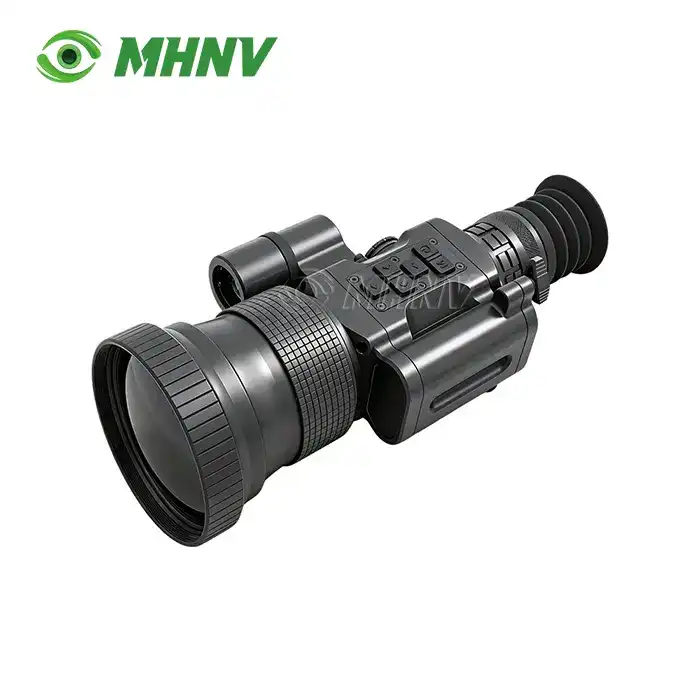
Thermals With Laser Rangefinder
Advanced Thermals With Laser Rangefinder Series | Factory-Integrated 1.3km LRF System for Professional Observation
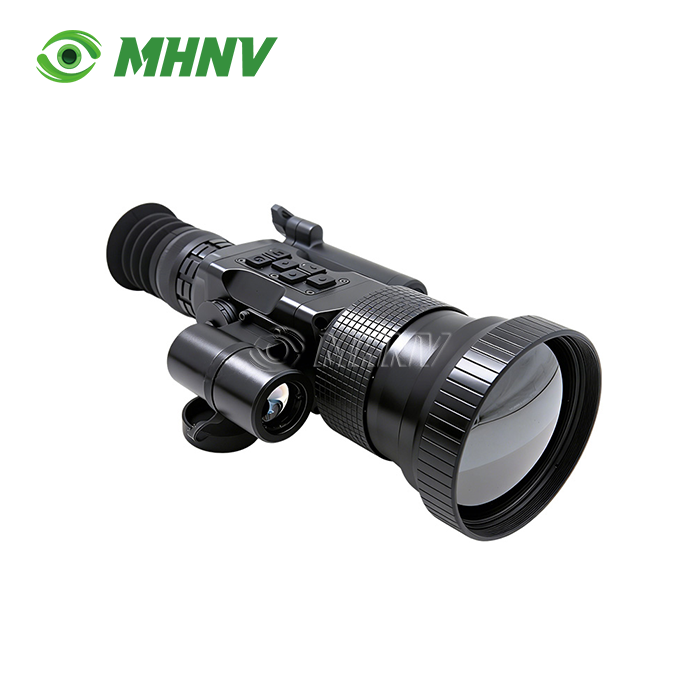
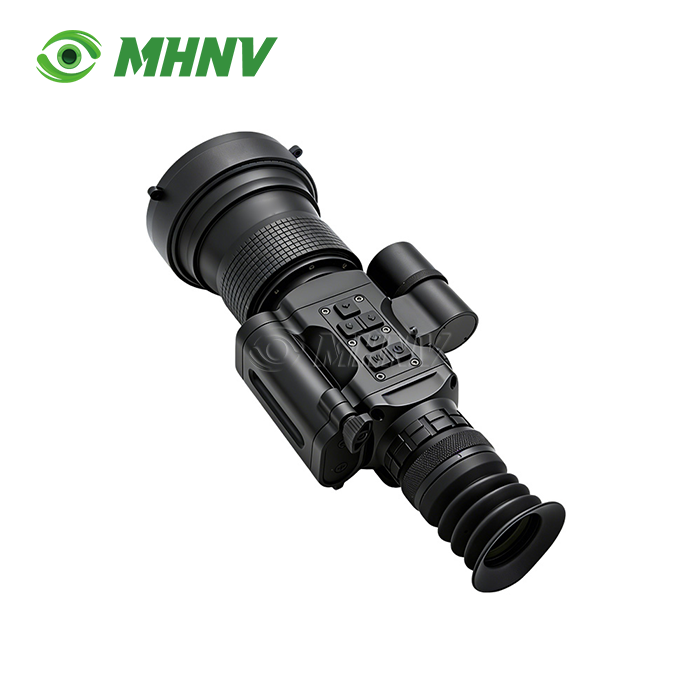
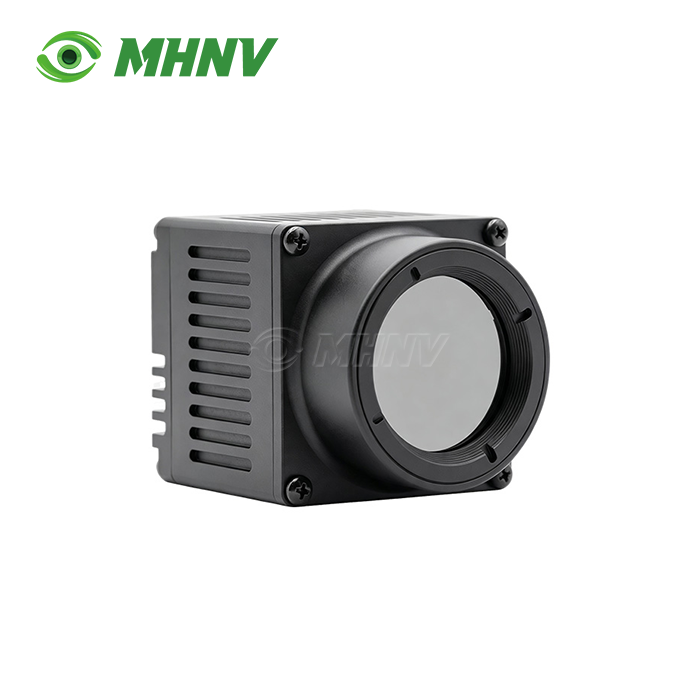
Xi'an MH Electronics And Technology Co., Ltd. presents the MHNV® MH-T Series, a next-generation Thermals With Laser Rangefinder thermal observation scope that integrates eye-safe laser ranging up to 1.3 kilometers within a compact monocular platform. Built around a 12μm uncooled VOx microbolometer sensor available in 384×288 or 640×512 resolution configurations, the system combines advanced thermal imaging with one-touch distance measurement and WiFi streaming capability. Operating across −40°C to +55°C temperature extremes and rated IP67, the MH-T Series delivers 8+ hours of continuous runtime while maintaining 1200G impact resistance across all three interchangeable germanium objective configurations (35mm, 50mm, 75mm F1.0).
Dual-Module Architecture: Thermal Imaging Meets Precision Ranging
The product solve a fundamental limitation in standard thermal observation: the absence of accurate depth perception. While heat-based imaging reveals targets in total darkness, estimating distance to those signatures remains challenging without spatial data. The MH-T Series addresses this through factory-integrated 1535nm eye-safe laser modules positioned behind the eyepiece assembly.
Range data appears directly within the reticle overlay at button press. This eliminates the traditional workflow of lowering your scope, retrieving a handheld rangefinder, acquiring the target again, and re-shouldering your equipment. Response time drops from 15–25 seconds to 3–5 seconds, directly improving decision accuracy when observing moving wildlife or monitoring perimeter zones at extended distances.
The laser module operates invisibly to targets while delivering ±1 meter accuracy across its full ranging envelope, ensuring reliable spatial data even when atmospheric conditions compromise manual estimation methods.
Three-Objective Flexibility on Unified Electronics Platform
The MH-T platform supports three interchangeable germanium objectives—35mm, 50mm, and 75mm—all sharing identical housing dimensions, mount interfaces, and electronic architecture. This modular approach allows operators to optimize field-of-view versus detection range without maintaining separate training programs or spare-parts inventories.
The 35mm objective provides wide situational awareness for close-range work. The 50mm balances field coverage with reach for medium-distance observation. The 75mm configuration extends identification capability beyond 500 meters for long-range surveillance missions. All three variants maintain the same 1024×768 OLED display pipeline and five polarity modes (white hot, black hot, red hot, false color, stroke outline) with 1×/2×/4× electronic zoom.
This standardization reduces total ownership cost by 25–40% compared to operating three incompatible thermal systems across different operational profiles.
Technical Specifications
| Parameter | Specification |
|---|---|
| Detector Type | Uncooled VOx microbolometer, 12μm pixel pitch |
| Resolution Options | 384×288 (entry) / 640×512 (premium) |
| Spectral Band | 8–14 micron LWIR |
| MRTD | ≤50mK at f/1.0 |
| Display | 1024×768 OLED with reticle overlay |
| Objective Options | 35mm / 50mm / 75mm F1.0 germanium |
| Field of View | 5.9° × 4.7° (reference focal length) |
| Focus Range | 10m to infinity |
| Eyepiece Magnification | 14× optical baseline |
| Electronic Zoom | 1× / 2× / 4× |
| Laser Rangefinder | Optional 1.3km, 1535nm eye-safe, ±1m accuracy |
| Connectivity | WiFi streaming, photo/video capture |
| Battery | 2× 18650 lithium cells |
| Runtime | ≥8 hours continuous |
| Operating Temperature | −40°C to +55°C |
| Impact Resistance | 1200G certified |
| Sealing | IP67 (1m / 30min immersion) |
| Dimensions | 255×116×102mm |
| Weight | ≤1.2kg |

Real-Time WiFi Streaming and Documentation
The built-in WiFi connectivity broadcasts the live thermal picture to smartphones or tablets in real-time, allowing for collaborative viewing and distant monitoring scenarios. The on-board recorder records still pictures and video directly to internal storage.
This feature serves a number of purposes. Evidence for insurance or regulatory bodies. Content for outreach or training materials. Proof of service for clients for guided operations. Review after a session to improve technique. A stream quality that has enough resolution for distant analysis and battery efficiency for long sessions supports remote analysis.
Engineered for Extreme Environments and Sustained Use
Each MH-T unit is tested over the complete −40°C to +55°C operational envelope, providing reliable performance from arctic cold to desert heat. The internal electronics and optics are sealed to IP67 against entry of dust and protection against temporary immersion up to 1 metre depth for 30 minutes, and will function through snow, monsoon rain, dust storms and coastal salt spray.
The 1200G impact resistance rating encompasses recoil energy from .223 Remington all the way through .308 Winchester, .30-06 Springfield and magnum calibres. This certification is the same for all three objective configurations, removing the performance tradeoffs of consumer-grade thermal scopes that can’t withstand repeated heavy-caliber recoil.
The nitrogen-purged internal chambers avoid fogging across fast temperature transitions. The ruggedised aluminium casing absorbs shock loads from the sensitive optical and electrical systems.
Quality Control and Optical Alignment Protocols
MHNV® applies rigorous validation to every Thermals With Laser Rangefinder unit before shipment. Critical test procedures include:
Laser-Reticle Axis Alignment: Verifying the laser beam path intersects the thermal reticle center within ±0.5 milliradians across the full focus range.
Non-Uniformity Correction (NUC): Calibrating each pixel of the VOx detector array to eliminate thermal drift artifacts and ensure uniform image quality.
Shock Resistance Validation: Subjecting assembled units to 1200G impact profiles that simulate extended shooting cycles.
Thermal Cycling: Testing operational stability across −40°C to +55°C transitions to validate sealing integrity and electronic performance margins.
Beam Divergence Measurement: Ensuring laser spot size remains tight over the full 1.3km ranging envelope for consistent return-signal quality.
Each unit ships with serialized QC documentation traceable to ISO 9001:2015 protocols and CE/RoHS compliance certificates.

Practical Application Scenarios
Product used by professional wildlife management teams that require exact distance information for ethical observation. Proper range removes the guess work from low light and helps you make good decisions when visual references are not available after sunset.
Integrated LRF capabilities is relied on by search and rescue personnel to provide precise coordinate data for locating individuals in dense forest, hilly terrain or maritime conditions. Thermal detection identifies heat signatures, while laser ranging translates them into GPS coordinates that can be acted upon to deploy the extraction crew.
Perimeter security professionals tasked with monitoring vital infrastructure rely on MH-T systems to classify threats over large surveillance areas. The LRF delivers quick confirmation of distances and can trigger automated reaction procedures associated with predetermined security zones, even in fog, smoke or total darkness which would inhibit traditional cameras.
During nite inspections of electrical substations, pipeline infrastructure or solar farms, industrial facility managers employ the thermal-LRF combo to locate equipment hot spots and take precise standoff distance measurements to document for safety compliance.

FAQ
Q: Why are integrated laser rangefinders better than handheld ones for thermal observation?
A: Factory integrated laser rangefinders in thermal scopes eliminate the operational delay that exists with handheld ranging devices as the distance data is presented directly in the reticle overlay. This allows the target acquisition time to drop from 15-25 seconds to 3-5 seconds and the observation posture to stay uninterrupted during the ranging process. The integration also provides accurate alignment of the laser beam path with the thermal sensor's optical axis, reducing parallax problems that can occur when utilising separate portable equipment to measure distances to small or distant heat signatures.
Q: What's the real-world impact on viewing performance of the 12μm pixel pitch spec?
A: The VOx detector array's 12-micron pixel pitch gives you more effective magnification and better target detail resolution than the earlier 17μm sensors, which translates to directly better ability to classify heat signatures at the greatest distances that the 1.3km laser rangefinder can measure. Smaller pixels also provide greater electrical zoom performance, preserving usable image quality through the 2× and 4× digital magnification modes to spot objects on distant targets.
Q: Can the laser rangefinder operate effectively in fog or heavy humidity?
A: In high humidity and fog situations, the 1535nm laser pulses undergo Mie scattering, which limits the maximum effective ranging distance compared to clear atmospheric conditions. However, the thermal imaging sensor still provides clear heat-based visualisation across the same obscurants. In dense fog, the range capability is expected to degrade to 40-60% of the quoted 1.3km specification, although the thermal image is still viable for target detection at usual observation distances.
Q: Does the battery life get greatly shortened with every laser ranging?
A: Modern low power laser modules require less than 1 W each ranging event, but using continuous-scan mode (repeated ranging every 1–2 s) results in an increase of overall power demand of roughly 15–20% compared to thermal-only operation. The MH-T Series does this with two 18650 lithium cells that will still give you the stated 8+ hour endurance even with regular range use, and the technology allows you to turn off the LRF module completely if you need longer battery life over distance measurement.
Q: Why is 1200G impact resistance important for thermal-laser combination devices?
A: The optical alignment between the thermal sensor axis and the laser beam path is the most shock sensitive element in the product systems and the 1200G certification ensures this alignment remains stable across the recoil energy produced by common rifle calibres from .223 through magnum loads. With lower-rated consumer thermals, the laser reticle often goes out of alignment after 50-100 rounds of heavy-caliber shooting, meaning range data is not reliable even if the thermal image still functions.

Contact Our Engineering Team
Our technical specialists provide detailed specification consultations, OEM customization options, and volume pricing for qualified Thermals With Laser Rangefinder projects.
Email: sarah@mh-elec.com
YOU MAY LIKE