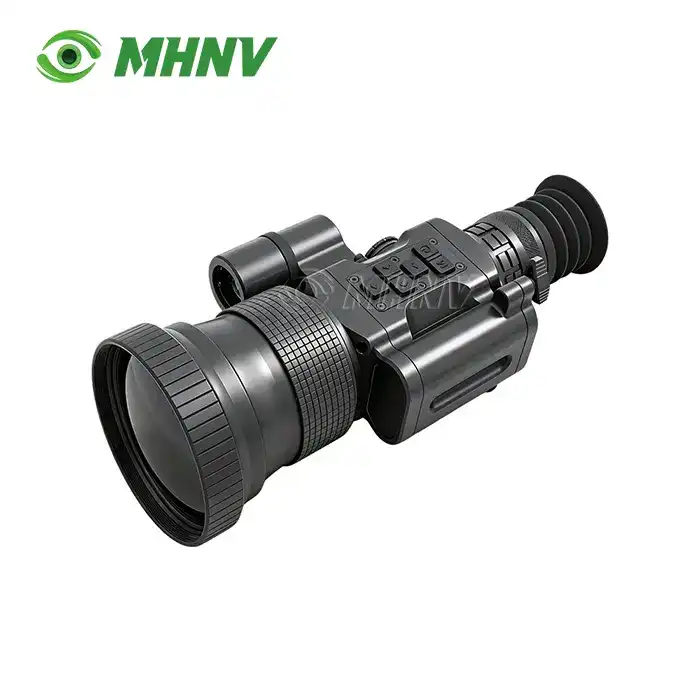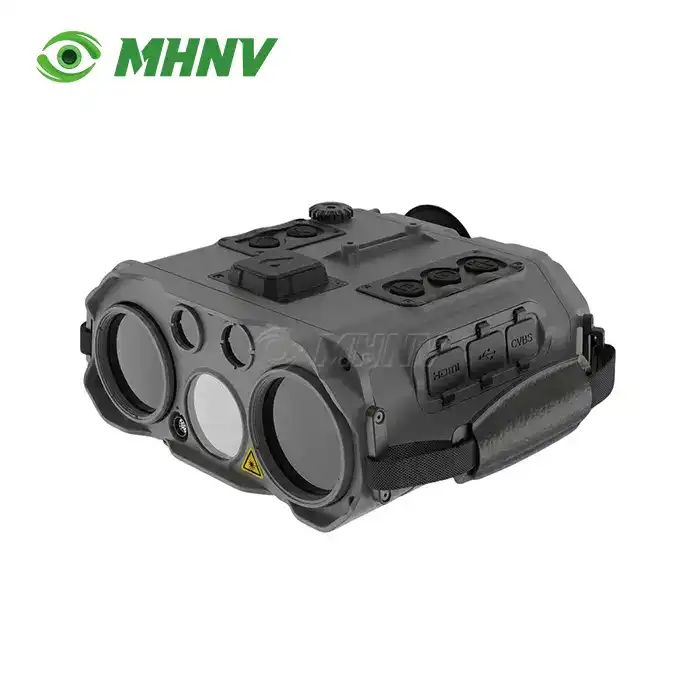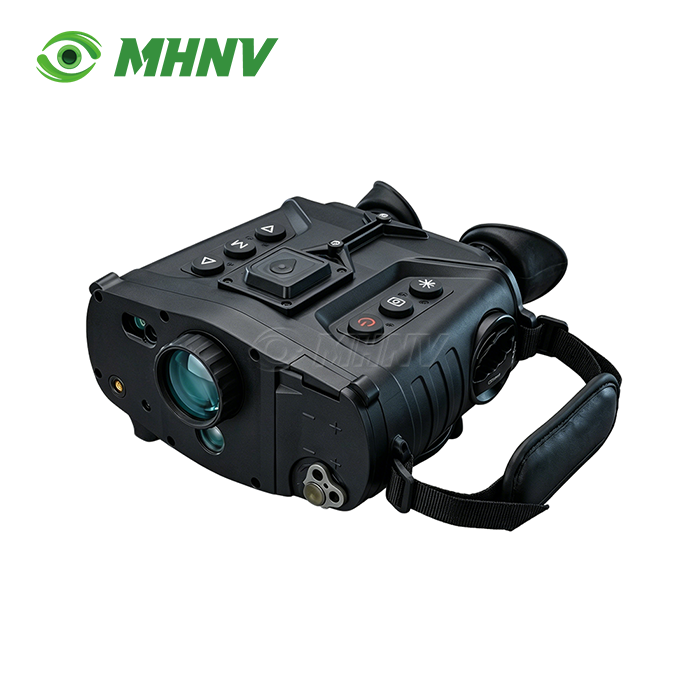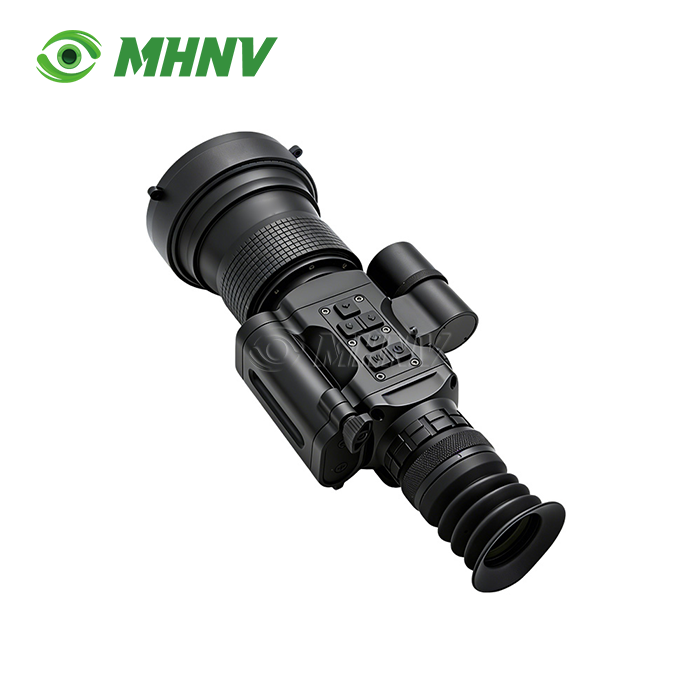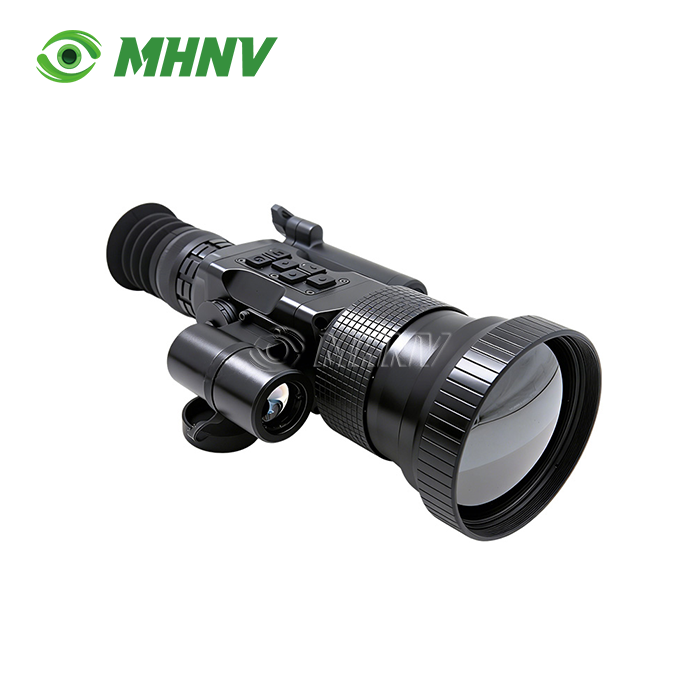
Thermal Scope With Rangefinder
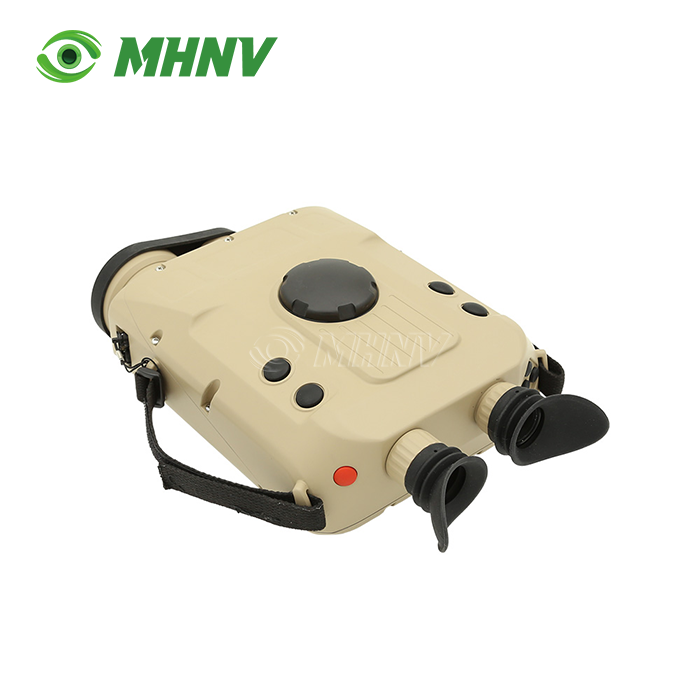
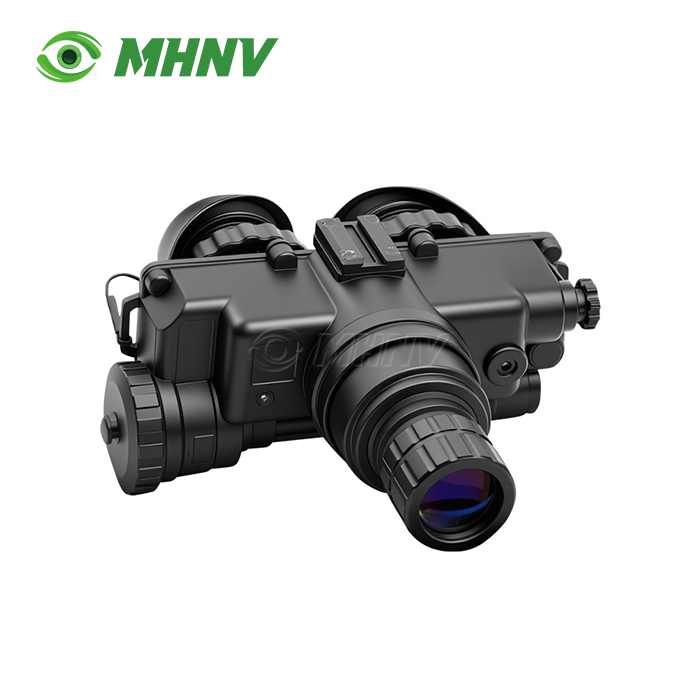
Thermal Scope With Rangefinder – Professional LWIR Imaging System With Integrated 1.3km Eye-Safe Laser Ranging For Precision Observation
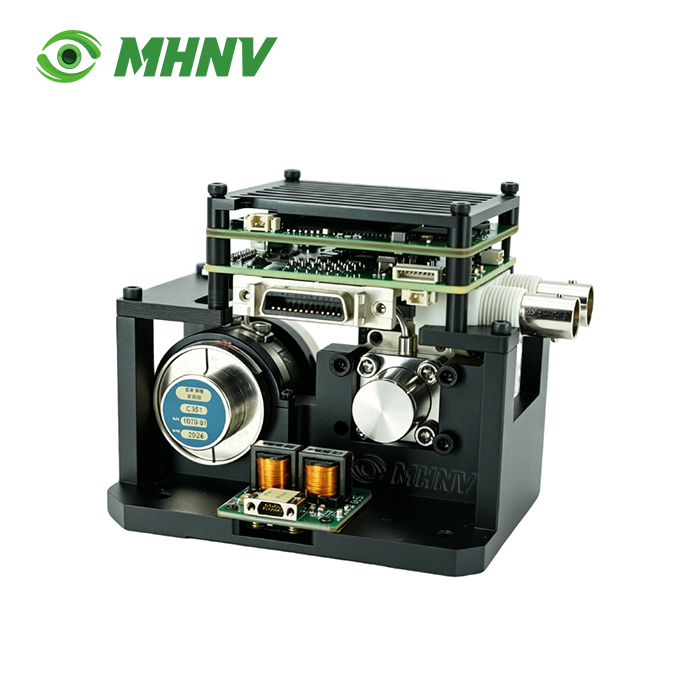
The MHNV MH-T Series represents a factory-integrated solution addressing the critical challenge of depth perception in long-wave infrared environments. This Thermal Scope With Rangefinder combines a 12μm uncooled VOx microbolometer—offered in 384×288 or 640×512 resolution tiers—with an optional 1535nm eye-safe laser module capable of instant ranging to 1.3km. The system delivers ≤550mK MRTD thermal sensitivity, 1024×768 OLED display clarity, and IP67-sealed durability across −40°C to +55°C operating conditions.
With three interchangeable F1.0 germanium objectives (35mm/50mm/75mm), 1200G shock certification covering .223 through magnum calibers, WiFi streaming, and ≤1.2kg total weight, the platform eliminates the need for separate handheld ranging devices while standardizing training and spare-part logistics across close, medium, and extended observation scenarios.
Why Choose MHNV Factory-Integrated Ranging Solutions?
Xi'an MH Electronics And Technology has a fully integrated engineering and production system from algorithm development to FPGA thermal processing, optical design, SMT assembly and Class-10,000 cleanroom calibration. Since 2013, we have been offering full OEM/ODM nite vision and thermal imaging solutions to customers from over 60 countries.
MHNV's full-stack capability enables direct customer-to-engineer connection, lowering product development cycles by 25–40% over trading-house operations. Consistent performance on every shipped unit is ensured by quality management with ISO 9001:2015, MIL-STD-810 environmental testing and individual serialised QC data sheets.

Technical Specifications At A Glance
| Parameter | Specification |
|---|---|
| Model | MHNV MH-T Series |
| Spectral Band | 8–14 μm |
| Detector Type | Uncooled VOx, 12 μm pitch |
| Resolution | 384×288 / 640×512 selectable |
| MRTD | ≤550 mK at f/1.0 |
| Display | 1024×768 OLED |
| Objectives | 35 / 50 / 75 mm F1.0 Ge |
| Field of View | 5.9° × 4.7° (reference) |
| Focus Range | 10 m to ∞ |
| Base Magnification | 14× optical |
| Digital Zoom | 1× / 2× / 4× |
| Polarity Modes | White hot, black hot, red hot, false color, stroke outline |
| Laser Rangefinder | Optional 1.3 km eye-safe |
| WiFi | Live streaming, photo/video |
| Battery | 2×18650 lithium |
| Runtime | ≥8 hours continuous |
| Temp Range | −40°C to +55°C |
| Shock Rating | 1200 G |
| Weight | ≤1.2 kg |
| Dimensions | 255×116×102 mm |
| Sealing | IP67 |
Five Core Engineering Advantages
Factory-Integrated Eye-Safe Ranging Module
The optional 1535nm Class I LRF mounts behind the eyepiece during final assembly. Range data overlays the reticle in real time at button press, reducing target-acquisition-to-decision time from 15–25 seconds (handheld LRF workflow) to 3–5 seconds. This architectural choice eliminates shoulder-down/re-shoulder cycles and improves first-round engagement probability on moving targets at extended distances.
Three-Objective Modularity On Single Electronics Platform
35mm, 50mm, and 75mm F1.0 germanium objectives share identical housing interfaces, firmware, and mount standards. Organizations operating across close-range control, balanced stalking, and long-range identification scenarios standardize training, accessories, and spare inventory on one platform—reducing total ownership cost by 25–40% versus maintaining separate product lines for each mission profile.
Onboard WiFi Streaming And Recording
Built-in WiFi mirrors the live thermal feed to smartphones or tablets. Simultaneous photo and video capture supports evidence documentation, insurance verification, content creation, and post-mission review. Remote observers can monitor engagements in real time without physical scope access.
1200G Recoil Certification Across All Objectives
Every objective variant undergoes 1200G impact testing, covering .223 Remington through .308 Winchester, .30-06 Springfield, and magnum loads. Competing consumer scopes typically publish 800–1000G ratings that fail under repeated heavy-caliber use. 1200G rating delivers genuine performance parity with premium hunting-grade thermal optics.
IP67 Environmental Sealing At ≤1.2kg
Full dust ingress protection and 1-meter immersion resistance for 30 minutes combine with −40°C to +55°C operation in a body weighing no more than 1.2kg. Users deploy one scope across arctic, desert, coastal salt-spray, and tropical monsoon environments without purchasing environment-specific variants.
Application Scenarios For Integrated Ranging Thermal Systems
Professional Wildlife Observation And Documentation
Conservation researchers and ranch operators use the Thermal Scope With Rangefinder to document herd movements, track predator activity, and monitor invasive species distribution across large properties. Instant ranging eliminates guesswork when recording observation logs, improving spatial data quality for GIS mapping and population density studies.
Extended-Range Predator Detection And Control
Agricultural specialists managing open rangeland deploy the 75mm objective for coyote and feral hog detection at 500+ meters. Integrated ranging provides precise distance-to-target data for ethical shot placement and ballistic compensation, reducing wounded-animal incidents and improving control program effectiveness.
Search And Rescue Coordination
SAR teams operating in zero-visibility conditions—dense forest, smoke-filled zones, or complete darkness—leverage thermal imaging to locate heat signatures and the LRF to relay exact coordinates and distance to extraction personnel. The WiFi feed allows command centers to monitor search progress in real time, reducing response times and improving resource allocation.

Customization Capabilities And OEM Support
MHNV provides complete product customization across multiple engineering layers:
Optical Customization: Magnification adjustment, field-of-view optimization, focal length design, anti-reflective coating selection.
Firmware Customization: User interface language localization, gain curve tuning, video overlay branding, wireless streaming protocol selection.
Mechanical Customization: Logo engraving, housing redesign, material selection (aluminum alloy, magnesium alloy, reinforced polymer), IP protection rating enhancement.
Packaging Customization: Branded boxes, multilingual manuals, quick-start guides, regional compliance documentation.
The company's in-house FPGA, embedded firmware, and algorithm teams enable rapid prototype iteration—ODM samples ship in 15–25 days, and mass production runs complete in 30–45 days.

Quality Assurance And Global Logistics
Each unit undergoes environmental reliability testing following MIL-STD-810 standards for shock resistance, vibration endurance, humidity exposure, and altitude performance. Thermal performance is validated by SNR, resolution, halo measurement and EBI testing before to shipment.
MHNV uses DHL, FedEx, UPS and EMS for worldwide logistics. Units in ready-stock ship in 3-7 days. The export documents include Commercial Invoice, Packing List, Certificate of Origin, CE/RoHS certificates and MSDS for lithium battery items.
FAQ
Q: What advantages does a product provide over separate handheld laser units?
A: An integrated product in the manufacture removes the operational process of shouldering the armament, putting it down to utilise a portable rangefinder, memorising the range and re-shouldering for engagement. Pressing a button brings up the integrated module, which superimposes range data directly onto the reticle, cutting target-to-decision time from 15–25 seconds down to 3–5 seconds while retaining shooter position during the observation cycle. This architecture eliminates the effect of parallax errors, increases probability of a first round hit on moving targets and simplifies training for organisations that have several operators on rotating shifts.
Q: How well does the laser rangefinder work in severe fog or rain?
A: Thermal imaging is less affected by air moisture than visible-light optics, but the 1535nm laser pulse can be backscattered by suspended water droplets. Professional-grade rangefinder modules use logic gates and signal-processing techniques to filter false reflections and prioritise returns from solid objects. In heavy fog, where visibility is less than 50 meters, the thermal detection range is usually well beyond the effective range of the LRF, but the system will still be able to provide meaningful data to solid targets inside its operational area. In heavy precipitation or fog banks, users might expect reduced maximum ranging distance often 60-70% of clear weather performance.
Q: How does the 1200G shock rating translate to real-world caliber compatibility?
A: All three objective focal lengths are impact rated for the recoil impulse of popular hunting and precision rifle calibres such as.223 Remington,.308 Winchester, .30-06 Springfield, 7mm Remington Magnum and.300 Winchester Magnum. Testing includes many shock cycles to simulate years of field service, and to verify that the optical alignment, electrical solder connections and laser collimation are within specification following continued heavy-caliber firing. This is equal to or better than shock tolerance published for premium hunting thermal optics from known companies, bringing true performance parity in this weight class and price tier.
Q: Is the WiFi streaming feature compatible with standard smartphone operating systems?
A: Yes, the built-in WiFi module employs industry standard 802.11 protocols and broadcasts video in formats compatible with iOS (iPhone, iPad) and Android smartphones. Users download a companion app (available via regional app stores or via direct APK distribution) that displays the live thermal stream, permits photo/video recording to the phone’s storage, and allows remote control of zoom, polarity modes and reticle selection. The connection works as a local WiFi hotspot and it does not need any cellular service or internet connectivity. Several devices can be connected at the same time, allowing team leaders, clients or remote observers to follow the view of the scope in real time, during guided operations or training exercises.
Q: What battery runtime should users expect during continuous rangefinder use?
A: The baseline 8-hour runtime spec assumes typical intermittent observation with periodic LRF activation, i.e. 10-15 range measurements per hour. Continuous active ranging mode (i.e. firing the laser every 2-3 seconds for lengthy periods) adds an additional 10-15% power demand, bringing the overall runtime to ~7 hours. Users can extend field time by carrying spare 18650 cells- hot changing takes less than 60 seconds- or by limiting continuous ranging to active engagement windows instead of passive scanning. The 18650 lithium chemistry delivers a steady voltage output across the −40°C to +55°C operating envelope to avoid performance degradation in harsh temperature situations.
Contact Our Engineering Team
Contact our technical sales team at sarah@mh-elec.com for Thermal Scope With Rangefinder detailed specification sheets, custom OEM quotations, and live demonstration scheduling.
YOU MAY LIKE