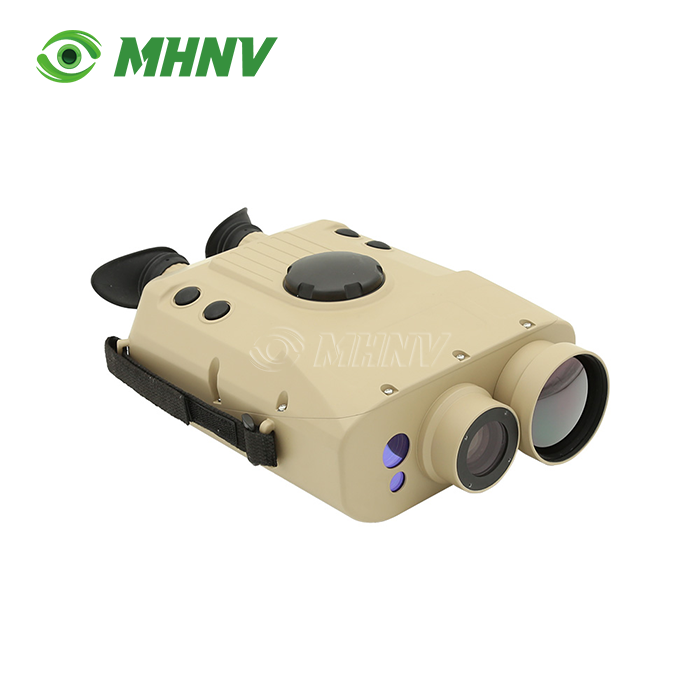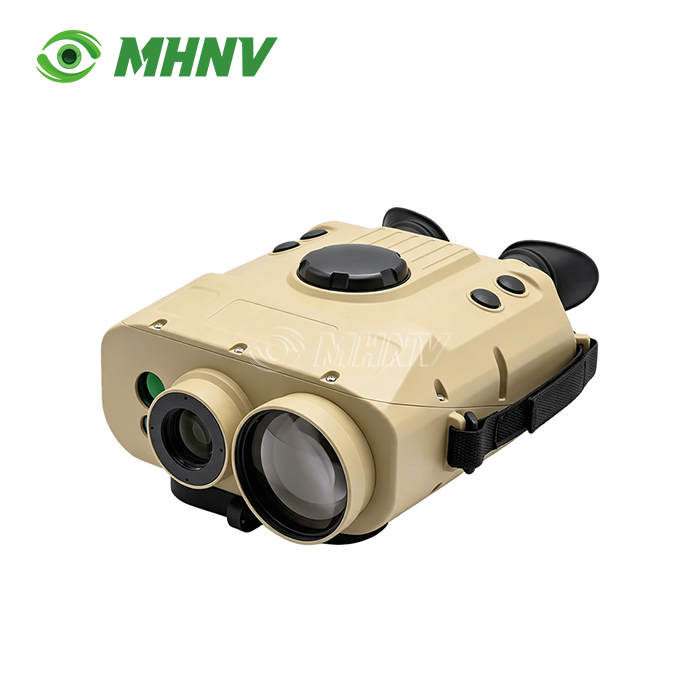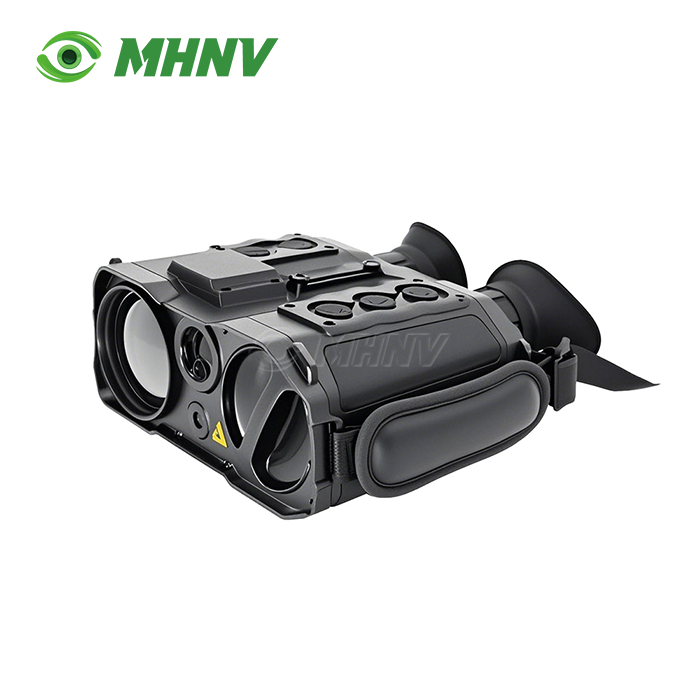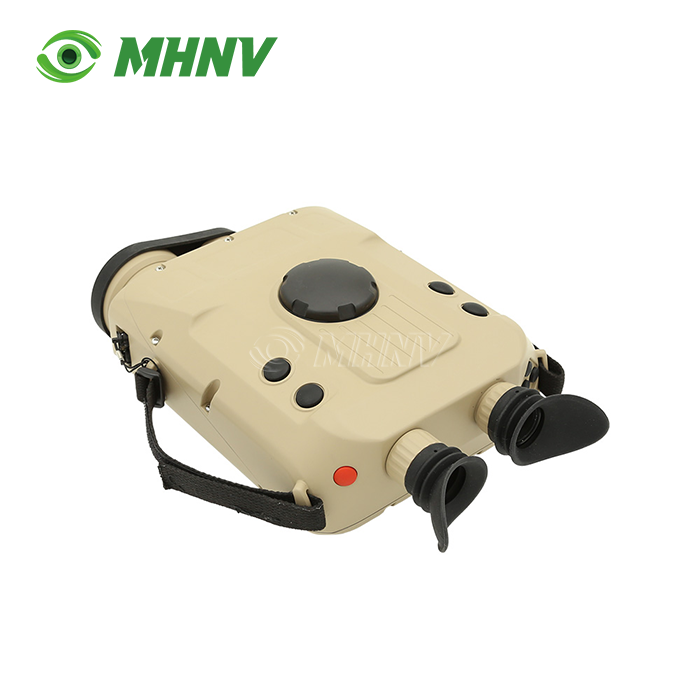
Cooled Thermal Imaging Binoculars
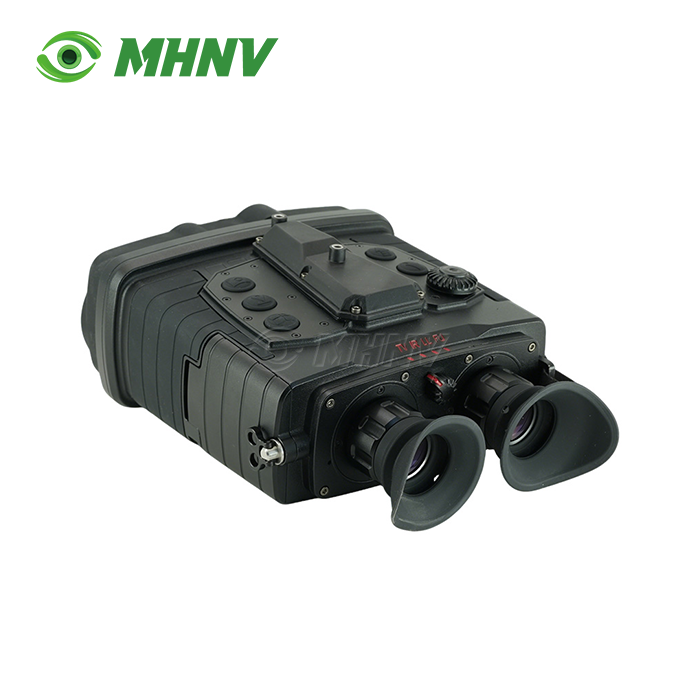
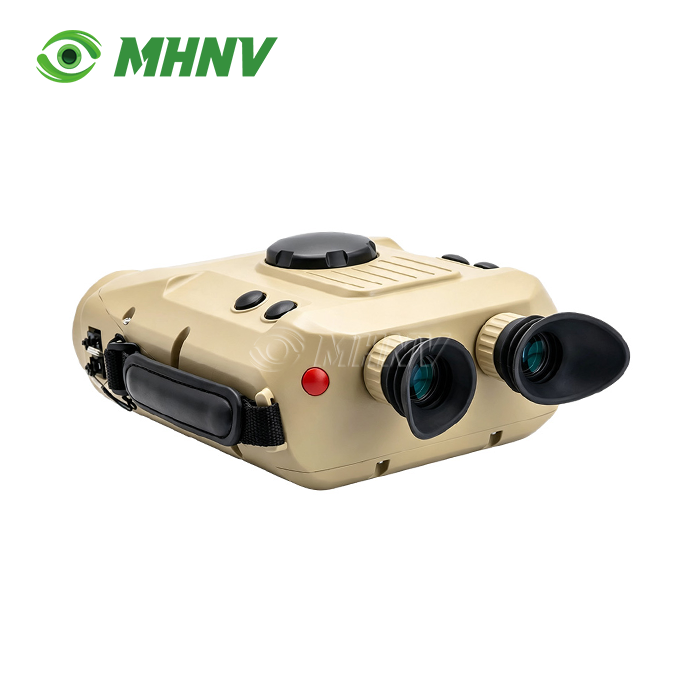
Cooled Thermal Imaging Binoculars | Long-Range Surveillance System with Integrated Multi-Sensor Platform
Cooled thermal imaging technology addresses critical challenges in long-range detection where atmospheric conditions and extended distances exceed the capability of conventional uncooled infrared systems. Xi'an MH Electronics And Technology Co., Ltd. (MHNV®) provides enterprise level Cooled Thermal Imaging Binoculars with refrigerated MWIR detector, NETD ≤30mK, thermal channel persons detection ≥6km and thermal channel vehicle recognition ≥6km. Integrated dual channel architecture incorporating 640×512px cooled infrared imaging with 1920×1080px visible CMOS sensor, 10km laser rangefinder, GPS positioning, electronic compass and a continuous 1.0–4.2X optical zoom across both channels – all in a 3.4kg IP68-rated handheld body providing ≥6 hours continuous operation in -40°C to +55°C environments.
Why Cooled Detection Outperforms Uncooled Systems in Demanding Environments?
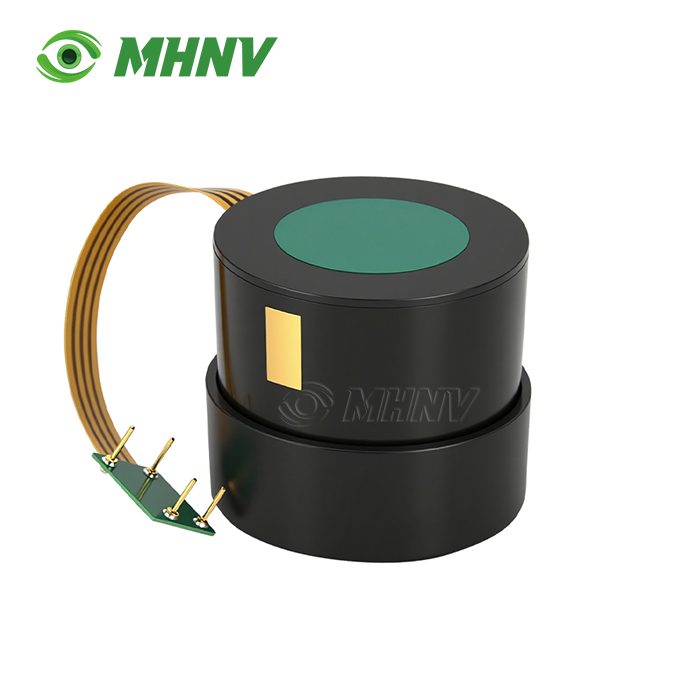
In general, uncooled thermal cameras have difficulty in settings with air moisture, long distances, or slight thermal contrast. The items contain a Mid-Wave Infrared (MWIR) detector, cryogenically cooled, working in 3-5{\mu}m spectral region.
The sensor is operated at cryogenic temperatures to reduce the internal thermal noise and achieve signal to noise ratios well above those of uncooled Long-Wave Infrared (LWIR) devices. This results in a greatly increased detection range (typically 3-4 times greater), and the ability to resolve temperature differences below 30mK even when the targets are camouflaged in thermally complex backgrounds.
These include coastline surveillance, places with high humidity and when target acquisition is necessary beyond 10 km. Air absorbs less of the MWIR wavelengths than it does the LWIR wavelengths.
Technical Specifications
| Parameter | Specification |
|---|---|
| Infrared Detector Type | Cooled MWIR (3–5μm) |
| Infrared Resolution | 640×512 px |
| Thermal Sensitivity (NETD) | ≤30 mK |
| Thermal Channel FOV | 7°×5.2° to 2.3°×1.7° |
| Visible Camera Resolution | 1920×1080 px Color CMOS |
| Visible Channel FOV | 7°×5.2° to 1.8°×1.3° |
| Optical Zoom Range | 1.0–4.2X Continuous |
| Laser Rangefinder Range | ≤10 km (large targets), ≤8 km (vehicles) |
| Thermal Detection (Personnel) | ≥6 km |
| Thermal Recognition (Personnel) | ≥3 km |
| Thermal Detection (Vehicles) | ≥12 km |
| Visible Detection (Personnel) | ≥7 km |
| Display Type | Binocular HD OLED |
| Eye Dilation Adjustment | -4° to +4° |
| Positioning & Navigation | GPS + Electronic Compass |
| Onboard Storage | ≥1,000 JPEG images or ≥4 hours video |
| Battery Life | ≥6 hours continuous operation |
| Ingress Protection | IP68 |
| Operating Temperature | -40°C to +55°C |
| Dimensions | ≤329×210×110 mm |
| Weight (with batteries) | ≤3.4 kg |
Core Advantages of MHNV® Cooled Thermal Imaging Binoculars
Improved Thermal Sensitivity: The cooled infrared core offers NETD ≤30mK for detection of weak heat signatures that uncooled cannot detect and steady image quality over wide ambient temperature fluctuations.
Dual-Channel Long Range Coverage: Thermal channel detect persons at ≥6km and vehicles at ≥12km. Personnel detected out to ≥7km in visible channel. Operators get redundant coverage in all lighting and weather conditions with no equipment changes.
Built-in Laser Rangefinder: Ranges large targets to 10km and vehicles to 8km using eye-safe laser, providing confirmed distance information for terrain analysis and coordinate reporting without the need for separate ranging instruments.
Continuous 1.0–4.2X Zoom: Wide-area scanning at 7°×5.2° FOV transitions effortlessly to close-detail identification at narrow 2.3°×1.7° (thermal) or 1.8°×1.3° (visible) during the same observation session, avoiding the need to swap optics.
All-in-One Sensor Platform: The thermal imaging, visible camera, laser rangefinder, GPS and electronic compass are factory combined into a single compact device. This consolidation decreases carry weight, setup time, and inter-device synchronisation issues.
HD OLED Binocular Viewfinder: Dual-eyepiece design with -4° to +4° eye dilation adjustment for comfortable viewing throughout long shifts. OLED panels in high definition provide crisp contrast and rich detail without eye fatigue.
6-Hour Field Endurance with Onboard Recording: Continuous operation ≥6 hours supports full-day deployment. Onboard storage contains up to 1,000 JPEG photographs or 4 hours of video, so you can document in the field without external recording devices.
IP68 Rugged Construction: The 3.4kg body measures 329×210×110mm and withstands full submersion, dust ingress, shock and vibration across -40°C to +55°C operating range, meeting MIL-STD environmental durability standards.
Real-World Applications Where Cooled Thermal Imaging Binoculars Excel
Coastal and Border Surveillance: Detecting small maritime vessels or human intruders at distances exceeding 10km remains critical in high-humidity coastal zones where atmospheric moisture attenuates standard optics. Cooled Thermal Imaging Binoculars penetrate water vapor effectively, maintaining target contrast where uncooled sensors fade.
Critical Infrastructure and Perimeter Security: Security teams protecting large-scale facilities—airports, power stations, industrial complexes—deploy cooled systems to track low-altitude drones and monitor extended perimeters. The combination of long-range detection and precise rangefinding enables proactive threat assessment.
Search and Rescue Operations: In mountain or desert terrain, rescuers leverage the superior thermal sensitivity to identify human heat signatures against thermally complex backgrounds. When ambient temperatures approach body temperature, the ability to resolve sub-30mK differentials becomes mission-critical.
Industrial Inspection and Environmental Monitoring: High-resolution thermal data supports gas leak detection, electrical substation diagnostics and wildlife observation where precise temperature measurement and extended standoff distance are both required.

MHNV® Manufacturing and Customization Capabilities
MHNV® operates a vertically integrated engineering and production system covering optical design, FPGA-based image processing, embedded firmware, mechanical design and precision assembly. This full-stack capability enables rapid OEM and ODM customization across hardware, software and appearance layers.
IIT and Optical Customization: Tube model selection, phosphor color, magnification adjustment, field-of-view optimization and optical coating selection are all configurable to meet specific operational requirements.
Firmware and Interface Customization: User interface language, gain curve adjustment, video overlay content and wireless streaming functions can be tailored for proprietary systems or regional compliance.
Mechanical and Branding Customization: Housing color, logo placement, material selection (aluminum alloy, magnesium alloy, polymer) and packaging design support white-label projects and bulk procurement programs.
Small MOQ trial orders are accepted to allow product evaluation before large-scale commitments. Dedicated technical consultation and compliance documentation are provided for all B2B buyers.

Quality Assurance and Global Standards
Every device sent is rigorously verified for quality including Signal-to-Noise Ratio (SNR), resolution testing, halo measurement and environmental reliability testing. MHNV® is ISO 9001:2015 Quality Management System certified and provides CE, RoHS and FCC compliant devices. Image intensifier tubes are evaluated to MIL-STD environmental criteria for stress, vibration, humidity and altitude performance.

FAQ
Q: How long does it usually take to cool down before operation?
A: Most current cooled thermal systems will achieve operational temperature within five to eight minutes after power-on, depending on ambient conditions and cryocooler design. This brief initialisation period allows the MWIR detector to reach the cryogenic temperature to provide excellent thermal sensitivity and image quality during the observation session.
Q: How does the detection range compare to uncooled binoculars in real-life scenarios?
A: Typically cooled systems will give three to four times the detection, recognition and identification (DRI) range of uncooled designs working in the same environment. Superior thermal sensitivity (NETD ?30mK) and MWIR wavelength allow for the resolution of targets at ranges where uncooled LWIR sensors can only produce noise, particularly in humid or cloudy air conditions.
Q: Do the products require regular maintenance?
A: Yes, the integrated cryocooler is a mechanical part which needs to be inspected periodically and possibly refurbished after its rated lifetime, which is typically between 10,000 and 20,000 operating hours. Routine maintenance comprises testing cryocooler function, assessing the integrity of ingress protection of seals and validating optical alignment to ensure factory-specified performance is maintained throughout the service life of the device.
Q: Can these binoculars see through ordinary glass windows?
A: No, normal glass is opaque to Mid-Wave Infrared (MWIR) light. But the visible-light camera channel in dual-channel binoculars can image through plain glass. MWIR transmission is possible with speciality IR transmitting materials (Germanium, Sapphire lenses, etc.) although they are not typically used in windows of buildings or vehicles.
Q: Is image quality affected by high ambient temperatures?
A: The goods have much more stable performance at hot environment, because the sensor is actively refrigerated to cryogenic temperature independent of outside heat. This prevents the "washout" phenomenon - loss of thermal contrast - which typically affects images from uncooled sensors when the ambient temperature approaches the target temperature during midday heat or desert operations.
Contact Us for Technical Consultation and Custom Solutions
Reach us at sarah@mh-elec.com to discuss Cooled Thermal Imaging Binoculars specifications, customization options and delivery schedules.
YOU MAY LIKE