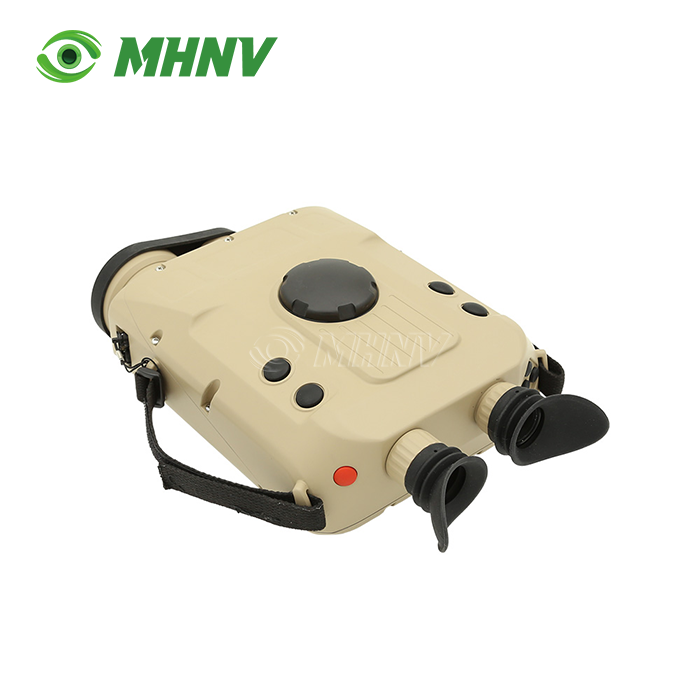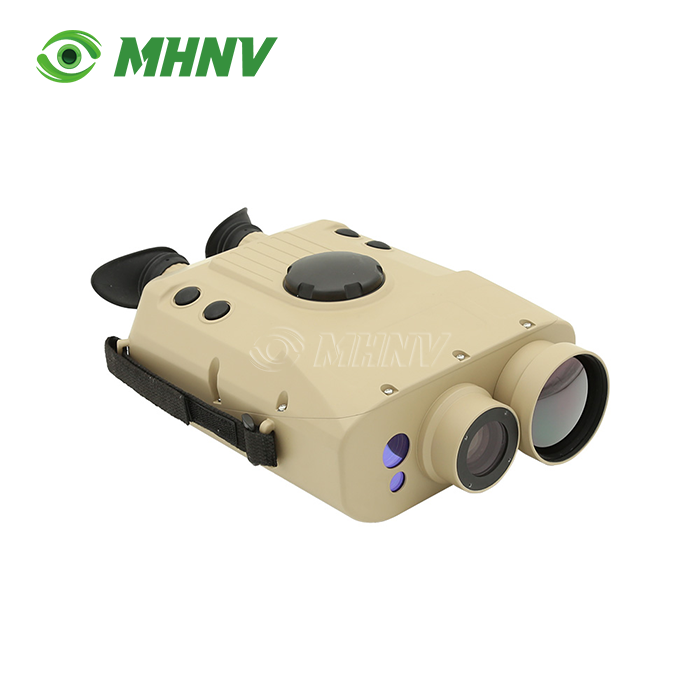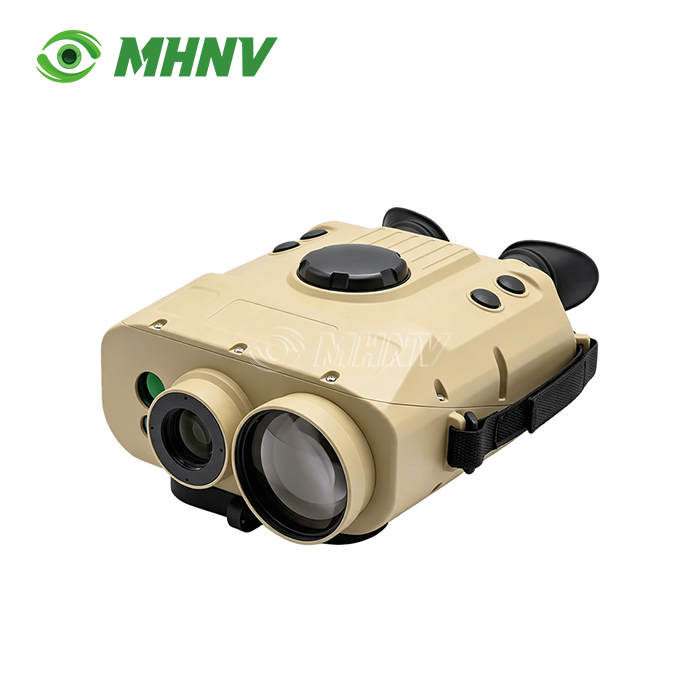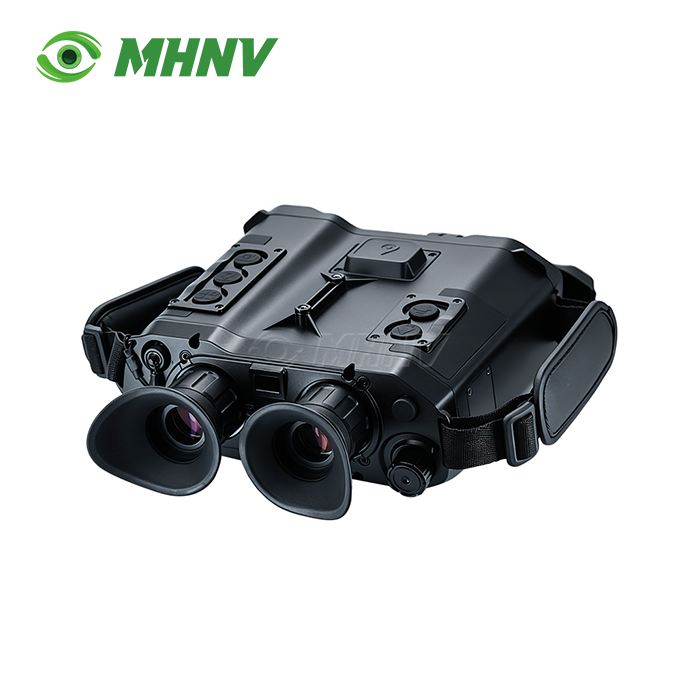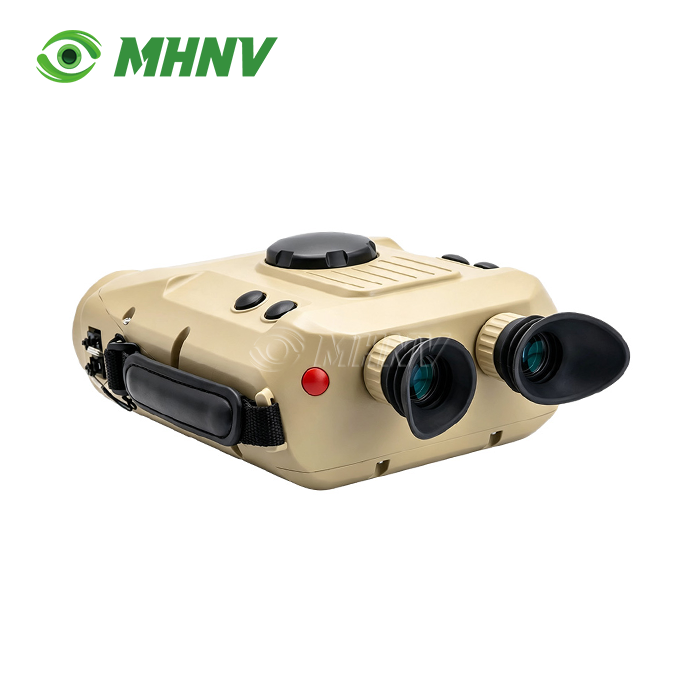
Cooled Infrared Multi-Function Binocular
Advanced Cooled Infrared Multi-Function Binocular: Long-Range Surveillance System with Integrated Positioning and Laser Ranging
Xi'an MH Electronics And Technology Co., Ltd. presents the MHNV® Cooled Infrared Multi-Function Binocular, a precision observation platform engineered for extended-range detection and identification. This system integrates a refrigerated thermal detector core with 640×512px resolution, achieving NETD ≤30mK thermal sensitivity for personnel detection at ≥6km and vehicle detection at ≥12km. The dual-channel architecture combines cooled infrared imaging with a 1920×1080px visible light sensor, while the built-in eye-safe laser rangefinder covers large targets up to 10km. Onboard GPS and electronic compass modules deliver real-time geo-location data, enabling coordinate output for target documentation. The binocular HD OLED display supports continuous 6-hour operation in IP68-sealed housing rated from -40°C to +55°C.
Why Cooled Technology Delivers Superior Long-Range Performance?
Detector noise limits conventional uncooled thermal cameras to ranges less than 3 km. The product uses a Stirling-cycle cryocooler to cool the infrared sensor to an operational temperature of around 77K. This technique decreases thermal noise floor to produce NETD ≤30mK, which enables detection of weak heat signatures in fog, darkness and moisture-rich atmospheres.
The cooled detector operates in the Mid-Wave Infrared band where water vapour in the atmosphere absorbs very little. This spectral window allows improved imaging at long distances compared to uncooled Long-Wave systems, especially in coastal and wet conditions where conventional detectors give inferior images.
Integrated Multi-Sensor Architecture for Single-Device Workflow
Field operators need to be able to quickly transition between wide-area scanning and target identification without changing equipment. The binoculars offer 1.0–4.2× optical zoom in both the thermal and visible channels, reducing the field-of-view from 7°×5.2° to 2.3°×1.7° on the thermal path and 1.8°×1.3° on the visible path.
It is Class 1M safe (eye safe) and has a range of up to 10km on large reflective targets and 8km on automobiles. The integrated GPS and digital magnetic compass modules determine target coordinates in real time, reducing the inaccuracies tied to manual plotting and speeding up intelligence reporting.
The imaging channels are fed into dual-eyepiece HD OLED displays with -4° to +4° diopter adjustment, supporting users with varying vision profiles for prolonged observation.
Technical Specifications
| Parameter | Specification |
|---|---|
| Infrared Channel | 640×512px, NETD ≤30mK, FOV 7°×5.2° to 2.3°×1.7° |
| Visible Channel | 1920×1080px Color CMOS, FOV 7°×5.2° to 1.8°×1.3° |
| Thermal Detection Range | Personnel ≥6km (detect), ≥3km (recognize); Vehicles ≥12km (detect), ≥6km (recognize) |
| Visible Detection Range | Personnel ≥7km (detect), ≥3.5km (recognize); Vehicles ≥12km (detect), ≥6km (recognize) |
| Laser Rangefinder | Up to 10km (large targets), 8km (vehicles), eye-safe Class 1M |
| Zoom Magnification | 1.0–4.2× continuous optical zoom |
| Display | Dual HD OLED eyepieces, -4° to +4° diopter adjustment |
| Positioning | Integrated GPS + Digital Magnetic Compass |
| Data Storage | ≥1,000 JPEG images or ≥4 hours video (onboard) |
| Battery Life | ≥6 hours continuous operation |
| Dimensions | ≤329×210×110mm |
| Weight | ≤3.4kg (batteries included) |
| Protection Rating | IP68 sealed housing |
| Operating Temperature | -40°C to +55°C |
| Storage Temperature | -55°C to +55°C |
Seven Core Advantages for Mission-Critical Operations
1. Refrigerated Detector Core Achieving NETD ≤30mK
Cryogenic cooling suppresses sensor noise, enabling detection of fractional temperature differences invisible to uncooled systems, even at extreme distances.
2. Dual-Channel Coverage for Day and Night
Thermal channel provides all-weather capability, while the visible channel captures high-resolution color detail under adequate lighting, eliminating the need to carry separate daytime optics.
3. 10km Laser Ranging on Large Targets
Confirmed distance measurement eliminates guesswork in terrain analysis and threat assessment, reducing reliance on external rangefinding equipment.
4. 1.0–4.2× Continuous Zoom
Operators transition seamlessly from wide situational scans to narrow target identification without losing lock on the subject.
5. Binocular OLED Display with Diopter Adjustment
Comfortable two-eye viewing reduces operator fatigue during extended surveillance missions, while -4° to +4° adjustment accommodates varied eyesight profiles.
6. 6-Hour Operation with Onboard Documentation
Extended battery life supports full-shift deployment. Onboard storage captures ≥1,000 images or ≥4 hours of video for evidence collection and debriefing.
7. IP68 Sealed Body at 3.4kg Total Weight
Compact form factor with full submersion protection and -40°C to +55°C rating ensures reliable operation across desert, arctic and maritime environments.
Application Scenarios Across Surveillance and Observation
Long-Range Border and Coastal Monitoring
The Cooled Infrared Multi-Function Binocular detects small vessels and personnel movement at distances up to 15km over water, where Mid-Wave Infrared imaging maintains clarity through humid atmospheric layers.
Forward Observation and Coordinate Reporting
Integrated GPS and compass enable rapid target location designation. Observers transmit precise geo-referenced data to command centers, accelerating intelligence cycles.
Search and Rescue in Harsh Terrain
High thermal sensitivity reveals heat signatures through dense foliage, across valleys and in complete darkness, significantly reducing search time during life-critical operations.
Infrastructure Protection and Perimeter Security
Extended detection ranges allow single observation posts to cover wide perimeters, reducing manpower requirements while maintaining continuous threat awareness.

OEM and ODM Customization for Bulk Procurement
MHNV® operates full-stack engineering and manufacturing, enabling comprehensive customization:
Housing and branding: Logo engraving, color finish selection, packaging design
Reticle and overlay: Custom aiming marks, unit labeling, language localization
Firmware configuration: Gain curves, coordinate formats, video output protocols
Accessory integration: Tripod mounts, remote displays, C4I interface modules
Small MOQ trial orders available for product evaluation before large-scale commitment. Technical consultation and compliance documentation provided for all B2B buyers.

Quality Assurance and Environmental Testing
Every product undergoes multi-stage validation:
Thermal performance: NETD, MRTD measurement under controlled lab conditions
Boresight alignment: Thermal axis, visible axis and laser axis parallelism verification
Cooler reliability: Cool-down time testing and MTTF evaluation
Environmental durability: Vibration, shock, humidity and thermal cycling per international standards
Ingress protection: IP68 submersion testing to 1.5m depth
Units ship with serialized QC data sheets documenting sensor performance and calibration certificates.

FAQ
Q: Why use a cooled system instead of uncooled thermal binoculars for long range observation?
A: Cryogenic operation of a cooled detector reduces the noise floor to NETD ≤30mK levels, thus achieving thermal sensitivity up to ten times better than that of uncooled sensors while operating in the Mid-Wave Infrared band, where air moisture causes minor signal attenuation. The combination allows detection of delicate heat signatures at ranges exceeding 10km when uncooled Long-Wave systems provide only noise-dominated imaging, making cooled technology essential for coastal surveillance, high altitude observation and long-range target acquisition.
Q: What is the projected lifetime of the integrated Stirling cooler?
A: The usual duty cycle for a modern Stirling-cycle cryocooler is 8000–10,000 hours of continuous operation before regular maintenance intervals, corresponding to several years of field deployment. The cooler reaches operating temperature in 5-8 minutes after power-on for fast mission readiness.
Q: Is the video from the binocular output integrated into command and control networks?
A: Yes, the device can deliver real-time video streaming via analogue PAL/NTSC outputs, digital Ethernet or USB-C interfaces to remote monitoring stations, recording systems and C4I networks. Data from GPS and compass modules can be overlaid on video feeds or sent as separate metadata.
Q: What happens with high intensity heat sources like solar reflection?
A: Advanced anti-blooming algorithms and specific optical coatings protect the refrigerated focal plane array from saturation when monitoring near high temperature sources. Automatic gain control regulates the sensor response to retain acceptable picture for dynamic scenarios with great thermal contrast.
Q: Is the integrated laser rangefinder safe for use near personnel?
A: The eye-safe laser is a laser that runs at 1540nm or 1550nm wavelength and is classified as Class 1 or Class 1M under international laser safety regulations. Training exercises or operational use at this wavelength and power level do not pose a hazard to unprotected eyes, even in the case of direct beam exposure.
Contact MHNV® for Technical Consultation
Ready to evaluate the Cooled Infrared Multi-Function Binocular for your surveillance project? Contact our engineering team at sarah@mh-elec.com for technical specifications, customization options and sample procurement.
YOU MAY LIKE