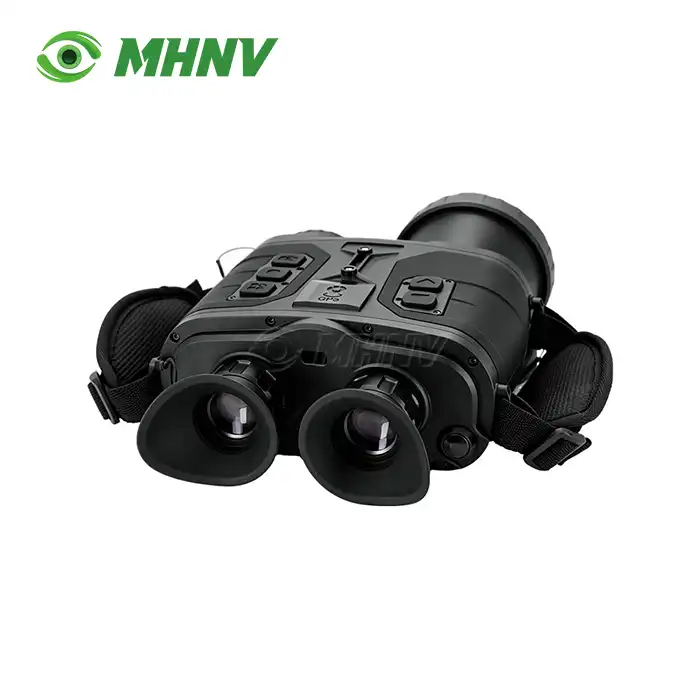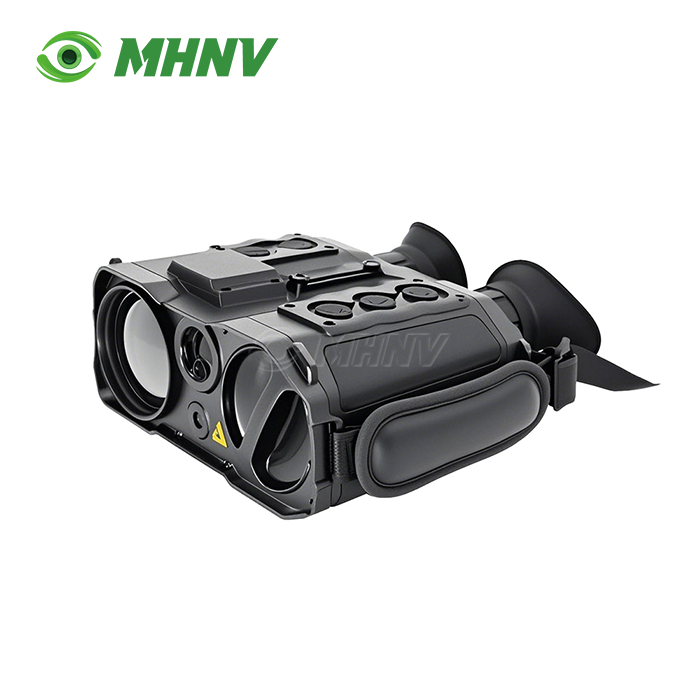
Long-Range Multifunction Infrared Binocular
Long-Range Multifunction Infrared Binocular – Advanced Thermal Observation System with Integrated GPS & Laser Rangefinding
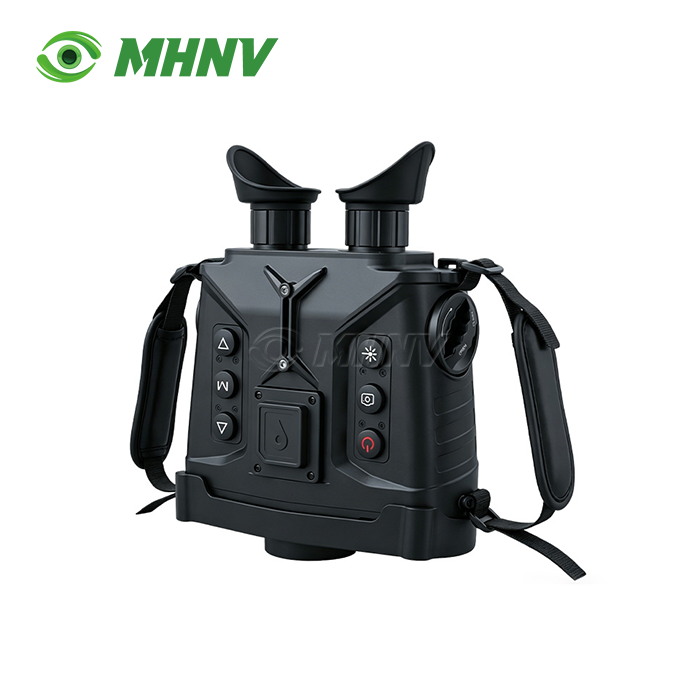
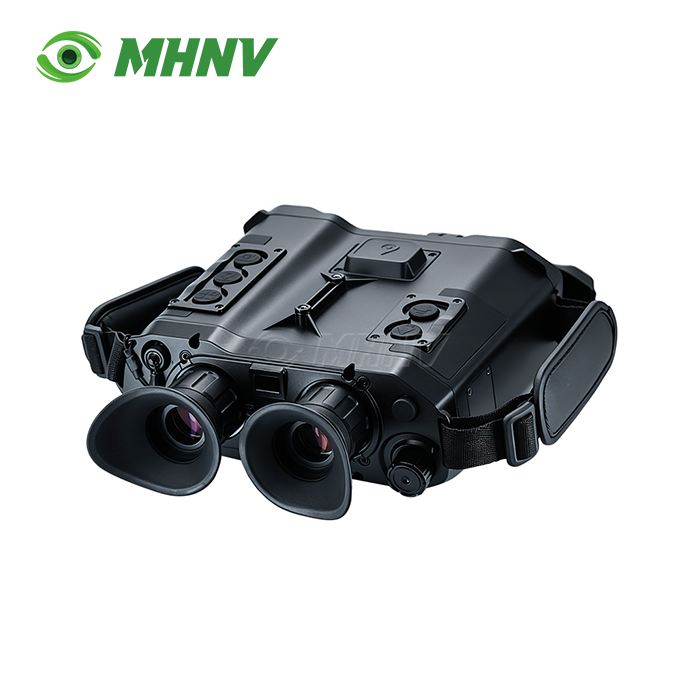
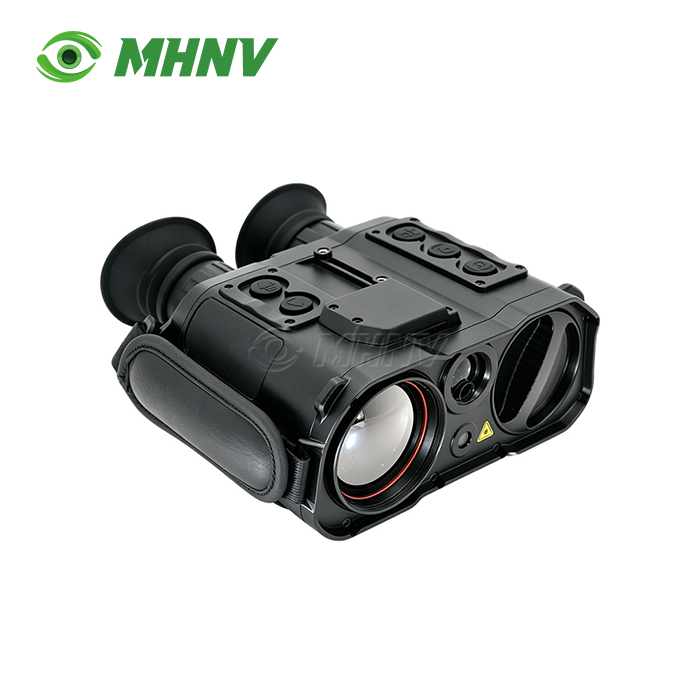
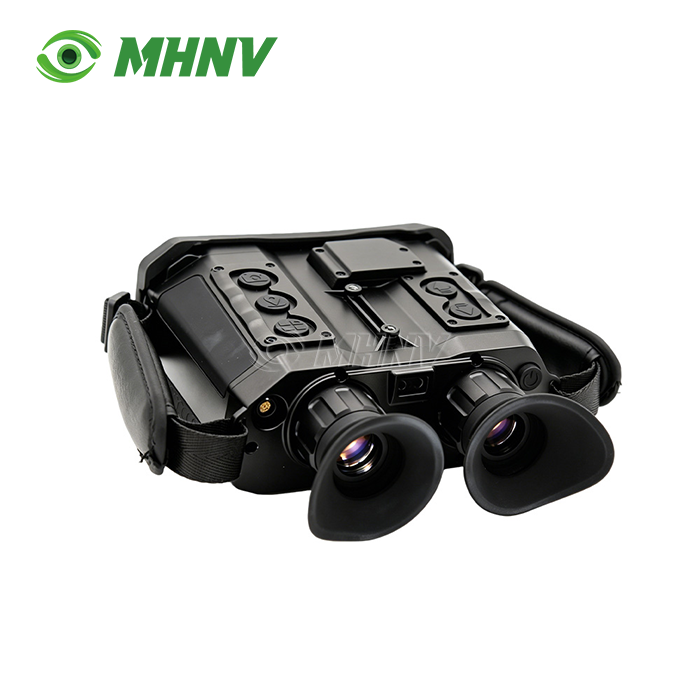
Xi'an MH Electronics And Technology Co., Ltd. announces the release of its Long-Range Multifunction Infrared Binocular targeting enterprise users for professional surveillance, search and long-range target acquisition. The system is a compact portable system weighing 1.4kg which combines a 640×512px heat sensor, 905nm laser rangefinder (10m–1.5km), electronic compass (1° azimuth accuracy), multi-constellation GNSS, 520nm visible laser indicator and inbuilt ballistic solver. The gadget provides stable all-weather performance where ambient light and human visual observation are inadequate, and works continuously for ≥8 hours at 25°C with IP67 classification over -40°C to +60°C.
All-Weather Thermal Detection with Integrated Rangefinding
The gadget combines high resolution thermal imaging and laser distance measurement into one portable platform. It uses a 640×512 uncooled focal plane array with a 12μm pixel pitch to detect thermal signatures in darkness, fog, rain and smoke. The built-in 905nm laser rangefinder offers accurate ranging from 10 meters to 1.5 km, allowing for instant coordinate determination without the use of additional devices.
Multi-constellation GNSS (BeiDou, GPS, GLONASS) can provide stable positioning in any geographic region. The electronic compass provides 1° RMS azimuth precision and 0.5° RMS pitch/roll accuracy for dependable orienting during long field activities.
Key Technical Specifications
| Parameter | Specification |
|---|---|
| Thermal Sensor | 640×512px, 12μm pixel pitch |
| Field of View (Thermal) | 8.8°×7.0° |
| Laser Rangefinder | 905nm, 10m–1.5km range |
| Visible Laser Indicator | 520nm, 30mW |
| Electronic Compass | 1° RMS azimuth, 0.5° RMS pitch/roll |
| GNSS Positioning | BeiDou + GPS + GLONASS |
| Ballistic Profiles | 267 customizable projectile libraries |
| Onboard Storage | 10,000 images / 4 hours video |
| Continuous Operation | ≥8 hours @ 25°C |
| Operating Temperature | -40°C to +60°C |
| Ingress Protection | IP67 (dustproof & waterproof) |
| Weight (with battery) | 1.4kg |
| Dimensions | 185×165×75mm |
| Interfaces | DC, USB, PAL, RS232 |
| Accessory Mounting | Picatinny rail |
Core Performance Advantages
Thermal Core High Resolution
The 640×512 sensor with 12μm pitch produces crisp thermal photography in absolute darkness and inclement weather. Target detection is still reliable in fog, rain or smoke that obscures visible-light optics.
Multi-Sensor Integrated System
It packs a laser rangefinder, electronic compass, GNSS receiver and weather sensor into a single 1.4kg instrument. It eliminates the logistical strain of carrying numerous different devices on extended excursions.
905nm Laser Range Finder 1.5km
The reliable distance measurement from 10m to 1500m delivers real-time range information to make possible accurate target coordinate determination under time pressure in the field.
267-Profile Ballistic Calculation Engine
It has 267 customisable projectile profiles with real time meteorological sensors and wind deflection correction in the onboard solver. You cut down on human mistake in calculations when you are under tough conditions.
Multi-Constellation GNSS Positioning
The simultaneous reception of BeiDou, GPS and GLONASS enables stable positioning in all geographic regions, even where single constellation signals are impaired by topography or atmospheric interference.
8 Hours Continues Working Time
The large-capacity battery can power the whole system for more than 8 h at 25°C and is suitable for all-day field deployment without swapping batteries or taking an external power source.
Rugged Environmental Protection
IP67 Dustproof & Waterproof Construction
Dust-tight housing and waterproof sealing withstand submersion. The Long-Range Multifunction Infrared Binocular maintains full functionality in extreme cold, high heat, and heavy precipitation.
Wide Operating Temperature Range
Designed to operate from -40°C to +60°C, the system performs reliably in Arctic environments and tropical regions without compromising sensor accuracy or battery performance.
Shock and Vibration Resistance
Structural design follows strict environmental stress screening protocols. Units undergo high-impact shock tests (up to 500g) and temperature cycling to ensure long-term durability in demanding outdoor environments.
Flexible System Integration
Expandable Picatinny Rail
The accessory rail supports flexible hardware mounting, enabling you to attach auxiliary optics, illuminators, or mounting brackets for vehicle integration and tripod deployment.
Multi-Interface Output
DC, USB, PAL, and RS232 ports enable direct connection to external displays, video recorders, and communication systems. You integrate the product into existing command-and-control infrastructure without additional adapters.
Onboard Media Capture
Built-in storage supports up to 10,000 images or 4 hours of video. Photo and video recording capabilities support documentation, post-mission evidence review, and intelligence analysis workflows.
OEM & ODM Customization Services
Bulk orders? MHNV® offers full OEM/ODM customisation. You can change the custom branding, UI language, reticle patterns, firmware logic, ballistic profile libraries, and housing materials. You get complete engineering support including optical design, firmware development and mechanical assembly.
Low MOQ means you can order small quantities to try before you buy a large quantity. MHNV® offers dedicated pre-sales engineering consultation, export compliance documentation, and international logistics coordination for all B2B customers.


FAQ
Q: How does atmospheric humidity affect the range of the product?
A: High moisture in the air absorbs long-wave infrared radiation in the 8-14μm spectrum, reducing effective detection range by as much as 20-30% in tropical environments with >90% relative humidity. However, advanced units compensate through optimised germanium window coatings and adaptive gain-control algorithms that enhance signal processing in high-attenuation conditions. The narrow field-of-view optics and high-sensitivity NETD <30mK sensors, which amplify faint thermal signatures, ensure that real world performance is still suitable for target recognition at 3km+ in heavy fog.
Q: Why is 12μm sensor better than the 17μm sensor?
A: The 12μm pixel pitch enables increased optical magnification with a smaller lens aperture, significantly reducing the overall weight and volume of the binocular, while still providing long detection ranges due to improved spatial resolution and lower chromatic aberration, allowing for compact handheld designs under 1.5kg without sacrificing image clarity at longer distances. The 12μm sensors also offer greater frame rates and lower power consumption, improving battery life during continuous operation in the field.
Q: Is the Laser Range Finder eye-safe?
A: Yes, the laser in high-end rangefinders in multi-purpose binoculars is Class 1M 905nm or 1550nm Erbium glass laser and the divergence angle is such that the laser beam will be projected at safe power densities at all operational distances to ensure full compliance with IEC 60825-1 eye-safety standards. The 1550nm wavelength is invisible to the human eye and Gen 2+/Gen 3 nite vision devices, enabling covert ranging without giving away your position to the target. The pulse energy and repetition rate are adjusted in such a way that the risk of retinal injury is excluded even for prolonged exposure.
Q: How long does the internal battery survive in the cold?
A: Most product units utilise high capacity 18650 lithium-ion batteries or external defence-standard battery packs for 6-10 hours of continuous operation at 25°C; in extreme cold (-40°C), internal heating circuits preheat the battery compartment during startup and capacity retention is greater than 60% with advanced thermal management systems and low-temperature rated cells. The external DC input ports allow you to plug in vehicle power or auxiliary battery packs for extended trips with no down time.
Q: Can I upgrade the firmware to improve target recognition?
A: Yes, modern product systems support OTA or USB-C firmware updates enabling the integration of AI-based target classification algorithms, enhanced dual-spectrum fusion logic, and updated ballistic calculation libraries as new projectile data is made available; MHNV® offers lifetime firmware support for OEM customers including custom algorithm development for specific operational requirements. Typically, upgrades increase the detection range, decrease the false-alarm rates and add new user-interface capabilities without changing the hardware.

Contact MHNV® for Volume Orders & Custom Solutions
Ready to integrate the Long-Range Multifunction Infrared Binocular into your operational workflow? Contact our engineering team for technical consultation, product demonstration, and volume pricing. Email: sarah@mh-elec.com
YOU MAY LIKE