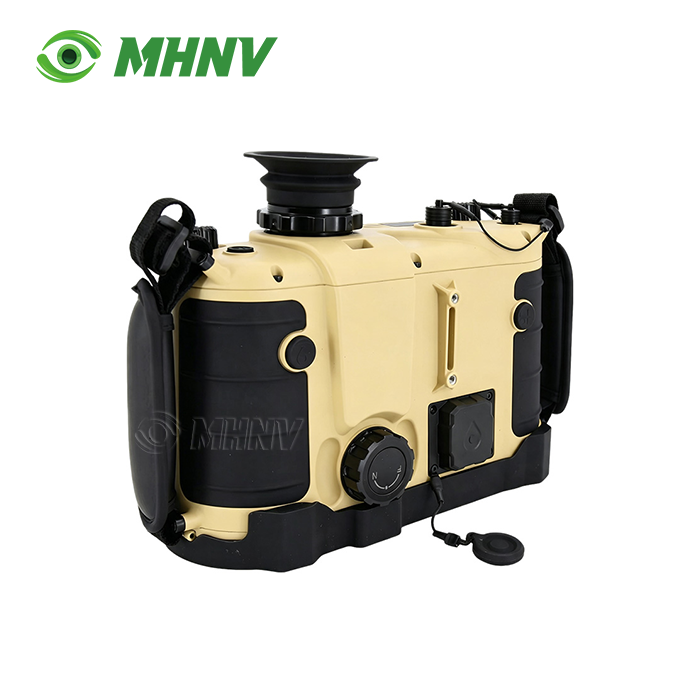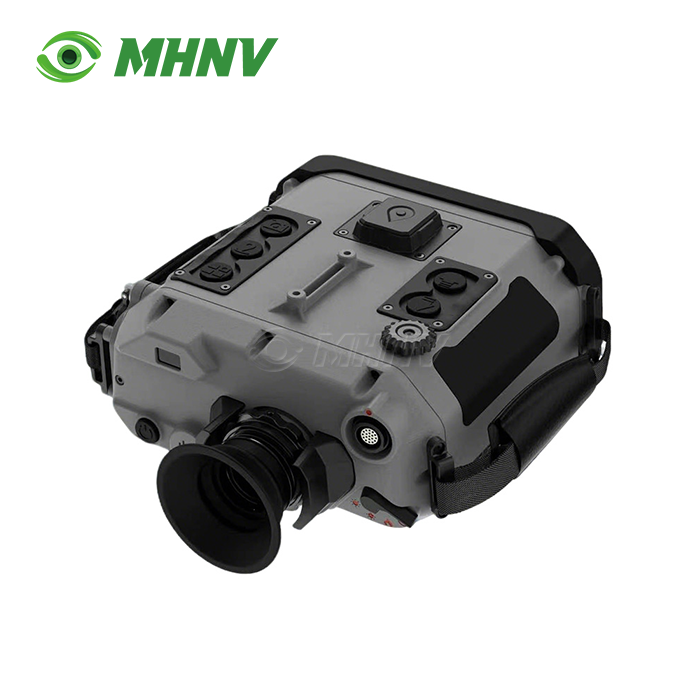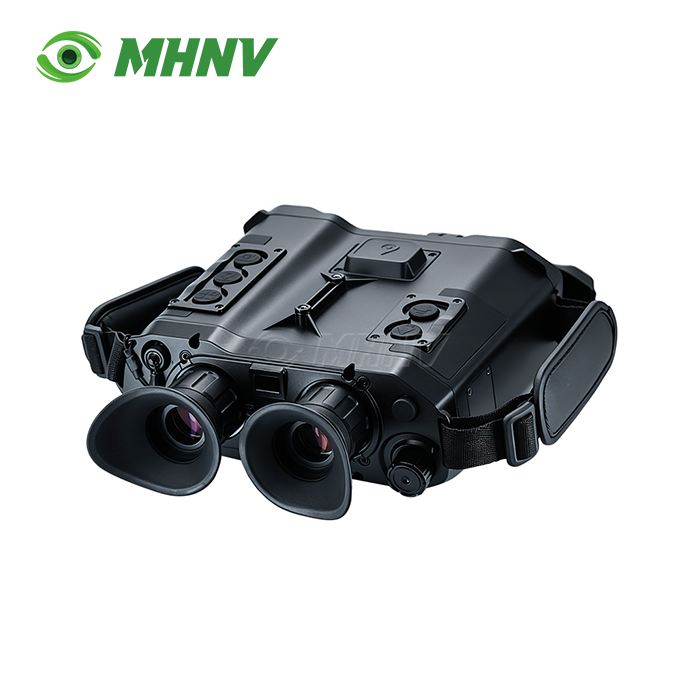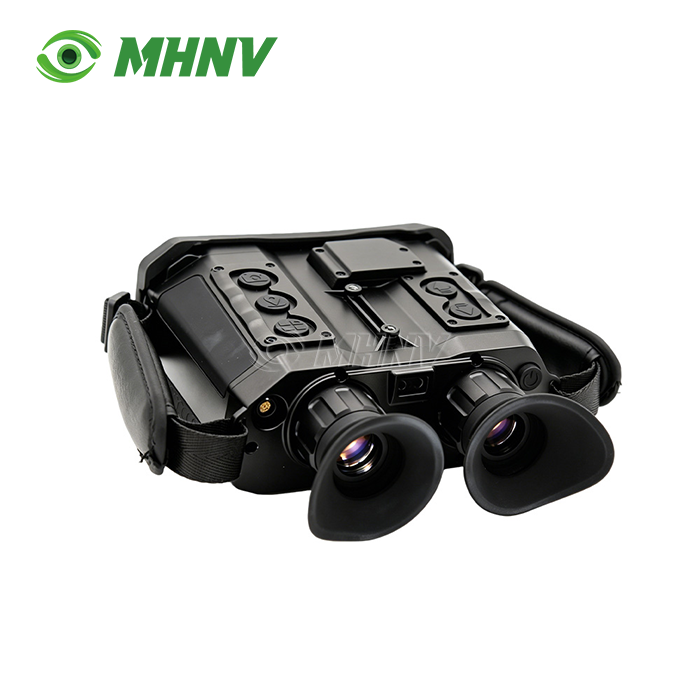
Long Range Thermal Binoculars
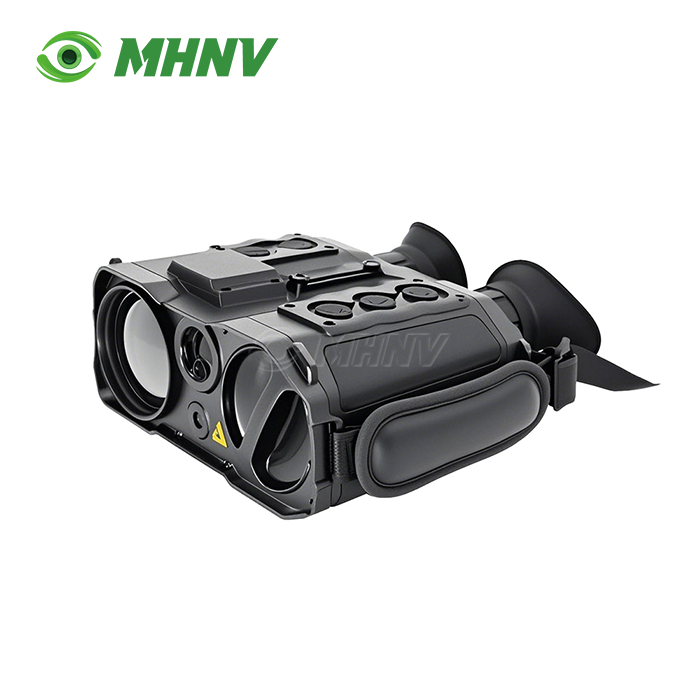
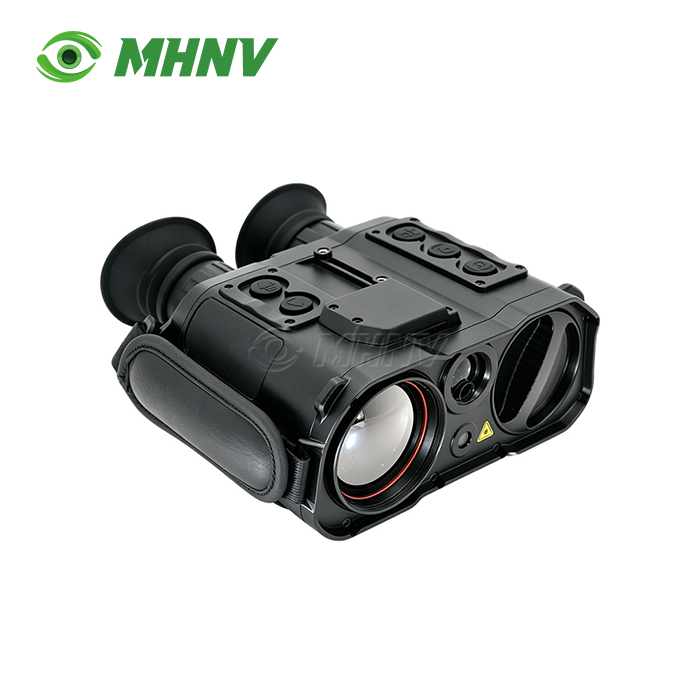
Long Range Thermal Binoculars with Integrated Laser Rangefinder & Multi-Sensor Fusion System – Professional Grade Solution
MHNV® Enterprise-class Long Range Thermal Binoculars are designed for long-range observation and precise target acquisition. It is built around a high-resolution 640×512 thermal sensor with a 12μm pixel pitch and packs a 905nm laser rangefinder (10m–1.5km), multi-constellation GNSS, electronic compass, visible laser indicator and inbuilt ballistic solver into a single 1.4kg handheld platform. It delivers 8 hours of continuous operation, IP67 protection from -40°C to +60°C, and multi-interface connectivity (DC/USB/PAL/RS232), ensuring dependable all-weather detection for border security, SAR operations and critical infrastructure monitoring.
Advanced Thermal Imaging Core for All-Weather Detection
Clear target imaging spans an 8.8°×7.0° field of view with a 640×512 resolution thermal sensor and a 12μm pixel pitch. Unlike visible-light systems, these products see heat signatures through utter darkness, fog, rain and smoke – no ambient light required. The uncooled vanadium oxide (VOx) microbolometer has good stability and low power consumption.
Operators develop good situational awareness in degraded conditions. The high frame rates of the high definition display provide fluid thermal maps that help speedy target classification at long ranges.
Integrated Multi-Sensor Suite for Precision Targeting
Laser Rangefinder with Target Designator
The 905nm laser rangefinder built-in can detect distances from 10 to 1,500 meters accurately. It has a 520nm 30mW visible laser pointer to point out a subject for coordinated observation or guiding. This is useful in multi-operator situations to make communication easier.
GNSS & Electronic Compass
Multi-constellation positioning (BeiDou, GPS, GLONASS) provides stable coordinate acquisition no matter where you are. The electronic compass measures azimuth, pitch and roll with 1° RMS precision in azimuth and 0.5° RMS accuracy in the pitch and roll, even in areas of magnetic interference.
Onboard Ballistic Computer
267 customisable projectile profiles, with built-in solver. Real time meteorological sensors (temperature, pressure, humidity) and wind deflection correction eliminate computation mistakes. Ballistic data can be uploaded by users using the firmware interface.
Technical Specifications
| Parameter | Specification |
|---|---|
| Thermal Sensor | 640×512 px, 12μm pixel pitch, VOx uncooled |
| Field of View | 8.8°×7.0° |
| Laser Rangefinder | 905nm, 10m–1,500m range |
| Laser Indicator | 520nm, 30mW visible beam |
| Electronic Compass | Azimuth ±1° RMS, Pitch/Roll ±0.5° RMS |
| GNSS | BeiDou + GPS + GLONASS |
| Ballistic Library | 267 profiles (customizable) |
| Onboard Storage | 10,000 images / 4 hours video |
| Interfaces | DC, USB, PAL, RS232 |
| Battery Life | ≥8 hours @ 25°C |
| Operating Temperature | -40°C to +60°C |
| Ingress Protection | IP67 (dustproof + waterproof) |
| Weight | 1.4 kg (with battery) |
| Dimensions | 185×165×75 mm |
| Accessory Rail | Picatinny standard |
Professional-Grade Construction & Reliability
IP67 Protection for Tough Environments
It is housed in a dust-proof and immersion-proof casing, and is equally effective in rain, snow and dusty conditions. Temperature range (-40oC to +60oC) ensures reliable performance in Arctic cold and desert heat.
Robust Mechanical Design
Its tiny size is 18516575mm and is made with sturdy materials for field use. An integrated Picatinny rail enables for the attachment of attachments or the connection to tripod systems. Weighing in at a total of 1.4kg, it can be operated handed and won't cause operator fatigue during long operations.
8-Hour Continuous Operation
The large-capacity battery means it can be used all day long. Removable design for quick field replacement for continuous 24 hour operations.
Integrated Recording & Connectivity
On-board Media Capture
Internal storage stores up to 10,000 still photos or 4 hours of video. Recorded data is useful for intelligence documentation, evidence gathering and post mission analysis.
Multi-Interface System Integration
DC and USB, PAL video output, RS232 serial connections allow direct connection to external displays, recording devices or command-and-control networks. This versatility allows incorporation into vehicle-mounted devices or stationary observation posts.
Key Application Scenarios
Border & Coastal Surveillance
Long Range Thermal Binoculars enable detection of human-sized targets at extended distances and maritime vessels across open water. Operators maintain persistent perimeter security in zero-visibility conditions, preventing unauthorized crossings.
Search & Rescue Operations
SAR teams identify heat signatures of survivors against cold backgrounds. The thermal sensor penetrates light foliage and atmospheric haze, accelerating victim location in mountainous or maritime terrain.
Critical Infrastructure Monitoring
Security professionals monitor oil pipelines, power grids, and industrial facilities across vast unlit areas. Early detection of unauthorized intrusions or equipment thermal anomalies reduces response time and mitigates risk.

OEM & ODM Customization Capabilities
MHNV® offers comprehensive customization for B2B procurement:
- Firmware Modification: Custom reticle design, user interface language, gain curve adjustment
- Branding: Logo engraving, custom packaging, multilingual user manuals
- Hardware Integration: Specialized accessory mounts, extended battery packs, custom connector arrays
- Ballistic Library: Client-specific ammunition profiles loaded at factory
Trial orders with low MOQ are available for qualification testing before large-scale deployment.

FAQ
Q: What is the difference between detection, recognition and identification ranges for the products?
A: Johnson's Criteria states that detection is the ability to see a thermal signature as a visible heat source on the display. Recognition allows an operator to classify what type of target he/she is seeing, for example, a person versus a vehicle. Identification provides enough detail in the image to categorise specific features, i.e., vehicle model or individual characteristics. As the sensor resolution is increased from one level to the next, the effective operational range is often reduced by around one-third to one-half depending on air conditions and the thermal contrast of the target.
Q: Why is a high frame rate important for long range thermal surveillance applications?
A: High frame rates (usually 50Hz or more) get rid of motion blur and visual tearing while panning across vast fields of vision or tracking fast moving targets. The low frame rates introduce a visible gap between the movement of the target and the display refresh rate, degrading the operator's situational awareness and increasing the chance of losing the target in dynamic observation circumstances typical for border patrol and SAR missions.
Q: Are these binocs able to pick up heat signatures through regular glass or windows?
A: No. Long Wave Infrared (LWIR) radiation, which thermal sensors detect, is blocked by standard silicate glass commonly used in windows and vehicle windshields. The sensor is intended to sense heat radiated from external surfaces. For monitoring an inside space, either a direct line of sight to the surface being viewed must be provided, or specialised infrared-transparent glass must be fitted.
Q: What is NUC and how does it effect thermal image quality?
A: Non-Uniformity Correction is an automatic calibration that corrects for pixel-to-pixel differences in the sensitivity of the sensor array. The NUC recalibrates the sensor when internal temperatures change while in use, eliminating fixed-pattern noise and digital artefacts, and providing you with a sharp thermal image without manual adjustment. Good devices can boot in less than a second, with minimal disruption to the user.
Q: What is the advantage of the 12μm pixel pitch versus the bigger 17μm sensors?
A: A smaller 12μm pixel pitch enables higher spatial resolution and greater image detail at equivalent magnification levels. This provides the possibility to achieve longer effective detection ranges and greater target classification capability without requiring correspondingly bigger objective lenses, thereby decreasing total system size and weight, a crucial benefit for handheld portable thermal optics deployed in field conditions.

Contact Us
For detailed technical specifications, OEM customization inquiries, or to request a Long Range Thermal Binoculars product demonstration, contact our B2B sales team at sarah@mh-elec.com.
YOU MAY LIKE