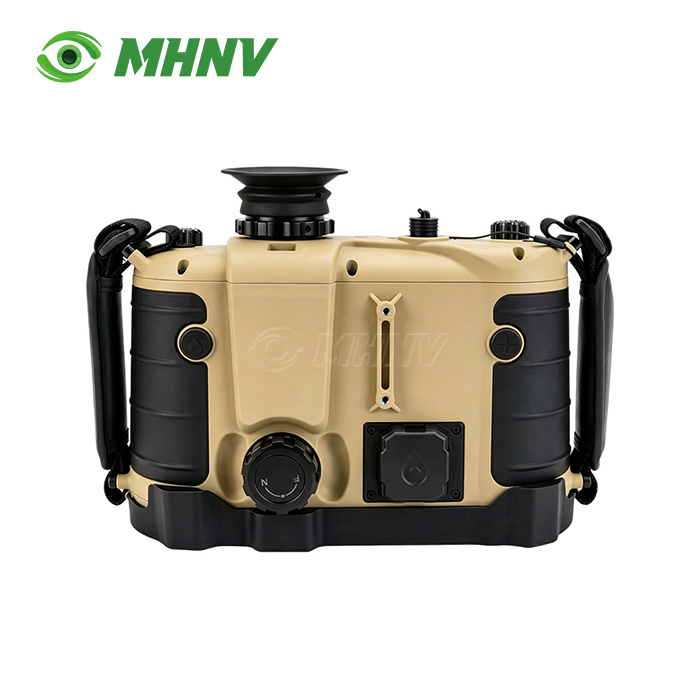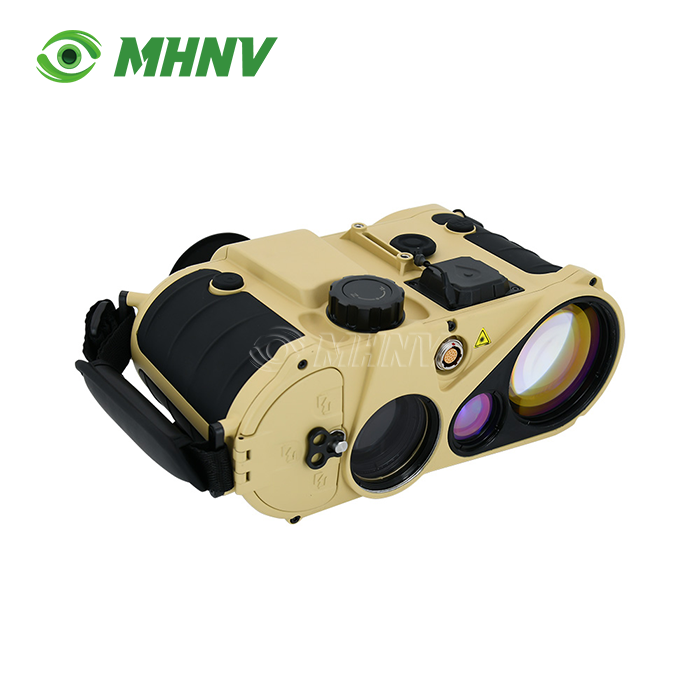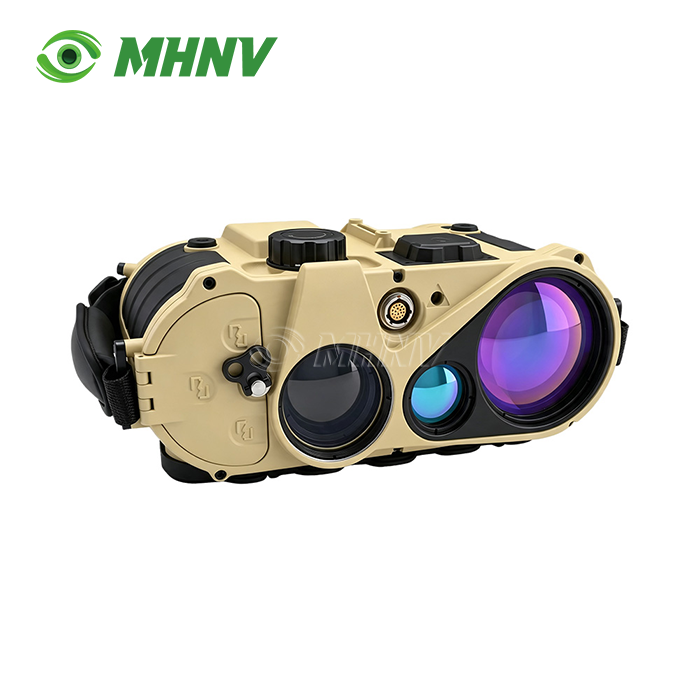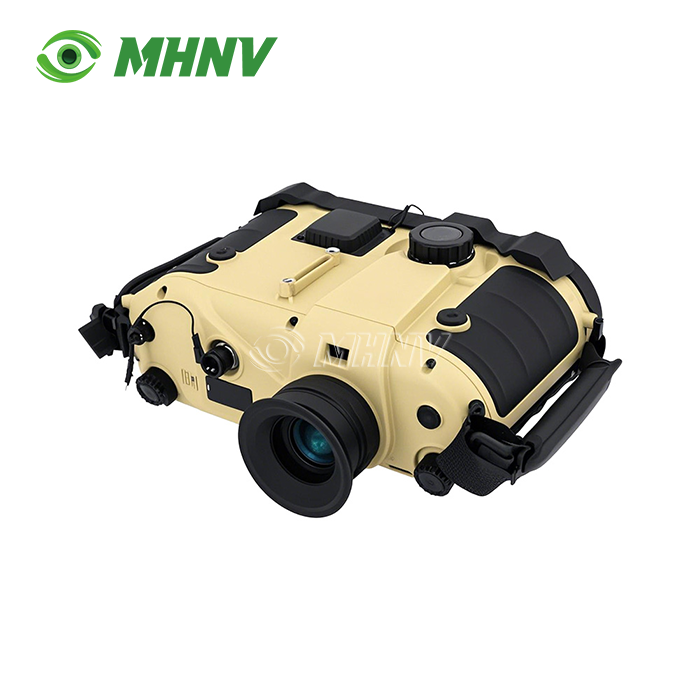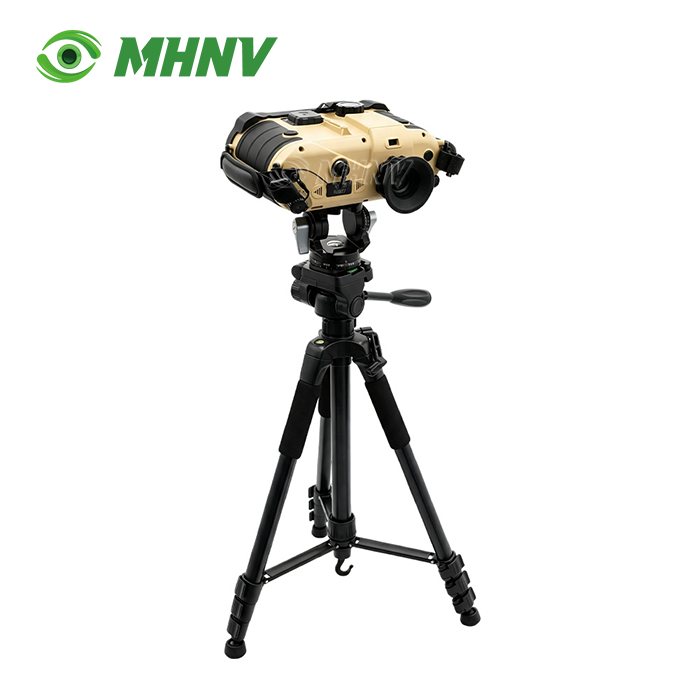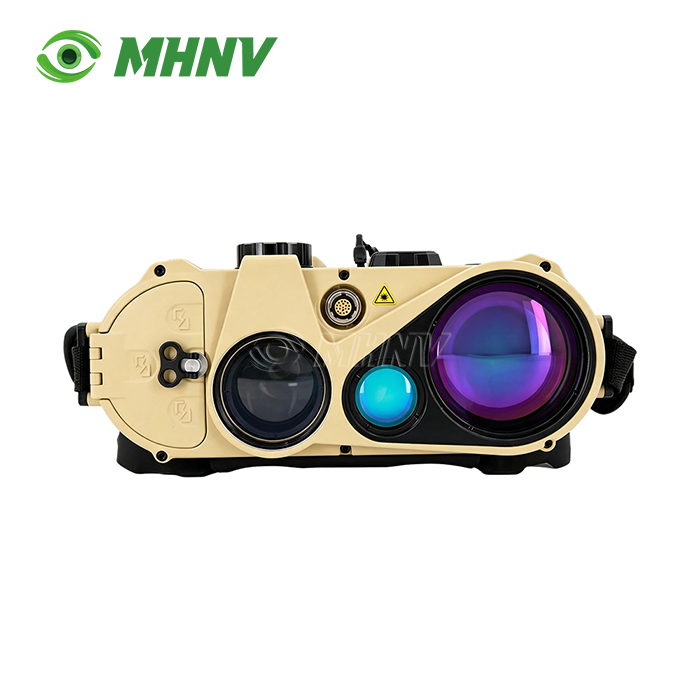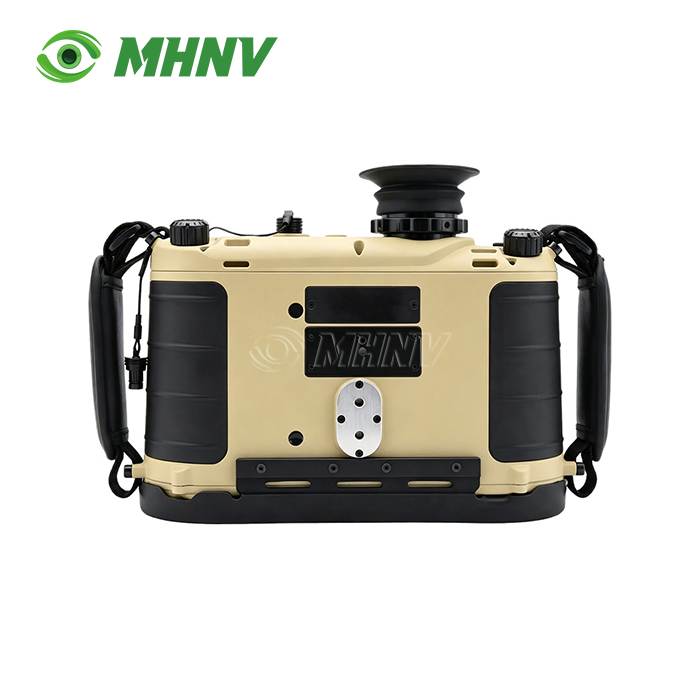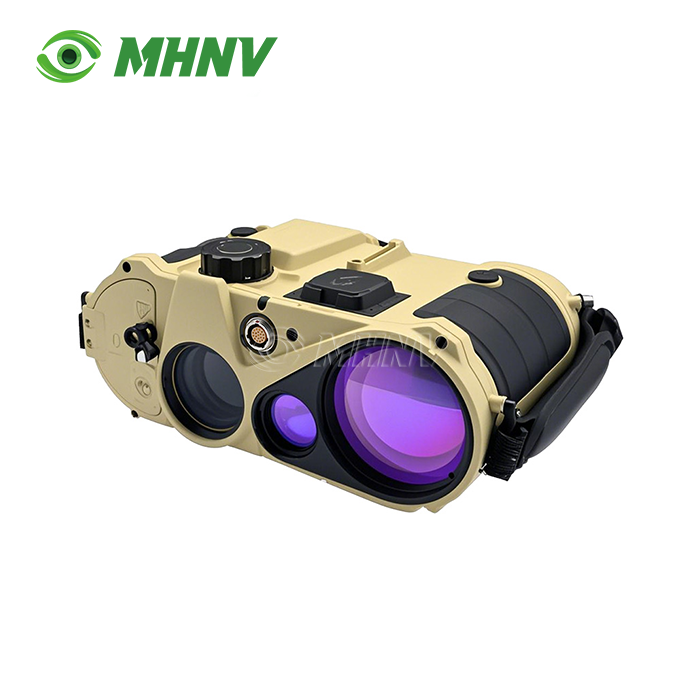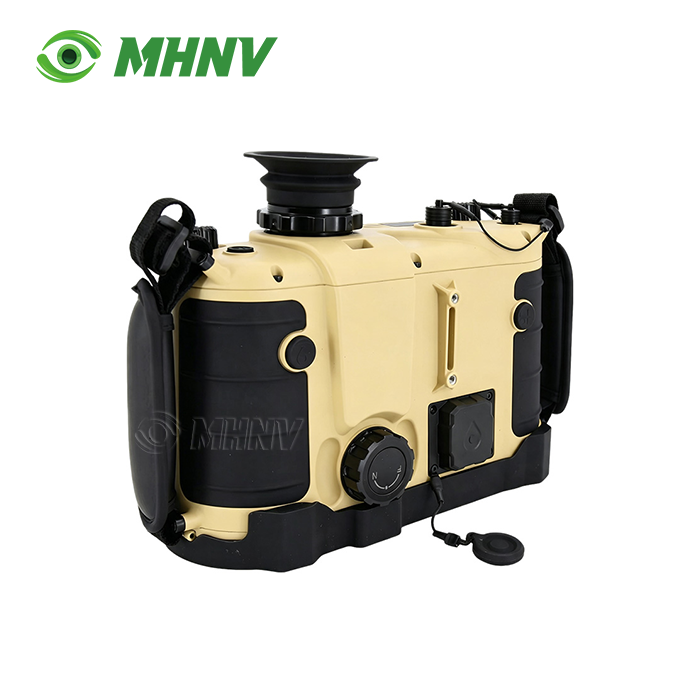
Laser Rangefinder Binocular
Professional Long-Range Laser Rangefinder Binocular with 23km Target Acquisition and Sub-Mil Precision for Observation Operations
Xi'an MH Electronics And Technology Co., Ltd. offers the MHNV MH-OL20, a precise Laser Rangefinder Binocular designed for ultra-long-range target acquisition. The handheld device combines 7× direct-view optics with a 1535nm Class 1 eye-safe laser, providing 23km range on buildings and 9km range on vehicles. It weighs only 732g, and has 0.06° azimuth accuracy after map correction, ±3m self-positioning and ≤20m target grid accuracy. Professional-grade performance for coastal observation, border surveillance and long-range spotting is packed into a compact IP67-sealed body certified from −40°C to +60°C, with an inbuilt ballistic calculator, RS232 data output and a 10-hour runtime.
Ultra-Long-Range Capability in a Compact Handheld Design
The MH-OL20 employs a 1535nm Class 1 eye-safe laser, providing 23km range on building targets and 9km on vehicles. This wavelength enables continued operation in the vicinity of inhabited areas and reflective coastal surfaces without visual hazard warnings.
The 732g weight and 190×240×100mm footprint fit in ordinary patrol pouches. Coastal watch teams on shipping lanes and border observers on cross-border activity enjoy class-leading range to weight performance, removing the requirement for 3-5kg tripod-mounted observation systems.
Direct-view 7× optics allow observation of the actual scene with zero delay and reticle-based rough range in the event of electronics failure, safeguarding mission important observation capability during electronic warfare or power failures.
Sub-Mil Accuracy Stack for Long-Distance Grid Precision
Azimuth accuracy after map correction is 0.06° (1 mil), pitch and roll are held to 0.1° (2 mil). At 15km range, this is less than 20m circle error probable, meeting first round artillery rectification and drone strike coordination needs.
The self-positioning accuracy of ±3m and target positioning ≤20m enable long-baseline applications where consumer-grade binoculars are useless beyond 3km. The multi-target mode measures 2 targets concurrently, allowing for precise separation for artillery fall-of-shot modification and spacing analysis of convoys.
Onboard ballistic calculator takes custom munition data and real-time weather input. The RS232 interface delivers compass, range, GPS, target grid and ballistic solutions straight to command computers, drone ground stations and battle-management systems, shortening observation-to-fire-mission durations from minutes to seconds.
Technical Specifications
| Parameter | Specification |
|---|---|
| Model | MHNV MH-OL20 |
| Architecture | Handheld direct-view binocular |
| Optical Magnification | 7× ±0.3× |
| Laser Wavelength | 1535nm eye-safe |
| Laser Class | Class 1 eye-safe |
| Max Range (Building) | ≥23km |
| Max Range (Vehicle) | ≥9km |
| Minimum Range | 50m |
| Azimuth Accuracy | ≤0.3° (5 mil) |
| Azimuth Accuracy (Corrected) | ≤0.06° (1 mil) |
| Pitch/Roll Accuracy | ≤0.1° (2 mil) |
| Self-Positioning Accuracy | ±3m |
| Target Positioning Accuracy | ≤20m |
| Multi-Target Mode | Supported |
| Ballistic Calculator | Supported with real-time weather |
| Data Interface | RS232 full data transmission |
| Digital Image Output | Scalable |
| Dimensions | 190×240×100mm |
| Weight | 732g |
| Runtime | ≥10 hours continuous |
| Operating Temperature | −40°C to +60°C |
| IP Rating | IP67 |
10-Hour Continuous Runtime with Command-Post Integration
Internal power gives ≥10 hours continuous operation, sufficient for entire 8-hour shifts with reserve. Field observers remain operationally capable for extended missions without the overhead of battery logistics.
RS232 output for real-time data streaming to command laptops and battle-management systems. Instead of voice call-out and paper transcription, targeting data is sent to headquarters, thus eliminating human error from time-sensitive coordination.
Digital picture interface providing scalable output for drone integration and remote viewing applications. Different types of ammo are supported in custom ballistic data entering . Map placement correction allows for better accuracy over different terrain.

IP67 All-Climate Rugged Construction
Full immersion, dust sealed, IP67 compliant. The −40°C to +60°C (100°C) operational envelope supports arctic border patrol, desert armour observation, tropical littoral surveillance, and coastal salt-spray situations without performance derating.
The sealed design protects internal optics and electronics from humidity, sand ingress and heat damage. This eliminates the need for climate-specific variations of the device, reducing fleet-wide warranty return rates and total ownership costs across multi-environment deployments.
The 732g weight and compact size maintain portability without sacrificing structural quality. The handheld operation is pleasant for long periods of observation and reduces operator fatigue compared to the heavier tripod-mounted options.
MHNV Full-Stack Manufacturing Advantage
Xi'an MH Electronics And Technology Co., Ltd. Has full vertical integration from optical design to final assembly. With our multi-disciplinary engineering team spanning algorithm creation, FPGA processing, embedded firmware, mechanical design and precision assembly, we are able to provide quicker development cycles and direct engineer-to-customer communication.

Each Laser Rangefinder Binocular undergoes thorough quality verification in class-10,000 clean rooms, SMT production lines and specialised metrology laboratories. ISO 9001:2015 , CE , ROHS , FCC compliance ensures international standards conformity .

With over 12 years of industry expertise serving customers in more than 60 countries, MHNV provides OEM/ODM customisation in IIT selection, optical setup, firmware UI, housing design and branded packaging. manufacturing Lead Time Ready stock 3-7 days, 30-45 days for mass manufacturing. Global Logistics Support DHL, Fedex, UPS, EMS.
FAQ
Q: Why does the MH-OL20 use 1535nm wavelength instead of 905nm for long-range laser ranging?
A: The 1535nm wavelength provides Class 1 eye-safe categorisation at larger output power levels than 905nm systems, allowing for safe continuous operation in the vicinity of friendly personnel, populous regions and reflecting coastal surfaces without invoking ocular hazard protocols. The 3.2 µm wavelength also provides improved atmospheric transmission through humidity and light haze, which is required to maintain the 23km building range and 9km vehicle detection in maritime and tropical environments where shorter wavelengths are degraded by water-vapor absorption and scattering losses that reduce the effective range by 30-50%.
Q: What is the detection range of non-reflective natural targets like plants or rock formations?
A: While the maximum range specification of 23km applies to large high-reflectivity building surfaces and 9km to vehicle-sized metal targets, non-reflective natural surfaces such as tree lines, rock formations, and soil typically return reliable readings at 4–6km depending on atmospheric visibility and target surface angle. The 1535nm wavelength and high sensitivity receiver offer usable performance on low reflectivity targets that defeat shorter wavelength systems and the multi-target mode distinguishes foreground vegetation from background solid surfaces to reduce false readings due to branch or foliage interference.
Q: Is it possible to export target data to external C2 systems or GIS software?
A: Yes. The MH-OL20 has a complete RS232 data interface that streams real-time compass azimuth, laser range, GPS self-position, calculated target grid coordinates, pitch, roll and ballistic solution data to external devices such as command laptops, tablet-based GIS applications, drone ground-control stations and networked battle-management systems. The digital image output provides a scalable video feed for remote viewing and documentation, and the open protocol structure supports integration with third-party software platforms used in observation coordination, fire-mission planning, and multi-sensor data fusion without proprietary lock-in or custom interface development costs.
Q: How do adverse weather conditions such as rain, fog, or dust affect laser ranging performance?
A: Heavy precipitation, dense fog and airborne dust scatter laser pulses and reduce the strength of the outgoing and return signal, thus reducing effective range. However, the 1535nm wavelength penetrates light-to-moderate fog better than visible or near infrared wavelengths because of reduced Rayleigh scattering at longer wavelengths. The high-sensitivity receiver and advanced signal-processing algorithms preserve detection capability in conditions that totally overwhelm consumer-grade 905nm rangefinders. The direct-view 7× optical channel is still available for visual observation and reticle-based rough range estimation in situations where laser returns are not reliable, ensuring operational continuity across the full weather spectrum without requiring mission abort.
Q: What are the maintenance steps to maintain the performance of the optical coating and dependability of laser module?
A: The outside surfaces of the lens are treated with ultra-hard anti-scratch and hydrophobic coatings to reduce the need for cleaning. If cleaning is necessary, clean only with high-purity anhydrous alcohol or distilled water and lint-free microfibre cloths. Abrasive particles or chemical residues in household cleaners can scratch the coating. Store the unit in the supplied protective case when not in use to avoid dust accumulation and mechanical impact. Do not leave the device exposed to prolonged periods of direct sunlight when powered off, as repeated thermal cycling may degrade internal adhesives and optical alignment over time and may reduce image sharpness and rangefinding accuracy beyond factory specifications.

Contact MHNV for Custom Long-Range Observation Solutions
Request technical specifications, performance demonstrations, or OEM customization for your observation requirements. Contact our engineering team at sarah@mh-elec.com for rapid response and expert consultation on Laser Rangefinder Binocular.
YOU MAY LIKE