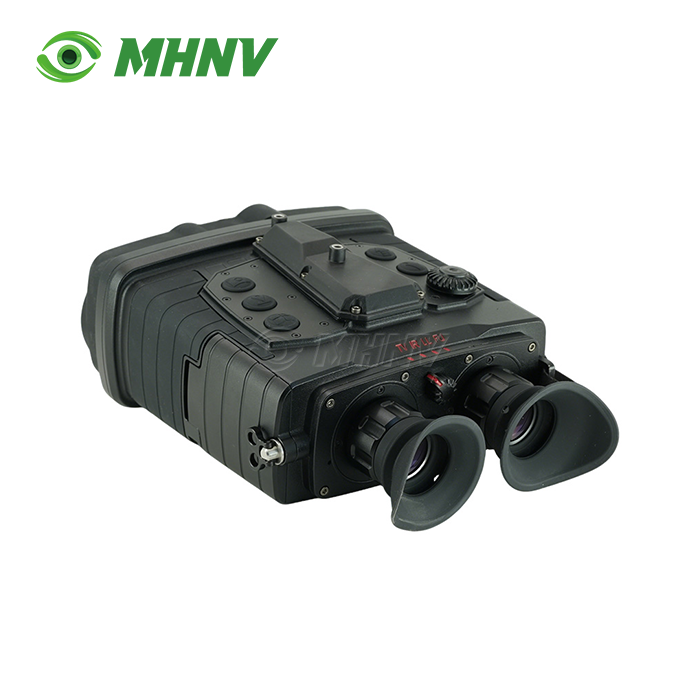
Thermal And Multi-Sensor Binoculars
Thermal And Multi-Sensor Binoculars | Four-Channel Fusion System for All-Weather Observation
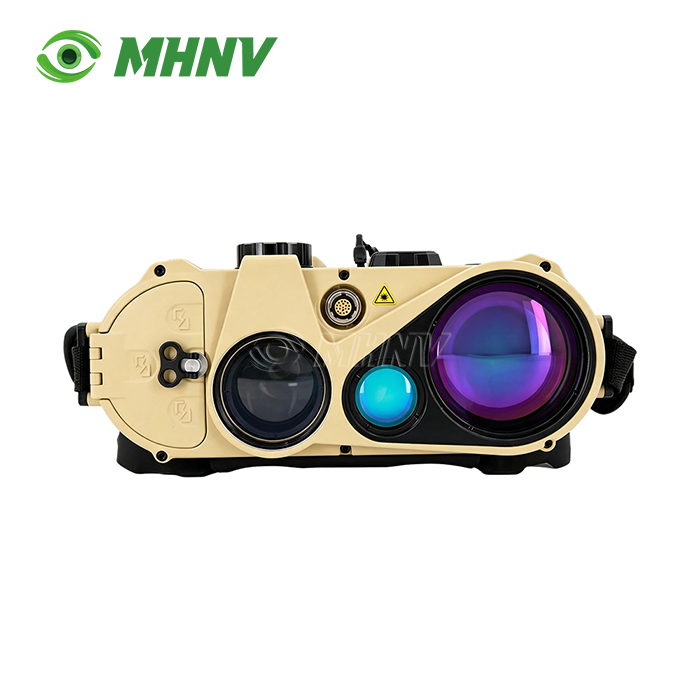
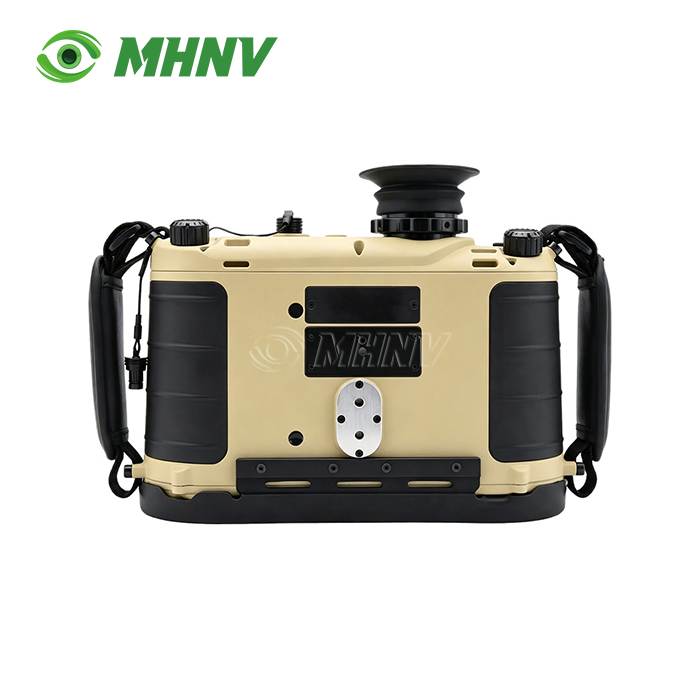
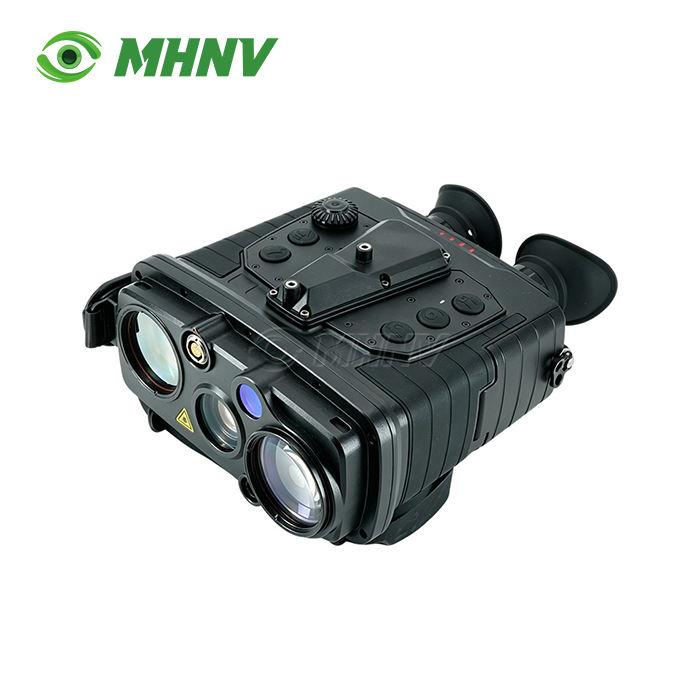
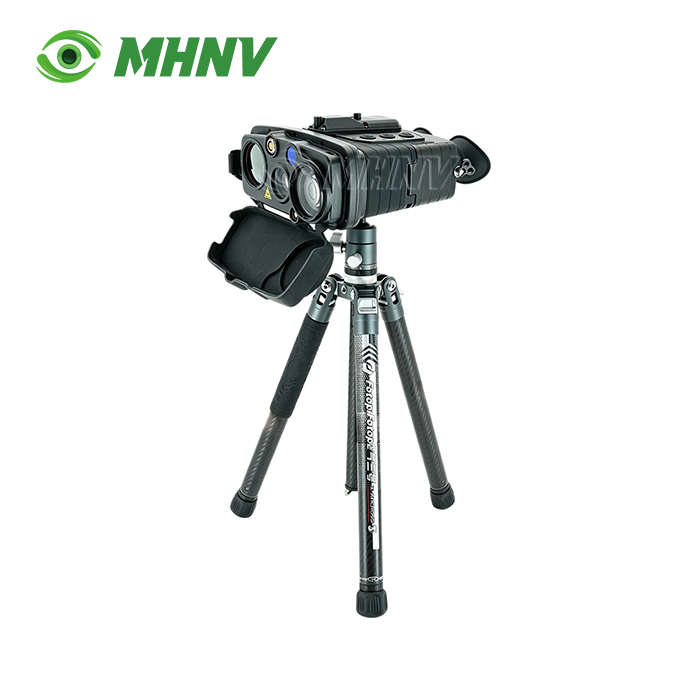
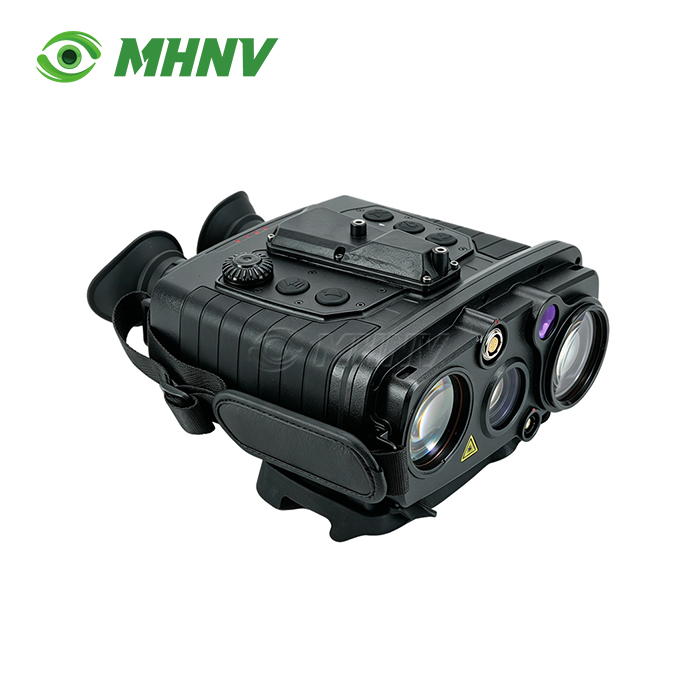
Xi’an MH Electronics And Technology Co., Ltd. is pleased to announce the MHNV® MH-MST4-L Thermal And Multi-Sensor Binoculars, a professional four-channel fusion observation system for long-range surveillance and target identification in zero-visibility situations. It features a sealed IP67 portable platform that includes a 640×512 VOx thermal imager (12 μm, NETD <30 mK), an 800×600 low-light camera, an FHD daylight sensor (1920×1080), and a 1535 nm Class 1 laser rangefinder. Multi-frequency BeiDou location and digital magnetic compass are helping you to get verified human detection at more than 3000 m and vehicle detection at more than 5000 m. Real-time fusion modes (highlight, edge, blending) provide usable imagery in darkness, fog, smoke and dense foliage when single-sensor systems cannot.
Why Professional Operators Choose Multi-Sensor Fusion Technology?
observation devices force you to select between thermal heat sensing and visible light detail. The goods concurrently run four independent channels, therefore there is no compromise there. The thermal route leaks the body heat through concealment and flora. The low light camera keeps scene detail in starlight when thermal contrast is reduced. The CMOS captures colour and identification-grade evidence in typical lighting during daylight. With your laser rangefinder you have ±5 m accuracy up to a target distance of 6000 m. The BeiDou module computes the grid coordinates of the target.
We use our patented fusion method to align all four optical axs to within 0.1 mrad, which allows for zero parallax throughout the 1080p FHD OLED panel. You may toggle between white-hot, black-hot and colour thermal palettes, and then overlay reticle, compass bearing, range readout and target grid, all refreshed at 50Hz for smooth tracking of moving objects.
Technical Specifications
| Parameter | Specification |
|---|---|
| Model | MHNV MH-MST4-L |
| Thermal Detector | 640×512 VOx microbolometer, 12 μm pitch |
| Thermal Spectral Band | 8–14 μm LWIR |
| Thermal Frame Rate | 50 Hz |
| NETD | ≤30 mK |
| Thermal FOV | ≥10°×8° |
| Thermal Focus Range | 5 m to ∞ |
| Thermal Zoom | 1.0×–8.0× electronic |
| Low-Light Sensor | 800×600 px, 8 μm pitch |
| Low-Light FOV | 7.32°×5.86° |
| Daylight Sensor | 1920×1080 FHD CMOS |
| Daylight FOV | ≥4.5°×3.5° |
| Laser Wavelength | 1535 nm (Class 1 eye-safe) |
| Laser Range | 30–6000 m, ±5 m accuracy |
| Detection Range (Human) | ≥3000 m (thermal) |
| Recognition Range (Human) | ≥1500 m (thermal) |
| Detection Range (Vehicle) | ≥5000 m (thermal) |
| Recognition Range (Vehicle) | ≥3500 m (thermal) |
| Fusion Modes | Highlight, edge, blend |
| Positioning | Multi-frequency BeiDou + digital compass |
| Display | 1080p FHD OLED |
| Connectivity | WiFi, CVBS, HDMI, USB |
| Ingress Protection | IP67 |
| Battery Life | ≥7 hours @ 25 °C |

Four-Channel Fusion for True All-Weather Capability
Single-sensor optics lose effectiveness when environmental conditions change. The products maintain full situational awareness by combining heat, light, and color data in real time.
Your thermal channel detects body heat through smoke, dust, and thin foliage—conditions that defeat daylight cameras entirely. When thermal contrast fades under uniform ambient temperature, the low-light sensor captures edge detail under starlight or moonless sky. In daylight or artificial illumination, the FHD CMOS delivers color-accurate imagery for identification-grade documentation.
Fusion presets let you tailor the display to mission conditions. Highlight mode overlays bright thermal hotspots onto the daylight base image. Edge mode extracts thermal contours and superimposes them as outlines, preserving spatial context. Blend mode merges all channels with adjustable weighting, producing a composite view that combines heat signature, fine detail, and color cues.
Verified Long-Range Detection Performance
The 640×512 VOx detector with 12 μm pixel pitch and sub-30 mK NETD delivers published detection ranges suitable for border surveillance, coastal watch, and forward observation missions.
Human detection exceeds 3000 m, recognition reaches 1500 m. Vehicle detection surpasses 5000 m, recognition extends beyond 3500 m. These figures are field-verified against NATO target standards, not theoretical calculations.
Your 1535 nm Class 1 eye-safe laser rangefinder measures distance from 30 m to 6000 m with ±5 m accuracy, enabling precise fire-control handoff or navigation waypoint logging without exposing your position to night-vision-equipped adversaries.
Integrated Positioning and Target Grid Computation
Multi-frequency BeiDou reception—also compatible with GPS and GLONASS constellations—combines with a magnetically compensated digital compass to deliver accurate own-position and computed target-grid coordinates.
This capability transforms Thermal And Multi-Sensor Binoculars from passive observation tools into active reconnaissance nodes, feeding directly into command-and-control networks.
Professional Connectivity for Command-Post Integration
WiFi streaming sends live video to smartphones or tablets for team-leader coaching and remote quality assurance. CVBS and HDMI outputs drive external monitors in vehicle command posts or forward operating bases, enabling multi-operator collaboration. USB supports firmware updates and recorded-video download for after-action review and evidence archiving.
Legacy observation systems force manual data handoff by radio. This platform streams every observation into your command information ecosystem automatically, cutting the reconnaissance-to-action loop by decisive seconds on time-critical missions.
Rugged IP67 Construction and Extended Runtime
Full IP67 immersion and dust sealing protects internal electronics during river crossings, monsoon rain, coastal salt spray, and desert dust storms. Nitrogen purging prevents internal fogging across the full operating temperature range of –40 °C to +60 °C.
The battery delivers over 7 hours of continuous operation at 25 °C, letting you complete an entire shift without swapping cells. Hot-swappable battery design supports 24-hour missions with spare packs carried in your vest or pack.
The 1080p FHD OLED display preserves every pixel of the 640 thermal, 800 low-light, and 1080 daylight channels—no downscaling, no lost detail before the image reaches your eye.

FAQ
Q: What is the main advantage of image fusion in these binoculars?
A: Fusion of images combines the heat detecting ability of long-wave infrared sensors with the edge detail and textural information of visible-light or low-light cameras, allowing you to read signage, identify facial features and recognise markings on vehicles that would be impossible to resolve using thermal imagery alone. The fusion algorithm registers both spectral channels to within a pixel, then overlays thermal hotspots on high-resolution daylight contours so that you can keep your eyes on your surroundings while picking up hidden heat signatures. This dual-spectrum perspective is particularly useful in complex urban areas where thermal by itself creates a “flat” scene with no depth clues, and in forested terrain where thermal can detect body heat through the vegetation and the visible channel can maintain the scene structure and navigation landmarks.
Q: Is the NETD rating the same as actual world performance?
A: Noise Equivalent Temperature Difference (NETD) is a measurement of the minimum temperature difference that the sensor can detect, where a lower NETD indicates stronger thermal sensitivity and better image quality under demanding settings. A <30 mK sensor can resolve small temperature variations through rain, fog and thin smoke that would otherwise swamp a typical <50 mK detector, providing useful imaging when the thermal contrast of the scene is diminished by air attenuation or low contrast. In high humidity maritime environments with uniform ambient temperature, sub-30 mK NETD means the difference between detecting a small heat source at maximum range and not being able to detect the target at all in sensor noise.
Q: Can these binoculars see through glass?
A: The thermal channel cannot image through windows, since regular glass prevents transmission of long-wave infrared radiation (8–14 μm). The visible-light and low-light cameras in the multi-sensor suite, however, pass through glass normally, so you get situational awareness inside vehicles and buildings. That’s the complementary capability that makes fusion platforms superior to thermal-only devices for urban reconnaissance: you scan the building exterior with the thermal channel to identify heat leaks and hidden occupants, and then switch to the daylight or low-light channel to observe interior activity through windows, combining both data streams into a complete operational picture without changing position or equipment.
Q: What is the importance of 12um versus 17um pixel pitch?
A: Pixel pitch is the distance between the centers of the detector elements. Smaller pixel pitch allows more pixels to fit into the same physical sensor area, resulting in greater spatial resolution and longer effective detection ranges in a small lens footprint. A 12 μm pitch sensor has around 40% more pixels per square millimetre than a 17 μm design, resulting in sharper images and the capacity to identify items farther out before diffraction and ambient blur dominate image quality. For handheld observation binoculars when size and weight are at a premium, 12 μm pitch maximises optical performance without the need for impractically large objective lenses, offering you professional-grade detection ranges in a field-portable form factor.
Q: How often do these devices need recalibration?
A: Most professional thermal sensors have an internal shutter mechanism to reference a uniform temperature target regularly, automatically performing a Non-Uniformity Correction (NUC) to compensate for pixel-to-pixel gain changes without user intervention. Recalibration of the sensors at the factory level, when the detector response curve is recharacterized over the complete temperature range, is normally advised every 24 months of continuous field usage to maintain radiometric measurement accuracy and to guarantee that the published NETD requirements are still valid. However, the automated NUC alone preserves image quality indefinitely for qualitative observation missions when absolute temperature measurement is not necessary and allows for factory recalibration intervals of up to 36–48 months depending on operating environment and duty cycle.

Contact MHNV® for Custom Solutions
Contact our engineering team at sarah@mh-elec.com for Thermal And Multi-Sensor Binoculars technical consultation and project quotations.
YOU MAY LIKE