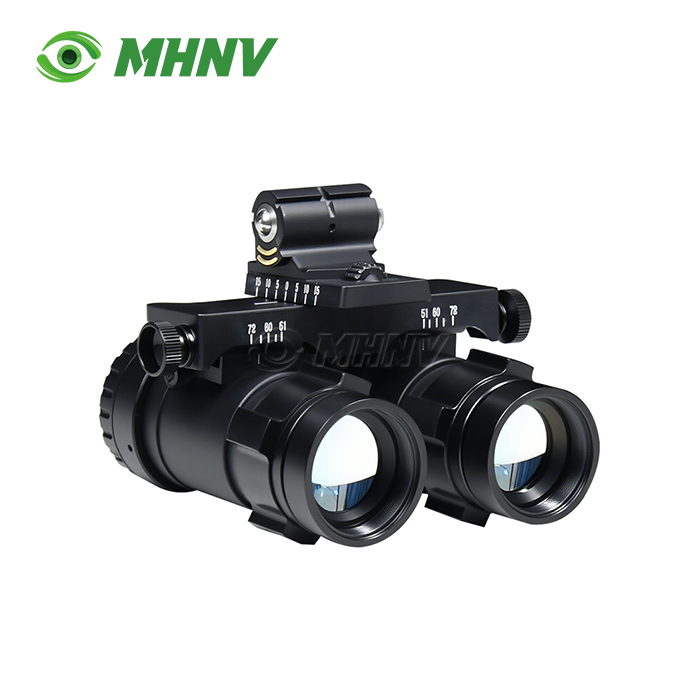
Aviation Night Vision Goggles
Aviation Night Vision Goggles – Advanced Pilot-Grade Low-Light Flight Solution with F/1.0 Optics
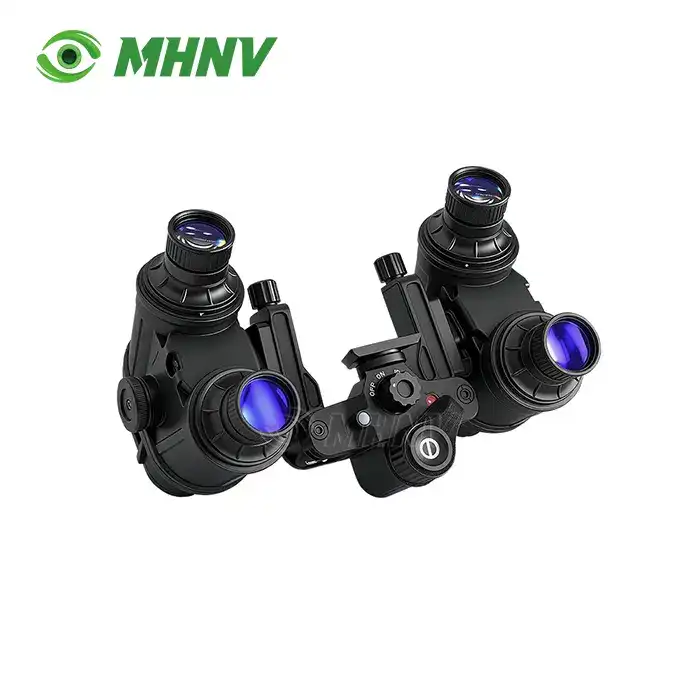
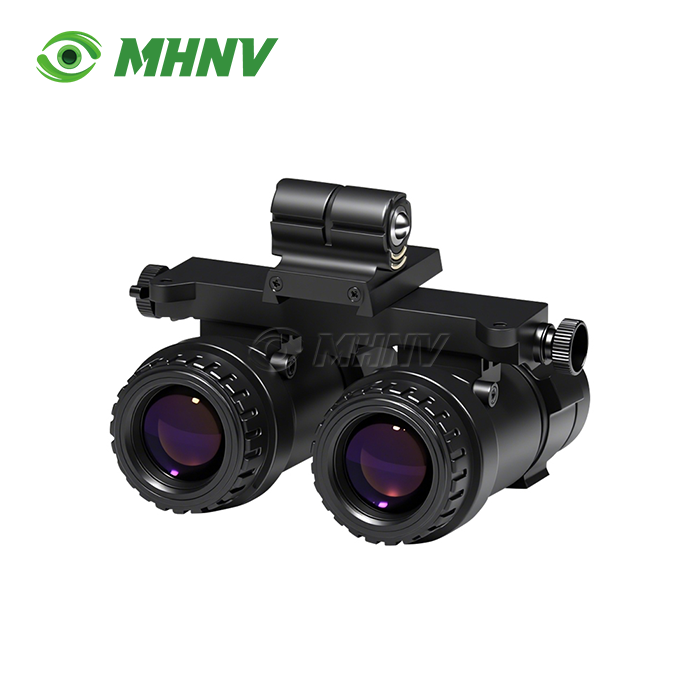
Night operations in rotary-wing and fixed-wing platforms demand optical systems engineered for cockpit integration and flight-critical performance standards. Aviation Night Vision Goggles from Xi'an MH Electronics And Technology Co., Ltd. deliver Gen 2+ and Gen 3 image intensifier tube technology optimized for pilots conducting night patrol, terrain reconnaissance, formation flight, and low-altitude approach operations. The MHNV PVS9 aviation binocular features F/1.0 objective optics capturing 44% more light than ground-focused F/1.2 designs, resolution exceeding 60 lp/mm, SNR above 20, and FOM 1400 standard (upgradeable to 1600/1800/2000). Weighing just 469 grams with 40-hour continuous operation from dual or quad AA batteries, this system provides 40° field of view, 52–72 mm IPD adjustment, and aviation-grade optical axis parallelism—horizontal divergence under 60 arc-minutes, vertical under 20 arc-minutes—meeting flight safety requirements for extended mission endurance.
Optimized Optical Architecture for Cockpit Integration
The MHNV PVS9 utilizes a precision-ground F/1.0 objective lens system that maximizes photon collection efficiency in ambient starlight conditions typically encountered during high-altitude operations. This faster aperture ratio delivers superior contrast detection at lower lux thresholds (10⁻¹ to 10⁻³ lux at 1.59 mrad).
Dual-tube binocular configuration preserves depth perception essential for obstacle avoidance during approach and landing. The 1× magnification and 25 mm eye relief accommodate helmet-mounted display systems and visor rails without mechanical interference.
Cathode sensitivity exceeds 600 μA/lm, ensuring reliable performance across diverse operational theaters—from coastal maritime patrol to mountainous terrain navigation. Green phosphor and white phosphor tube options allow fleet managers to match image preference to mission profiles and pilot training backgrounds.
Aviation-Grade Mechanical Precision and Helmet Compatibility
Three-axis adjustment capability—16 mm fore-aft travel, 16 mm vertical travel, and 8° pitch adjustment—enables precise optical alignment with pilot helmet mounting interfaces. This eliminates the platform-specific accessory complexity common in ground-focused goggle designs.
Optical axis parallelism specifications (horizontal divergence <60 arc-min, vertical <20 arc-min) meet aviation standards that prevent pilot disorientation during formation flight and low-altitude maneuvering. Such tight tolerances reduce vestibular conflict and extend operator endurance during multi-hour missions.
IPD adjustment range of 52–72 mm accommodates 95th percentile pilot populations. The 14 mm exit pupil diameter ensures full image transmission even when the pilot's head shifts during dynamic flight maneuvers.
Scalable Performance Through Field-Selectable FOM Upgrades
The housing architecture accepts image intensifier tubes across the performance spectrum—from cost-effective Gen 2+ tubes at FOM 1400 through premium Gen 3 tubes at FOM 2000. This modularity allows fleet operators to deploy high-performance tubes (FOM 1800/2000) to primary operational squadrons while equipping training units with FOM 1400 tubes from a single procurement platform.
Cathode technology utilizes GaAs photocathode materials for broad spectral response across the 450–900 nm near-infrared band. Auto-gating circuitry maintains optimal resolution under rapidly changing light conditions—transitioning from instrument-lit cockpit environments to external darkfield observation without manual gain adjustment.
Resolution exceeding 60 lp/mm and SNR above 20 ensure that terrain features, obstacles, and ground references remain clearly resolved even at detection thresholds approaching the system's rated sensitivity floor.
Technical Specifications
| Parameter | Specification |
|---|---|
| Model | MHNV PVS9 |
| Resolution | ≥60 lp/mm |
| Signal-to-Noise Ratio | >20 |
| Figure of Merit | 1400 (1600/1800/2000 optional) |
| Cathode Sensitivity | >600 μA/lm |
| Magnification | 1× |
| Field of View | 40° |
| F-Number | F/1.0 |
| Detection Threshold | 10⁻¹ to 10⁻³ lux @ 1.59 mrad |
| Optical Axis Parallelism | <60 arc-min (H), <20 arc-min (V) |
| Focus Range | 250 mm – ∞ |
| Diopter Adjustment | ±4 diopter |
| Eye Relief | 25 mm |
| Exit Pupil Diameter | 14 mm |
| IPD Adjustment | 52–72 mm |
| Mechanical Travel | 16 mm (fore-aft/vertical), 8° pitch |
| Dimensions | 108×131×93 mm |
| Weight | 469 g |
| Power Supply | 3V (2×AA or 4×AA) |
| Operating Time | 40 hours continuous |
| Phosphor Options | Green phosphor / White phosphor |

Extended Mission Endurance Through Lightweight Design
At 469 grams, the Aviation Night Vision Goggles MHNV PVS9 reduces total helmet load—a critical factor for pilot neck fatigue during extended operations. Cockpit environments already impose significant instrument weight; every gram of goggle mass compounds cumulative strain over multi-hour sorties.
Dual or quad AA battery configuration delivers 40 hours of continuous operation at 3V, eliminating mid-mission battery swaps during extended patrol or search operations. Battery compartment design accommodates rapid field replacement without removing the goggle assembly from helmet mounts.
Aerospace-grade polymer housings provide IP-rated environmental protection against humidity, vibration, and shock—meeting MIL-STD-810 testing protocols for altitude performance and temperature cycling.
Full-Stack Manufacturing Capability and OEM Customization
MHNV® operates vertically integrated production facilities in Xi'an, China, encompassing optical design, image intensifier tube integration, FPGA-based video processing, embedded firmware development, and precision mechanical assembly. Class-10,000 cleanrooms ensure contamination-free IIT calibration.
Since 2013, MHNV® has delivered night vision and thermal imaging systems to customers in 60+ countries. The engineering team provides complete OEM and ODM customization—from tube selection and optical parameter adjustment to firmware interface localization and housing redesign.
Each shipped unit undergoes rigorous QC verification: SNR testing, FOM measurement, resolution benchmarking, halo characterization, and EBI analysis. Serialized data sheets accompany every product, ensuring traceability and performance documentation.

FAQ
Q: What is the difference between F/1.0 objective optics and conventional ground-focused designs for goggles for use in aviation?
A: F/1.0 objective aperture systems can collect 44 percent more incident photons per unit time than F/1.2 designs generally optimised for ground-based operation, providing vital low-light sensitivity for flight envelope operations at higher altitudes where ambient starlight is the only orientation reference, and where marginal image quality would directly compromise flight safety during approach, landing, and terrain-following manoeuvres in rural or maritime environments without artificial illumination infrastructure.
Q: What is the impact of optical axis parallelism specification on pilot performance in formation flight?
A: Aviation industry optical axis parallelism standards — horizontal divergence limited to less than 60 arc-minutes and vertical divergence limited to less than 20 arc-minutes — eliminate vestibular-ocular conflict that causes spatial disorientation and pilot fatigue during prolonged formation flight, low-level navigation and precision approach operations where even slight binocular misalignment creates conflicting depth cues that ground-focused goggles with looser parallelism tolerances cannot correct without jeopardising flight safety and increasing operator exhaustion.
Q: Is the MHNV PVS9 mountable on both helmet mounted display systems and visor rails without any mechanical modifications?
A: Three-axis mechanical adjustability; 16 mm fore-aft and vertical travel and 8 degree pitch adjustment, allows direct integration with pilot helmet mounting interfaces such as visor rails, NVG brackets and helmet-mounted display hardware, without the need for platform-specific accessory procurement. This allows single goggle designs to be used across a variety of rotary-wing and fixed-wing platforms in fleet inventories, while still maintaining optical alignment specifications across adjustment ranges.
Q: What is the practical benefit of field-selectable FOM upgradeability to fleet operators?
A: The housing architecture is designed to accommodate image intensifier tubes from FOM 1400 to FOM 2000. This allows procurement managers to field high-end FOM 1800 and FOM 2000 Gen 3 tubes in primary operational squadrons conducting high-risk missions, and to equip training or secondary units with cost-effective FOM 1400 Gen 2+ tubes, eliminating the need for separate product platforms and reducing lifecycle procurement complexity across mixed-mission aviation organisations.
Q: How does 469-gram weight design reduce cumulative pilot fatigue compared to heavier dual-tube configurations?
A: The current weight of the pilot helmet assemblies is already substantial from the embedded communication systems, oxygen delivery machinery, and protective shell components; every gram increase in goggle weight is added to the cumulative helmet load carried by the cervical vertebrae during extended flight activities, making the 469-gram construction critical to ensuring pilot endurance over multi-hour missions where heavier dual-tube arrangements over 600 grams hasten neck muscle fatigue and impair operational efficacy in long-duration missions.

Contact Us
Ready to enhance your fleet's night operational capability with aviation-grade image intensification technology? Reach us at sarah@mh-elec.com for Aviation Night Vision Goggles product demonstrations and procurement guidance.
YOU MAY LIKE