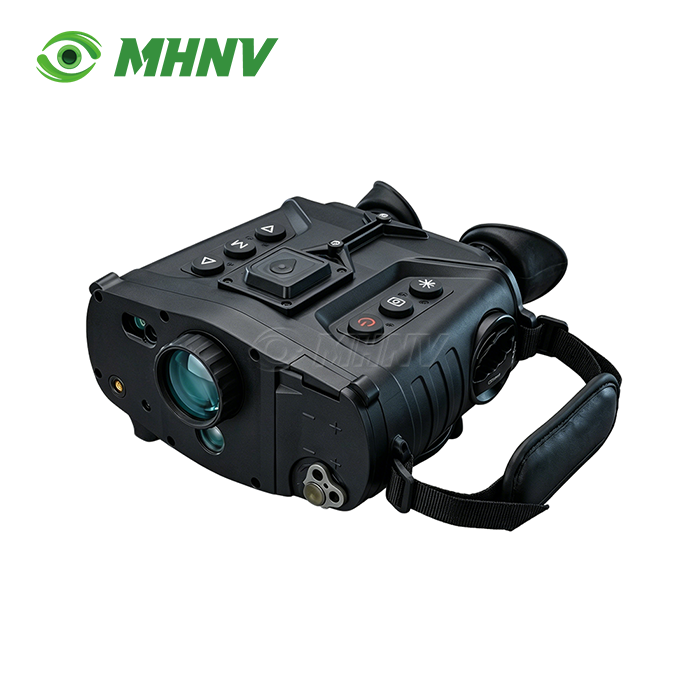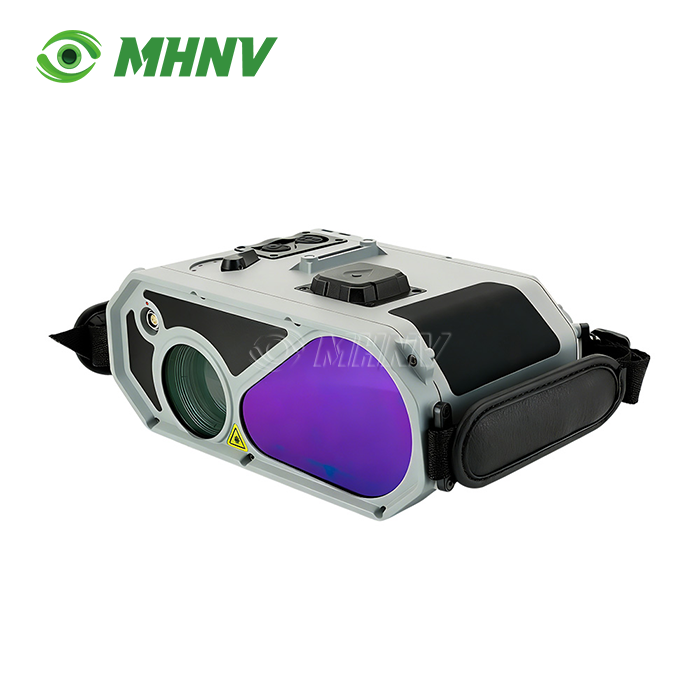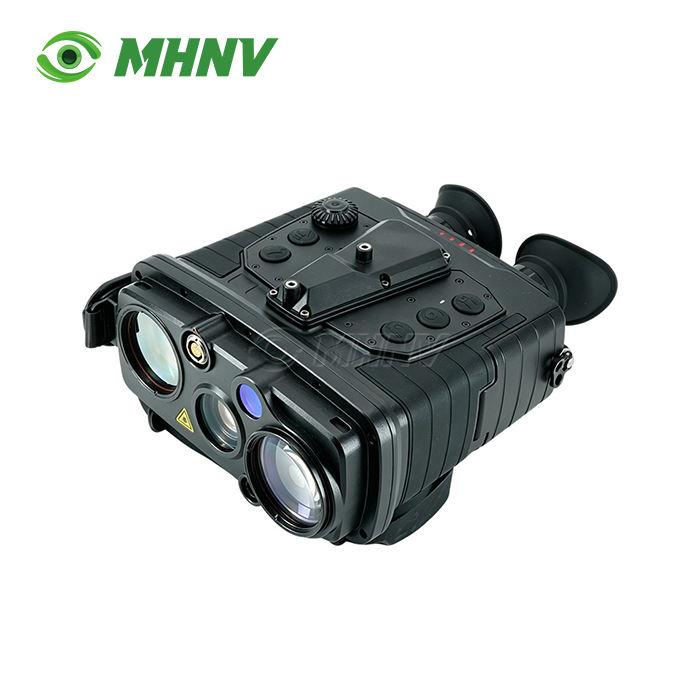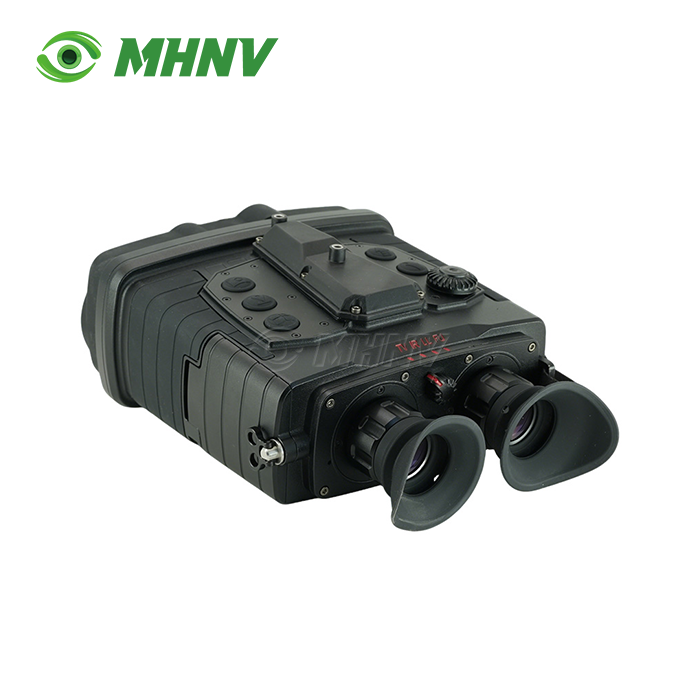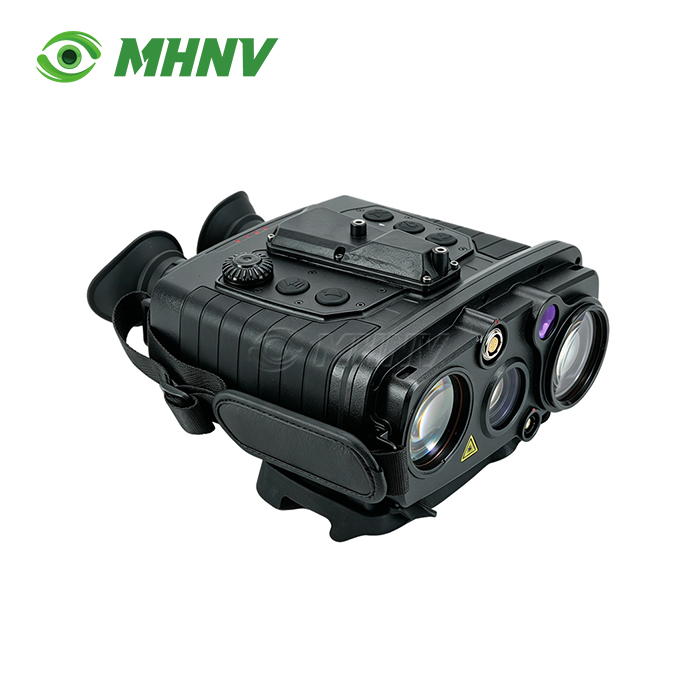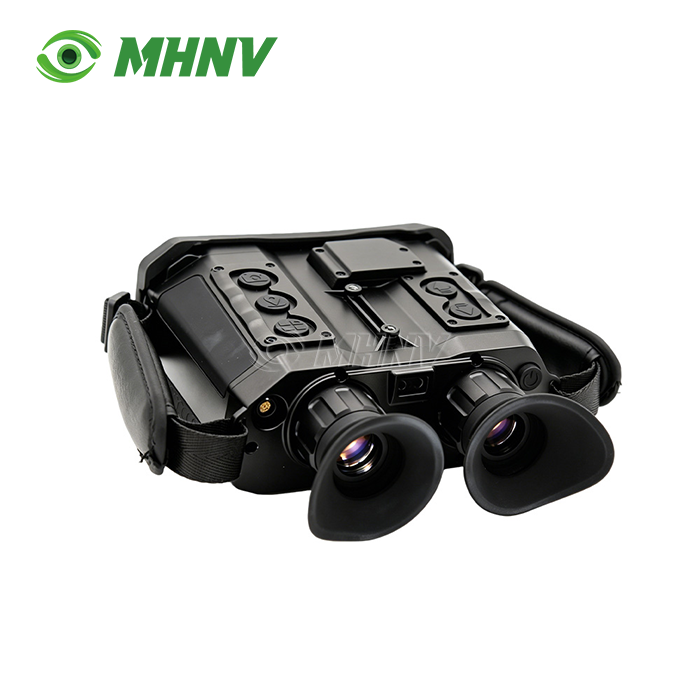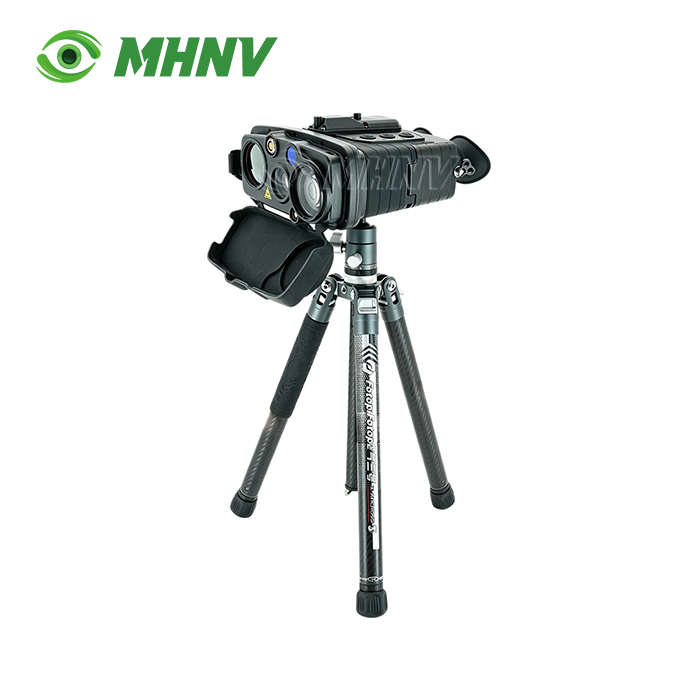
Fusion Thermal Night Vision Binocular
Fusion Thermal Night Vision Binocular – Professional Multi-Spectral Observation System for All-Weather Long-Range Detection and Target Recognition
Xi'an MH Electronics And Technology Co., Ltd. presents the MHNV MH-MST4-L, a professional-grade Fusion Thermal Night Vision Binocular engineered for demanding all-weather reconnaissance and surveillance operations. This advanced system integrates four independent imaging channels—640×512 VOx thermal detector, 800×600 low-light sensor, 1920×1080 daylight CMOS, and Class 1 eye-safe laser rangefinder—into a unified real-time fusion pipeline.
With verified detection ranges exceeding 3000 meters for human targets and 5000 meters for vehicles, the MH-MST4-L delivers enterprise-grade observation capabilities. The multi-frequency BeiDou positioning module and digital compass provide accurate target-grid computation. IP67-rated construction ensures continuous operation across fog, rain, dust, and smoke conditions where conventional single-sensor devices fail.

Multi-Spectral Fusion Architecture
The product uses simultaneous four channel processing to overcome the constraints of a single sensor. The 640×512 thermal array (12μm pitch, <30mK NETD, 50Hz) identifies heat signatures via camouflage, vegetation and atmospheric obscurants. The 800×600 low-light channel extends viewing into starlight settings, providing scene detail that thermal imaging alone cannot provide.
Full-HD daylight sensor 1920×1080 for colour identification and documentation grade imagery. The real-time fusion algorithms provide three operator-selectable modes: the highlighting mode overlays thermal hotspots on the low-light base image; the edge mode extracts thermal contours for high-contrast target acquisition; and the blending mode combines all channels proportionally for maximum environmental awareness.
This architecture solves important operational difficulties. Thermal alone will lose fine detail. Low-light will struggle in utter darkness. Daylight needs sufficient illumination. Fusion provides useable images in all lighting conditions, from blazing midday to moonless nighttime, through thick fog and mild smoke.
Long-Range Detection and Laser Ranging
The MH-MST4-L has been field-tested and verified to detect humans beyond 3000 meters and recognise them at 1500 meters on the thermal channel. Vehicle detection is over 5000 meters, recognition verified at 3500 meters. “These performance benchmarks support coastal watch, border patrol, forward observation and wildlife protection missions requiring long-baseline surveillance.
The integrated 1535nm Class 1 eye-safe laser rangefinder estimates distances from 30 to 6000 meters with an accuracy of ±5m. Paired with the multi-frequency BeiDou receiver and digital magnetic compass, the system calculates target coordinates and displays range, bearing and grid location on the 1080p FHD OLED overlay. This removes human calculation errors and cuts observation-to-decision time from minutes to seconds.
Technical Specifications
| Parameter | Specification |
|---|---|
| Model | MHNV MH-MST4-L |
| Thermal Detector | 640×512 VOx microbolometer, 12μm pitch |
| Thermal Spectral Band | 8–14 μm |
| Thermal Frame Rate | 50 Hz |
| Thermal NETD | ≤30 mK |
| Thermal E-Zoom | 1.0×–8.0× |
| Thermal FOV | ≥10°×8° |
| Thermal Focus Range | 5 m to infinity |
| Daylight Sensor | 1920×1080 CMOS |
| Daylight FOV | ≥4.5°×3.5° |
| Low-Light Sensor | 800×600 pixel, 8μm pitch |
| Low-Light FOV | 7.32°×5.86° |
| Laser Wavelength | 1535 nm (Class 1 eye-safe) |
| Laser Range | 30–6000 m (±5 m accuracy) |
| Human Detection (IR) | ≥3000 m detection, ≥1500 m recognition |
| Vehicle Detection (IR) | ≥5000 m detection, ≥3500 m recognition |
| Fusion Modes | Highlighting, Edge, Blending |
| Positioning | Multi-frequency BeiDou + digital compass |
| Display | 1080p FHD OLED |
| Connectivity | WiFi, CVBS, HDMI, USB |
| IP Rating | IP67 |
| Battery Life | ≥7 hours at 25°C |
Command Integration and Connectivity
Modern reconnaissance demands seamless information sharing. The Fusion Thermal Night Vision Binocular includes WiFi streaming for real-time video transmission to smartphones and tablets, enabling team-leader coaching and remote observation.
CVBS and HDMI outputs support external monitors in vehicle command posts and forward operating bases. USB connectivity provides recorded video download and firmware update capability. This comprehensive interface suite integrates every observation into command information ecosystems, replacing manual radio hand-off with automatic digital workflows that accelerate reconnaissance-to-action cycles on time-critical missions.
Rugged All-Environment Design
IP67 sealing protects against full immersion and dust entry for reliable operation in coastal salt spray, monsoon rain, river crossings and dust storms. The device performs well in adverse temperature and high altitude deployments.
Battery life is greater than 7 hours of continuous operation at 25C, enabling full shift missions without swapping out batteries mid-activity. The 1080p FHD OLED display retains all the pixels from all four imaging channels (thermal, low-light, and daylight) unlike rival systems that utilise a lower resolution display and suffer from downsizing losses.
MHNV Manufacturing and Customization Capability
MHNV® has a complete vertical production infrastructure that encompasses optical design, IIT integration, FPGA processing, embedded firmware, mechanical design and precision assembly. The company has provided nite vision and thermal imaging solutions to customers in more than 60 countries since 2013.
With in-house full-stack engineering, we can rapidly customise for OEM and ODM. Services include optical configuration correction, firmware interface change, housing redesign, logo branding and multi-language packaging. Complete quality testing of SNR, FOM, resolution, halo, EBI, shock, vibration and environmental verification assures that each and every device satisfies international requirements before it is shipped.

FAQ
Q: What is the benefit of multispectral fusion over devices with only one sensor?
A: Multi-spectral fusion takes the best parts of thermal imaging, low-light intensification, and daylight sensors and blends them into a single observation stream. This gets around the problems that each technology has on its own. Thermal can find heat signals through fog, smoke, and camouflage, but it can't see fine spatial details. Low-light can give you a clear picture of a scene when it's dark, but it can't do anything when it's completely dark. Daylight can identify colours, but it needs enough light. Fusion algorithms put these channels on top of each other in real time, giving usable images in all lighting and weather conditions, from bright noon to dense fog to midnight with no moon, which is something that a single-sensor device can't do.
Q: How does the laser rangefinder work with the method for positioning?
A: The 1535nm Class 1 eye-safe laser rangefinder can accurately measure the distance between targets from 30 to 6000 meters. The multi-frequency BeiDou detector and digital magnetic compass work together to figure out your position and direction. The built-in processor figures out the target's coordinates automatically and shows range, azimuth, and grid position on the 1080p OLED screen as a real-time overlay. This gets rid of the need to calculate maps by hand, makes the job of operators easier, and speeds up reporting targets for tasks like reconnaissance, surveillance, and search-and-rescue where quick decisions are needed.
Q: Can the device be used in complete darkness without any ambient light?
A: Yes, the 640x512 VOx thermal detector works without visible light at all. It picks up infrared radiation that things give off based on the differences in their temperatures. When there is no moon or when there is no light coming from anywhere else, the thermal channel can still pick up on human and vehicle heat signatures at confirmed ranges of more than 3000 meters and 5000 meters, respectively. The low-light channel makes this possible in starlight, and the fusion algorithm combines both feeds to keep you informed of your surroundings and help you find your way through the darkest areas of the nite.
Q: What kinds of connections are there for team operations and integrating command posts?
A: The device has WiFi, which lets you stream live video to smartphones, tablets, and handheld command units. This lets you keep an eye on things from afar and work together as a team. For viewing by more than one operator, CVBS and HDMI outputs can be connected to external monitors in vehicle command posts, control rooms, and forward operating bases. USB lets you download recorded videos for keeping records and analysing evidence after the task is over. It also lets you update the firmware. This complete interface suite replaces manual radio hand-off with automated digital processes that connect your observation data directly to command information networks.
Q: In what ways does the device protect itself from harsh weather?
A: Yes, the MH-MST4-L is sealed to IP67 standards, which means it can withstand full immersion up to one metre and total dust ingress. This means it will work reliably in situations like salt spray, heavy rain, dust storms and crossing rivers. The chassis is made to handle drops, hits in the field, and changes in temperature. Internal parts are shock-mounted. The battery lasts more than seven hours of continuous use at 25°C, so full-shift missions can go on without stopping in the middle of their work. The 1080p FHD OLED display can be read in both bright daylight and total darkness.


Contact MHNV for Multi-Sensor Observation Solutions
Ready to enhance your reconnaissance and surveillance capabilities? Contact MHNV® at sarah@mh-elec.com for Fusion Thermal Night Vision Binocular technical specifications, customization options, and OEM partnership inquiries today.
YOU MAY LIKE