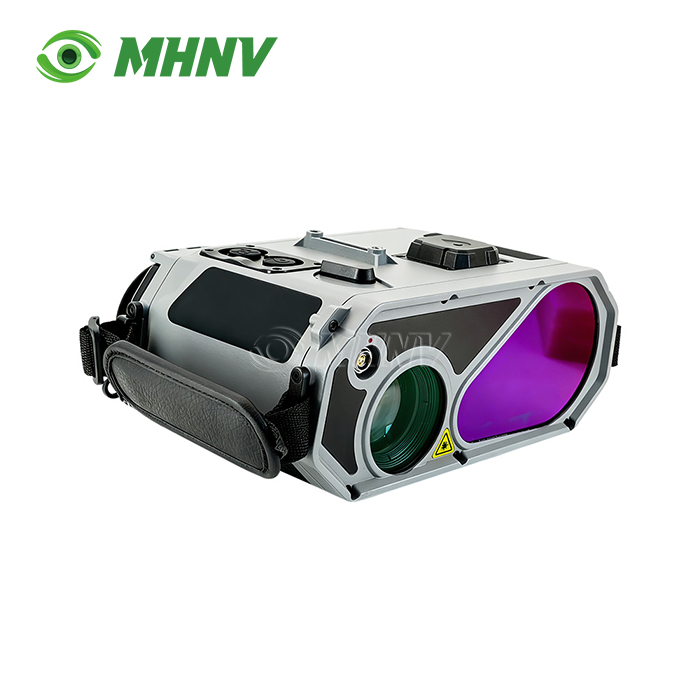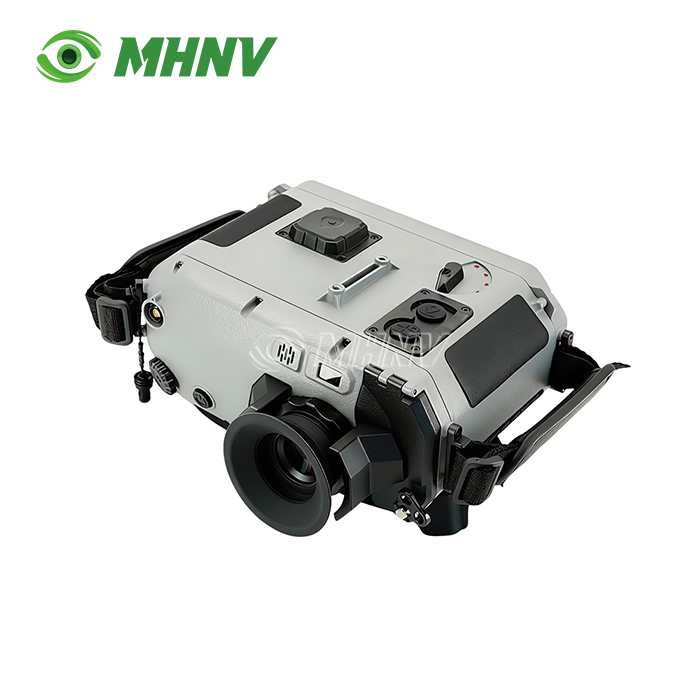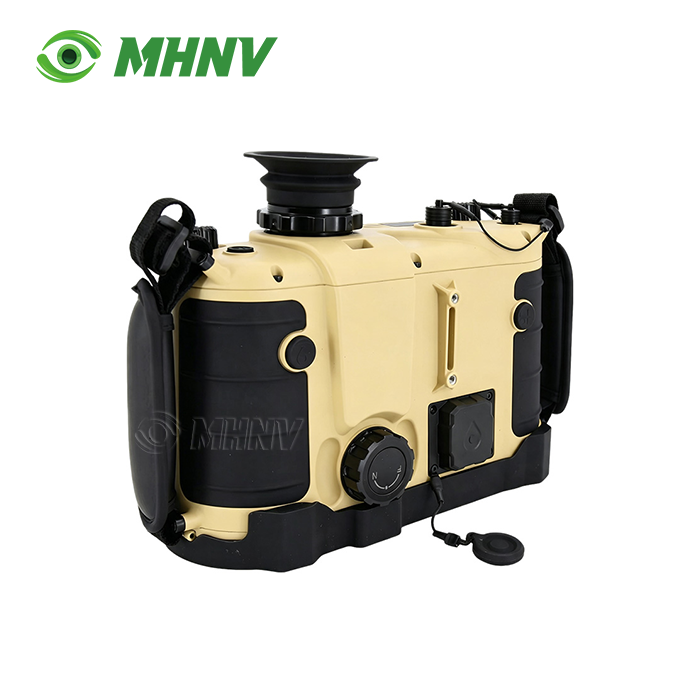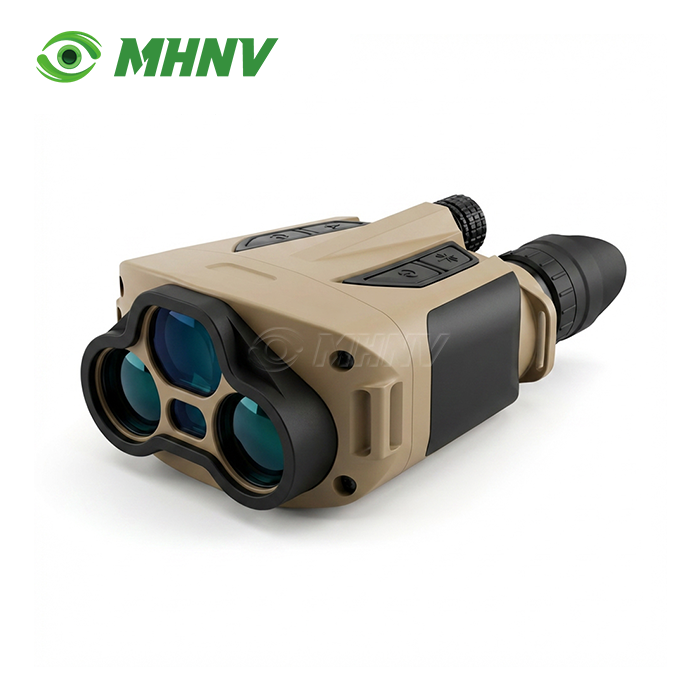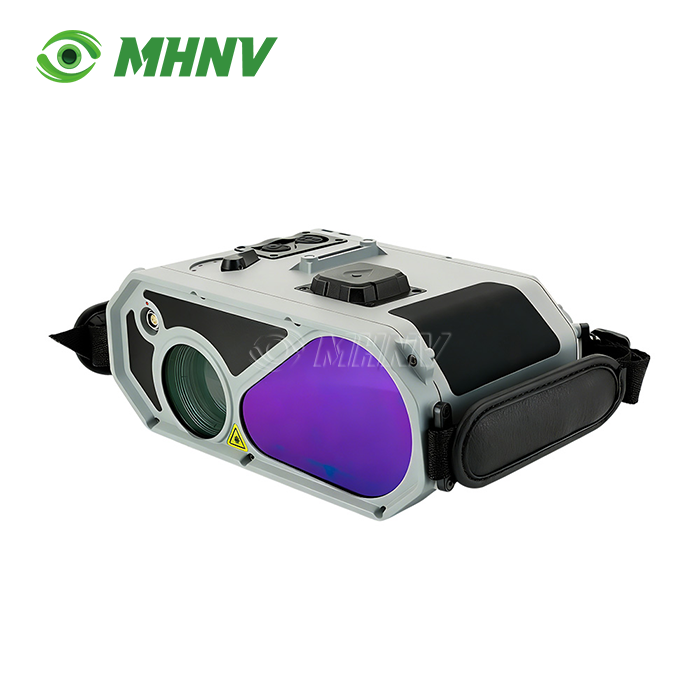
Handheld Target Location Designation Unit
Handheld Target Location Designation Unit – 25km Eye-Safe Long-Range Laser Rangefinder with Sub-Mil Navigation System
The tiny observation systems of Xi’an MH Electronics are full-stack engineering of the MHNV MH-OL25. Handheld Target Location Designation Unit provides 25km building detection, 17km vehicle tracking and 8.5km personnel identification in a 2.5kg direct-view body with Class 1 eye-safe 1535nm laser architecture. MHNV® combines 7x direct view optics, sub-mil electronic compass (0.3° azimuth / 0.1° pitch-roll), ≤3m self-positioning GPS, and ≤1 mil target grid accuracy with 12 years of optical-electronic integration experience to support first-round artillery correction, drone coordination and coastal surveillance in −40°C to +60°C environments. The device has IP67 sealing, ≥7-hour runtime, RS232 full-data output and a scalable digital picture interface for command-post integration.

Why Choose Direct-View Long-Range Laser Rangefinding?
Traditional digital observation devices are not capable after battery failure. Direct-view architecture addresses this fundamental problem. The MH-OL25 sends true photons through a 42mm objective and 7x magnification optics straight to your eye with minimal latency so you can execute reticle based approximation range even when the electronics go dead.
This design concept is crucial for extended field operations. If your battery goes dead during a 72-hour border patrol or arctic observation operation, you may still see and use the reticle grid to estimate target distance. The diopter adjustment range of -5D to +5D is useful to allow operators that wear corrective eyewear to operate the device with the naked eye and not have fogging problems inside the eyecup when deployed in cold weather conditions.
The 6.7° field of vision balances the speed of target acquisition with magnification power. You sweep vast sectors fast, lock on suspects or targets, then fire the 1535nm laser to collect exact grid data.
Four-Target-Class Ranging Envelope Engineered for Real Missions
Most competing rangefinders publish a single ambiguous "maximum range" figure. The product transparently publishes four distinct performance thresholds aligned to operational needs:
- 25km buildings: Multi-story structures, coastal installations, warehouse complexes
- 17km vehicles: Trucks, armored carriers, maritime patrol boats
- 8.5km personnel: Human-sized targets, infiltrators, rescue subjects
- 6km UAVs: Small rotary and fixed-wing unmanned aerial systems
This granular specification lets you plan missions with confidence. If you're tasked with tracking shipping traffic at 20km standoff, you know the system will deliver. If you're supporting indirect fire correction at 15km, you understand the effective working range before deployment.
Combined with ±5m accuracy and ≤1 mil target positioning precision, the device meets artillery observer requirements for first-round correction and drone strike coordinate hand-off.

Technical Specifications
| Parameter | Value |
|---|---|
| Model | MHNV MH-OL25 |
| Architecture | Direct-view single-eye laser target locator |
| Optical Magnification | 7× |
| Field of View | 6.7° |
| Objective Lens Diameter | 42mm |
| Diopter Adjustment | −5D to +5D |
| Laser Wavelength | 1535nm |
| Laser Class | Class 1 eye-safe |
| Ranging Accuracy | ±5m |
| Measuring Rate | 1–5Hz (single-shot / continuous) |
| Minimum Measuring Range | 150m |
| Maximum Range – Building | ≥25km |
| Maximum Range – Vehicle | ≥17km |
| Maximum Range – Personnel | ≥8.5km |
| Maximum Range – UAV | ≥6km |
| Self-Positioning Accuracy | ≤3m |
| Target Positioning Accuracy | ≤1 mil |
| Azimuth Accuracy | ≤0.3° |
| Pitch & Roll Accuracy | ≤0.1° |
| Multi-Target Relative Distance | Supported |
| Ballistic Calculator | Integrated |
| Map Positioning Correction | Supported |
| Digital Image Output | Scalable interface |
| Data Interface | RS232 full data transmission |
| Dimensions | 180 × 220 × 95mm |
| Weight | 2.5kg |
| Working Time | ≥7 hours continuous |
| Operating Temperature | −40°C to +60°C |
| IP Rating | IP67 |
Class 1 Eye-Safe Laser with Single-Shot and Continuous Modes
Eye safety drives the operational flexibility of the Handheld Target Location Designation Unit. The system is Class 1 eye safe at 1535nm wavelength in all firing modes and has no ocular danger exclusion zones. You can operate around friendly forces, civilian populations and reflecting surfaces without the safety corridor constraints that handicap shorter wavelength 905 nm devices.
Single-shot mode produces one pulse per trigger pull to reduce laser signature for covert surveillance and signature discipline in reconnaissance.
Continuous mode up to 5Hz for tracking moving vehicles, patrol boats, low altitude aircraft and running personnel. The fast repetition rate offers real-time distance updates as targets move closer or further away, supplying live data feeds to ballistic calculators and drone guidance systems.
Integrated Navigation and Command-Post Data Link
The sub-mil electronic compass provides 0.3° azimuth and 0.1° pitch/roll precision and GPS self-positioning within 3m Target location precision is less than 1 mil, acceptable for forward observer-directed indirect fire control.
When you laser a target, the device immediately calculates and outputs:
- Range
- Azimuth
- Elevation angle
- Self GPS coordinates
- Target grid coordinates
- Ballistic solution (when configured)
All data streams over RS232 interface to command laptops, battle-management systems, and drone ground stations in real time. The scalable digital image output supports optional camera modules for evidence capture, training review, and remote video hand-off to command posts.
Systems lacking this data integration force operators to manually transcribe observations and voice-call every coordinate, adding minutes of delay and transcription errors to time-critical tasking.
Ruggedized for Extreme Environments
IP67 sealing protects internal electronics against dust ingress and temporary immersion, critical for coastal watch, riverine patrol, and monsoon-season border operations.
The −40°C to +60°C operating envelope covers arctic expeditions, desert deployments, and tropical humidity without performance degradation. Internal power management sustains ≥7 hours of continuous operation on a single charge, supporting all-night observation rotations and extended reconnaissance patrols.
The 180×220×95mm form factor and 2.5kg weight keep the device genuinely handheld. Operators carry the unit in chest rigs or belt pouches, deploying it rapidly from vehicle dismount or concealed observation posts without tripod setup delays.
FAQ
Q: What is a product and how does it differ from standard laser rangefinders?
A: A product is a precision optoelectronic instrument integrating long-range laser distance measurement, electronic compass, GPS self-positioning, and target grid calculation into a single portable body, designed to deliver sub-mil coordinate accuracy for indirect fire correction, drone strike hand-off, and multi-domain observation missions. Unlike standard laser rangefinders that only output distance-to-target, the designation unit fuses range, azimuth, elevation, GPS coordinates, and ballistic solutions into a complete fire-control data package transmitted via digital interface to command systems. The MH-OL25 further distinguishes itself through direct-view optics that maintain zero-latency real-scene observation and reticle-based ranging even during battery failure, a capability absent in fully-digital competitor systems that become inoperable the moment power is lost.
Q: Why does the 1535nm laser wavelength matter for operational safety and multi-target scenarios?
A: The 1535nm wavelength achieves Class 1 eye-safe certification under IEC 60825-1 standards, meaning the laser emission poses no ocular hazard to unaided eyes even under direct prolonged exposure, eliminating the need for safety exclusion zones or restricted firing corridors required by shorter-wavelength 905nm systems. This safety profile allows operators to range targets near friendly forces, civilian populations, and reflective surfaces without endangering bystanders or compromising mission security through laser signature discipline. The continuous 1–5Hz mode supports real-time tracking of moving vehicles, boats, aircraft, and personnel while maintaining eye-safe status across all repetition rates, a decisive advantage during multi-target engagements in populated environments where 905nm systems would require manual safety corridor management for every shot.
Q: How does sub-mil compass accuracy improve first-round fire correction?
A: Sub-mil compass accuracy (0.3° azimuth and 0.1° pitch/roll) directly translates to ≤1 mil target positioning error, meeting artillery observer requirements for first-round correction where positional uncertainty must remain below 1/6400th of the circle to ensure projectile impact within effective radius of the intended grid. When paired with ≤3m self-positioning GPS, the system calculates target grids with combined error budgets tight enough for indirect fire missions at 10–15km ranges without requiring subsequent spotting rounds, reducing ammunition expenditure, mission time, and risk of counter-battery detection. The integrated ballistic calculator ingests range, azimuth, elevation, and meteorological inputs to generate firing solutions transmitted over RS232 to fire-direction centers, closing the sensor-to-shooter loop in seconds rather than minutes required by voice-call coordinate transcription.
Q: Can the device function in total electronic failure or battery-dead scenarios?
A: Yes, the direct-view optical architecture routes real photons through the 7× magnification, 42mm objective optics directly to the operator's eye without requiring electronic image processing, ensuring zero-latency visual observation regardless of battery state. The reticle etched into the optical path provides mil-based stadia lines for approximate range estimation using standard target-height formulas (range = target height / mil angle × 1000), allowing the operator to continue reconnaissance, target identification, and rough distance estimation during extended field operations after battery depletion. This capability is absent in fully-digital thermal or electro-optical systems that become entirely inoperable once power is exhausted, leaving the operator blind during multi-day missions or emergency scenarios.
Q: What OEM and ODM customization options does MHNV® support for the MH-OL25 platform?
A: MHNV® leverages 12 years of full-stack engineering capability to offer comprehensive customization across optical (magnification adjustment, field-of-view optimization, reticle pattern design), firmware (user interface language, gain curves, data output protocols, wireless streaming), mechanical (housing redesign, material selection among aluminum alloy, magnesium alloy, or polymer, logo customization, IP rating enhancement), and integration layers (RS232 protocol adaptation, scalable digital image output for camera modules, ballistic calculator tuning for customer-specific ammunition types). Minimum order quantities start at 1 piece for evaluation units and 10 pieces for customized production runs, with lead times of 15–25 days for ODM samples and 30–45 days for volume orders, supported by NDA agreements and non-compete protection for customer-specific tooling and firmware.

Contact MHNV® for Custom Observation Solutions
Ready to integrate precision long-range observation into your operations? Contact our engineering team at sarah@mh-elec.com for Handheld Target Location Designation Unit technical consultation, live demonstration, or custom development inquiries.
YOU MAY LIKE