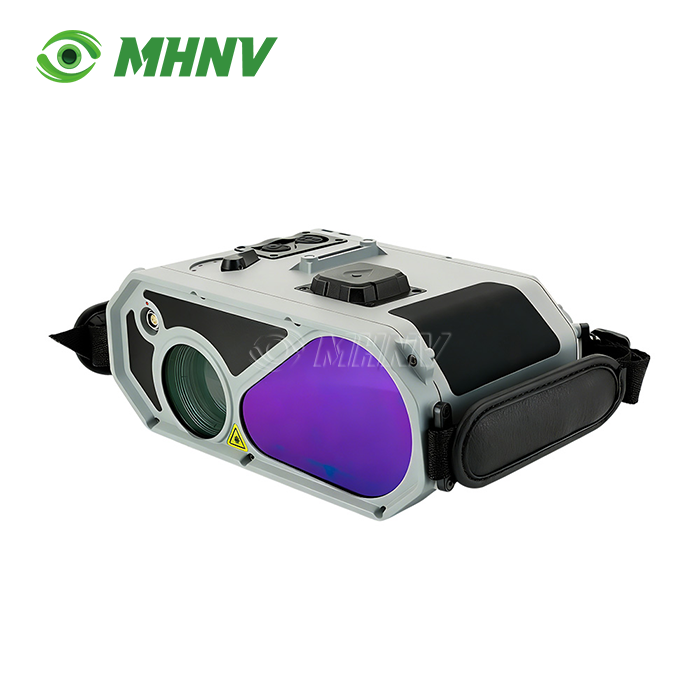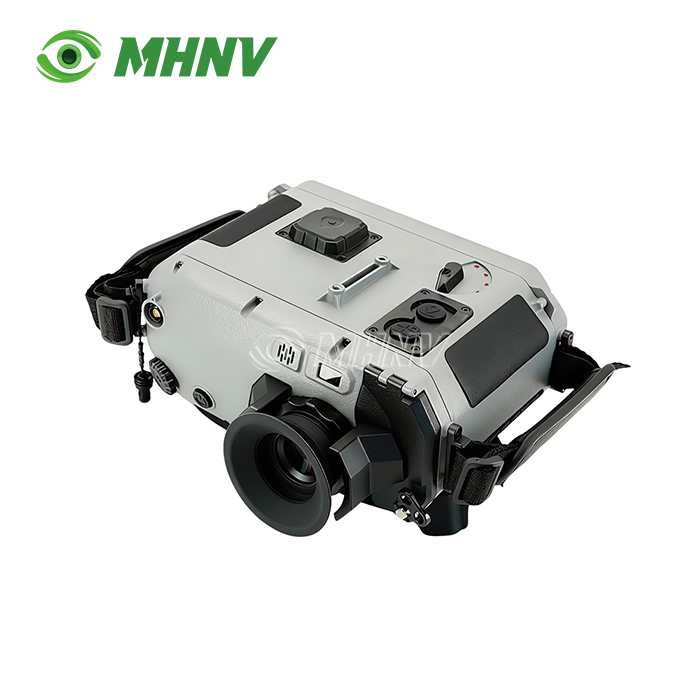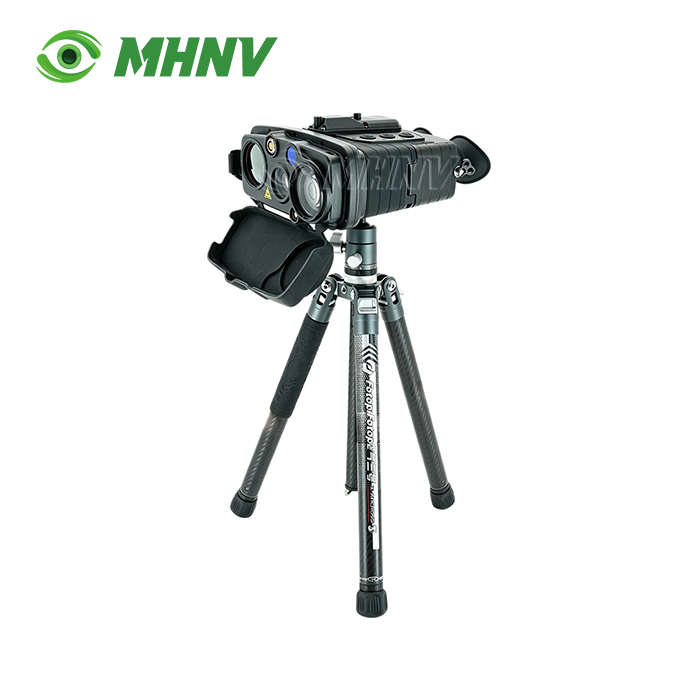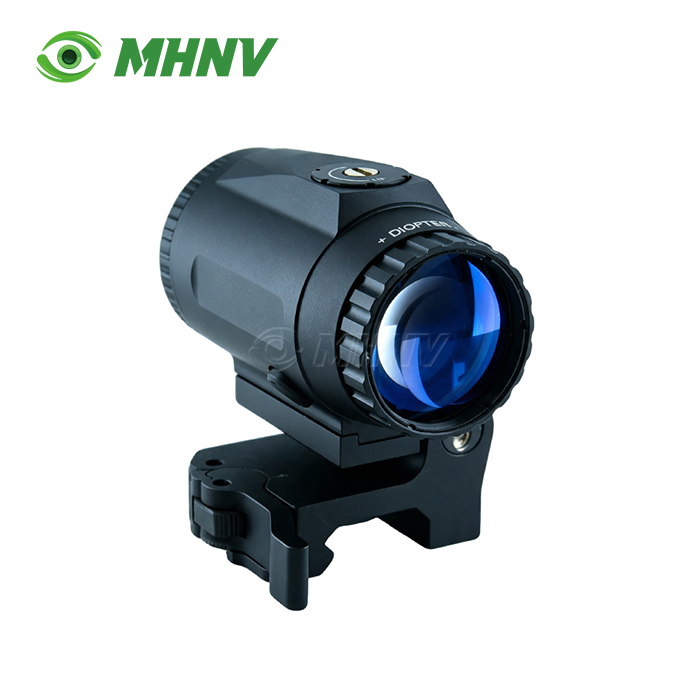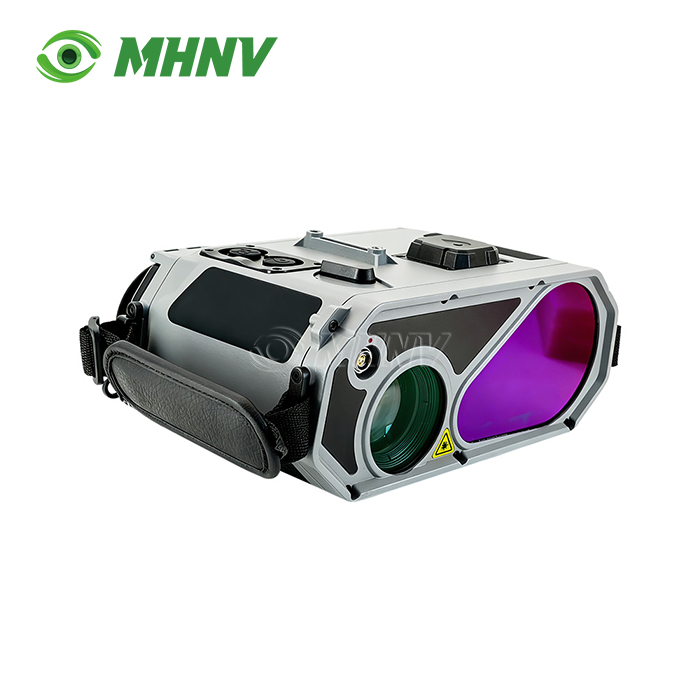
Handheld Target Acquisition System
High-Performance Handheld Target Acquisition System for Long-Range Observation and Precision Positioning Solutions
There is a requirement for small, powerful observation devices for modern reconnaissance and surveillance missions that can provide an exact target location at long range. The MHNV MH-OL25 Handheld Target Acquisition System integrates direct-view 7× optics, Class 1 eye-safe 1535nm laser rangefinder technology, electronic compass, and self-positioning capabilities within a rugged 2.5kg handheld body. The system provides 25 km building detection, 17 km vehicle ranging, 8.5 km personnel identification, and 6 km UAV tracking, all in an enterprise-grade package with 5 m accuracy and 1 mil target positioning precision. With an IP67 protection rating, an operational tolerance of −40°C to +60°C and a continuous runtime of ≥7 hours, the device provides professional-grade performance for artillery observation, coastal surveillance, border patrol and forward reconnaissance operations.
Direct-View Optical Architecture for Zero-Latency Target Engagement
The direct-view optical architecture bypasses digital processing time delays, letting genuine photons go to your eye through a 42mm objective lens with zero latency. With 7 magnification and a 6.7° field of vision, this is the perfect balance between target detail and situational awareness. The device has diopter adjustment from -5D to +5D, thus the entire range of observer eyesight may be accommodated without the need for corrective eyewear.
The reticle based range capability does not require electronics. As the battery wears down, you may still get estimated distance measurements – a key redundancy feature for long field operations. This backup feature differentiates direct-view systems from all-digital systems, which lose functionality during power outages.

Extended-Range Laser Measurement Across Four Target Classifications
The 1535nm laser rangefinder delivers Class 1 eye-safe operation without ocular hazard exclusion zones. Performance specifications include:
- Building targets: ≥25km maximum range
- Vehicle targets: ≥17km maximum range
- Personnel targets: ≥8.5km maximum range
- UAV targets: ≥6km maximum range
The precision is ±5 m over the entire measurement volume and the repetition rate is configurable from 1 to 5 Hz. The single shot mode reduces the laser signal for clandestine operations and the continuous mode tracks moving targets with refresh rates of 5Hz. Minimum measuring range is 150m This allows operation both in close range and long distance scenarios.
Integrated Positioning and Navigation for First-Round Fire Correction
Raw distance measurements are transformed into actionable target coordinates with electronic compass and GNSS integration. The system has 0.3° azimuth accuracy, 0.1° pitch/roll precision, self-positioning accuracy of ≤3m and target positioning accuracy of ≤1 mil. These specs meet the requirements for indirect fire control to coordinate artillery and organise drone strikes.
Multi-target relative distance measurement may track numerous objects at the same time. The in-built ballistic calculator processes trajectory data and map location correction features adjust for topographical variances. The features reduce the sensor to shooter delay and eliminate inaccuracies associated with manual coordinate calculation.

Technical Specifications
| Parameter | Specification |
|---|---|
| Model | MHNV MH-OL25 |
| Optical Magnification | 7× |
| Field of View | 6.7° |
| Objective Diameter | 42mm |
| Diopter Range | −5D to +5D |
| Laser Wavelength | 1535nm (Class 1 eye-safe) |
| Ranging Accuracy | ±5m |
| Measuring Rate | 1–5Hz |
| Minimum Range | 150m |
| Building Range | ≥25km |
| Vehicle Range | ≥17km |
| Personnel Range | ≥8.5km |
| UAV Range | ≥6km |
| Self-Positioning Accuracy | ≤3m |
| Target Positioning Accuracy | ≤1 mil |
| Azimuth Accuracy | ≤0.3° |
| Pitch/Roll Accuracy | ≤0.1° |
| Data Interface | RS232 full transmission |
| Digital Image Output | Scalable |
| Dimensions | 180×220×95mm |
| Weight | 2.5kg |
| Operating Time | ≥7 hours continuous |
| Operating Temperature | −40°C to +60°C |
| IP Rating | IP67 |

Ruggedized Construction for Extreme Environmental Deployment
IP67 ingress protection seals the housing against dust and submersion. Operating temperature range from −40°C to +60°C supports arctic, desert, and coastal deployments. The 2.5kg weight remains manageable for handheld observation during extended missions, while the 180×220×95mm form factor balances portability with optical performance.
Built-in RS232 data transmission streams real-time compass, range, GPS coordinates, and ballistic solutions to command laptops, drone ground stations, and battle-management systems. Scalable digital image output supports optional camera integration for evidence capture and command-post video relay.
Versatile Application Scenarios
This Handheld Target Acquisition System serves multiple operational contexts:
Artillery observation: First-round fire correction with sub-mil grid precision at 15km+ engagement distances.
Coastal surveillance: Shipping detection and vessel identification beyond 20km range.
Border patrol: Personnel infiltration detection at 8.5km with precise coordinate hand-off.
Drone coordination: Real-time target coordinates for unmanned strike missions.
Infrastructure inspection: Long-range assessment of critical facilities without physical access requirements.
FAQ
Q: What makes the MHNV MH-OL25 product suitable for long-range observation compared to standard binoculars?
A: The MHNV MH-OL25 product combines direct-view 7× optics with a 1535nm Class 1 eye-safe laser rangefinder capable of measuring building targets at 25km, vehicle targets at 17km, and personnel at 8.5km—performance levels typically requiring tripod-mounted systems weighing 5–10kg. Standard binoculars provide visual magnification without rangefinding capability or electronic positioning, limiting their utility for coordinate-dependent missions. The integrated electronic compass (0.3° azimuth accuracy) and GNSS module (≤3m self-positioning) generate target grids that eliminate manual calculation errors, while the RS232 data interface streams coordinates directly to command systems, reducing sensor-to-shooter latency from minutes to seconds.
Q: How does direct-view optical design improve operational reliability during extended field deployments?
A: Direct-view optical architecture transmits real photons through the 42mm objective lens to your eye without digital processing, eliminating screen latency and preserving natural depth perception. The reticle-based ranging system functions independently of electronics, providing approximate distance measurement even when battery power depletes—a critical redundancy feature absent in fully digital target acquisition platforms that become inoperable during power failures. The −5D to +5D diopter adjustment accommodates all observer eyesight variations, allowing operation without corrective eyewear that can fog during rapid temperature transitions in arctic or high-humidity environments.
Q: What operational advantages does Class 1 eye-safe laser classification provide?
A: A: Class 1 eye-safe certification at 1535nm wavelength eliminates ocular hazard exclusion zones, allowing unrestricted operation near friendly personnel, civilian populations, and reflective surfaces without risk of eye injury from direct or reflected laser exposure. Shorter-wavelength 905nm laser systems require restricted firing corridors and safety protocols that delay target engagement and compromise covert positioning. The 1–5Hz adjustable repetition rate supports both single-shot mode for minimal laser signature during covert reconnaissance and continuous mode for tracking moving vehicles, vessels, and aircraft at 5Hz refresh rates.
Q: How does multi-target relative distance measurement enhance situational awareness?
A: Multi-target relative distance measurement simultaneously tracks multiple objects and calculates spatial relationships between them, enabling operators to assess convoy spacing, formation patterns, and approach vectors without sequential ranging of individual targets. Combined with the built-in ballistic calculator and map positioning correction features, this capability transforms the product into a complete fire control solution that processes trajectory data, compensates for terrain elevation, and generates first-round artillery correction grids with ≤1 mil target positioning accuracy—precision sufficient for indirect fire missions.
Q: What environmental conditions can the IP67-rated housing withstand?
A: IP67 ingress protection certifies complete dust-tightness and submersion resistance to 1 meter depth for 30 minutes, protecting internal optical and electronic components during river crossings, heavy precipitation, and dust storm exposure. The −40°C to +60°C operating temperature range supports deployment across arctic tundra, desert environments, and tropical coastal regions. Ruggedized construction withstands mechanical shock and vibration encountered during vehicle transport, helicopter insertion, and rough handling, while the ≥7 hours continuous runtime eliminates frequent battery changes during extended observation missions.

Contact MHNV for Handheld Target Acquisition System Solutions
For technical specifications, custom integration support, or ordering information for Handheld Target Acquisition System, contact our team at sarah@mh-elec.com. We deliver worldwide shipping and comprehensive technical assistance.
YOU MAY LIKE