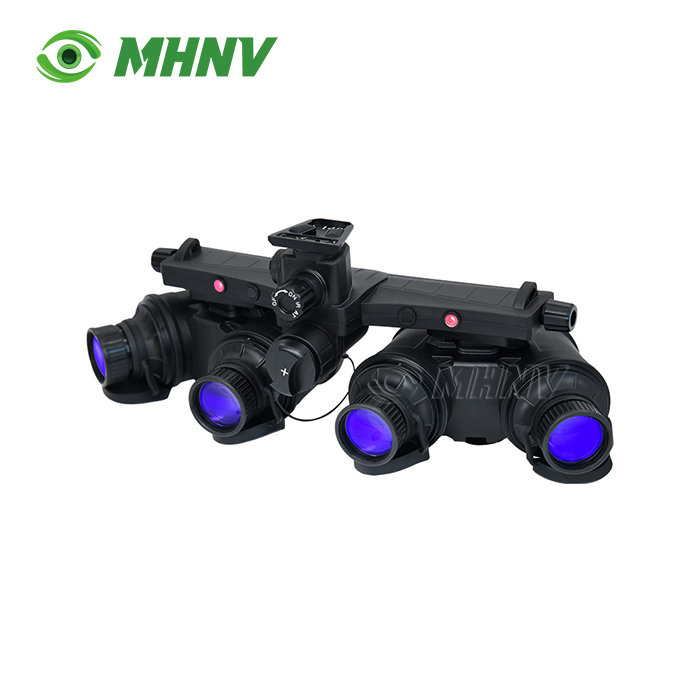
Panoramic Night Vision Goggles 120 Degree Fov
Premium Four-Tube Panoramic Night Vision Goggles 120 Degree Fov for Enhanced Situational Awareness and Professional Night Operations
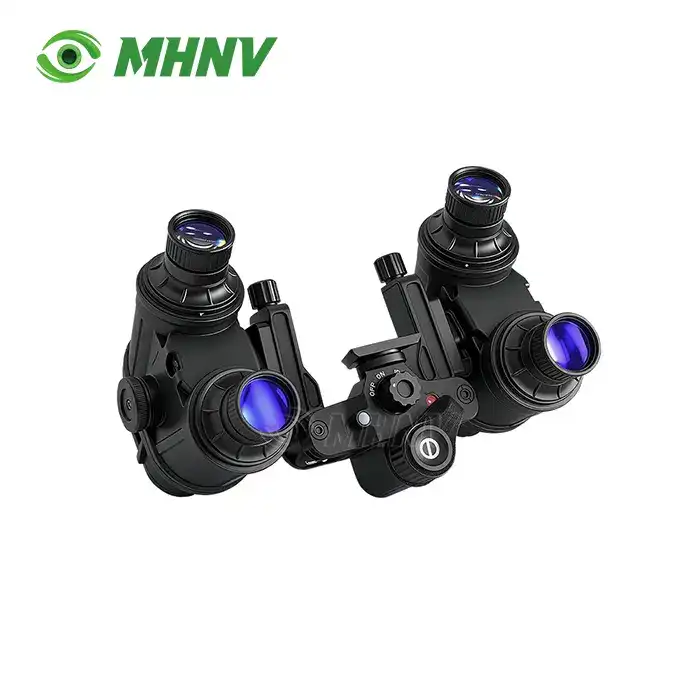
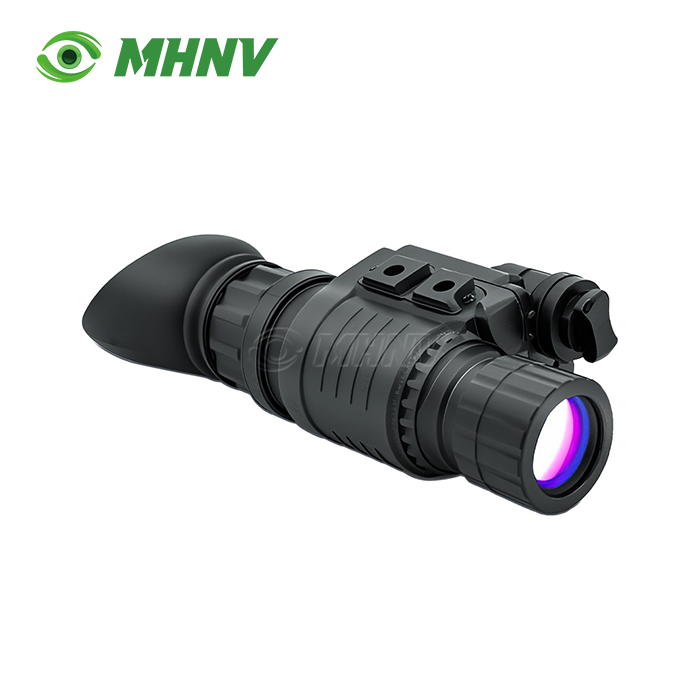
MHNV® introduces the GPNVG series Panoramic Night Vision Goggles 120 Degree Fov, delivering enterprise-grade performance for professional night operations. This quad-tube system features an ultra-wide 120-degree horizontal field of view, utilizing four 18mm S-25 photocathode image intensifier tubes with resolution rated at 57–64 lp/mm. The advanced F1.18 lens system achieves 120 lp/mm MTF across the entire panoramic field, while the optimized 880-gram housing with IP65/IP67 protection enables extended deployment. Flexible power options include internal single CR123 or external 4-cell pack providing 30–80 hour runtime. With IPD adjustment from 50–85 mm and integrated 850 nm IR illuminator, the system addresses critical operational requirements for security, search-and-rescue, and professional observation applications.
Ultra-Wide Field Of View Architecture
The product employ a sophisticated four-tube configuration that triples peripheral awareness compared to conventional 40-degree dual-tube systems. This panoramic layout combines two central tubes with two peripheral channels, creating seamless visual coverage across 120 degrees horizontally and 50 degrees vertically.
By eliminating the restrictive "tunnel vision" effect inherent in standard night vision devices, operators gain natural human-like scanning capability. The expanded coverage reduces head movement requirements during critical observation tasks, accelerating target detection and decision-making cycles.
The system enables faster threat identification during close-quarter scenarios where peripheral awareness directly impacts operational success. Navigation through complex terrain and structures becomes significantly safer when obstacles outside the central viewing cone remain visible throughout movement.

Technical Specifications
| Parameter | Specification |
|---|---|
| Model | MHNV GPNVG |
| Magnification | 1× |
| Field of View | 120° ± 2° (H) × 50° ± 2° (V) |
| Photocathode | 18mm S-25 |
| Resolution | 57–64 lp/mm |
| Lens System | 22.5mm F1.18 |
| MTF | 120 lp/mm |
| Focus Range | 250mm to infinity |
| Eye Relief | 30mm |
| Pupil Diameter | 8mm |
| Diopter Range | +0.5 to -2.5 |
| IPD Adjustment | 50–85mm |
| IR Illuminator | 850nm 20mW |
| Battery Type | CR123 × 1 (internal) or CR123 × 4 (external) |
| Battery Capacity | 800–3200mAh |
| Runtime | 30–80 hours |
| Operating Temperature | -40°C to +55°C |
| Humidity Range | 5–95% |
| Protection Level | IP65 (IP67 optional) |
| Dimensions | 155mm × 136mm × 83mm |
| Weight | 880g (without battery) |

Advanced Optical Performance
The F1.18 fast aperture design captures 12 percent more photon flux than F1.2 competitor systems, enhancing low-light performance under challenging conditions. This optical advantage proves critical during overcast nights or heavily shadowed environments where starlight alone provides illumination.
Each of the four independent optical channels maintains consistent MTF performance at 120 lp/mm across the entire panoramic field. This uniformity ensures that peripheral details remain as sharp and discernible as central imagery, eliminating the performance degradation common in inferior multi-tube designs.
The 22.5mm lens system balances light-gathering capability with compact form factor requirements. Combined with 8mm exit pupil diameter and 30mm eye relief, the optical configuration accommodates extended wear without eye fatigue while maintaining full image transmission to the operator's retina.
Modular Power Management System
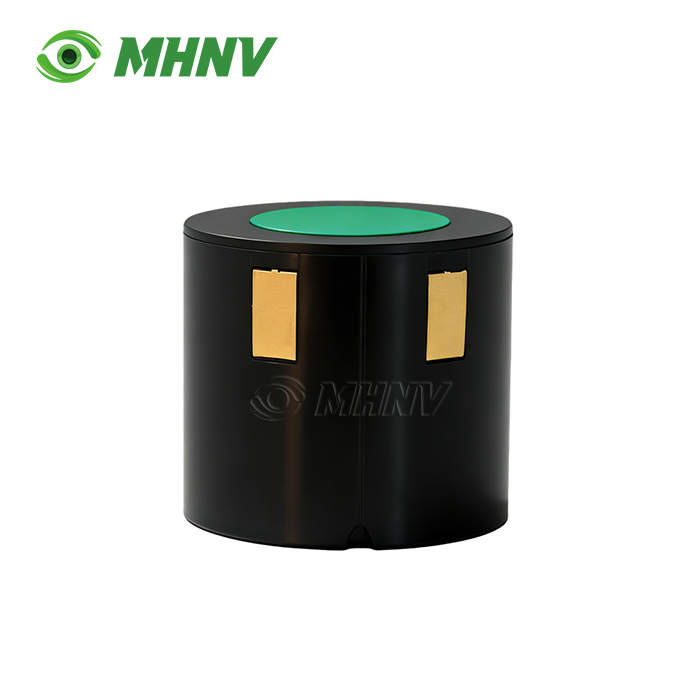
Dual battery architecture addresses diverse operational requirements within a single platform. The internal CR123 configuration provides lightweight tactical capability for mobile operations requiring minimum carried weight. For extended surveillance missions, the external 4-cell pack delivers sustained 80-hour runtime without device removal.
This flexibility eliminates the need for separate equipment procurement based on mission duration. Operators can adapt the same Panoramic Night Vision Goggles 120 Degree Fov unit to both rapid-response scenarios and prolonged observation tasks by simply selecting the appropriate power configuration.
Battery transition occurs without tools or complex procedures. The standardized CR123 format ensures global availability and simplified logistics planning across international deployment locations.
Ergonomic Design For Extended Missions
At 880 grams without battery, the MHNV GPNVG achieves class-leading weight distribution for a four-tube panoramic system. Polymer-carbon composite housing construction reduces mass while maintaining structural integrity under operational stresses.
The extended IPD adjustment range from 50–85mm accommodates users beyond typical anthropometric limits found in standard 55–72mm systems. This inclusive design enables shared equipment deployment across diverse operator populations without requiring individual unit assignments or accessory modifications.
Balanced weight distribution and helmet mount integration allow sustained 4–6 hour mission profiles. The ergonomic design minimizes cervical strain that limits operational effectiveness with heavier competitor panoramic systems exceeding 1200 grams.
Environmental Durability Standards
IP65 protection as standard (with IP67 available) ensures reliable operation in adverse weather conditions. The sealed housing prevents dust ingress during desert operations and withstands water exposure during maritime applications.
Operating temperature range from -40°C to +55°C covers extreme environmental conditions from Arctic surveillance to desert reconnaissance. Humidity tolerance spanning 5–95% maintains functionality across tropical, temperate, and arid climate zones.
The rugged construction meets demanding operational requirements for professional security, search-and-rescue coordination, and industrial inspection applications. Shock-resistant mounting and reinforced tube housings protect the sensitive intensifier components during vehicular transport and dynamic movement scenarios.
Integrated IR Illumination Capability
The built-in 850nm 20mW infrared illuminator provides supplemental lighting for close-range observation and navigation. This covert illumination source remains invisible to the unaided eye while enhancing detail visibility within confined spaces or shadowed areas where ambient light proves insufficient.
The 850nm wavelength balances detection range with power efficiency. The integrated design eliminates the need for separate IR devices, reducing equipment complexity and freeing mounting points for additional mission-specific accessories.
Operator-controlled activation allows selective use based on tactical requirements. The illuminator functions independently from the main imaging system, enabling rapid on-off cycling without affecting tube operation or necessitating gain readjustment.

FAQ
Q: What are the operational advantages of the 120-degree field of view versus the 40-degree systems?
A: The 120-degree horizontal field of view provides three times the peripheral awareness of traditional dual-tube nite vision equipment, revolutionising the way that operators see their environment in low-light conditions. This broadened view removes the limiting ‘tunnel vision’ effect requiring frequent head scanning to observe lateral areas, and so greatly reduces cognitive burden and physical weariness on extended missions. The wider field allows natural human-like visual scanning capability, allowing one to simultaneously monitor central objectives and peripheral threat vectors, directly accelerating the observe-orient-decide-act cycle in a dynamic operational environment where situational awareness is the key to success.
Q: How can you properly wear the weight of four-tube panoramic nite vision devices for lengthy periods?
A: Weight management of the device is achieved by balancing the helmet mount with optional external battery packs that serve as back counterweights to maintain equilibrium, so distributing the burden across the cranial platform rather than at the front mount point. The 880-gram MHNV GPNVG system provides this balance through an optimised polymer-carbon composite design that preserves structural integrity while minimising superfluous material mass. With the correct adjustment of the helmet suspension system and vertical mounting position, the load is transferred through the skull rather than the neck musculature, permitting 4–6 hour operational periods that heavier competitor systems cannot sustain without inducing operator fatigue that degrades performance.
Q: Are there gaps or blind areas in the images between the four individual tubes in panoramic nite vision goggles?
A: Professional level panoramic systems ( such the MHNV GPNVG ) employ exact optical alignment and overlapping fields of coverage to produce nearly seamless image fusion throughout the 120 degree horizontal field of view, with very little visible borders between adjacent tube outputs. The four optical channels are placed with calculated angular overlap so that the human visual cortex may automatically integrate the various images into a unified panoramic perception after brief periods of adaptation. Advanced manufacturing tolerances mean that tube positioning, focus matching, and gain consistency across all four channels eliminate brightness variations or alignment errors that could lead to distracting transition zones, ensuring smooth peripheral-to-central visual flow that supports natural eye scanning patterns during operation.
Q: Is there a way to upgrade or change out the individual image intensifier tubes without having to replace the complete goggle system?
A: Yes, the MHNV GPNVG has a modular tube architecture that allows for individual image intensifier replacement to perform maintenance, repair damage or improve performance. This greatly increases the service life of the system and reduces the long-term ownership costs as compared to sealed non-serviceable systems. Each 18mm tube is mounted in a precision aligned housing that preserves optical collimation when correctly installed utilising factory calibration methods. After tube replacement, the system should be checked for optical alignment and the four channels gain matched to maintain the same image quality and to avoid eye fatigue caused by the difference in brightness or focus between neighbouring viewing zones. This serviceability enables incremental system improvements when better tube technology becomes available rather than needing entire unit replacement.
Q: How does the power consumption of four-tube systems compare with the regular dual-tube NV devices?
A: Four-tube panoramic setups inherently use nearly double the electrical power of dual-tube systems since they operate twice the number of active picture intensifiers at any given time. They therefore require bigger battery capacity to provide the same duration of operation. The MHNV GPNVG satisfies this with dual power architecture providing an internal single CR123 for weight sensitive tactical applications providing 30 hour baseline runtime, or an external 4-cell CR123 pack providing extended 80 hour operation for surveillance missions where sustained capability is more important than carried weight. Operators are not forced to accept a one-size-fits-all compromise, with the flexibility to select the appropriate power configuration for specific mission profiles. The standardised CR123 format also ensures worldwide availability of batteries and simplifies logistics planning for a wide variety of deployment environments.
Contact MHNV® For Panoramic Night Vision Solutions
Discover how the MHNV GPNVG Panoramic Night Vision Goggles 120 Degree Fov can enhance your operational capabilities. Contact our technical team at sarah@mh-elec.com for detailed specifications and application consultation.
YOU MAY LIKE