Circle Dot Optic Certifications: What Should Buyers Verify?
When sourcing a Circle Dot Optic for tactical, law enforcement, or competitive applications, certifications are not paperwork formalities — they are the measurable proof that a product performs under real operational stress. Buyers who skip certification verification risk receiving optics that fail shock tests, drift under temperature extremes, or carry no enforceable warranty. This guide walks through every critical certification layer that procurement managers, OEM buyers, and distributors must scrutinize before committing to a holographic or reflex sight purchase.
Core Certification Criteria Buyers Must Verify
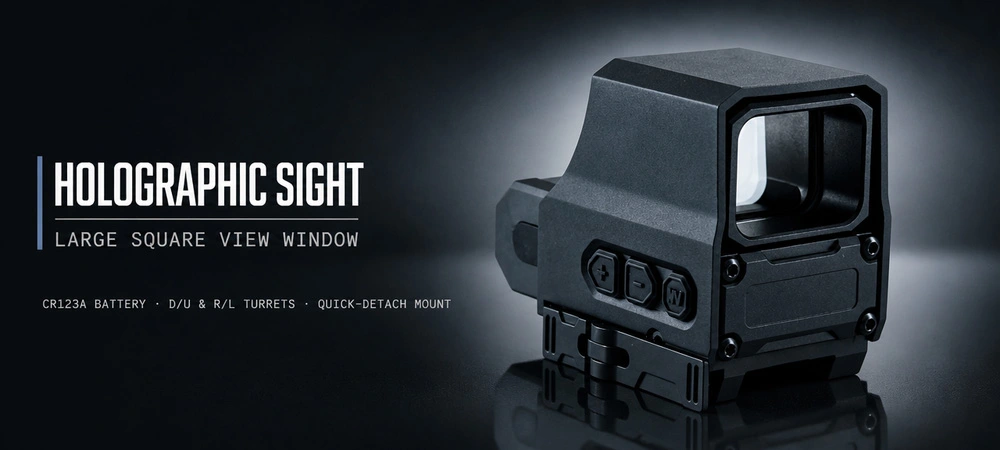
Before approving a purchase order, buyers should make sure that each claimed certification meets the needs of the business. The MHNV® MH-KW2S laser holographic sight is a good example because it has been tested for waterproofing to IP68, shock resistance to 1200G according to MIL-grade standards, and an operating temperature range of -40°C to +65°C. These are all performance parameters that should be written down, not just assumed.
When looking at Circle Dot Optic suppliers, these are the main approval factors that every buyer should look at:
- Reticle performance validation: Photometric tests in a lab should show that the 635 nm laser energy creates a clear 1 MOA dot in the middle and a well-defined 65 MOA ring around it at all 13 brightness levels for daytime viewing and 3 levels for nighttime viewing, with no blooming or ghosting at full output.
- Shock and vibration endurance: To meet MIL-STD-810G standards, something must be able to withstand multi-axis shock bursts of more than 1000G. The MH-KW2S is rated to 1200G, which means it can handle high-caliber rifle platforms and long-term deployments in the field with no loss of data.
- Waterproof and environmental sealing: IP68 certification proves full submersion resistance, not just splash protection for Holographic Sights. By cleaning the product with nitrogen during production, internal fogging is stopped across the entire operating temperature range.
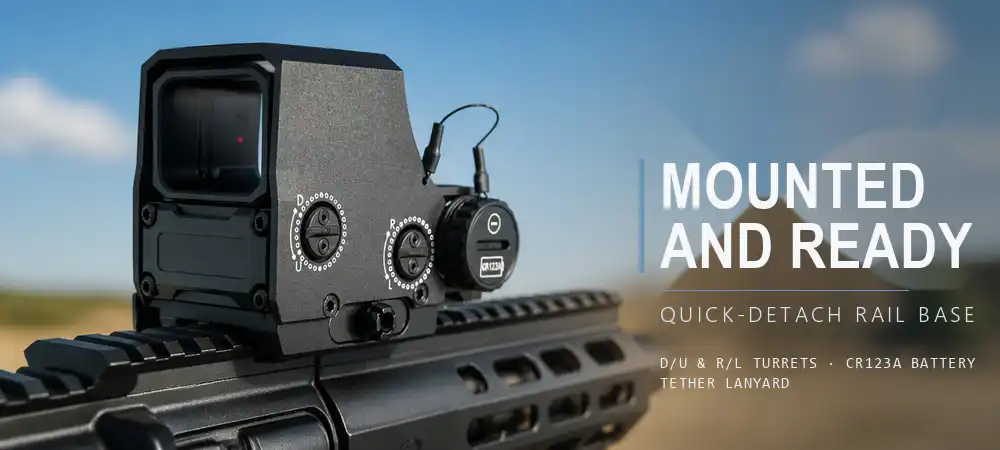
- Electronic and battery safety: The CR123A power source on approved glasses should be in line with IEC 60086. The MH-KW2S can run continuously for more than 2,000 hours at medium brightness. It has a reticle flicker low-battery warning that meets practical safety standards.
- Mounting system compatibility: The quick-detach lever mount works with standard weapon platforms without the need for an adapter because it is compliant with Picatinny rails (MIL-STD-1913). It takes the MH-KW2S less than 10 seconds after landing to get a reliable zero return.
These certification factors work together to show that a dot-sight system is reliable in the real world. When buyers check all five layers, they greatly lower the risk of buying for big OEM orders.
How to Verify Authenticity and Certification Validity
In the optics supply chain, certification theft is known to happen. On wholesale sites, fake CE markings and IP scores that can't be proven are common. Until direct documentation requests are made, procurement teams should treat every Holographic Sights certification claim as unverified.
Practical Verification Methods
The absolute minimum that must be asked for is a numbered third-party test report, not a marketing brochure. For IP68 claims, you should ask for the exact depth of water, length of time, and name of the testing lab. To find out about shock resistance, ask for the shock-pulse pattern data. As part of its ISO 9001:2015-certified production process, MHNV® supports this step by sending full QC data sheets with every unit it ships. Cross-referencing with records from official licensing bodies like TÜV, SGS, and Intertek gives you even more peace of mind.
Red Flags in Uncertified Optic Claims
If an optic says it is "IP67-equivalent" or "MIL-grade inspired" but doesn't include test results, that means it hasn't been officially certified. Also, sellers who can't provide a CE Declaration of Conformity for orders going to the EU put buyers at risk of having their goods rejected at customs and being held responsible later on.
Comparison of Certified Circle Dot Optic Products: What Certifications Differentiate Top Brands?
Premium holographic sight makers set themselves apart not with marketing language but with the level of certification they offer. In the business world, the EOTech and Vortex Razor platforms are used as standards for their proven parallax performance and environmental ratings. The MHNV® MH-KW2S Holographic Sights is immediately comparable to this level: parallax stays within 2 MOA from 0 to infinity, elevation and windage can be changed at 0.5 MOA per click, and the click precision is the same as the EOTech EXPS3 class standard.
Certification Completeness as a Procurement Criterion
When looking at a Circle Dot Optic manufacturer, buyers should ask for a full approval grid that includes standards for mechanical, electronic, and environmental factors. It is safer to buy from a supplier that has proof of ISO 9001:2015, CE, RoHS, and MIL-STD-810 compliance than from one that only makes test claims. Completeness of certification is also directly linked to being able to uphold warranties and get products through approved routes of distribution.
Best Practices for B2B Buyers When Procuring Circle Dot Optics
Before placing a large order for hologram sights, it is important to do structured due diligence. A useful pre-purchase certification guide keeps buyers from having to pay a lot of money for compliance problems and field returns.
When buying a lot of Circle Dot Optics, buyers should make sure that the following steps are taken as part of their normal supplier qualification process:
- Request the ISO 9001:2015 certificate number and verify its validity date directly with the issuing body.
- Obtain IP68 and shock resistance test reports from a named third-party laboratory.
- Confirm CE and RoHS compliance documents are product-specific — not generic company-level declarations.
- Validate Picatinny rail compatibility through MIL-STD-1913 documentation.
- Inspect the housing material certification: 7075-T6 aerospace aluminum with hard black oxide surface treatment should be accompanied by material composition reports.
By using this checklist regularly for all Circle Dot Optic seller evaluations, procurement managers can get rid of brand bias and work with an objective framework. MHNV® helps OEM and ODM partners with all of this documentation, and their pre-sales technical teams are available in a number of time zones.
Conclusion
Verification of certifications is the most important part of buying Circle Dot Optics responsibly. When buyers demand proof of IP68 waterproofing, MIL-STD-810G shock documentation, and verifiable ISO 9001:2015 manufacturing certification, they lower their risk of product failures and supply chain disruptions. The MHNV® MH-KW2S laser holographic sight shows that approved performance, including 1200G shock resistance, IP68 submersion protection, battery life of 2,000+ hours, and parallax errors of less than 2 MOA, is possible at prices that are competitive with OEMs. Deep certification sets trustworthy long-term providers apart from temporary ones.
FAQ
1. Why are certifications critical when sourcing a Circle Dot Optic internationally?
Certifications show that a hologram dot sight meets performance and safety standards that are enforced and accepted around the world. Without them, buyers have no independent basis for validating Circle Dot Optic reticle accuracy, waterproofing depth, or shock endurance claims — and no legal recourse if products underperform.
2. How can I independently verify a supplier's IP68 or MIL-STD-810G certification?
Ask for the original test report from a third-party lab, along with the name of the testing body, the date of the report, and the exact test settings. You can cross-check license numbers against files kept by well-known organizations like SGS, TÜV Rheinland, or Bureau Veritas.
3. What should I do if a Circle Dot Optic supplier cannot provide certification documentation?
If there is no paperwork, that should be taken as a sign of high risk. Take the request to the supplier's quality assurance department. If the documentation is still not available, have a third-party agent inspect the goods before they are shipped, before payment is released.
4. Does the MHNV® MH-KW2S ship with full certification documentation?
Yes, MHNV® includes numbered QC data sheets, papers showing compliance with CE and RoHS standards, and IP68 and shock resistance test references with every unit. This meets the needs of both retail channel compliance and B2B import requirements.
Partner with MHNV® for Verified Circle Dot Optic Solutions
MHNV® is a well-known company that makes Circle Dot Optics. They sell approved holographic sights to wholesalers and original equipment manufacturers (OEMs) in more than 60 countries. Full IP68, 1200G shock resistance, CE, and RoHS documentation for the MH-KW2S is ready to go with every order. You can email our technical team at sarah@mh-elec.com to get catalogs of our products, certification packages, and bulk pricing. Buyers who meet the requirements get a personalized consultation within 24 hours.
References
1. American National Standards Institute (ANSI). ANSI/ISEA 112 — Performance and Testing Standards for Optical Sighting Systems. ANSI, 2021.
2. U.S. Department of Defense. MIL-STD-810H: Environmental Engineering Considerations and Laboratory Tests. Department of Defense, 2019.
3. International Electrotechnical Commission. IEC 60529: Degrees of Protection Provided by Enclosures (IP Code). IEC, 2013.
4. International Organization for Standardization. ISO 9001:2015 — Quality Management Systems: Requirements. ISO, 2015.
5. European Commission. Directive 2011/65/EU on the Restriction of Hazardous Substances (RoHS 2). Official Journal of the European Union, 2011.
6. National Institute of Justice. NIJ Standard 0603.01: Ballistic Resistance of Personal Body Armor and Associated Optical Devices. U.S. Department of Justice, 2020.
YOU MAY LIKE