How to Import Gen 3 Image Intensifiers for Business
Importing a Gen 3 image intensifier for business purposes is more strategic than simply placing an order overseas. These high-sensitivity vacuum-optoelectronic devices, built around a Gallium Arsenide photocathode, sit at the intersection of advanced photonics and defense-grade manufacturing. Whether you are a distributor, OEM integrator, or tactical equipment brand, understanding the technology, compliance landscape, supplier vetting process, and logistics framework will determine whether your procurement program succeeds or stalls. This guide walks you through every critical decision point.
Understanding Gen 3 Image Intensifiers: Technology and Core Benefits
What Makes GaAs Photocathode Technology Different
A Gen 3 Image Intensifier tube works by turning photons in the environment, including those with near-infrared wavelengths, into electrons using a GaAs photocathode, boosting them through a Microchannel Plate (MCP), and displaying an image that can be seen on a phosphor screen. The photocathode sensitivity of the GaAs material is more than 1,800 μA/lm, and premium tubes can reach up to 3,000 μA/lm. This gives the gadget a brightness gain of ≥10,000 cd/㎡/lx and an effective photon amplification factor of 30,000–50,000×, which lets it take clear images under both bright stars and cloudy moonlight.
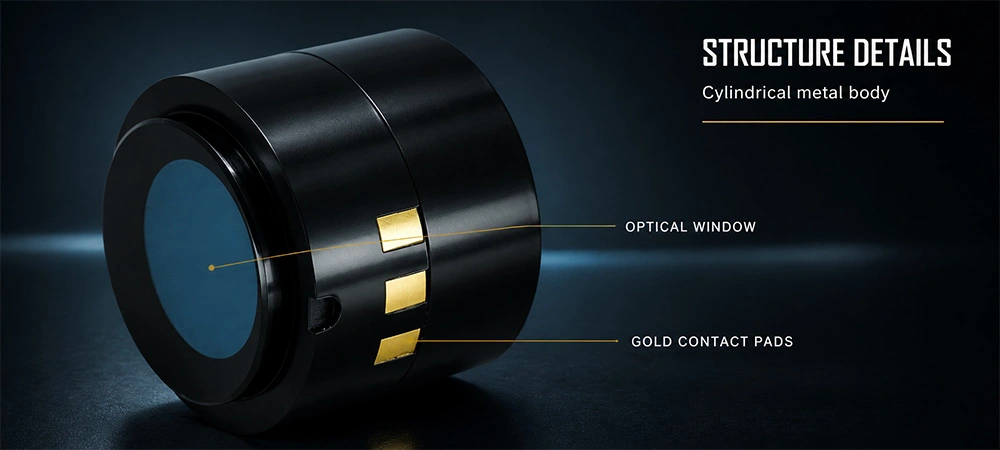
Key Performance Specifications Worth Knowing
There are a number of measured factors that affect purchasing choices that are part of the technical profile of a quality tube. Here are the main benefits that buyers always choose:
- With a resolution of 64–72 lp/mm and a photocathode useful width greater than 17.5 mm, it is possible to get clear images from far away, which is important for surveillance and target identification.
- SNR ≥ 28 (typical), up to >30 — a higher signal-to-noise ratio directly leads to a cleaner, less grainy image in low-light conditions, which is what tactical and security-tier buyers look for.
- EBI ≤ 0.25 μlx — this amount of equivalent background illumination means that there is almost no self-generated noise. This creates high-contrast images that help people stay aware of their surroundings when it is almost dark.
- Ion barrier film on the MCP extends the rated operational life beyond 10,000 hours. This solves one of the biggest problems with buying legacy tubes.
- Autogating technology adjusts the voltage at the microsecond level when the photocathode is exposed to sudden bright sources. This stops image blooming and keeps the tube from getting damaged.
- With an operating temperature range of -45°C to +55°C and a storage temperature range of -55°C to +70°C, it can be used in a wide range of conditions, from patrols in the Arctic to security perimeters in the desert.
These benefits directly fix the most important problems that most B2B buying teams point out: not enough detection range in very low light, high noise levels in high-gain settings, and tubes breaking down faster in the field. There are two types of screens available: P43 green phosphor and P45 white phosphor. The P45 screen is better for long-term use because it does not strain the eyes as much, which is important for both law enforcement and medical imaging integrators.
Key Considerations When Importing Gen 3 Image Intensifiers for Business
Regulatory Compliance and Export Control
The International Traffic in Arms Regulations (ITAR) control the movement of defense-related technology in the US. Any buyer looking for Gen 3 Image Intensifiers must make sure they follow these rules. Before a package goes through customs, buyers must make sure that their seller has the right export licenses and that all the paperwork is ready, including end-user certificates. Along with serialized QC data sheets that check SNR, FOM, resolution, halo, and EBI for each tube, each package should also come with CE, RoHS, FCC, and ISO 9001:2015 certificates.
Supplier Vetting and Pricing Transparency
The type of tube has a direct effect on unit cost. Some important factors that affect the price are the quality of the GaAs wafer, the consistency of the MCP production batches, the type of phosphor powder (P43 vs. P45), and the output faceplate configuration—inverting flat, non-inverting spherical (SR40), or non-inverting flat. Before agreeing to large orders, buyers should ask for lab test results, sample units, and proof that each lot can be tracked. A big risk in the supply chain is suppliers who will not give you personalized QC data sheets.
Comparing Gen 3 Image Intensifiers: Making Informed Procurement Decisions
Knowing how the competition works helps buyers spend their money wisely. Gen 2+ tubes are less expensive, but they are not as sensitive. The photocathode values are usually 40–60% lower than Gen 3 limits, and the SNR performance rarely goes above 22. Gen 4 tubes do not have an ion barrier film, which leads to small SNR gains in certain photon-flux situations. However, their working lifespan isn't proven to go beyond 10,000 hours, and export controls make them much harder to find. Digital night vision gets rid of all the complexity of tubes, but it has problems with latency and resolution that make it unsuitable for precision tactical or OEM defense integration.
A GaAs-based Gen 3 Image Intensifier is the best value for money when it comes to long-term cost-performance for industrial inspection, border monitoring, and business security OEM projects. Gen 3 MX10160-series tubes consistently meet system-level specifications without the import friction that Gen 4 hardware introduces. This is good news for buyers looking for white-label tactical brands or integration into PVS-14 or PVS-31 compatible housings.
Step-by-Step Guide to Importing Gen 3 Image Intensifiers
The order in which you source is just as important as the supplier you choose. Follow these steps in order to protect the security of procurement for your Gen 3 Image Intensifiers:
- Confirm supplier credentials: Check the export license status, ISO 9001:2015 certification, and paperwork for CE, RoHS, and FCC approval before starting a business conversation.
- Request technical datasheets and samples: Each sample tube should have a serialized QC report that includes the measured SNR, resolution (lp/mm), EBI, and FOM values. If the tubes work at 2.2–3.4V, have an input current of ≤25mA @3V, and weigh < 75 g, that means they were made correctly.
- Negotiate volume pricing with lead-time clarity: In-stock units usually ship within 3–7 business days. It takes 15–30 work days for custom mass production runs. Include this in the process of planning your inventory.
- Optimize freight arrangements: Framework deals with DHL, FedEx, UPS, or EMS offer door-to-door express service in 5–8 days. For full-container OEM orders, combining sea and air shipping through Shanghai or Shenzhen ports lowers the cost of logistics per unit.
- Secure complete export documentation: Every package must include a Commercial Invoice, a Packing List, CO/CE/RoHS certificates, and, if needed, an MSDS for battery-integrated parts.
A disciplined procurement process keeps you from getting stock that does not meet your standards and avoids costly customs delays that throw off production plans further down the line.
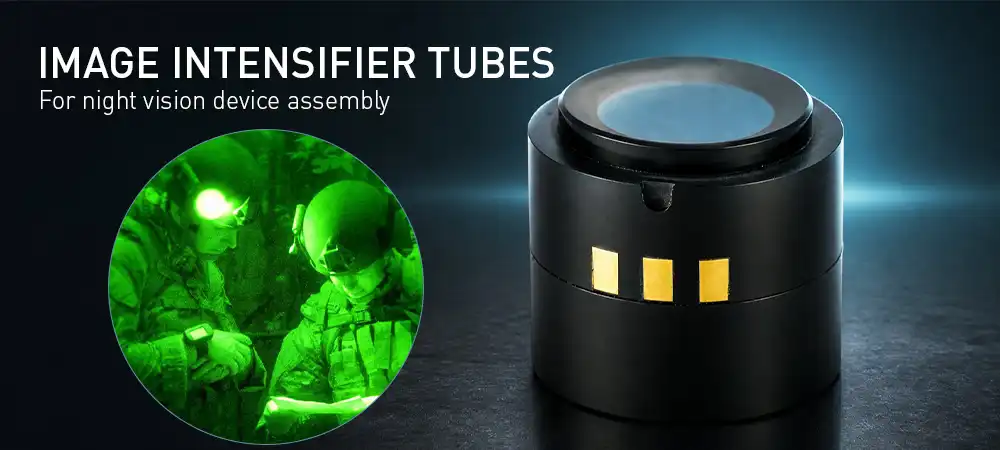
Best Practices and Future Trends in Night Vision Tube Procurement
In the category of night vision intensifier tubes, long-term procurement stability depends less on individual transaction prices and more on the engineering depth of the supplier. Companies that do their own research and development in optics, software, FPGA, and hardware design are better able to support product iterations, adapt to changes in specifications, and make sure that all production batches of tubes work the same way. Buyers should give more weight to vendors that offer free IIT testing, repair programs backed by warranties, and the ability to customize OEM housing, phosphor, and faceplates in the same production cycle.
Higher-FOM Gen 3 Image Intensifiers (2000+), better autogating precision, and combined thermal-plus-intensifier image systems are what the market is moving toward. Buyers who set up framework supplier relationships now will be able to take advantage of these improvements before competitors on the spot market, and they will also be able to keep their procurement going smoothly as regulations change.
Conclusion
To import a Gen 3 Image Intensifier for business use, you need to do more than just find a product. You also need to know how to properly evaluate suppliers, follow all the rules, and set up a procurement workflow that is designed to be consistent. The SNR, EBI, and resolution metrics of GaAs photocathode tubes have been shown to be useful in defense, security, and industrial OEM programs. People who buy from makers with approved quality systems, clear paperwork, and real customization options will always do better than people who buy this as a commodity.
FAQ
1. What certifications should a Gen 3 image intensifier tube supplier provide?
Buyers should demand at least ISO 9001:2015, CE, RoHS, and FCC certifications along with lab test results. Every Gen 3 Image Intensifier tube should come with a QC data sheet that is serialized and lists the measured SNR, resolution, FOM, halo, and EBI values.
2. What is the difference between P43 and P45 phosphor screens?
The P43 uses green phosphor (Gadolinium Oxysulfide), which is the standard way to show night vision. The P45 uses white phosphor (Yttrium Aluminum Garnet), which makes a grayscale image with better contrast and less eye strain. This type of image is better for tactical and medical applications that require long-term use.
3. How long does shipping typically take for image intensifier tubes?
Items that are in stock will be sent out within 3–7 business days. Orders for bulk production take 15–30 business days, based on the details and quantity.
4. What input voltage do these tubes require?
The normal input voltage is between 2.2V and 3.4V, and the normal input current is less than 25mA at 3V. This means that it can work with normal NVG power circuits.
5. Is autogating standard on Gen 3 tubes?
Autogating, or dynamic photocathode voltage regulation, is built into high-quality tubes. It works at the microsecond level to keep images from blooming in light environments that change quickly.
Partner With MHNV® for Verified Gen 3 Image Intensifier Supply
MHNV® is a Gen 3 Image Intensifier company based in China that has been making them for over 12 years and has approved OEM/ODM production experience. They work with dealers and technology integrators in over 60 countries. Our GaAs photocathode tubes come with full ISO 9001, CE, RoHS, and FCC paperwork. They come in P43/P45 phosphor, different faceplate configurations, and FOM 1200–2000+ grades. Contact our B2B team directly at sarah@mh-elec.com to request a sample, datasheet, or volume pricing.
References
1. Jane's Defence Weekly. (2023). Night Vision Technology: Procurement and Export Control Landscape.
2. Society of Photo-Optical Instrumentation Engineers (SPIE). (2022). Advances in GaAs Photocathode Image Intensifier Performance. SPIE Proceedings Vol. 12100.
3. U.S. Department of State, Directorate of Defense Trade Controls. (2023). ITAR Compliance Guide for Defense Articles and Services.
4. International Organization for Standardization. (2015). ISO 9001:2015 Quality Management Systems — Requirements.
5. Applied Optics Journal. (2021). Signal-to-Noise Ratio Characterization in Third-Generation image intensifier tubes. Vol. 60, Issue 14.
6. Defense Technical Information Center (DTIC). (2020). MIL-STD-810H Environmental Engineering Considerations and Laboratory Tests.
YOU MAY LIKE