Why Choose a High Performance Night Vision Monocular Device?
When operational visibility at night determines mission success or failure, selecting the right optical tool becomes a critical procurement decision. A High Performance night vision Monocular Device delivers the image clarity, detection range, and environmental durability that standard consumer optics simply cannot match. Built around Gen 2+ or Gen 3 image intensifier tubes, these compact instruments amplify ambient light—starlight, moonlight, or faint IR sources—into sharp, actionable imagery. For B2B buyers sourcing professional-grade night observation equipment, understanding what separates a premium monocular from an average one is the starting point for confident investment.
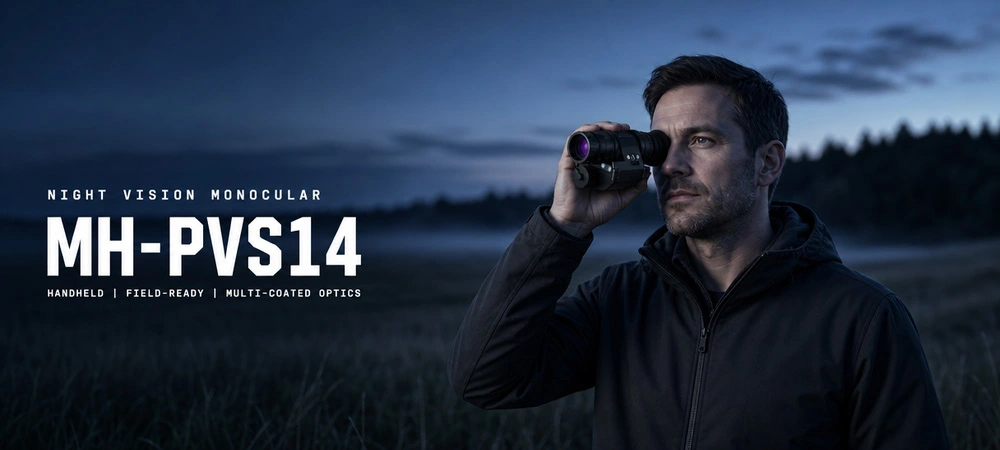
High Performance Night Vision Monocular vs. Other Night Vision Devices
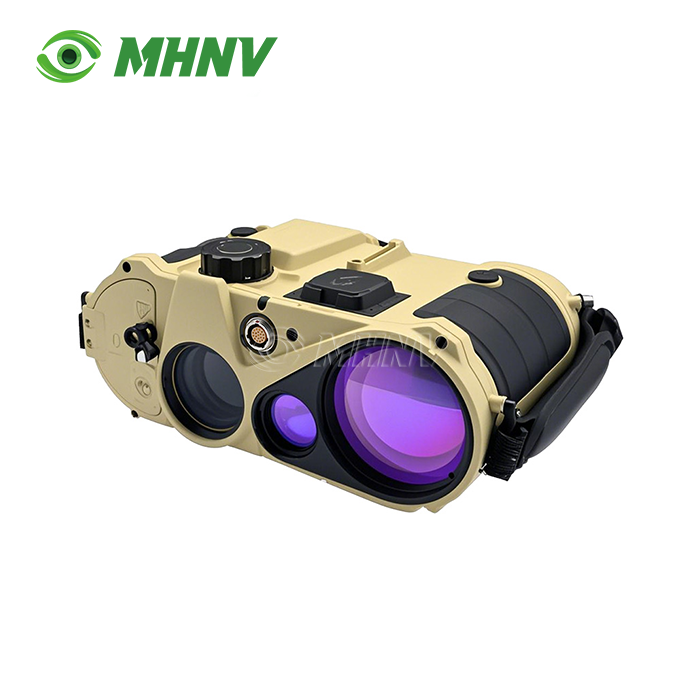
There is a different way to use each type of device. Binoculars let you see depth with both eyes, which is good for slow, careful viewing but makes carrying a lot of gear more difficult because they are heavy and expensive. A scope can be used with a weapon platform, but it can't be used without your hands. Thermal imagers can see heat signatures through smoke or leaves, which makes them very useful in total blackouts. However, they can't show facial features or read text, which are important skills for investigative or coastal defense teams.
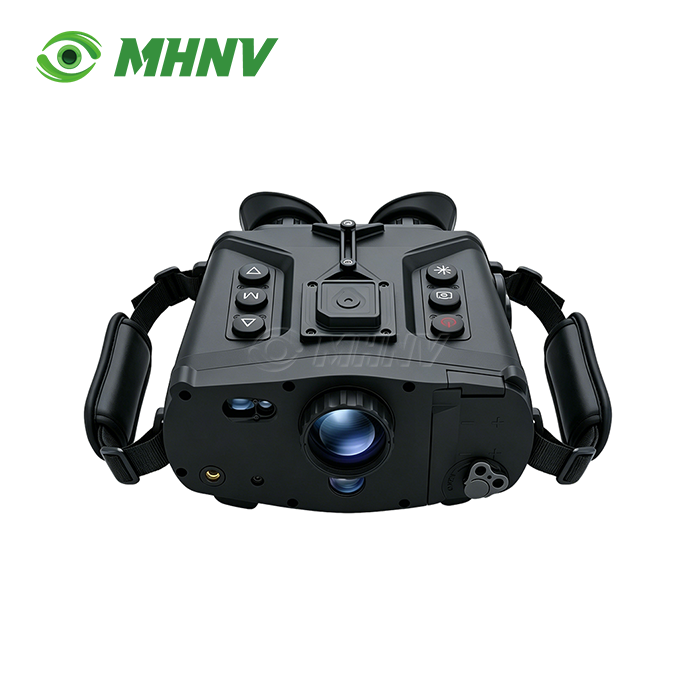
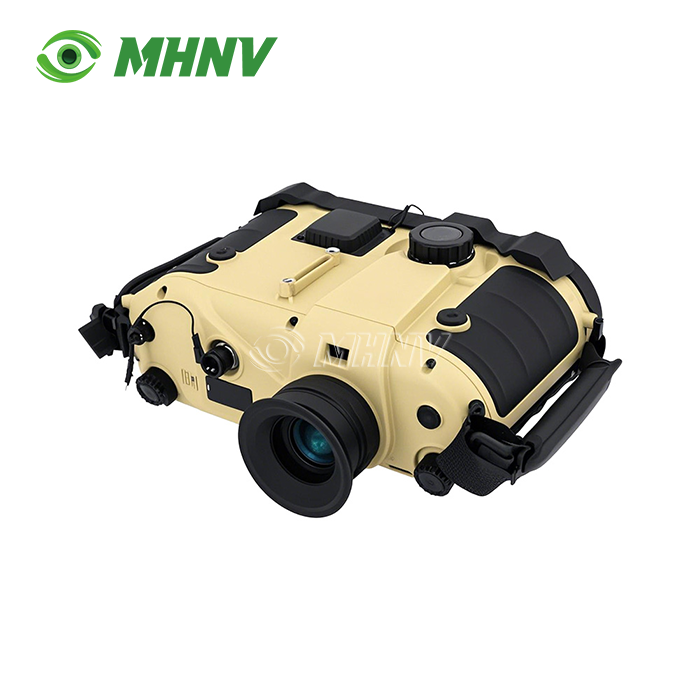
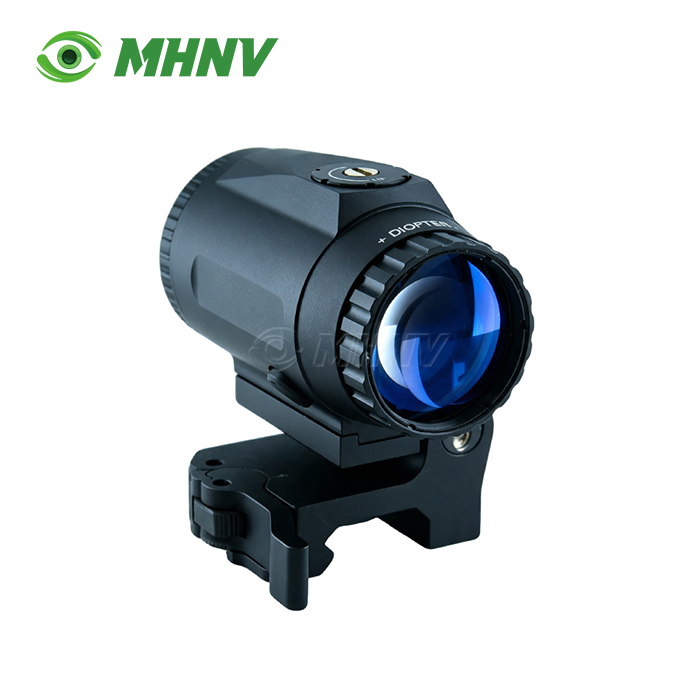
The ideal High Performance night vision monocular Device combines portability, image quality, and affordability. It weighs 300 grams and has a 42° field of view, so you can quickly scan with one hand free. When buying in bulk, the Night Vision Monocular is cheaper per unit than thermal systems, which is a big deal for procurement managers who are outfitting security teams or marine watch units. The Gen 2+ tube's photon-amplification method also produces images that look natural, which is important for evidence-grade work.
Procurement Guide: How to Select and Buy the Best High-Performance Night Vision Monocular
A structured framework is needed to buy professional low-light optics on a large scale. Before agreeing to a provider, every distributor or OEM buyer should check these key technical and business factors:
- IIT grade and documentation: For each tube, ask for a numbered datasheet that confirms the SNR, FOM, resolution, and halo. Reputable companies like MHNV® calibrate each unit in a Class-10,000 cleanroom and include QC records that can be tracked with the shipment.
- Environmental certification: IP65 as standard, IP67 as an option; working temperature range of -40 °C to +50 °C; this makes sure the device can be used for everything from Arctic patrol to tropical coastal deployment without the need for different SKUs.
- Battery and runtime: One CR123 or AA cell working at 2.6–4.2 V gives 80 hours of runtime with IR off, which is enough for a normal week in the field without needing to be charged again.
- Compliance and export documentation: Make sure that the supplier's export license and CE, RoHS, and FCC compliance are in line with each other. MHNV® takes care of all export paperwork in-house, such as End-User Statements and licenses that are controlled by MOFCOM.
- OEM/ODM capability: Make sure the supplier can handle logo customization, phosphor selection, firmware localization, and packaging. This is very important for distributors who are making their own product lines.
These traits set a trustworthy long-term supply partner apart from a one-time seller. By checking them early, you lower the risk later on and keep the procurement timelines safe.
Practical Applications and Use Cases for High Performance Night Vision Monoculars
Where This Device Delivers Measurable Operational Value
A professional-grade night observation Night Vision Monocular can be used in a number of high-stakes situations. Coastal defense and marine watch teams use these gadgets to keep an eye on the shorelines when there isn't much light and accurate identification is a must. At the edges of vital infrastructure, security staff use the 250–300 m detection range to look for possible attacks before they get close enough to touch.
Forensic investigation teams use the 500–900 µA/lm sensitivity to record evidence in low-light situations where the accuracy of the images must stand up to legal review. Wildlife scientists who do surveys at night can benefit from the 42° wide field of view and lightweight housing, which keep observers from getting tired after long observation sessions. Industrial workers who work in dark places or at night use the device to check on the state of equipment without putting on light that could break safety rules.
The aviation-grade aluminum housing doesn't rust when exposed to coastal salt spray, which is important for marine and shoreline uses. This is a material choice that engineering teams always use when comparing the total cost of ownership of aluminum housings to polymer housings.
Maintenance, Usage, and Optimization Tips for High Performance Night Vision Monoculars
Extending Operational Life Through Proper Handling
The most expensive part of any night vision gadget is the picture intensifier tube. One rule that must be followed at all times is that the objective lens must never be exposed to direct sunlight or bright artificial light without a protective pinhole cap being in place. Bright light exposure by accident speeds up the breakdown of the photocathode and can permanently lower the tube's gain.
Beyond tube protection, maintaining peak performance involves these practices:
- Diopter calibration: Before each use, set the diopter to your own prescription. Most operators work in the -5 to +5 range, but skipping this step lowers the apparent sharpness no matter what kind of tube you use.
- Lens cleaning protocol: Only use an optical-grade cotton cloth and a lens-safe cleaner. The multi-coated objective lens gets scratched by rough materials, which permanently cuts off light flow.
- Storage conditions: Keep in a dry case where the humidity stays below 80%, even though the IP65 rating covers moisture in the field. Seals wear out faster after being stored for a long time in high humidity.
- Battery management: Take out the CR123 or AA cell before storing it for more than two weeks to keep the contact points from rusting, which can short out the 2.6–4.2 V power circuit.
If you stick to these habits, the tube will last much longer than the stated operational hours, and the picture quality will stay the same for as long as the device works.
Conclusion
A High Performance Night Vision Monocular Device is a precise tool where the accuracy of the specifications, the quality of the materials, and the dependability of the supply chain all come together in one purchase choice. With a precision of 57 lp/mm, a detection range of 250–300 m, and an 80-hour battery life, the Gen 2+ IIT platform meets the real operating needs of coastal defense, security tracking, forensic investigation, and nighttime fieldwork. At 300 grams and an IP65-rated aviation aluminum chassis, it's tough enough for the military without being too heavy like bigger platforms. When buyers compare these factors with the supplier's paperwork and ability to follow regulations, they will always find the right device and the right partner for long-term operational performance.
FAQ
1. What is the difference between Gen 2+ and Gen 3 night vision tubes?
An S-25 multi-alkali photocathode is used in Gen 2+ tubes, which is a good compromise between price and performance for most industrial uses. The GaAs photocathode in Gen 3 tubes makes them more sensitive and lasts longer, making them perfect for the harshest tactical environments. Through MHNV®, you can get both choices.
2. Can a night vision monocular be used during the day?
Use during the day without a pinhole cap will damage the image intensifier tube. These gadgets work best when there is little or no light. The 500–900 µA/lm sensitivity range is set to the level of light in the room at night.
3. How important is warranty and after-sales support for bulk orders?
Important. When buying in bulk, the prices of replacing tubes and the time they take to do so are real financial risks. MHNV® backs up all of its products with a one-year warranty from the maker and lets buyers compare different tube specs for free using IIT benchmarking.
4. Does white phosphor perform better than green phosphor?
White phosphor (P45) makes a grayscale picture that many operators find helps them keep their eyes from getting tired after long periods of observation. Green phosphor (P31) is still used a lot and is even chosen in some area markets. MHNV® gives users both choices so they can choose what they want.
Partner With MHNV® for Your Next Night Vision Monocular Procurement
Since 2013, MHNV® has been a trusted high performance night vision monocular device manufacturer, working with technology integrators and distributors in more than 60 countries. We support purchases of all sizes because we are ISO 9001:2015 certified, make Gen 2+ and Gen 3 IIT in-house, offer full OEM/ODM services, and have shipping infrastructure in both the USA (Los Angeles) and Europe (Rotterdam). To get a price or set up a tube comparison session, email Sarah at sarah@mh-elec.com to look at our products.
References
1. Jane's Defence Equipment & Technology — Night Vision and Imaging Systems Review, 2023.
2. Photonics Spectra — Image Intensifier Tube Technology: Generation Advances and Performance Benchmarks, 2022.
3. Journal of Applied Optics — Signal-to-Noise Ratio Characterization in Low-Light Imaging Devices, 2021.
4. Military & Aerospace Electronics — Procurement Standards for Electro-Optical Night Vision Equipment, 2023.
5. SPIE Proceedings — Advances in Gen 2+ and Gen 3 Photocathode Sensitivity for Tactical Applications, Vol. 12233, 2022.
6. Security Technology Executive — Field Evaluation of Night Vision Monoculars in Perimeter Security Operations, 2023.
YOU MAY LIKE