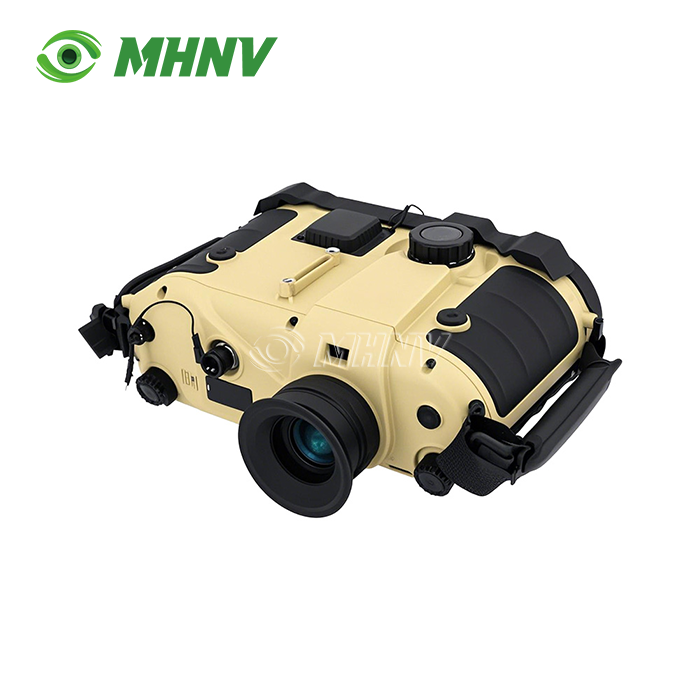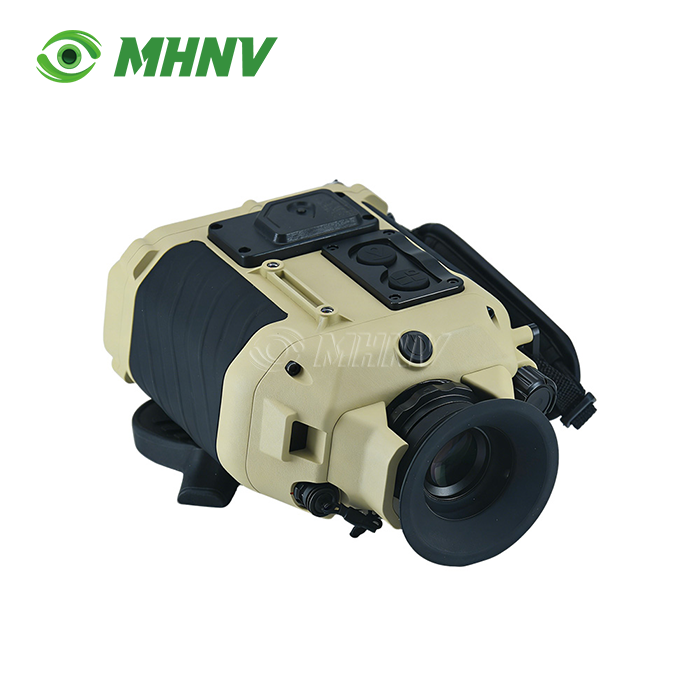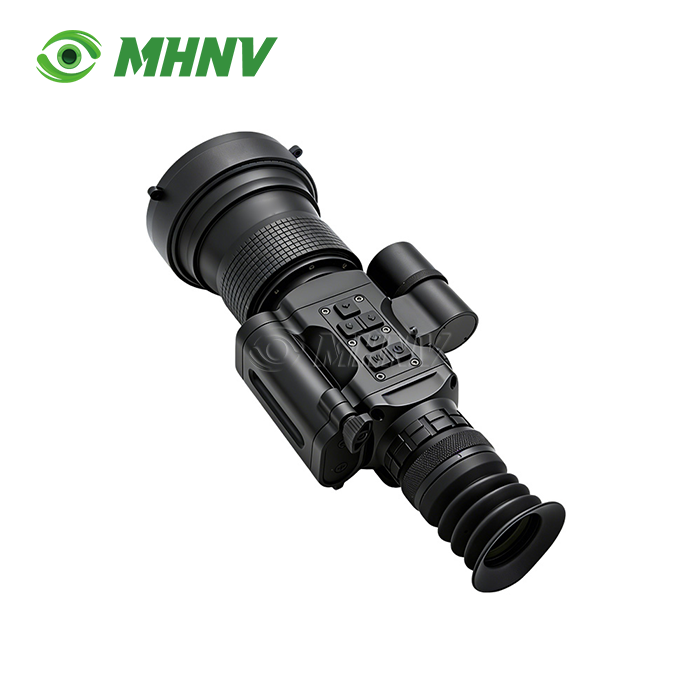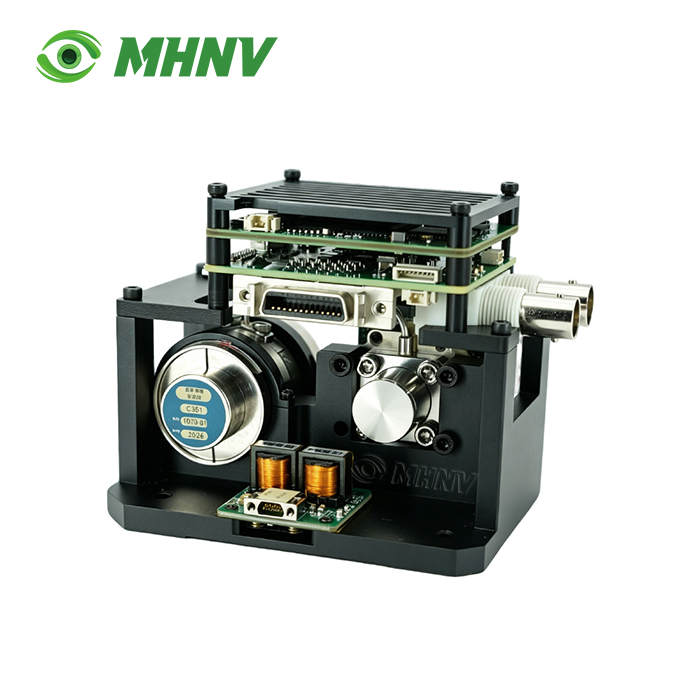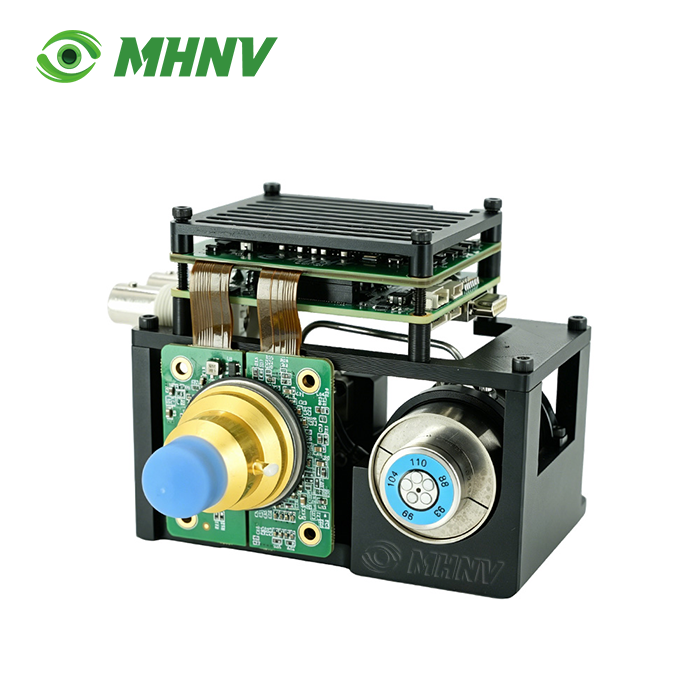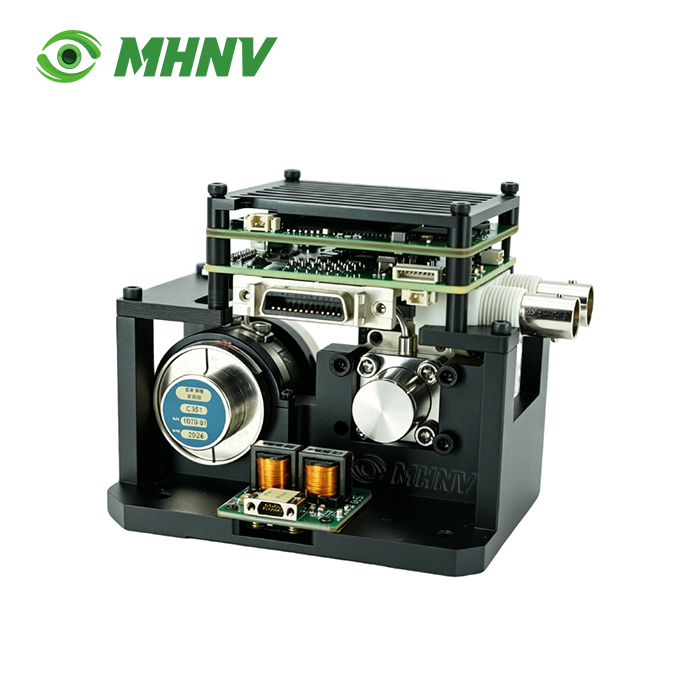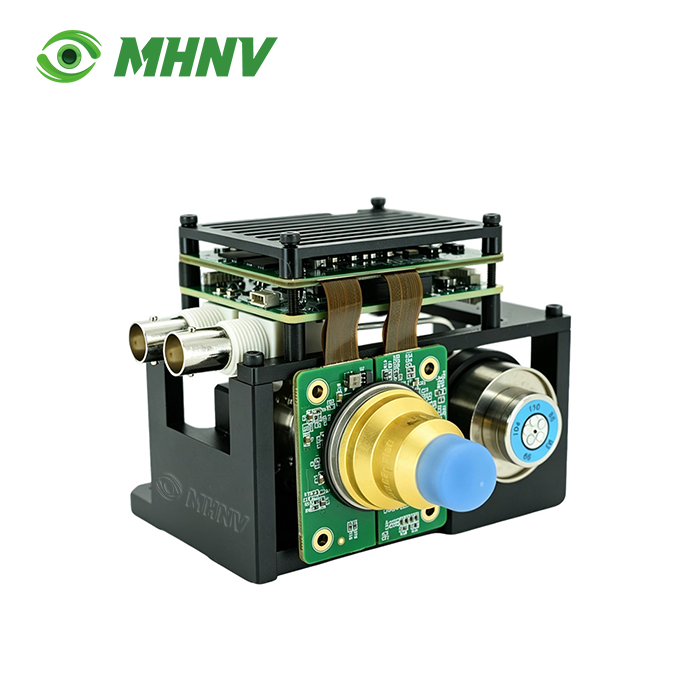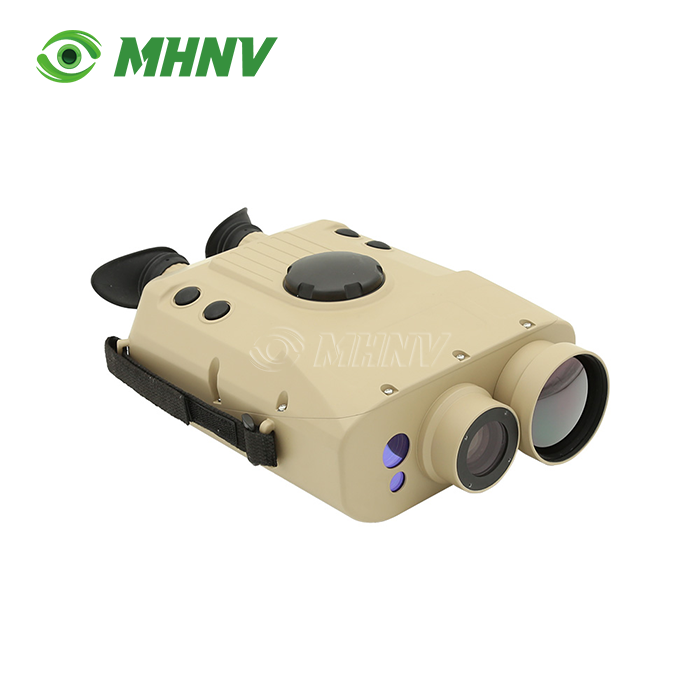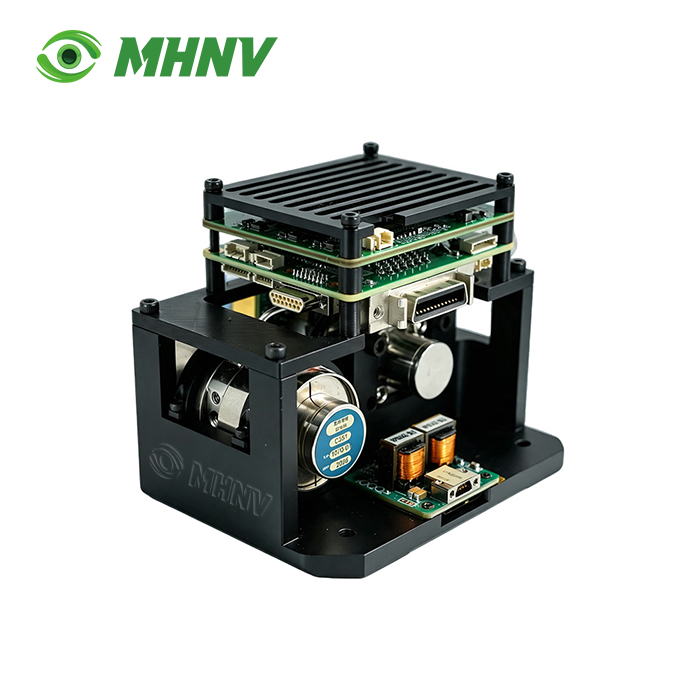
Cooled Thermal Imaging Camera Cores
High-Performance Cooled Thermal Imaging Camera Cores | MWIR Detection Solutions for OEM Long-Range Surveillance & Industrial Monitoring
Xi'an MH Electronics And Technology Co., Ltd. delivers enterprise-grade Cooled Thermal Imaging Camera Cores engineered for OEM integration in critical observation platforms. The MHNV HOT-series features a 640×512 pixel high-operating-temperature MWIR detector with 15μm pitch, achieving ≤22mK NETD sensitivity and ≤3.5-minute cooldown at 23°C. Spanning 3.7–4.8μm spectral response, the core resolves sub-100mK temperature differences for gas-leak detection and long-range surveillance. Its compact 100×100×81mm footprint, ≤580g weight, and ≤6.5W steady-state consumption enable battery-powered UAV payloads and handheld systems previously accessible only to uncooled modules, while CameraLink, DVP, PAL and RS422 interfaces ensure seamless integration into modern and legacy platforms.
Superior MWIR Performance in Compact Form Factor
Traditional cooled cores sacrifice portability for sensitivity. Our products reverse that trade-off.
The high-operating-temperature detector architecture allows the cryocooler to stabilise at warmer stages than conventional designs, reducing size, weight and power by about two-thirds. You get cooling MWIR resolution and <22mK NETD in a package that fits handheld gimbals, small UAV turrets and battery essential applications. The 3.7–4.8μm MWIR band penetrates humid coastal atmospheres and industrial plumes significantly better than 8–14μm LWIR sensors, giving higher contrast on hot objects such as engines, exhaust streams and fugitive gas emissions.
For applications that need the detection of human-sized objects at ranges exceeding 10 km or visualisation of methane leaks in petrochemical facilities, this core delivers the air transmission and thermal sensitivity that uncooled alternatives just cannot supply.
Rapid Cooldown for Quick-Response Missions
Deployment speed defines mission success. The MHNV HOT-series reaches imaging-ready state in ≤3.5 minutes at room temperature—one of the fastest figures in the compact cooled MWIR class.
Legacy cores requiring 6–10 minutes miss observation windows in surge-scenario surveillance and rapid-response UAV sorties. Our sub-4-minute cooldown meets modern operational tempo, letting you activate the system, acquire targets and transmit intelligence within a single response cycle. For battery-powered platforms, shorter cooldown also means lower peak power draw and extended mission endurance.
Complete OEM Integration Interface
You gain four parallel video outputs and full FPGA-level control without developing an in-house infrared signal processor.
| Interface Type | Specification | Use Case |
|---|---|---|
| CameraLink Digital | Full bandwidth | High-speed FPGA systems |
| DVP Parallel | 8-bit BT.656, 1.8V logic | Direct SoC integration |
| PAL Analog | BNC composite | Legacy video pipelines |
| RS422 Serial | Full-duplex command | NUC, polarity, zoom, palettes |
The on-board FPGA executes single-point and two-point non-uniformity correction, bad-pixel replacement, adaptive dynamic range compression, seven color palettes, black-hot/white-hot polarity switch, digital zoom (2×, 4×, 8×) and image flip. Reference schematics and command documentation arrive at NDA signature, compressing your integration timeline from 6–12 months to 4–12 weeks.
Technical Specifications
| Parameter | Value |
|---|---|
| Model | MHNV HOT-series cooled MWIR core |
| Detector Resolution | 640×512 pixels |
| Pixel Pitch | 15 μm |
| Spectral Range | 3.7–4.8 μm (MWIR) |
| NETD (23°C) | ≤22 mK |
| Cooldown Time (23°C) | ≤3 min 30 s |
| Frame Rate | 50 Hz |
| Digital Zoom | 2×, 4×, 8× |
| Supply Voltage | DC 12–18 V |
| Steady Power (23°C) | ≤6.5 W |
| Peak Power (23°C) | ≤12 W |
| Dimensions (L×W×H) | ≤100×100×81 mm |
| Weight | ≤580 g |
| Mounting | 4×M4 threaded holes |
| Operating Temp. | −40°C to +60°C |
| Storage Temp. | −45°C to +65°C |
| Electrical Connector | J30JZ/XLN15TJWA000 (15-pin) |
Wide-Ranging Application Scenarios
Cooled Thermal Imaging Camera Cores excel in environments where performance is non-negotiable.
Long-Range Border & Coastal Surveillance: Detection of human-sized targets at 15km+ and vessels at 25km+ remains stable even when high humidity degrades LWIR signals. The MWIR atmospheric window ensures clear imagery through salt spray and fog.
Airborne ISR Payloads: Integrated into UAV and helicopter gimbals, the core supplies stabilized, high-resolution video for target acquisition at high altitudes. The 50Hz frame rate and rapid FPGA processing compensate for platform vibration and fast slew rates.
Gas Leak Detection (OGI): Specialized MWIR tuning to specific absorption bands visualizes fugitive VOC emissions—methane, ethane, benzene—in petrochemical refineries and pipeline corridors. Leaks invisible to the naked eye and uncooled sensors appear as distinct plumes, enabling predictive maintenance and regulatory compliance.
Industrial & Scientific Monitoring: Precision thermal fault detection in semiconductor fabrication, photovoltaic cell inspection, and research-grade infrared spectroscopy all benefit from sub-22mK sensitivity and calibrated output.

Proven Manufacturing and Quality Assurance
MHNV® operates a vertically integrated facility with Class-10,000 cleanrooms, SMT lines and precision optical assembly stations. Every products unit undergoes NETD uniformity testing, bad-pixel mapping (>99.5% operability threshold), vacuum-integrity accelerated aging, cooldown-time verification and MIL-STD-810 vibration/shock simulation.
Our ISO 9001:2015 quality system, CE, RoHS and FCC compliance ensure traceability and regulatory confidence. Each core ships with a serialized QC datasheet documenting NETD, operability and cooldown performance.

12 Years of Thermal-Core Engineering Excellence
Since 2013, Xi'an MH Electronics And Technology has delivered night-vision and thermal-imaging solutions to customers in 60+ countries across North America, Europe, the Middle East, Russia, Southeast Asia and Latin America. Our full-stack R&D team—spanning algorithm engineering, FPGA design, optical simulation, mechanical CAD and firmware development—ensures continuous innovation and rapid customization.
We support OEM and ODM projects with NDA protection, customer-specific tooling ownership transfer and multilingual technical assistance in English, Russian, Arabic, French and Spanish.
Flexible OEM Customization
Tailor the core to your platform requirements:
- Optical Customization: Magnification, field of view, focal length, anti-reflective coatings
- Firmware Customization: UI language, gain curves, video overlays, WiFi/Bluetooth streaming
- Mechanical Customization: Logo engraving, housing redesign, IP67/IP68 sealing, material selection (aluminum/magnesium alloy, polymer)
- Packaging Customization: Branded boxes, multilingual manuals, quick-start guides
Lead times: ready-stock units ship in 3–7 days; ODM samples in 15–25 days; mass production in 30–45 days.

FAQ
Q: What are the advantages of a cooled core vs. an uncooled thermal module for your surveillance or monitoring application?
A: Cooled thermal cores achieve significantly higher sensitivity (as indicated by NETD values of less than 22mK) and offer outstanding performance over extended detection ranges greater than 10km, particularly in high-humidity coastal or industrial-plume environments where uncooled LWIR microbolometers suffer from signal attenuation. Cooled architectures have greater initial cost and frequent cryocooler maintenance, but the considerable improvement in picture contrast, target discrimination and atmospheric penetration justifies the expense for mission essential and high-value-asset protection scenarios.
Q: What is the typical maintenance cycle for the integrated cryocooler, and how does it impact total cost of ownership?
A: Super reliable Modern products with integrated Stirling-cycle coolers are designed to provide a mean-time-between-failures (MTBF) of 10,000–15,000 hours of continuous operation, or around 1–2 years of 24/7 service, or 5–7 years of 8-hour daily use. Scheduled maintenance or cooler replacement after this interval assures continued cooling efficiency and picture quality. Buyers should allow for periodic cooler refurbishment or swap-out, although the prolonged service life and performance advantages usually result in lower per-image costs than replacing several uncooled sensors to acquire equal range and sensitivity.
Q: Can these MWIR cores see through normal architectural glass or automobile windscreens?
A: No, the mid-wave infrared light in the 3.7–4.8μm band is heavily absorbed by normal silicate glass, making the standard windows and car glazing opaque to the sensor. They are, however, excellent at penetrating air obscurants such as smoke, light fog, haze and industrial emissions which scatter visible and near-infrared light and are hence perfect for through-weather surveillance and environmental monitoring where glass clarity is not required.
Q: How does the cooldown startup time effect operational deployment and what measures can be used to minimise delay?
A: Our HOT-series cores have an intrinsic cool-down period of 3.5 minutes because the detector needs to get to its cryogenic operating temperature, typically about 77K. For some applications where instant readiness is required such as quick reaction force surveillance or rapid launch UAVs, systems can use a 'standby' mode to keep the detector pre-chilled at reduced power. This provides near instantaneous imaging upon activation, whilst only drawing a modest holding current between missions.
Q: Are there export controls or licensing requirements when buying cooled thermal cores for foreign use?
A: Yes. Because of their high sensitivity and long-range detection, the products are typically subject to international trade regulations (e.g., the U.S. Export Administration Regulations (EAR) or similar national control lists) that require specific export licenses, end-user certificates and destination approvals for cross-border transactions. MHNV® offers extensive assistance with export documents such as commercial invoices, certificates of origin and end-user statements, and our sales staff will walk you through the regulatory requirements relevant to your country and intended use.
Contact MHNV® for OEM Integration Support
Contact our engineering team at sarah@mh-elec.com for Cooled Thermal Imaging Camera Cores datasheets, integration guidelines and sample-unit quotations today.
YOU MAY LIKE