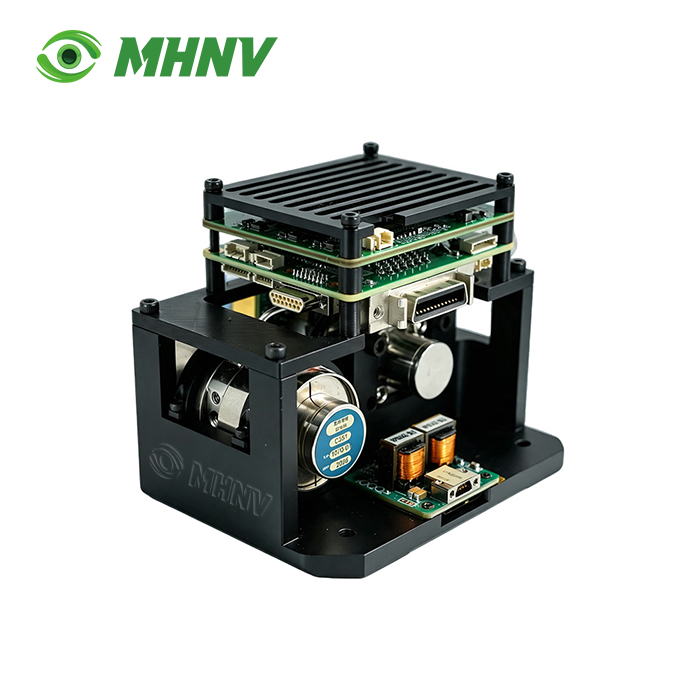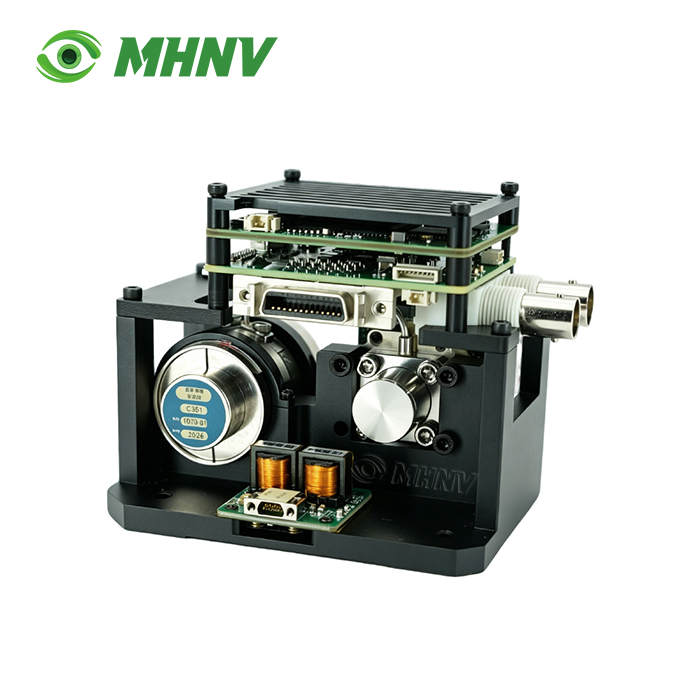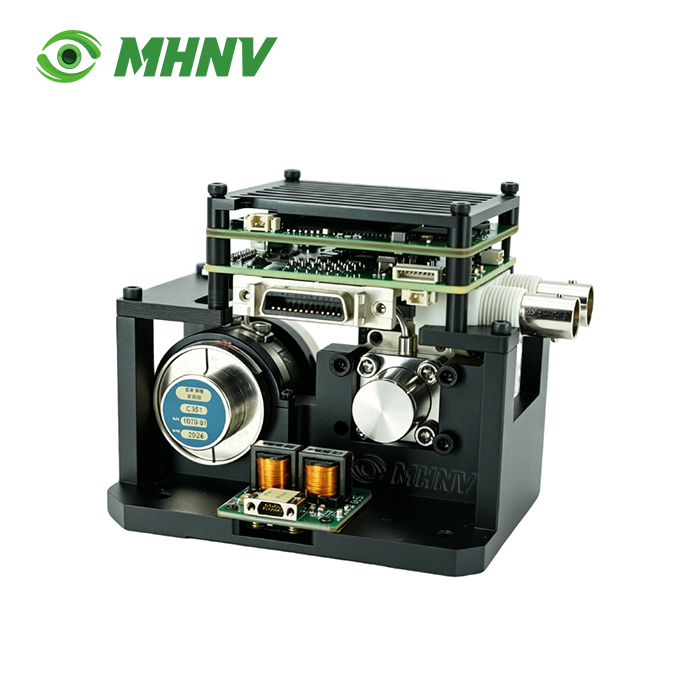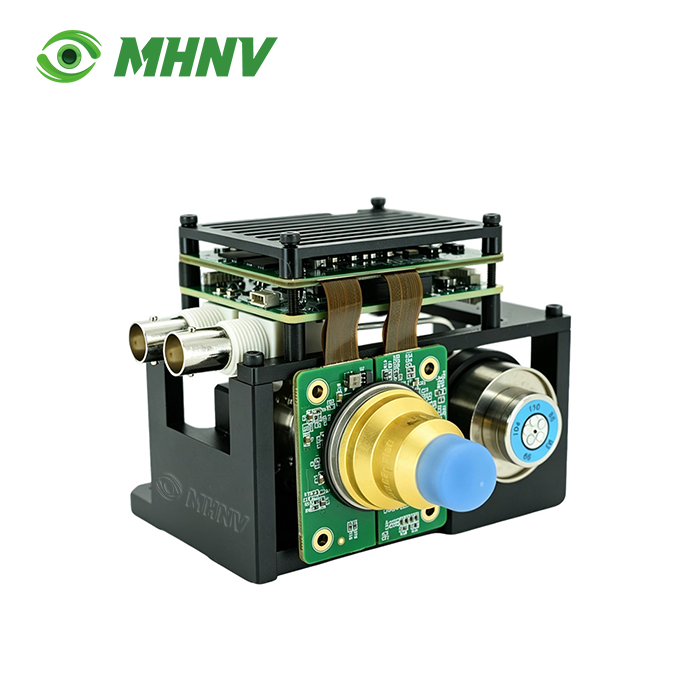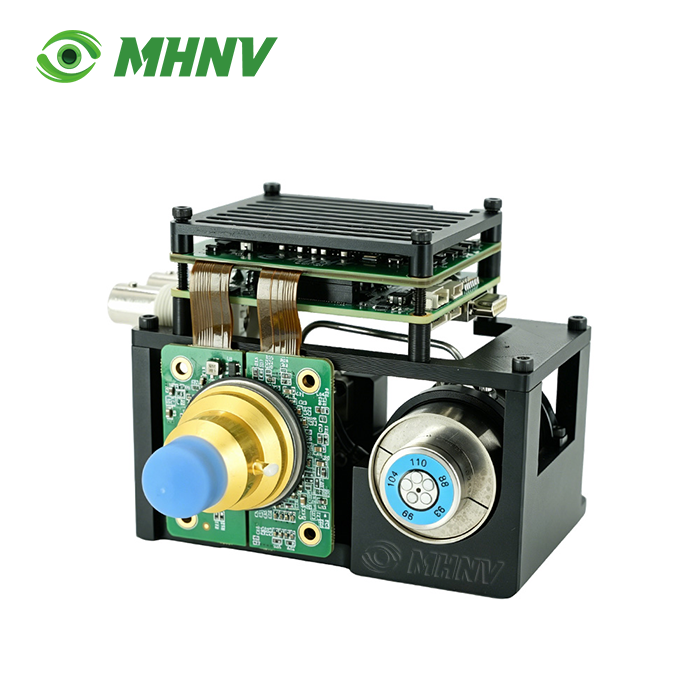
Cooled Thermal Infrared Camera Core
Cooled Thermal Infrared Camera Core | MWIR Long-Range OEM Solution for Precision Detection
Xi'an MH Electronics And Technology Co., Ltd. delivers the MHNV HOT-series Cooled Thermal Infrared Camera Core, a breakthrough MWIR imaging solution engineered for OEM surveillance, UAV payloads, and industrial monitoring. This compact cooled core integrates a 640×512 pixel HOT digital MWIR detector with 15μm pitch, achieving ≤22mK NETD sensitivity across 3.7–4.8μm spectral response. Unlike legacy cooled cores, this product reaches imaging-ready state in ≤3.5 minutes at 23°C, consuming ≤6.5W steady power within a 100×100×81mm, 580g footprint. CameraLink, DVP parallel (BT.656), and PAL analog outputs combine with RS422 control interface to deliver plug-and-play OEM integration. The system operates −40°C to +60°C, supporting battery-powered field deployment where conventional cooled MWIR cores cannot fit.
What Makes Our MWIR Core Different?
Traditional cooled MWIR cores require 6–10 minutes cooldown, weigh over 1kg, and demand 15W+ power budgets. The MHNV HOT-series redefines cooled thermal imaging by pairing high operating temperature detector architecture with miniaturized cryocooler design.
You gain cooled MWIR performance—22mK sensitivity, MWIR atmospheric penetration, sub-microsecond integration times—in uncooled-class size and power envelope. The 3.7–4.8μm MWIR band cuts through humid coastal air, industrial plumes, and salt-spray environments where LWIR struggles. Hot-target contrast for engines, gas leaks, and electrical faults surpasses any uncooled sensor.
FPGA-based image processing runs NUC, bad-pixel correction, DRC, digital zoom, and seven palettes internally. Your OEM product ships with premium thermal imagery without 12-month ISP development cycles. RS422 command access, CameraLink high-speed output, and DVP 1.8V logic match modern SoC and FPGA platforms directly.
HOT Detector Technology Advantage
High Operating Temperature detector architecture enables the cryocooler to maintain imaging performance at warmer stage temperatures than legacy MCT designs. This reduces cryocooler mechanical load by approximately two-thirds, cutting cooldown time, size, weight, and power draw proportionally.
You deploy the product in handheld gimbals, quadcopter UAV payloads, and battery-powered border patrol systems previously restricted to uncooled LWIR. The 3.5-minute cooldown fits surge-response scenarios: power on, image within four minutes, and mission-ready before the observation window closes.
22mK NETD in MWIR delivers higher signal-to-noise ratio on sub-degree thermal differentials at 10+ km range. Gas leak detection, petrochemical monitoring, and perimeter surveillance applications rely on this precision to identify methane plumes, hot bearings, and human signatures against cluttered thermal backgrounds.
Technical Specifications
| Parameter | Specification |
|---|---|
| Model | MHNV HOT-series Cooled MWIR Core |
| Detector Type | Cooled HOT Digital MWIR |
| Resolution | 640 × 512 pixels |
| Pixel Pitch | 15 μm |
| Spectral Band | 3.7 – 4.8 μm (MWIR) |
| NETD Sensitivity | ≤ 22 mK @ 23°C |
| Cooldown Time | ≤ 3 min 30 sec @ 23°C |
| Frame Rate | 50 Hz |
| Digital Zoom | 2×, 4×, 8× |
| Supply Voltage | DC 12 – 18 V |
| Steady Power | ≤ 6.5 W @ 23°C |
| Peak Power | ≤ 12 W @ 23°C |
| Dimensions (L×W×H) | ≤ 100 × 100 × 81 mm |
| Weight | ≤ 580 g |
| Mounting Interface | 4 × M4 threaded holes |
| Digital Output | CameraLink |
| DVP Interface | 8-bit parallel, BT.656, 1.8V logic |
| Analog Output | PAL composite (BNC) |
| Control Interface | RS422 full-duplex serial |
| Operating Temp | −40°C to +60°C |
| Storage Temp | −45°C to +65°C |
| Connector | J30JZ/XLN15TJWA000 (15-pin) |
OEM Integration Advantage
Complete interface stack accelerates your time-to-market. CameraLink output feeds FPGA-based video processors at full 50Hz bandwidth. DVP 8-bit parallel with BT.656 sync connects directly to ARM SoC platforms without level-shifter complexity. PAL analog supports legacy analog recording and transmission pipelines.
RS422 serial command set provides full parameter control: NUC trigger, polarity switch, brightness, contrast, bad-pixel correction, DRC, digital zoom, palette selection, and image flip. State feedback reports imaging status, communication health, and temperature alarms in real time.
Reference integration schematics and command protocol documentation ship under NDA. Typical OEM mechanical and firmware integration completes in 4–12 weeks versus 6–12 months for ground-up cooled MWIR development. Four M4 mounting threads and compact 100mm square footprint simplify gimbal and housing design.

Built-In Image Processing Pipeline
Your end product delivers premium thermal imagery without in-house ISP investment. The onboard FPGA executes single-point and two-point non-uniformity correction automatically. Bad-pixel detection and correction algorithms suppress defects across the 640×512 array to >99.5% operability.
Adaptive dynamic range compression optimizes contrast across wide temperature spans—viewing ambient backgrounds and 500°C exhaust simultaneously without saturation. Seven color palettes (iron red, green-red, yellow hot, rainbow, warm, blue-green-red, blue-red) match operator preference and mission type.
Black-hot and white-hot polarity switch with single command. Manual brightness and contrast adjustment fine-tunes display output. Horizontal mirror and vertical flip support inverted mounting in UAV gimbals. Digital zoom (2×, 4×, 8×) maintains real-time 50Hz frame rate for smooth aerial tracking.
Industrial & Field Applications
Long-Range Surveillance Platforms: Coastal border monitoring, perimeter security, and maritime patrol systems leverage MWIR atmospheric transmission to identify vessels and vehicles beyond 15km. The Cooled Thermal Infrared Camera Core penetrates fog, haze, and salt spray where LWIR contrast degrades.
UAV and Gimbal Payloads: Sub-600g weight and ≤6.5W power budget fit tactical quadcopters and fixed-wing drones. Fast cooldown enables rapid-response ISR missions; operators power on during ascent and image on-station within four minutes.
Gas Leak Detection: Methane, VOCs, and refrigerant gases absorb MWIR wavelengths, rendering leaks visible as dark plumes against ambient backgrounds. Petrochemical facilities, refineries, and pipeline inspection teams rely on this capability for environmental compliance and safety audits.
Scientific and Industrial Imaging: High-speed thermography captures thermal profiles of rotating turbine blades, injection-molding processes, and ballistic events. Sub-microsecond integration times freeze motion without ghosting artifacts typical of uncooled microbolometers.

Why Choose MHNV HOT-Series Core?
Xi'an MH Electronics provides full-stack R&D services, spanning optical design, FPGA processing, detector integration and precision assembly. For more than 12 years, we have been serving 60+ nations in the surveillance, inspection and observation sectors.
We do not employ trading businesses to source third party cores. We design detector interface circuits, FPGA firmware, and cryocooler control loops in house. You’re talking directly to the people who designed the command protocol and tuned the NUC algorithms, not through a vendor intermediary that slows down requests for customisation.
Dedicated technical support for OEM projects, including reference designs under NDA, integration webinars, batch-production quality oversight Custom firmware (UI language, gain curves, overlay visuals) Mechanical housing redesign and logo branding 30-45 day production schedules.


FAQ
Q: Why is MWIR better than LWIR in coastal surveillance environments?
A: Atmospheric transmission models show that water vapour molecules cause stronger scattering and absorption of LWIR 8-14μm wavelengths than MWIR 3.7-4.8μm wavelengths. In humid coastal air, salt spray, and fog, MWIR photons travel further before scattering events degrade signal strength. The device working in the 3.7-4.8μm band produces stronger contrast at 10+ km marine ranges than uncooled LWIR sensors, which experience considerable extinction beyond 5 km under the same conditions. This physical advantage makes cooled MWIR the default for littoral border patrol and offshore platform monitoring.
Q: How does cooldown time impact operational preparedness in field deployments?
A: The cooldown time is the duration between system power-on and the imaging-ready condition, an important measure for surge-response missions. Legacy cooled MWIR cores that take 6-10 minutes to cool lose observation windows in rapid deployment scenarios, such as vehicle stops, UAV on-station time or perimeter alarm responses. The MHNV HOT-series couples high operating temperature detector design with optimised cryocooler control algorithms to deliver ≤3.5 minute cooldown at 23°C, enabling operators to photograph targets four minutes after power-on. Shorter cooldown also decreases the time of peak power draw for battery-powered platforms, sparing energy for extended mission endurance.
Q: Can this core detect gas leaks that are invisible to uncooled thermal cameras?
A: Yes, the 3.7-4.8μm MWIR spectral band coincides with absorption lines of methane (CH4), volatile organic compounds (VOCs) and refrigerant gases such as SF6. If these gases leak into the surrounding air, they absorb MWIR photons and show as dark plumes against warmer backdrops in the thermal image. Uncooled LWIR sensors operating at 8–14 µm do not have sensitivity to these absorption properties and so cannot see most industrial gas escapes. This device is an optical gas imaging (OGI) equipment for petrochemical facilities, pipelines and HVAC systems that meets environmental compliance and safety audit leak detection standards.
Q: How does a cooled core improve integration time compared to microbolometers?
A: Microbolometer uncooled cores have thermal time constants of 8-12 milliseconds. This means quickly moving objects cannot be frozen without motion blur. The MWNV HOT-series cooled photodetectors operate on photon-to-electron conversion with integration times that may be adjusted to microseconds and can capture sharp thermal profiles of rotating machinery, high-speed projectiles and turbine blades. This is the key advantage of R&D thermography, ballistics testing and industrial quality control where temporal resolution is the difference between clearly capturing the defect or thermal anomaly or spreading it out over several frames.
Q: How long does the Stirling cryocooler run before it needs servicing?
A: The integrated Stirling cryocooler is rated for 10,000 to 20,000 hours of operation (Mean Time To Failure) depending on duty cycle and ambient temperature. In normal regular use the cooler lasts 4-8 years before renovation, running 8 hours a day. Once MTTF is reached, the cryocooler module can be factory-refurbished or replaced without discarding the pricey MWIR focal plane array sensor, extending the entire service life of the core to over a decade. To safeguard your long-term investment in the imaging platform, MHNV offers a global logistics support and cooler replacement service.
Contact Us for OEM Integration
Ready to integrate Cooled Thermal Infrared Camera Core into your next platform? Email sarah@mh-elec.com to discuss your project requirements and receive technical support.
YOU MAY LIKE
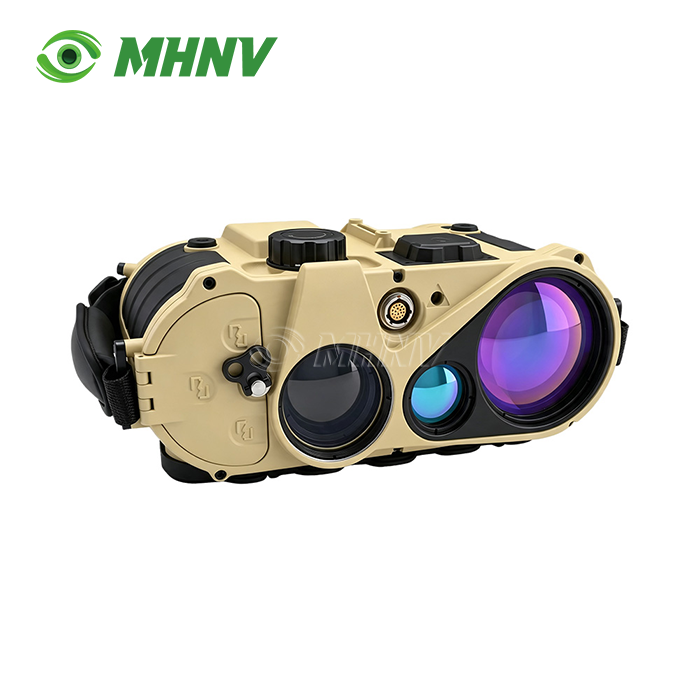
.webp "Laser Target Locator Module (LTLM)")