OEM Guide to High Performance Night Vision Monocular Devices
This guide is designed for B2B buyers, OEM integrators, and distributors who need a reliable reference when sourcing a High Performance night vision Monocular Device for professional deployment. Whether your end users operate in coastal defense, forensic investigation, or perimeter security, understanding the technical baseline and procurement pathway matters. This guide walks through core specifications, technology comparisons, supplier evaluation, and maintenance essentials — drawing on verified product data and real OEM partnership criteria to help you make confident, informed procurement decisions.
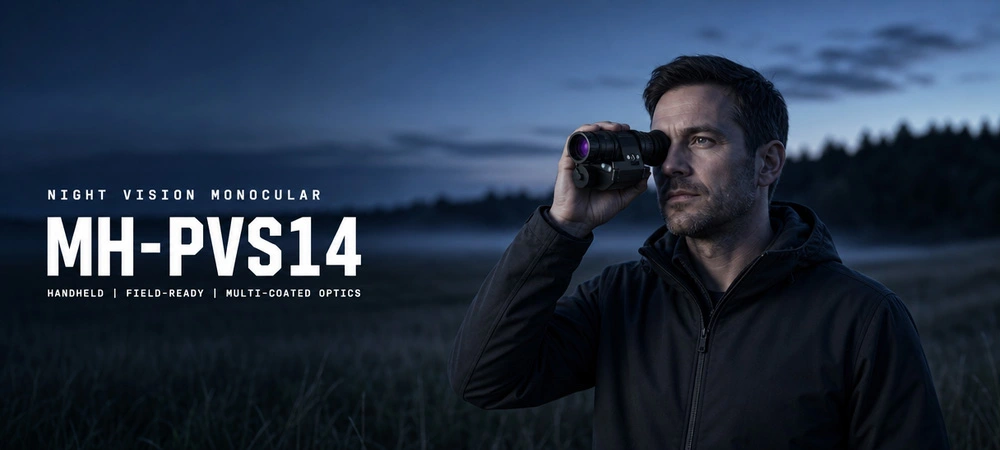
Evaluating and Comparing Night Vision Monocular Technologies
Digital vs. Analog: What Procurement Teams Need to Know
For digital night vision to work, CMOS cameras and digital signal processing are needed. It can record videos and stream them wirelessly, but in terms of low-light sensitivity and image latency, it usually falls behind analog Gen 2+. An analog Gen 2+ High Performance night vision monocular Device is still the more reliable platform for professional uses like coastal defense, security tracking, or legal-grade forensic investigation. This is because picture quality and dependability under stress are crucial.
Key Benchmarking Parameters Procurement
When procurement teams compare Night Vision Monocular platforms, they should look at these important factors. The performance profile of a professional-grade Gen 2+ device that can be integrated by OEMs has been confirmed to meet the following requirements:
- Resolution: at least 57 lp/mm, which is good enough to see targets at 250–300 meters in bright daylight.
- Signal-to-Noise Ratio (SNR): 18–25 dB. A higher SNR directly leads to clearer images and less visible noise at detection limits.
- Luminous sensitivity: 500–900 µA/lm through 18 mm S-25 photocathode—provides consistent performance good enough for legal-grade forensic photography.
- Lens system: The lens system has a 25 mm F1.2 objective with a field of view of 42° ±3°, which is wide enough for handheld reading while still being clear enough for recognition range.
- Battery runtime: With the IR light turned off, the battery can last for 80 hours on a single CR123 or AA cell (2.6–4.2 V), which is enough time for a week of field deployments without needing to be charged again.
These standards are not goals; they are based on production-tested specs for devices that are already available for bulk orders from OEMs. When looking for a reliable maker, one of the most important things to look for is one that gives you serialized QC data sheets for each unit, which show the individual SNR, resolution, and Figure of Merit (FOM) numbers.
The Procurement Process for High Performance Night Vision Monoculars
Supplier Qualification Criteria That Protect Your Business
More than just price comparison is involved in choosing a High Performance Night Vision Monocular Device source. Verified certifications are the norm. For example, ISO 9001:2015 quality management, CE and RoHS compliance for entering the EU and US markets, and MIL-STD-810 environmental testing ratings show that the supplier meets high standards for the industrial world.
In addition to certificates, buyers should check to see if the company calibrates each IIT in a cleanroom and includes a numbered QC data sheet with each unit. With this level of tracking, your brand's image is kept safe when devices are used in controlled areas like law enforcement or defense contracting.
Pricing Structure and OEM Volume Negotiation
OEM buyers can expect prices to be set in levels. You can test the quality of a product before committing to a large order by placing a pilot order for a single unit. Custom ODM programs usually have lead times of 30 to 45 days for mass production and 15 to 25 days for samples. Formal requests for volume discount matrices should be made, and for private-label programs, non-disclosure agreements (NDAs) that cover tooling ownership and IP protection are a must.
Logistics skills are just as important. Global distributors need supply chain freedom. Suppliers with framework deals that cover DHL, FedEx, and UPS fast delivery, as well as sea freight consolidation through big Chinese ports, can give them that. Support after the sale, like a manufacturer warranty that lasts for a year and a dedicated pre-sales response within 24 hours, lowers the risk of buying even more.
Maintenance and Troubleshooting of Night Vision Monocular Devices
The most important part of any Night Vision Monocular is the picture intensifier tube. Proper maintenance directly increases the useful life of your purchase and protects your investment. When the tube is operating, don't put the device near bright light sources. Autogating circuits will protect against rapid flare, but long-term bright light exposure will damage the photocathode.
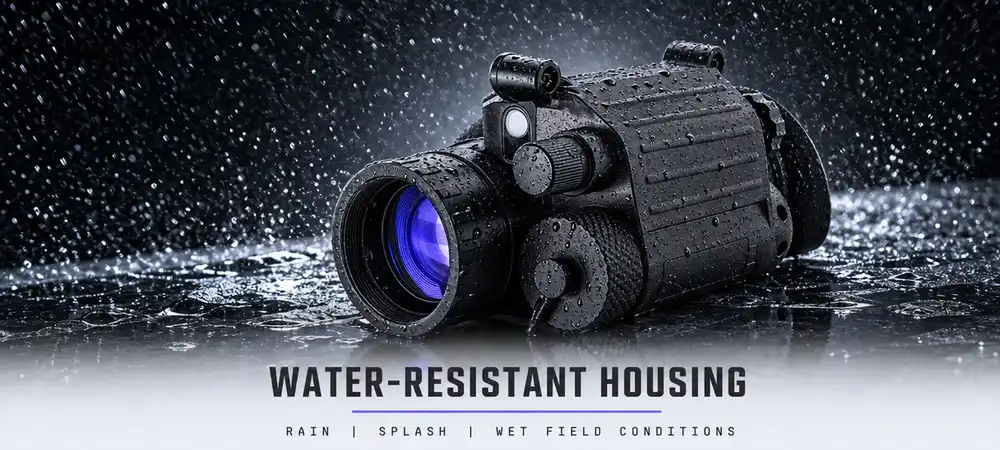
For maintenance work in the field, only anti-reflection coating-safe materials should be used to clean the lens surfaces. The contacts on a battery should be checked often and kept free of rust, especially in places with a lot of dampness. This device is rated for 5–98% relative humidity and has an IP65 standard rating (IP67 is an optional upgrade). This means it can reliably handle conditions like coastal salt spray and tropical monsoons.
Having a professional check the tubes in a device is recommended if it has chronic picture flaws, strange gain flickering, or loss of sensitivity. Working with an OEM-certified service provider that does nitrogen purge verification and seal integrity checks everymanufacturer'snths will keep your fleet ready to go without any sudden field breakdowns.
Why OEMs and Distributors Should Partner with MHNV®
MHNV® (Xi'an MH Electronics and Technology Co., Ltd.) is a full-stack night vision maker based in Xi'an, China. They have been making Gen 2+ and Gen 3 devices for over 12 years and have sold them to customers in over 60 countries. As a Gold Supplier on Alibaba for 11 years and a frequent participant at DSA Malaysia, IDEX UAE, and Enforce Tac Germany, MHNV® has proven its trustworthiness in the defense, law enforcement, and industrial inspection markets.
MHNV® is a reliable OEM partner because it has a lot of in-house skills. Algorithm development, optical design, FPGA firmware, mechanical engineering, and appearance design are all done by the same engineering team. This means that OEM clients can change things about IIT models (MX10130, MX10160, and MX11769), lens configurations, firmware language and gain curves, housing material and color, and even phosphor type—green phosphor for deployments in the Middle East and white phosphor for tactical markets in the US and EU.
In a Class-10,000 laboratory, MHNV® calibrates each High Performance Night Vision Monocular Device separately. Clients get a serialized QC data sheet with every unit that has values for SNR, FOM, resolution, halo, and Equivalent Background Illumination (EBI). In the mid-tier provider market, that level of openness is very rare, and it helps your quality assurance process immediately.
Conclusion
It takes more than just getting a cheap professional-grade low-light monocular to sell as an OEM. The ideal High Performance Night Vision Monocular Device combines tested IIT performance, tough environmental engineering, and an open supplier relationship. With a resolution of 57 lp/mm, an 80-hour battery life, an aviation aluminum housing, and a wide working temperature range of -40°C to +50°C, the Gen 2+ platform explained in this guide is a mature, usable option for serious B2B buying projects. Pick suppliers whose specs are backed up by data, not just datasheets.
FAQ
1. What generation of night vision is appropriate for security and forensic applications?
Gen 2+ is the best choice for most security tracking, coastal defense, and criminal investigation tasks because it is both cost-effective and performs well. Gen 3 GaAs photocathode devices are more sensitive, but they cost a lot more per unit. Gen 2+ is still the best professional choice for OEM projects that need consistent volume pricing and proven performance.
2. How does white phosphor differ from green phosphor in an IIT monocular?
White phosphor (P45) creates a grayscale picture that is more like how humans see things naturally. This makes it easier to see contrast in complex settings and keeps your eyes from getting tired from looking at things for long periods of time. The standard for a long time was green phosphor (P22), and some military and Middle Eastern markets still prefer it. For OEM customization, MHNV® gives you both choices.
3. What warranty and after-sales support should OEM buyers expect?
A reputable High Performance Night Vision Monocular Device manufacturer should back their products with a manufacturer warranty that lasts at least one year and covers IIT-specific issues. For B2B accounts, MHNV® offers standard support 24 hours a day, 7 days a week: pre-sales answers, remote setup help, and video tutorials. For big orders, on-site training is also available.
4. What is the typical OEM minimum order quantity?
MHNV® takes pilot orders for finished devices starting at 1 unit and IIT components starting at 10 units. If you ask, you can get a bulk price structure.
Partner with MHNV® — Your Trusted High-Performance Night Vision Monocular Device Manufacturer
MHNV® sells ISO-certified, MIL-grade night vision monoculars that can be fully customized for OEM/ODM orders. Stock models are sent out within 3–7 days. The High Performance Night Vision Monocular Device and the manufacturer offer a 1-year warranty. The engineering team at MHNV® is ready to help your program, whether you need private-label housing, phosphor selection, or software localization. You can email our business-to-business team at sarah@mh-elec.com to get a product datasheet and bulk pricing.
References
1. Jane's Defence Weekly. (2023). Electro-Optical Systems and Night Vision Technology Market Review.
2. SPIE — International Society for Optics and Photonics. (2022). Image Intensifier Tube Performance Standards and Testing Protocols.
3. Military & Aerospace Electronics. (2023). Gen 2 and Gen 3 Night Vision Intensifier Tubes: Performance Benchmarking for Defense Applications.
4. Night Vision and Electronic Sensors Directorate (NVESD), U.S. Army. (2021). Image Intensifier Tube Specification and Qualification Standards.
5. Photonics Spectra. (2023). Advances in Low-Light Imaging: From Gen 2+ to Fused Night Vision-Thermal Platforms.
6. International Defence Review. (2024). OEM Night Vision Procurement Trends: Supply Chain Resilience and Technology Integration.
YOU MAY LIKE