How Does a High Performance Night Vision Monocular Device Work?
Understanding High-Performance Night Vision: The one thing the High Performance Night Vision Monocular Device truly helps you do is make sense of the parameters you’ll find on a datasheet, and more crucially, it lets you decide if a certain unit will actually operate in the field. A Nite Vision Monocular absorbs a little quantity of ambient light (starlight, moonlight, or dim reflected light) and amplifies it thousands of times so the human eye may perceive a usable picture in almost absolute darkness. We will cover the image intensifier technology within the device, the optical and power criteria that determine real-world performance, and how tough construction makes these monoculars suited for coastal defence, security monitoring, and forensic fieldwork.
How Does the Image Intensifier Tube Inside a Night Vision Monocular Work?
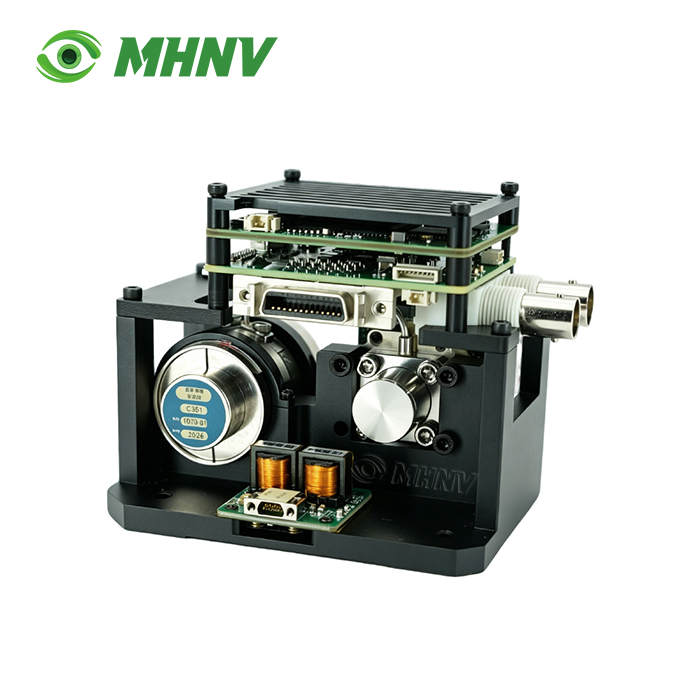
The image intensifier tube is really the heart of any Night Vision Monocular, so let's break down how it converts faint light into a visible image.
Photocathode Sensitivity and Light Amplification
Inside a High Performance Nite Vision Monocular Device, photons arriving in autumn on an 18 mm S-25 photocathode convert the light to electrons. These electrons are accelerated and amplified by a microchannel plate and then strike a phosphor screen to create a brilliant, visible picture from the almost invisible light. The photocathode is sensitive from 500 to 900 microamperes per lumen, which enables a Nite Vision Monocular to work consistently under starlight circumstances, offering the user usable images when the human eye would see absolutely nothing.
Resolution and Signal-to-Noise Ratio Explained
The real sharpness and cleanness of the amplified picture are determined by the resolution and the signal-to-noise ratio (SNR). A premium high-performance night vision monocular device is often rated at 57 lp/mm or superior resolution and 18 to 25 dB signal-to-noise ratio. The higher the SNR, the less grainy or “snowy” the picture appears. This is critical in forensic investigation or security monitoring when the difference between recognising a target or missing it altogether might come down to fine detail. Always compare the statistics of both units, since a Nite Vision Monocular with good resolution but low SNR will still provide a painfully noisy picture.
Phosphor Screen and Image Output
When the electrons impact the phosphor screen, the tube creates a visible picture. Depending on the model, the colour of the phosphor may be green or white. White phosphor provides a greyscale display that many operators find more natural and less fatiguing over long periods of observation, but the norm for a Nite Vision Monocular has been green phosphor, which has great contrast. This phosphor screen option is not just about visual aesthetics; it has a real impact on operator comfort and effectiveness during a complete shift since a High Performance Nite Vision Monocular Device is typically worn for hours on end.
| Component | Function |
|---|---|
| Photocathode (18 mm S-25) | Converts photons to electrons |
| Microchannel plate | Amplifies electron signal |
| Phosphor screen | Converts electrons back into visible light |
What Optical and Power Specifications Define a High Performance Night Vision Monocular Device?
Beyond the tube itself, the surrounding optics and Night Vision Monocular system determine how the device performs in actual field conditions.
Lens System, Magnification, and Field of View
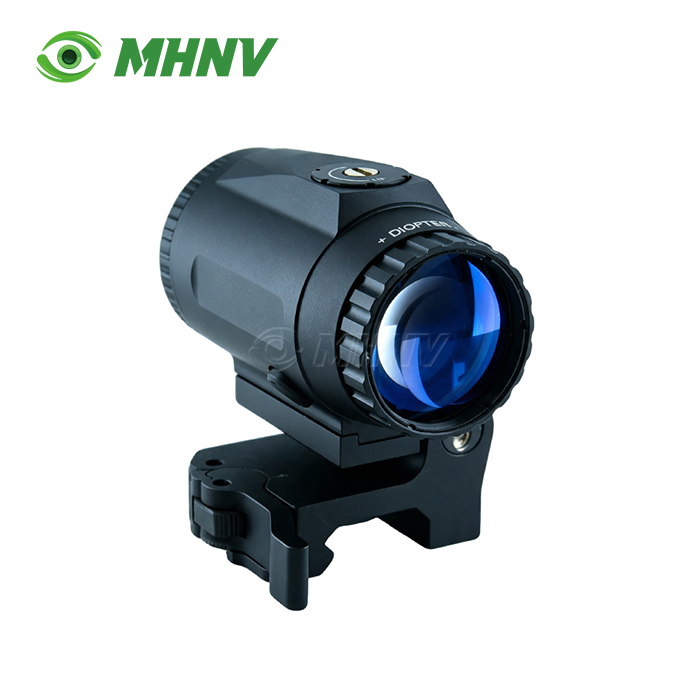
A typical high-performance night vision monocular device will employ a 25 mm F1.2 lens with 1x magnification, a conscious trade-off between situational awareness and visual brightness. A field of vision of approximately 42 degrees (+/- 3 degrees) provides the operator with a sufficiently broad scanning area for situational awareness, rather than a limited soda-straw view that restricts peripheral detection. This is exactly why a Nite Vision Monocular designed for handheld scanning is very different from a rifle-mounted scope, which usually favours greater magnification rather than field of vision.
Detection Distance, Focus, and Diopter Adjustment
A good quality Nite Vision Monocular should be able to detect a target at a distance of 250 to 300 meters under favourable ambient light circumstances. The actual range is influenced by weather and target reflectivity. The focus range of 0.25 m to infinity allows the same device to be used for close-up forensic documentation and distant perimeter observation. The diopter adjustment from -5 to +5 diopters makes it possible for users with varying eyesight to operate the High Performance Nite Vision Monocular Device without the need for prescription eyewear underneath. This flexibility is crucial for teams that share equipment among many operators with various eye requirements.
Power Supply and Battery Runtime
The power supply range is 2.6 to 4.2 volts, and the device takes either a CR123 or a single AA battery, giving field teams a choice when resupply options are limited. An endurance of around 80 hours without the IR illumination on is a good statistic for any Nite Vision Monocular destined for prolonged deployment, easily covering a week-long field rotation without a battery change. For a high-performance night vision monocular in distant coastal or patrol situations, its duration will directly impact operations planning and logistics.
| Specification | Typical Value |
|---|---|
| Lens system | 25 mm, F1.2 |
| Detection distance | 250–300 m |
| Battery runtime (IR off) | ~80 hours |
How Is a High Performance Night Vision Monocular Device Built for Field Use?
Specifications aside, the physical construction of the device determines whether it survives real operational conditions over the long term.
Rugged Housing and Environmental Ratings
Normally, a real high-performance Night Vision Monocular is encased in aircraft-grade aluminium, selected for its strength-to-weight ratio and corrosion resistance, critical in a coastal salt-spray environment. Optional IP67 and IP65 environmental classifications protect internal electronics and the tube against dust and water infiltration in the field. The operational temperature range of -40°C to +50°C means a single Nite Vision Monocular can go from Arctic patrol conditions to tropical deployment without a hardware change, simplifying logistics for organisations operating in diverse climates.
Weight, Ergonomics, and Compact Design
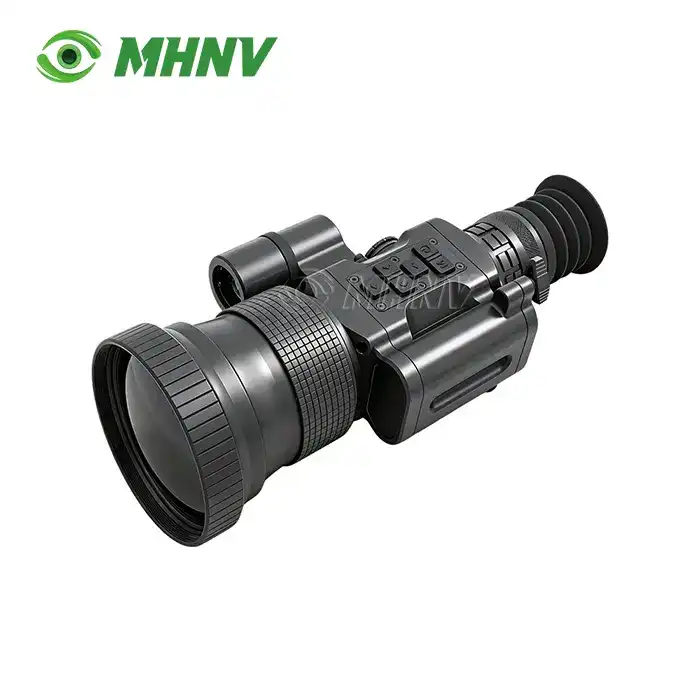
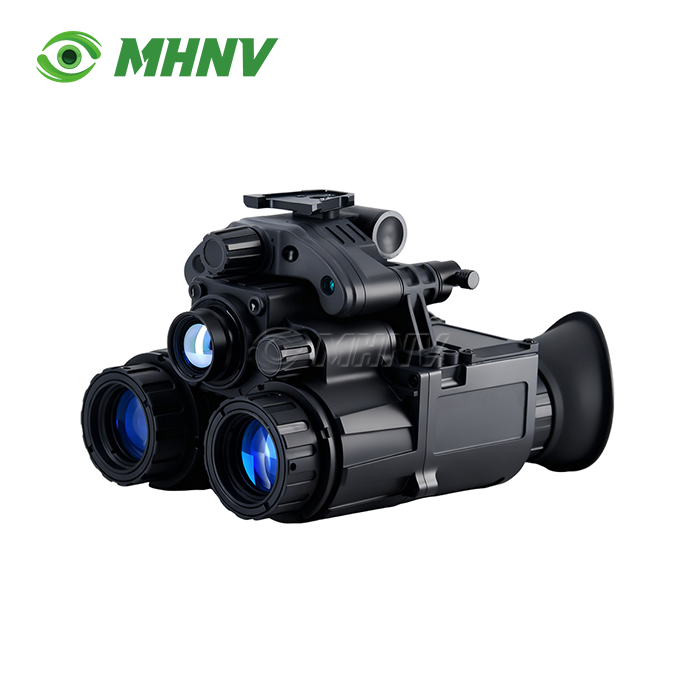
The High Performance Nite Vision Monocular Device is superbly built, weighing around 300 grams without battery and 115 by 69 by 54 mm, and is very comfortable for handheld or helmet-mounted usage during extended periods of observation. Size is also an important factor for security work, since it may be concealed, and for the user to reduce tiredness during lengthy forensic documentation sessions. This lightweight, single-eye form is typically a determining factor for mobile field teams that need to move swiftly between observation spots, as compared to larger binocular-style options.
Real-World Applications: Coastal Defense, Security, and Forensics
Such design decisions naturally lead to actual use cases. High Performance Nite Vision Monocular Device is ideal for coastal defence patrols where salt spray resistance and long detection range are most important, and for security monitoring where a broad field of vision and long battery life are most important for lengthy shifts. For forensic inquiry, the professional-grade sensitivity of 500 to 900 microamperes per lumen gives the kind of consistent, legal-quality images that documentation work needs, where consistency across units is as important as raw performance on any one. In all these situations, a Nite Vision Monocular is a real working instrument, not a toy. Buyers who are considering possibilities should think about how each use case stresses distinct qualities before choosing one model.
Conclusion
A high-performance night vision monocular device works by combining a sensitive image intensifier tube, purpose-built optics, and rugged construction into one compact unit. MHNV® has manufactured Gen 2+ and Gen 3 night vision devices since 2013, backing every Night Vision Monocular with serialized testing and full OEM/ODM engineering support for global buyers across security, patrol, and forensic applications.
FAQ
Q1: What image intensifier generation does this monocular use?
A: Models typically use Gen 2 Plus or Gen 3 tubes, depending on sensitivity and budget requirements.
Q2: How far can a high-performance night vision monocular device detect a target?
A: Typical detection distance ranges from 250 to 300 meters under favorable conditions.
Q3: How long does the battery last on a Night Vision Monocular?
A: Approximately 80 hours with the IR illuminator switched off.
Q4: Is the device waterproof?
A: It meets the IP65 standard protection, with IP67 available as an optional upgrade.
Q5: What's the difference between green and white phosphor screens?
A: Green is the traditional high-contrast option; white offers a grayscale display that reduces eye fatigue.
Source Your High Performance Night Vision Monocular Device Today
Looking for a reliable, field-tested high-performance night vision monocular device for security, patrol, or forensic work? MHNV® offers full in-house engineering, serialized QC reports, and OEM/ODM customization for global brands across 60+ countries. Contact our team at sarah@mh-elec.com to discuss specifications, request test data, or start your custom project today.
References
1. Csorba, I. P. — Image Tubes, Howard W. Sams & Co.
2. RCA Corporation — Electro-Optics Handbook.
3. U.S. Department of Defense — MIL-STD-810 Environmental Engineering Considerations.
4. Driggers, R. G., Cox, P., & Edwards, T. — Introduction to Infrared and Electro-Optical Systems, Artech House.
5. Society of Photo-Optical Instrumentation Engineers (SPIE) — Proceedings on Night Vision Technology.
6. National Institute of Standards and Technology (NIST) — Low-Light Imaging Sensor Performance Standards.
YOU MAY LIKE