What Makes a Cooled MWIR Thermal Camera Core Ideal for Industry?
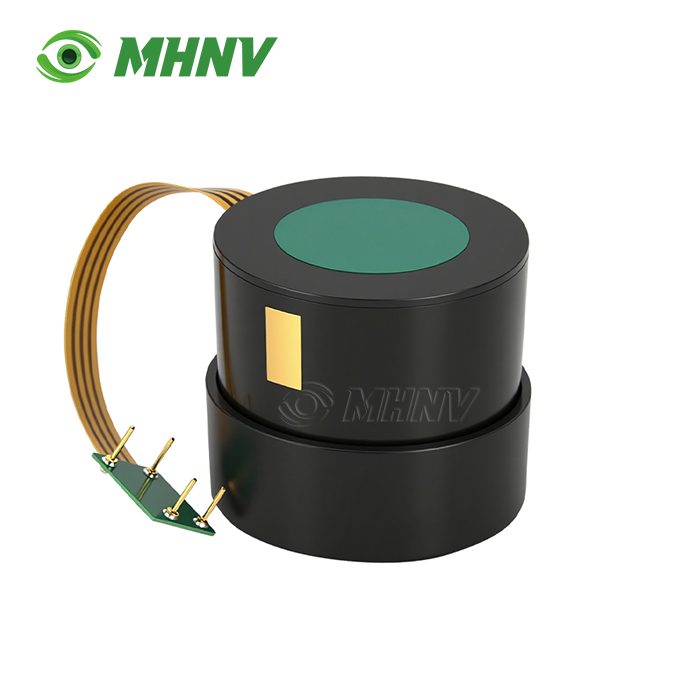
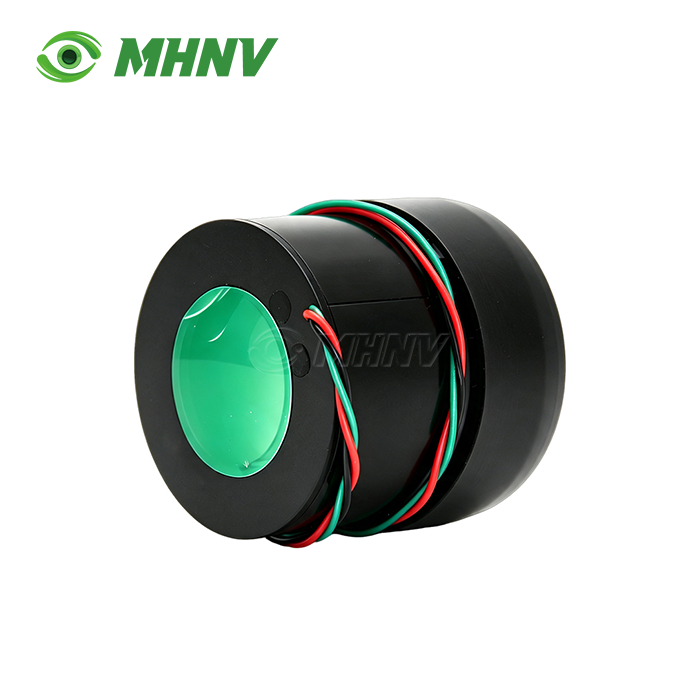
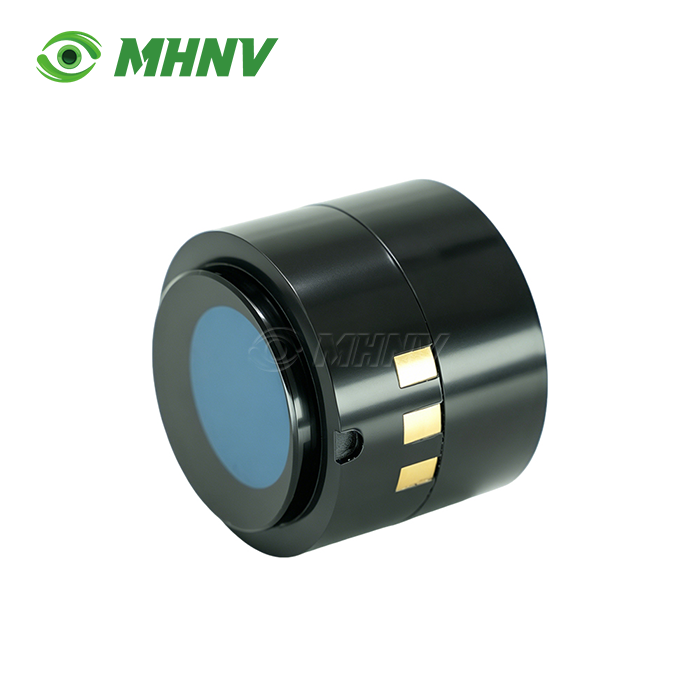
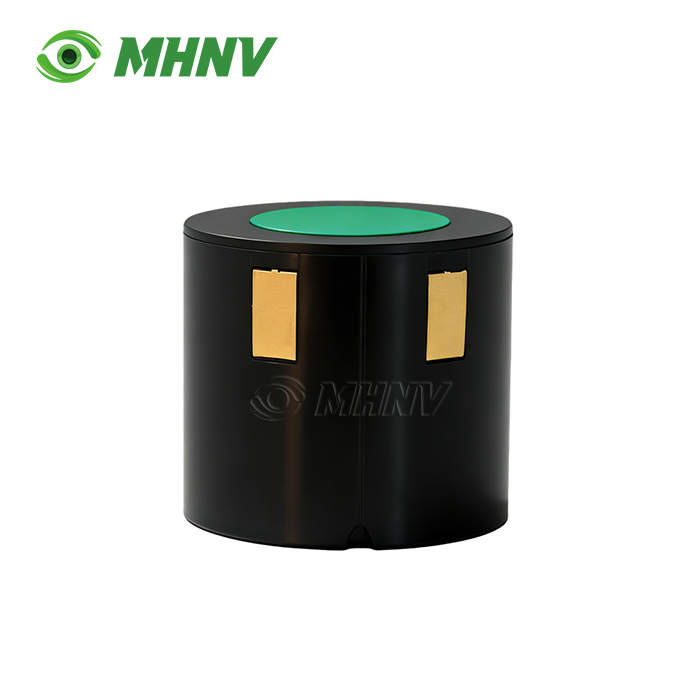
Industrial purchasers considering thermal imaging technology soon realise that not all cores are made equal, and here is where a Cooled MWIR Thermal Camera Core lives up to its reputation. The chilled mid-wave infrared core provides the sensitivity and air penetration required for challenging applications such as gas leak detection, long-range surveillance, and precise industrial monitoring, rather than uncooled alternatives. Engineers creating OEM platforms are increasingly looking beyond basic specs to how effectively a core really integrates into an existing system, and that’s precisely the gap a well-engineered core is supposed to address. In this post, we’ll explain how these Thermal Imaging Components accomplish their sensitivity, what integration features make them practicable for OEM platforms, and why they perform so well in actual industrial and field applications.
How Does a Cooled MWIR Thermal Camera Core Achieve High Sensitivity?
Sensitivity starts at the detector level, so let's look at what actually gives a Cooled MWIR Thermal Camera Core its performance edge over uncooled alternatives.
HOT Detector Architecture and Resolution
A contemporary Cooled MWIR Thermal Camera Core, such as the MHNV HOT-series, employs a high operating temperature (HOT) digital MWIR detector with 640 by 512 resolution and a 15-micron pixel pitch. The HOT architecture enables the cryocooler to operate at a higher stage temperature than legacy-cooled cores, reducing cryocooler size, weight, and power consumption to around one-third of prior designs. For engineers selecting Thermal Imaging Components for a new platform, this means premium-tier cooled image quality without the bulk that has traditionally excluded cooled cores from handheld and UAV-payload applications, opening design options that simply weren’t available with previous-generation cooled architectures.
NETD and Thermal Sensitivity Performance
The noise equivalent temperature difference (NETD) is the main parameter to evaluate the ability of a Cooled MWIR Thermal Camera Core to distinguish fine temperature differences. With a core rating of no more than 22 mK at 23°C ambient, it is possible to detect variances of less than 100 mK, which is precisely what is required to reveal gas plumes, thermal leaks, or concealed electrical defects against a colder backdrop. NETD typically provides more insight in comparing Thermal Imaging Components from different vendors than resolution alone, since an image might be very clear yet noisy and still not display the subtle thermal fingerprints that industrial inspection work relies on.
MWIR Spectral Response and Atmospheric Transmission
Another differentiating characteristic is spectral response. The Cooled MWIR Thermal Camera Core functions in the 3.7 to 4.8 micron MWIR band and offers high atmospheric transmission in humid, tropical, coastal, and industrial-plume settings where 8 to 14 micron LWIR sensors often lose signal strength. This spectrum advantage also yields better thermal contrast on real hot objects such as engines, exhaust plumes, and gas releases. This is one of the obvious reasons why engineers prefer MWIR Thermal Imaging Components over LWIR counterparts for situations where long-range detection via tough air conditions is a concern.
| Specification | Value |
|---|---|
| Detector resolution | 640 x 512 pixels |
| Pixel pitch | 15 micron |
| NETD | ≤22 mK at 23°C |
| Spectral response | 3.7–4.8 micron |
What Integration Features Make Thermal Imaging Components Suitable for OEM Platforms?
Sensitivity alone isn't enough for OEM integration — the surrounding interfaces and control features determine how easily a core fits into an existing system.
Multi-Interface Video Output Options
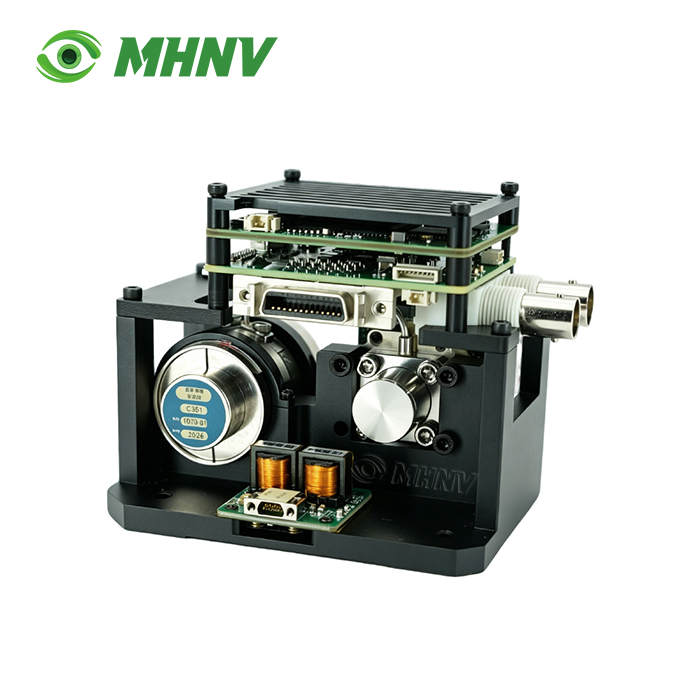
A well-designed Cooled MWIR Thermal Camera Core supports multiple video output formats simultaneously, including CameraLink digital output, DVP 8-bit parallel with BT.656 at 1.8V logic, and PAL analog composite via BNC connector. This flexibility means the same Thermal Imaging Components can integrate into legacy analog systems as well as modern FPGA and SoC-based platforms without requiring a redesign. For OEM integrators supporting multiple product generations, this multi-interface approach significantly reduces engineering overhead when the same core needs to serve several different platform architectures.
RS422 Serial Control and Image Processing Features
Full command-set control over a Cooled MWIR Thermal Camera Core is handled through RS422 full-duplex serial communication, giving integrators access to non-uniformity correction, polarity switching, brightness and contrast adjustment, bad-pixel correction, adaptive dynamic range compression, digital zoom, and multiple color palettes. These onboard processing capabilities mean the Thermal Imaging Components handle much of the image conditioning work internally, reducing the processing burden on downstream host systems and simplifying firmware development for OEM engineering teams building around the core. With seven selectable color palettes and both single-point and two-point non-uniformity correction available over the same serial link, integrators can tune image presentation for their specific end-user application without touching the core's internal firmware.
Compact Size, Weight, and Mounting Interface
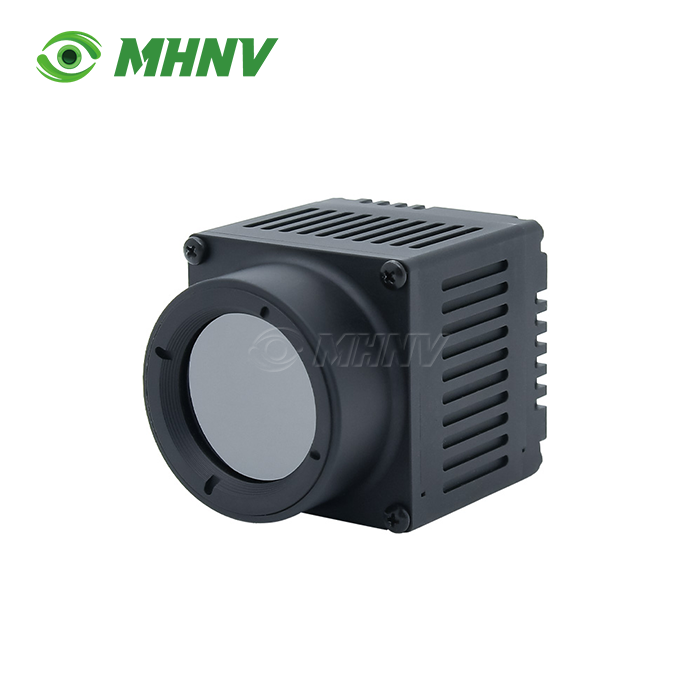
Physical integration matters just as much as electrical interfacing. A Cooled MWIR Thermal Camera Core in this class typically measures no larger than 100 by 100 by 81 mm and weighs no more than 580 grams, with a 4x M4 threaded mounting interface designed for direct OEM housing integration. This compact footprint allows Thermal Imaging Components, once reserved for large, vehicle-mounted systems, to fit into gimbal payloads, handheld devices, and space-constrained industrial enclosures without extensive mechanical redesign.
Why Is a Cooled MWIR Thermal Camera Core Ideal for Industrial and Field Applications?
Beyond raw specifications, real-world deployment conditions ultimately decide whether a thermal core is genuinely fit for industrial use.
Fast Cooldown Time and Operational Readiness
Traditional cooled thermal cores were often criticized for slow startup, but a modern Cooled MWIR Thermal Camera Core reaches operational readiness in no more than 3 minutes and 30 seconds at 23°C ambient, making the full system useful within about four minutes of power-on. For Thermal Imaging Components deployed in security or emergency-response scenarios, this fast cooldown can meaningfully affect how quickly a team can respond to a developing situation, compared to legacy cores that historically required significantly longer warm-up periods.
Power Efficiency and Wide Operating Temperature Range
Efficient power consumption extends what's operationally possible with a Cooled MWIR Thermal Camera Core. Steady-state power draw of no more than 6.5W (with a 12W peak) supports long-endurance, battery-powered platforms and unattended field installations that older cooled cores simply couldn't sustain. An operating temperature range of -40°C to +60°C further ensures these Thermal Imaging Components function reliably whether deployed in Arctic monitoring stations or industrial facilities in hot climates, without requiring separate hardware variants for different regions.
Applications in Gas Detection, UAV Payloads, and Industrial Monitoring
These combined features make a Cooled MWIR Thermal Camera Core very well suited for industrial specialised applications. NETD and MWIR spectrum responses are critical for gas leak detection equipment to detect plumes unseen by the human eye, while UAV EO payloads benefit from small size and 50 Hz frame rate for smooth aerial tracking with no motion tearing. Precision industrial monitoring and scientific imaging benches also benefit from the identical Thermal Imaging Components, as reliable, repeatable thermal data matters as much in a lab environment as it does in field surveillance operations. Facility managers performing unattended electrical inspections or pipeline monitoring programs also have a reliable, low-maintenance sensor platform that stays running throughout seasonal temperature changes without recalibration.
| Application | Key Benefit |
|---|---|
| Gas leak detection | Fine NETD reveals sub-100 mK plumes |
| UAV EO payloads | Compact size, 50 Hz smooth frame rate |
| Industrial monitoring | Wide temperature range, reliable operation |
Conclusion
A Cooled MWIR Thermal Camera Core combines HOT detector sensitivity, fast cooldown, and compact integration in one package. MHNV® has engineered Thermal Imaging Components since 2013, backing every core with full OEM/ODM support and in-house engineering for global industrial and defense-tier partners.
FAQ
Q1: What resolution does a Cooled MWIR Thermal Camera Core typically offer?
A: The MHNV HOT-series delivers 640 by 512 resolution with a 15-micron pixel pitch.
Q2: How fast does the core reach operational readiness?
A: Cooldown takes no more than 3 minutes and 30 seconds at 23°C ambient.
Q3: Why choose MWIR over LWIR Thermal Imaging Components?
A: MWIR maintains a stronger signal in humid, coastal, and industrial-plume atmospheric conditions.
Q4: What video outputs does the core support?
A: CameraLink digital, DVP 8-bit parallel BT.656, and PAL analog composite via BNC.
Q5: What operating temperature range does this thermal core support?
A: From -40°C to +60°C, suitable for both Arctic and tropical deployments.
Integrate a Cooled MWIR Thermal Camera Core Into Your Platform
Ready to add a high-sensitivity Cooled MWIR Thermal Camera Core to your surveillance, UAV, or industrial monitoring system? MHNV® offers full engineering support, serialized QC data, and OEM/ODM customization for Thermal Imaging Components used by global partners. Contact our team at sarah@mh-elec.com to discuss integration requirements or request a full technical datasheet today.
References
1. Rogalski, A. — Infrared Detectors, CRC Press.
2. Hudson, R. D. — Infrared System Engineering, Wiley.
3. SPIE — Proceedings on Infrared Technology and Applications.
4. U.S. Department of Defense — MIL-STD-810 Environmental Engineering Considerations.
5. Driggers, R. G., Cox, P., & Edwards, T. — Introduction to Infrared and Electro-Optical Systems, Artech House.
6. National Institute of Standards and Technology (NIST) — Thermal Imaging Sensor Performance Standards.
YOU MAY LIKE