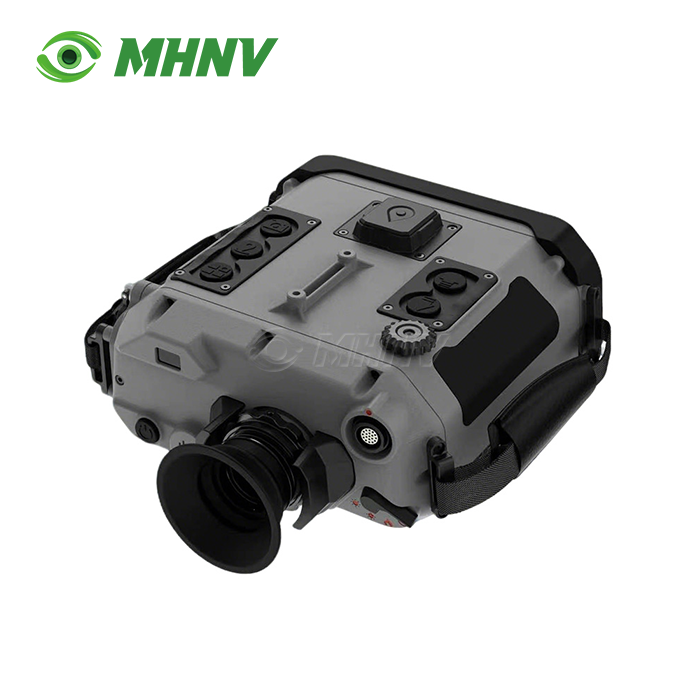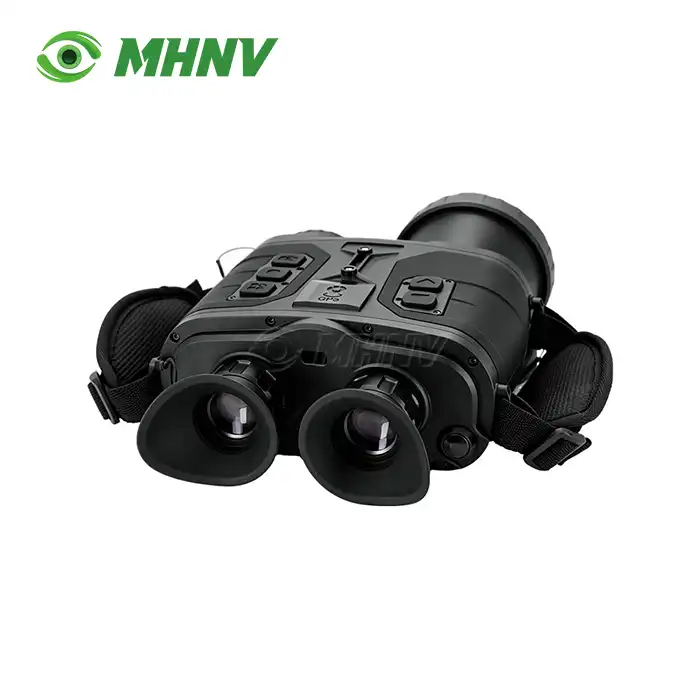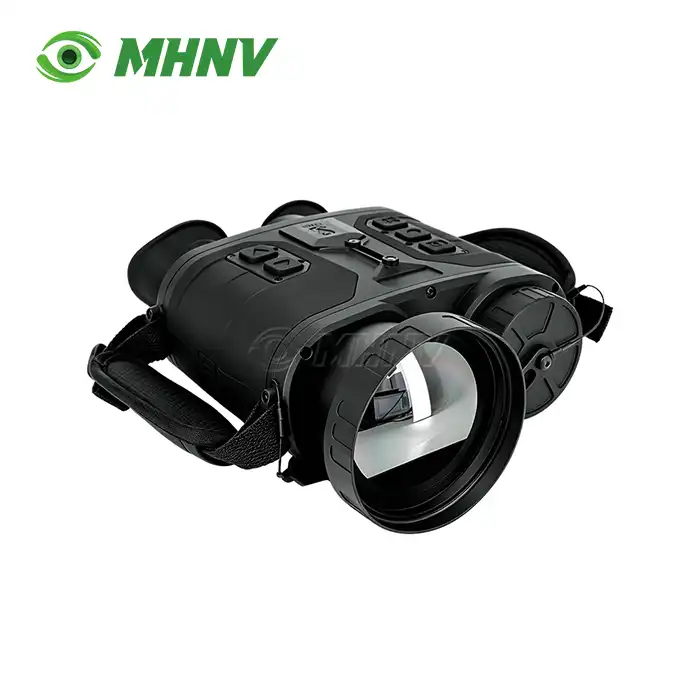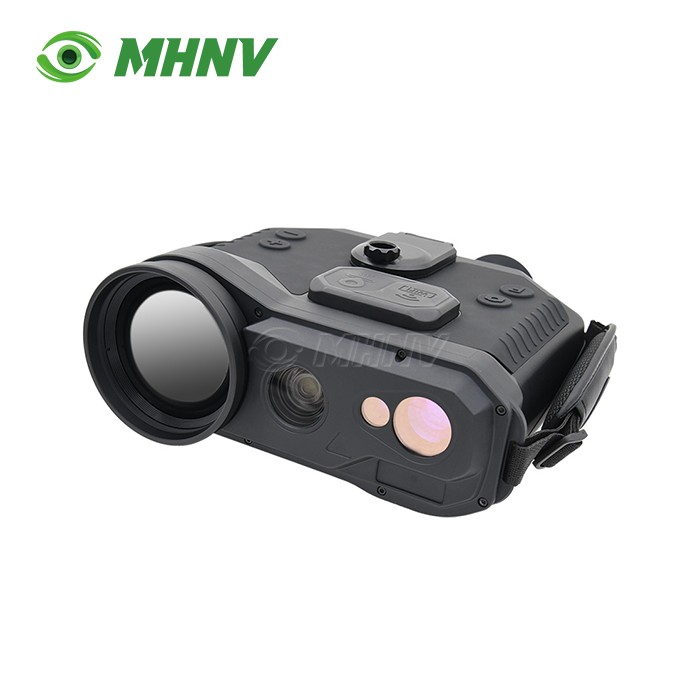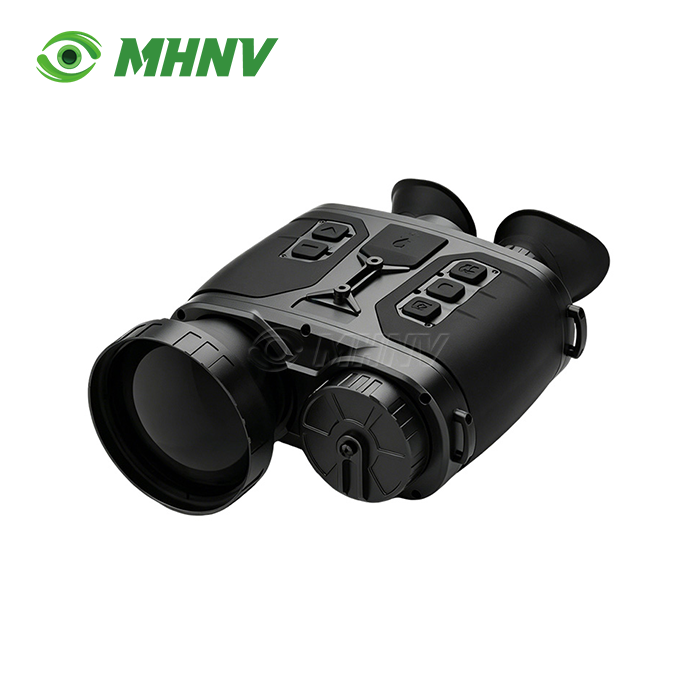
640×512 Thermal Imaging Binoculars
640×512 Thermal Imaging Binoculars | Professional Long-Range Detection System with IP67 Protection
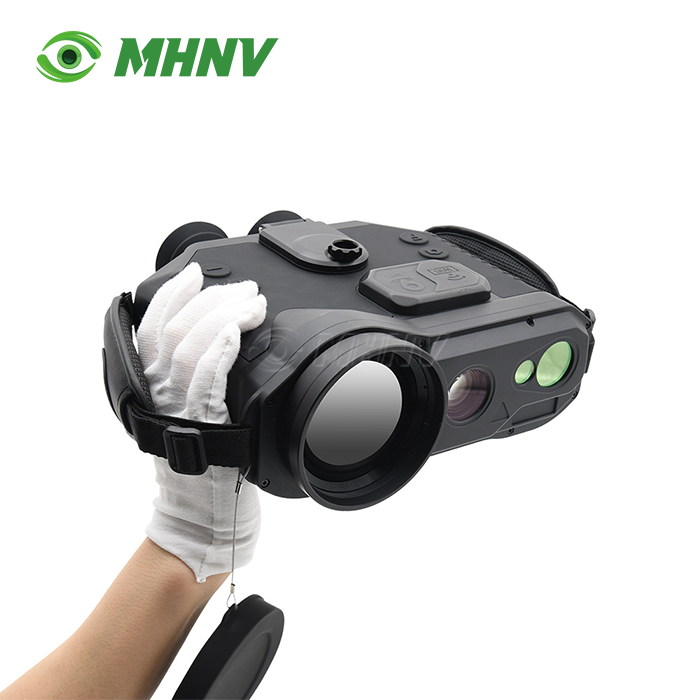
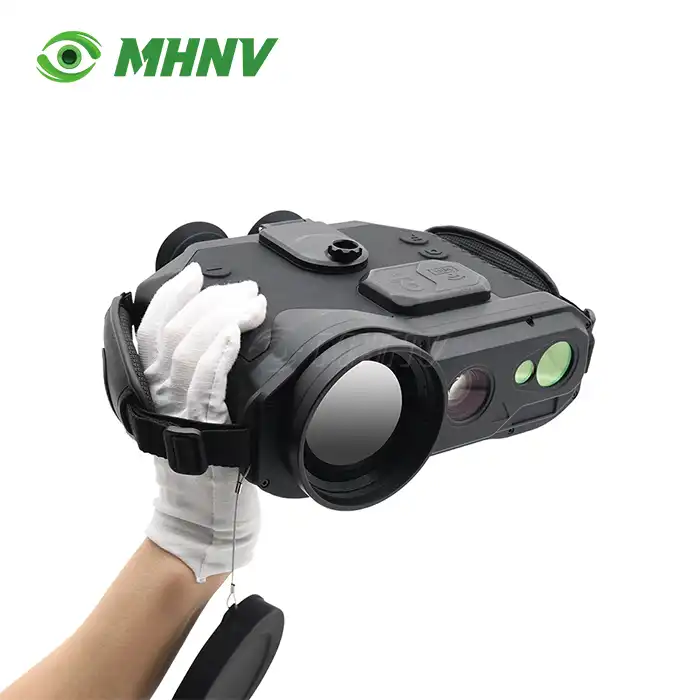
Xi'an MH Electronics And Technology Co., Ltd. delivers enterprise-grade 640×512 Thermal Imaging Binoculars engineered for extreme-range observation and all-weather reliability. Our MHNV® series integrates high-sensitivity uncooled VOx microbolometer technology with 12μm pixel pitch, achieving ≤50mK NETD thermal sensitivity and IP67 ingress protection. This professional-grade system detects human targets at 7.3km and vehicle targets at 13km, with recognition capabilities extending to 1.8km and 3.3km respectively. Weighing just 2.04kg, the device combines dual 1920×1080 OLED displays with 100mm F1.2 optics, delivering superior image clarity through 327,680 effective pixels. Our full-stack manufacturing capability ensures consistent quality from optical design through final assembly, backed by 12+ years of thermal imaging expertise serving customers across 60+ countries.
Advanced Detection Technology for Critical Operations
The products utilize professional-grade focal plane array sensors operating across 8~14μm spectral range at 50Hz frame rate. This configuration solves the identification gap inherent in lower-resolution systems.
Competing 384x288 sensors create misleading thermal signatures when objects are beyond 500 meters. Our triple-pixel density design ensures definite target classification with improved spatial resolution. The 12μm pitch architecture offers extended detection ranges, while keeping the optical housing size small.
Dual OLED micro-displays with 1920×1080 resolution get rid of monocular eye fatigue. Binocular vision is normal . This maintains the stereoscopic vision that allows us to navigate terrain and judge distances . The 4.40°3.52° field of vision provides a good balance between situational awareness and magnification.
Technical Specifications
| Parameter | Specification |
|---|---|
| Detector Resolution | 640×512 pixels @ 12μm pitch |
| Thermal Sensitivity (NETD) | ≤50mK @ F1.0 |
| Spectral Range | 8~14μm |
| Frame Rate | 50Hz |
| Micro Display | Dual 1920×1080 OLED 0.71" |
| Objective Lens | 100mm / F1.2 |
| Field of View | 4.40°×3.52° |
| Digital Zoom | 1.0× ~ 8.0× |
| Detection Range (Human) | 7.3km |
| Recognition Range (Human) | 1.8km |
| Detection Range (Vehicle) | 13km |
| Recognition Range (Vehicle) | 3.3km |
| Power Supply | 4× 18650 rechargeable batteries |
| Operating Duration | ≥9 hours continuous |
| Storage Capacity | 128GB with USB-A 2.0 |
| Operating Temperature | -30°C to +60°C |
| Storage Temperature | -40°C to +65°C |
| Ingress Protection | IP67 |
| Dimensions | 251×179×75mm (L×W×H) |
| Net Weight | 2.04kg |
Core Performance Advantages
Superior Smoke Penetration Capability
Its high sensitivity IR detection can see through thick smoke, fog and dust for crisp imaging. The long-wave infrared spectrum of 8-14 microns can penetrate obscurants that defeat visible-light devices. This is critical for firefighting operations, inspection of industrial facilities and reconnaissance in limited visibility.
Passive Detection for Prime Stealth
The binoculars are a totally passive thermal system therefore do not emit any electromagnetic radiation while operation. This allows detection by radio frequency sensors or optical surveillance equipment, enabling covert monitoring requirements for border patrol and nocturnal security operations.
All-Weather Durability
IP67 rated for complete dust-tight sealing and protection against forceful water jets. Housing is impervious to rain, snow, sandstorms, and high humidity situations without performance loss. Operating temperature range -30°C to +60°C for arctic to desert regions.
Ergonomic Design for Extended Use
The soft rubber coating provides comfort and a non-slip grip for one or two-handed use. The weight distribution of 2.04kg helps to prevent operator fatigue during extended surveillance flights. Low power consumption makes the device work continuously for ≥9 hours using rechargeable battery packs.
Flexible Configuration Options
MHNV® offers many focal length configurations including MH-350B/650B, MH-375B/675B, and MH-6100B models. Choose the best balance of detection range and field of vision to suit your individual mission objectives, from short-range search to long-range reconnaissance.
Professional Applications
Search and Rescue Operations
In maritime or mountainous environments, the 640×512 Thermal Imaging Binoculars distinguish human heat signatures from background clutter like rocks or wave patterns at extreme distances. Light fog penetration enables rescuers to locate survivors faster than competing lower-resolution systems. The high pixel density reveals critical details that determine whether a thermal signature represents a person or natural heat source.
Border Surveillance and Perimeter Security
High-resolution sensor capabilities enable Detection, Recognition, and Identification (DRI) of intruders at ranges that support security protocols. Early detection allows intervention before perimeter breach occurs. The dual-eyepiece design reduces operator eye strain during hours-long surveillance shifts. Passive operation prevents adversary awareness of observation activities.
Wildlife Research and Conservation
Researchers conduct non-intrusive nocturnal observation without artificial illumination that disrupts animal behavior. High pixel density reveals fine behavioral details and individual animal identification markers. The system ensures zero ecosystem disruption while gathering critical ethological data. Extended battery life supports full-night observation sessions without recharging interruptions.

MHNV® Manufacturing Excellence
Xi'an MH Electronics has vertically integrated production facilities with Class-10,000 clean rooms for sensor calibration. Our full-stack technical team includes in-house optical design, FPGA processing, embedded firmware and algorithms for AI.
Every device sent is tested for Signal-to-Noise Ratio (SNR) , resolution and environmental stress screening. Our quality management system is based on ISO9001:2015 and we are compliant with CE, RoHS and FCC . Products are provided with serialised QC data sheets documenting performance characteristics.
We are over 12 years experienced in thermal imaging and we have customers in North America, Europe, the Middle East and Southeast Asia. We offer complete OEM/ODM customisation from optics requirements to housing design and firmware localisation. Stock products take 3-7 days to produce, while custom orders take 30-45 days to produce.


Quality Control Standards
Professional purchasers evaluate products through rigorous technical checkpoints:
Sensor Uniformity Testing
Non-Uniformity Correction (NUC) verification eliminates ghosting and fixed-pattern noise across the full temperature range. Our calibration process ensures consistent thermal response across all 327,680 pixels.
Bad Pixel Mapping
Dead or hot pixel counts fall within strict industrial tolerances. Every sensor undergoes pixel mapping at multiple temperature gradients to identify and compensate for defective elements.
Optical Collimation Verification
Dual optical axes receive precision alignment testing to prevent user eye strain and headaches. Binocular convergence accuracy meets optical instrument standards for comfortable extended viewing.
Thermal Sensitivity Validation
Laboratory testing confirms actual NETD values match advertised millikelvin ratings. We test thermal contrast performance at target ambient temperatures and background conditions.
Environmental Stress Screening
Units undergo temperature cycling from -40°C to +60°C and IP67 submersion testing. Shock and vibration testing follows MIL-STD-810G protocols to guarantee field reliability.
FAQ
Q: How well does 640×512 resolution compare to 384×288 thermal sensors in professional applications?
A: The 640x512 arrangement has almost three times as many pixels as 384x288 sensors, which substantially changes the identification range performance and digital zoom utility. At long ranges, when 384x288 systems display blurred thermal blobs, higher pixel density shows the clear target features needed for positive identification. This becomes crucial when operators need to distinguish between humans, animals or inanimate heat sources at 1000+ meters. The higher resolution also keeps the image clear at 4×-8× digital zoom levels, while lesser resolution devices become pixelated after 2× magnification.
Q: What is the impact of the 12μm pixel pitch on overall system performance vs 17μm detectors?
A: The smaller 12μm pixel pitch permits increasing the optical magnification and extending the detection range without compromising compact lens sizes and device portability. The lower pitch allows lens manufacturers to cover the same field-of-view with shorter focal lengths, meaning smaller weight and better handling characteristics. This design benefit is significant for portable binocular applications where size and weight directly effect operator fatigue during long surveillance missions. The tradeoff is a little decrease in per-pixel sensitivity compared to 17μm detectors, which manufacturers overcome with sophisticated noise reduction algorithms.
Q: Why does NETD rating matter for practical field operations?
A: Noise Equivalent Temperature Difference (NETD) is a measure of the smallest temperature difference that a sensor can resolve. This has a direct impact on image contrast in demanding thermal scenes. NETD of <50mK enables detection of slight temperature swings that are important in high humidity circumstances, rainy weather or when there is low thermal difference between objects and backgrounds. The difference between a 25mK NETD and a 60mK sensor is enough to see camouflaged soldiers or recently disturbed ground in practice. This sensitivity advantage is crucial in search operations, perimeter security and reconnaissance scenarios where targets are purposefully lowering thermal fingerprints.
Q: What are the differences between real binocular thermal devices and bi-ocular viewing systems?
A: True binocular thermal systems utilise separate optical channels with individual objective lenses and sensors for each eye to maintain natural depth perception and stereoscopic vision. Bi-oculars take the image from a single sensor and split it between two eyes for comfortable two-eyed viewing, but not true 3D. The binocular design provides better distance estimates and less eye fatigue over long periods of viewing, while bi-ocular units are less expensive and of less weight. True binocular capabilities will usually be required for professional operators concerned with terrain navigation and tactical movement, whereas bi-ocular designs may be suitable for fixed surveillance applications.
Q: What battery life should professionals expect from 640×512 systems?
A: High-resolution 640×512 sensors demand a significant amount of processing power to generate images in real-time and process digital signals, which means they can run continuously for 5-9 hours on excellent lithium-ion battery packs. The system achieves ≥9 hours with power management optimisation and enables field-swappable 18650 rechargeable batteries for extended missions. For professional users, spare battery sets should be carried for use beyond 8 hours. Cold weather conditions will reduce real run time by 20-30% below rated specs. The USB charging feature allows for recharging in the vehicle on patrol or for replenishing power at the base camp between shifts.
Contact MHNV® for Professional Thermal Solutions
Ready to enhance your observation capabilities with 640×512 Thermal Imaging Binoculars? Contact our technical team at sarah@mh-elec.com for detailed specifications, custom configuration options, and volume pricing.
YOU MAY LIKE