




Développement MHNV
Actualités de l'industrie
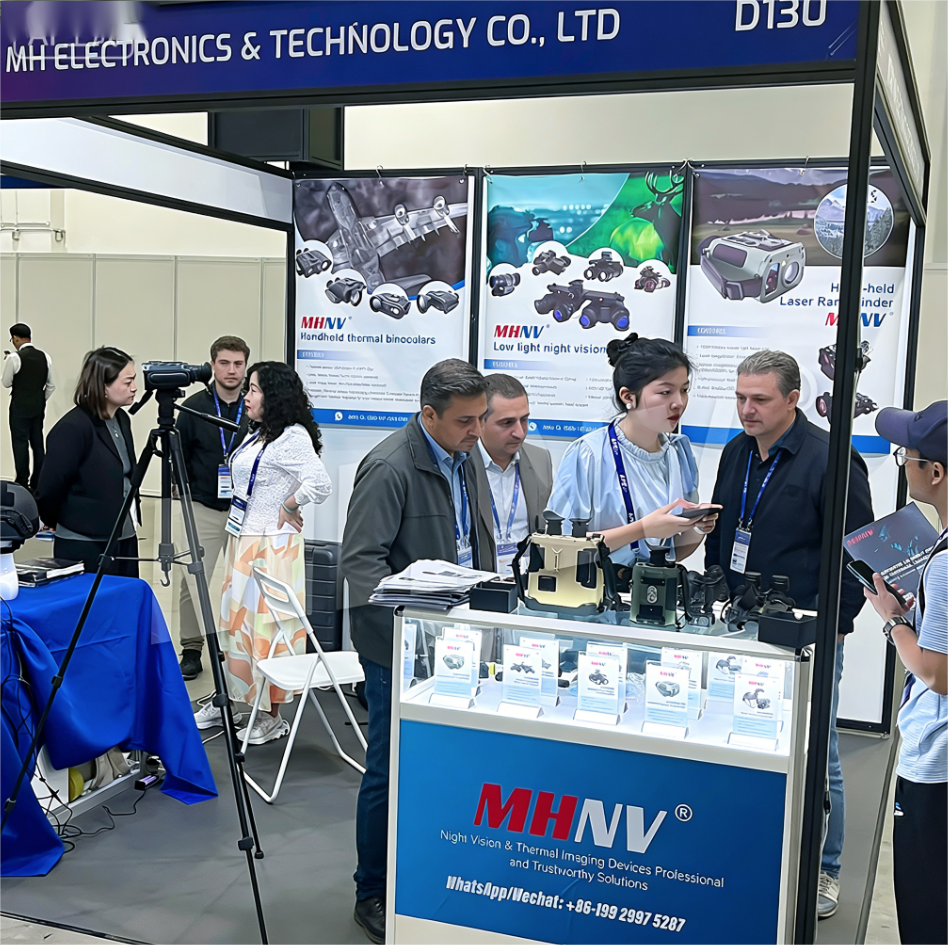
Meet MHNV at DSA Malaysia 2026
<p><br></p><div data-w-e-type="video" data-w-e-is-void style="text-align: center;">
<iframe width="400" height="250" src="https://www.youtube.com/embed/r6-WHLRbNiw?si=K-jE2K1euNe2nzfq" frameborder="0" allowfullscreen="" style="width: 800px;height: 400px;"></iframe>
</div><p><br></p><p><br></p><p><span style="font-size: 16px; font-family: Arial;">MHNV is pleased to announce our participation in DSA Malaysia 2026, one of the most influential defense and security exhibitions in Southeast Asia. The event will be held in Kuala Lumpur, Malaysia, bringing together global leaders, professionals, and innovators in defense, security, and surveillance technologies.</span></p><p><span style="font-size: 16px; font-family: Arial;">As a professional manufacturer specializing in night vision systems, thermal imaging devices, and laser rangefinder solutions, MHNV is committed to delivering reliable and advanced electro-optical products for military, law enforcement, and professional security applications.</span></p><p style="text-align: center;"><img src="https://www.mhnvnightvision.com/uploads/file-1770620278629-25620592.png" alt="MHNV® | Meet MHNV at DSA Malaysia 2026 " data-href="https://www.mhnvnightvision.com/uploads/file-1770620278629-25620592.png" width="" height="" style="width: 50%;"></p><p><span style="font-size: 16px; font-family: Arial;"><strong>Discover Advanced Electro-Optical Solutions</strong></span></p><ul><li><span style="font-size: 16px; font-family: Arial;">At DSA Malaysia 2026, MHNV will showcase a selection of our latest technologies, including:</span></li><li><span style="font-size: 16px; font-family: Arial;">High-performance night vision devices designed for low-light and no-light environments</span></li><li><span style="font-size: 16px; font-family: Arial;">Advanced thermal imaging solutions for detection, observation, and situational awareness</span></li><li><span style="font-size: 16px; font-family: Arial;">Precision laser rangefinders offering accurate distance measurement for tactical and professional use</span></li></ul><p><span style="font-size: 16px; font-family: Arial;">Our products are developed with a strong focus on performance, durability, and real-world operational needs, ensuring dependable results in demanding environments.</span></p><p><span style="font-size: 16px; font-family: Arial;"> </span></p><p><span style="font-size: 16px; font-family: Arial;"><strong>Meet the MHNV Team Face to Face</strong></span></p><p><span style="font-size: 16px; font-family: Arial;">DSA Malaysia 2026 provides an excellent opportunity to meet the MHNV team in person. We welcome visitors, partners, and industry professionals to discuss:</span></p><ul><li><span style="font-size: 16px; font-family: Arial;">Product features and technical specifications</span></li><li><span style="font-size: 16px; font-family: Arial;">Customized solutions and OEM/ODM cooperation</span></li><li><span style="font-size: 16px; font-family: Arial;">Market opportunities and long-term partnerships</span></li></ul><p style="text-align: center;"><span style="font-size: 16px; font-family: Arial;"> </span><img src="https://www.mhnvnightvision.com/uploads/file-1770620360215-316304679.png" alt="MHNV® | Meet MHNV at DSA Malaysia 2026 " data-href="https://www.mhnvnightvision.com/uploads/file-1770620360215-316304679.png" width="" height="" style="width: 539.97px;height: 372.92px;"></p><p><span style="font-size: 16px; font-family: Arial;">Whether you are looking for proven solutions or exploring new collaboration possibilities, MHNV looks forward to meaningful conversations and connections.</span></p><p><span style="font-size: 16px; font-family: Arial;"><strong>Let’s Connect at DSA Malaysia 2026---Would you like to meet MHNV at DSA Malaysia 2026?</strong></span></p><p><span style="font-size: 16px; font-family: Arial;">We invite you to visit our booth and experience our electro-optical technologies firsthand.</span></p><p><span style="font-size: 16px; font-family: Arial;"><strong>For meeting appointments or more information, please feel free to contact us in advance.</strong></span></p><p><span style="font-size: 16px; font-family: Arial;"><strong>We look forward to seeing you in Kuala Lumpur.</strong></span></p><p><br></p><p><span style="color: rgb(255, 255, 255); font-size: 19px; font-family: "Titillium Web", Arial, "Helvetica Neue", Helvetica, sans-serif;">Please feel free to contact our sales engineer at </span><a href="mailto:jacky@mh-elec.com" target="_blank" style="text-indent: 37.3333px; text-align: start;"><span style="color: rgb(255, 255, 255); font-size: 19px;"><u>jacky@mh-elec.com</u></span></a><span style="color: rgb(255, 255, 255); font-size: 19px; font-family: Arial;"> </span></p>
2026-02-09
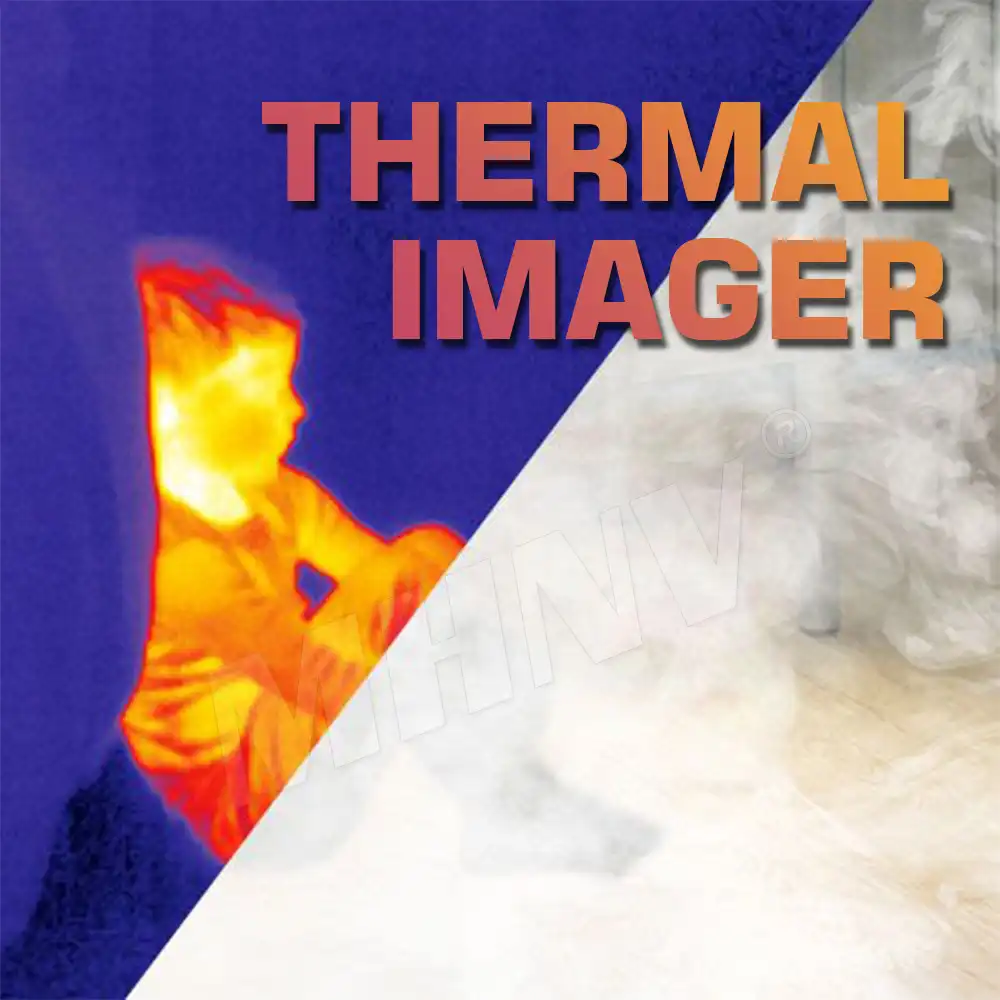
What is an infrared thermal imager? How does it work?
<p style="text-align: justify; line-height: 1.5;"><span style="color: rgb(38, 38, 38); font-size: 22px; font-family: Arial;">Infrared thermal imagers are extremely important in a variety of environments. Beyond their use in first-response setups, thermal imaging expands the range of tasks that robotic devices can perform in high-risk environments or emergency situations. Let's take a look at some of the "hot" topics related to thermal imaging and its applications.</span></p><p style="text-align: justify; line-height: 1.5;"><br></p><p style="text-align: justify; line-height: 1.5;"><span style="color: rgb(38, 38, 38); font-size: 24px; font-family: Arial;"><strong>What is thermal imaging?</strong></span></p><p style="text-align: justify; line-height: 1.5;"><span style="color: rgb(38, 38, 38); font-size: 22px; font-family: Arial;">Infrared thermal imagers can efficiently convert heat (i.e., thermal energy) into visible light to analyze the surrounding environment. This makes them very versatile. Biological and mechanical devices emit heat, making them visible even in darkness. These cameras are highly accurate and require only a small amount of heat to operate effectively.</span></p><p style="text-align: justify; line-height: 1.5;"><br></p><p style="text-align: justify; line-height: 1.5;"><span style="color: rgb(38, 38, 38); font-size: 24px; font-family: Arial;"><strong>How does thermal imaging work?</strong></span></p><p style="text-align: justify; line-height: 1.5;"><span style="color: rgb(38, 38, 38); font-size: 22px; font-family: Arial;">Visible light is extremely useful to humans and other living organisms, but it represents only a small portion of the electromagnetic spectrum. Infrared radiation, generated by heat, occupies a much larger "space" in the spectrum. Infrared thermal imagers capture and assess the interactions of heat that is absorbed, reflected, and sometimes even propagated.</span></p><p style="text-align: justify; line-height: 1.5;"><br></p><p style="text-align: justify; line-height: 1.5;"><span style="color: rgb(38, 38, 38); font-size: 22px; font-family: Arial;">The level of thermal radiation emitted by an object is called its thermal signal. The hotter a given object is, the more it will radiate into the environment. Thermal imagers can distinguish between heat sources and small differences in thermal radiation. They compile this data into a complete "thermal map," distinguishing them by heat level.</span></p><p style="text-align: justify; line-height: 1.5;"><br></p><p style="text-align: justify; line-height: 1.5;"><span style="color: rgb(38, 38, 38); font-size: 24px; font-family: Arial;"><strong>What are the uses of thermal imaging?</strong></span></p><p style="text-align: justify; line-height: 1.5;"><span style="color: rgb(38, 38, 38); font-size: 22px; font-family: Arial;">Thermal imagers have been used since the Korean War, initially for nighttime reconnaissance and combat. Since then, they have been improved for use by firefighters, electricians, law enforcement officers, and rescue teams in disaster areas. They are also widely used for building inspection, maintenance, and optimization.</span></p><p style="text-align: justify; line-height: 1.5;"><br></p><p style="text-align: justify; line-height: 1.5;"><span style="color: rgb(38, 38, 38); font-size: 24px; font-family: Arial;"><strong>How can thermal imaging be achieved?</strong></span></p><p style="text-align: justify; line-height: 1.5;"><span style="color: rgb(38, 38, 38); font-size: 22px; font-family: Arial;">Thermal imaging can be a compact and effective technique. Simple thermal imagers assess heat sources centered on a pair of crosshairs. More sophisticated systems offer multiple comparison points, allowing users to analyze environmental conditions. The color palette of cameras varies greatly, from monochrome to a full "rainbow" palette.</span></p><p style="text-align: justify; line-height: 1.5;"><br></p><p style="text-align: justify; line-height: 1.5;"><span style="color: rgb(38, 38, 38); font-size: 24px; font-family: Arial;"><strong>What should you be looking for in a thermal imaging device?</strong></span></p><p style="text-align: justify; line-height: 1.5;"><span style="color: rgb(38, 38, 38); font-size: 22px; font-family: Arial;">To be precise, your needs for a thermal imager depend on the environment in which it will be used. However, there are two key quality-differentiating factors for thermal imagers: detector resolution and thermal sensitivity.</span></p><p style="text-align: justify; line-height: 1.5;"><br></p><p style="text-align: justify; line-height: 1.5;"><span style="color: rgb(38, 38, 38); font-size: 22px; font-family: Arial;">Like many other displays, resolution describes the total number of pixels – for example, a 160x120 display consists of 19,200 pixels. Each pixel has associated thermal data, so a larger display can produce a sharper image.</span></p><p style="text-align: justify; line-height: 1.5;"><br></p><p style="text-align: justify; line-height: 1.5;"><span style="color: rgb(38, 38, 38); font-size: 22px; font-family: Arial;">Thermal sensitivity is the threshold of difference that an imager can detect. For example, if a device has a sensitivity of 0.01°, it can distinguish objects with a temperature difference of one percent. The minimum and maximum temperature ranges are also important.</span></p><p style="text-align: justify; line-height: 1.5;"><br></p><p style="text-align: justify; line-height: 1.5;"><span style="color: rgb(38, 38, 38); font-size: 22px; font-family: Arial;">Thermal imagers have some fundamental limitations: for example, they cannot see through glass due to the reflective properties of materials. They can also see but not penetrate walls. Nevertheless, thermal imaging has proven useful in many applications.</span></p><p style="text-align: justify; line-height: 1.5;"><br></p><p style="text-indent: 21pt; text-align: center;"><img src="https://www.mhnvnightvision.com/uploads/file-1764820182709-976432515.png" alt="MHNV® | What is an infrared thermal imager? How does it work?" data-href="https://www.mhnvnightvision.com/uploads/file-1764820182709-976432515.png" width="" height="" style="width: 50%;"></p><p style="text-align: left;"><span style="color: rgb(38, 38, 38); font-size: 22px; font-family: Arial;">MHNV is a professional manufacturer specializing in the research and development and production of infrared thermal images. We provide customized services to our clients, and we firmly believe that our cooperation with you will be mutually beneficial, efficient, and fruitful.</span></p><p style="text-align: left;"><br></p><p style="text-align: left;"><span style="color: rgb(38, 38, 38); font-size: 22px; font-family: Arial;">Please feel free to contact our sales engineer at </span><a href=" mailto:jacky@mh-elec.com" target="_blank"><span style="color: rgb(38, 38, 38); font-size: 22px; font-family: Arial;">jacky@mh-elec.com</span></a></p>
2025-12-04
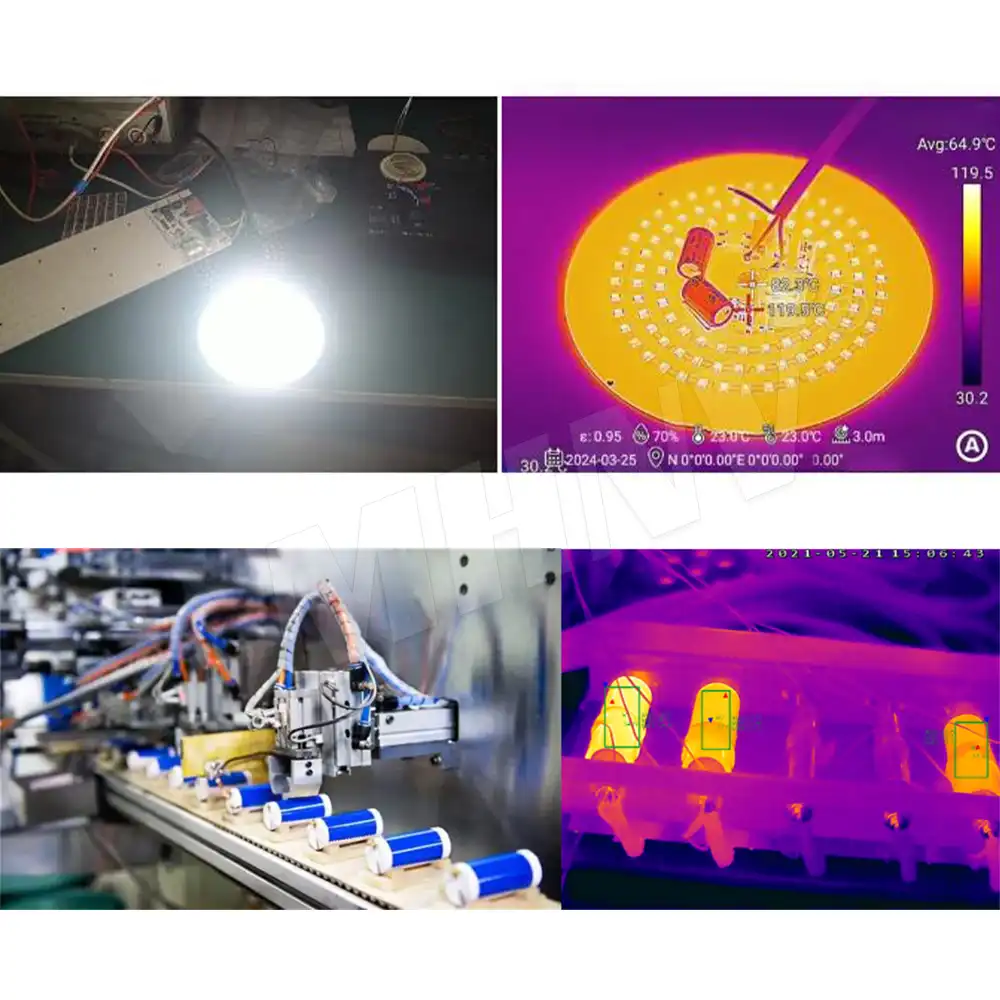
Application of infrared thermal imagers in the field of power batteries
<p><span style="color: rgb(38, 38, 38); font-size: 22px; font-family: Roboto-Regular;">With increasing global focus on renewable energy and electric vehicles, power battery technology is also developing rapidly. Infrared thermal imagers, as an advanced non-destructive testing tool, have been widely used in the power battery field. This article will introduce the application of infrared thermal imagers in the power battery field and its related principles.</span></p><p><br></p><p><span style="color: rgb(38, 38, 38); font-size: 24px; font-family: Roboto-Regular;"><strong>I. Basic Principles of Infrared Thermal Imagers</strong></span></p><p><span style="color: rgb(38, 38, 38); font-size: 22px; font-family: Roboto-Regular;">An infrared thermal imager is an instrument that uses infrared radiation for measurement. All objects emit infrared radiation, which is related to the object's temperature and emissivity. Infrared thermal imagers receive the infrared radiation emitted by objects, convert it into a visible light image, and thus measure the temperature distribution on the object's surface.</span></p><p style="text-indent: 32pt;"><br></p><p style="text-indent: 32pt; text-align: center;"><img src="https://www.mhnvnightvision.com/uploads/file-1764818321270-655400939.png" alt="MHNV® | Application of infrared thermal imagers in the field of power batteries" data-href="https://www.mhnvnightvision.com/uploads/file-1764818321270-655400939.png" width="" height="" style="width: 30%;"></p><p style="text-indent: 32pt;"><br></p><p style="text-indent: 32pt;"><br></p><p><span style="color: rgb(38, 38, 38); font-size: 24px; font-family: Roboto-Regular;"><strong>II. Application of Infrared Thermal Imagers in Power Batteries</strong></span></p><p><span style="color: rgb(38, 38, 38); font-size: 22px; font-family: Roboto-Regular;">1. Battery Pack Thermal Management: In electric vehicles, the battery pack is a core component, and its thermal management is crucial. Overheating can lead to decreased battery performance and even safety issues. Infrared thermal imagers can monitor the temperature distribution of the battery pack in real time, helping to design more effective heat dissipation systems. By observing thermal images, researchers can understand the heat generation of the battery under different operating conditions, providing a basis for battery pack thermal management strategies.</span></p><p><br></p><p><span style="color: rgb(38, 38, 38); font-size: 22px; font-family: Roboto-Regular;">2. Battery Fault Diagnosis: Infrared thermal imagers can detect internal thermal anomalies in the battery, such as localized overheating or excessive temperature differences, which may be signs of battery malfunction. By analyzing the thermal images, the fault location can be pinpointed, facilitating timely battery repair and replacement, and improving vehicle operational safety.</span></p><p><br></p><p><span style="color: rgb(38, 38, 38); font-size: 22px; font-family: Roboto-Regular;">3. Battery Performance Testing: During the R&D phase, infrared thermal imagers can be used to evaluate the performance of different types of power batteries. For example, by comparing the temperature changes of different batteries under the same operating conditions, their energy density, charge/discharge rate, and other performance indicators can be determined. Furthermore, infrared thermal imagers can also be used to study battery performance under different ambient temperatures, providing data support for optimizing battery performance.</span></p><p><br></p><p><span style="color: rgb(38, 38, 38); font-size: 22px; font-family: Roboto-Regular;">4. Production Quality Control: In the production process of power batteries, infrared thermal imagers can be used to inspect the quality and safety of the batteries. For example, by analyzing the internal temperature distribution of the battery, it can be determined whether its internal structure is uniform and whether there are problems such as localized overheating. This non-destructive testing method helps improve production quality and reduce the product defect rate.</span></p><p><br></p><p><span style="color: rgb(38, 38, 38); font-size: 22px; font-family: Roboto-Regular;">5. Charging Facility Management: Charging facilities are a crucial component of electric vehicles. Observing battery temperature changes during the charging process using infrared thermal imagers can help researchers understand the performance characteristics of charging facilities and provide a basis for optimizing their design. Furthermore, infrared thermal imagers can also be used to monitor the safety status of charging facilities and promptly identify potential problems.</span></p><p><br></p><p style="text-indent: 32pt;"><span style="color: rgb(38, 38, 38); font-size: 22px; font-family: Roboto-Regular;">In conclusion, infrared thermal imagers have broad application value in the field of power batteries, helping to improve the safety, performance, and production quality of power batteries. With the continuous expansion of the electric vehicle market and the ongoing development of power battery technology, the application of infrared thermal imagers in this field will become more in-depth and widespread. In the future, with the continuous advancement and optimization of infrared thermal imager technology, its application in the power battery field will have even greater potential.</span></p><p style="text-indent: 32pt;"><br></p><p style="text-indent: 28pt;"><span style="color: rgb(38, 38, 38); font-size: 22px; font-family: Roboto-Regular;">MHNV is a professional manufacturer specializing in the research and development and production of infrared thermal images. We provide customized services to our clients, and we firmly believe that our cooperation with you will be mutually beneficial, efficient, and fruitful.</span></p><p style="text-indent: 28pt;"><br></p><p style="text-indent: 28pt;"><span style="color: rgb(38, 38, 38); font-size: 22px; font-family: "Arial Regular";">Please feel free to contact our sales engineer at </span><a href=" mailto:jacky@mh-elec.com" target="_blank"><span style="color: rgb(38, 38, 38); font-size: 22px; font-family: "Arial Regular";"><u>jacky@mh-elec.com</u></span></a></p>
2025-12-03
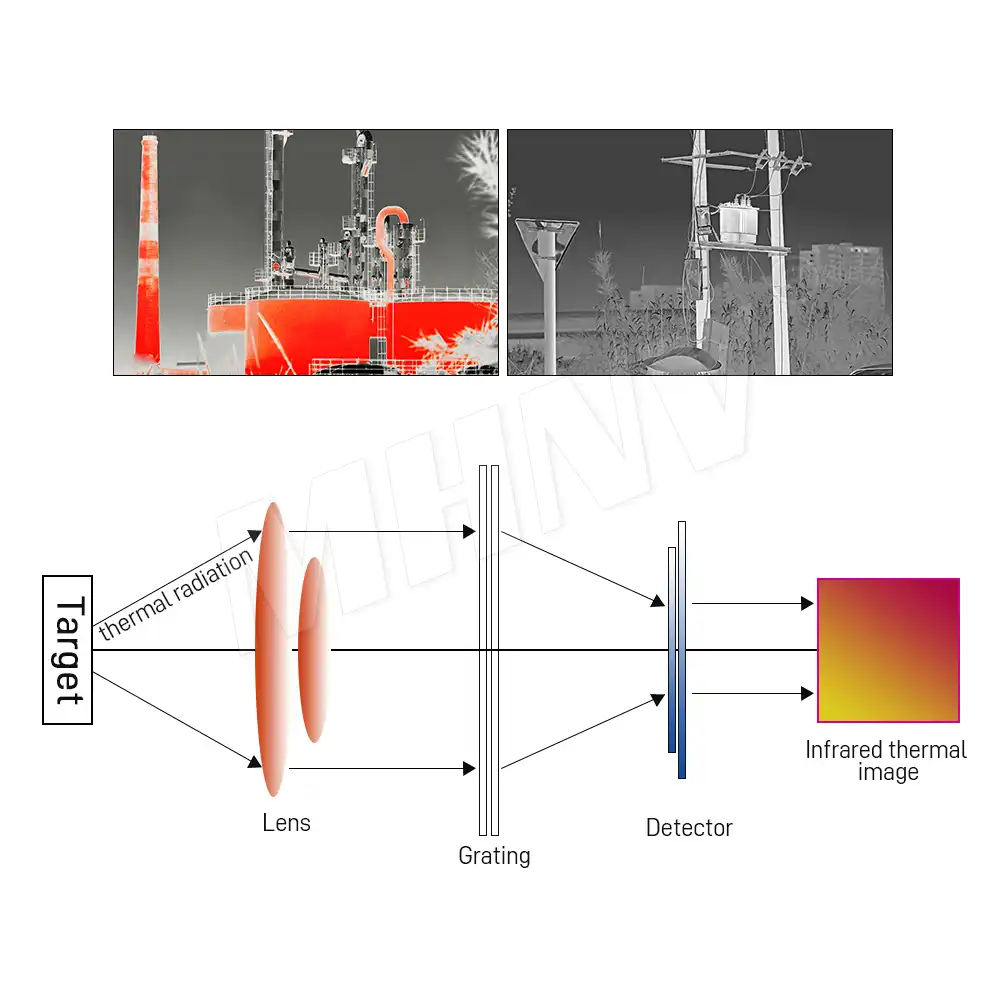
How infrared thermal imagers are used for temperature monitoring in wafer manufacturing
<p style="text-align: left;"><span style="color: rgb(38, 38, 38); font-size: 22px; font-family: Calibri;">The application of infrared thermal imagers in temperature monitoring during wafer fabrication is a cutting-edge and important technological field. Wafer fabrication is a critical link in the semiconductor industry chain, requiring extremely high precision in process parameters such as temperature. As a non-contact, high-precision temperature measurement method, infrared thermal imagers play an irreplaceable role in temperature monitoring during wafer fabrication.</span></p><p style="text-align: left;"><br></p><p style="text-align: left;"><span style="color: rgb(38, 38, 38); font-size: 24px; font-family: Calibri;"><strong>I. Technical Background and Significance</strong></span></p><p style="text-align: left;"><span style="color: rgb(38, 38, 38); font-size: 22px; font-family: Calibri;">With the rapid development of semiconductor technology, wafer sizes are constantly increasing, and manufacturing processes are becoming increasingly complex. Temperature, as a key parameter in wafer production, has a decisive impact on product performance and yield. Traditional temperature measurement methods, such as thermocouples and infrared thermometers, are no longer sufficient to meet the temperature measurement needs of modern wafer production due to their limitations. Infrared thermal imagers, with their advantages of non-contact and full-field measurement, have shown great potential in temperature monitoring during wafer production.</span></p><p style="text-align: left;"><br></p><p style="text-align: center;"><img src="https://www.mhnvnightvision.com/uploads/file-1764662591659-511056160.png" alt="MHNV® | How infrared thermal imagers are used for temperature monitoring in wafer manufacturing" data-href="https://www.mhnvnightvision.com/uploads/file-1764662591659-511056160.png" width="" height="" style="width: 50%;"></p><p style="text-align: left;"><br></p><p style="text-align: left;"><span style="color: rgb(38, 38, 38); font-size: 24px; font-family: Calibri;"><strong>II. Application Principles</strong></span></p><p style="text-align: left;"><span style="color: rgb(38, 38, 38); font-size: 22px; font-family: Calibri;">Infrared thermal imagers generate thermal images by receiving infrared radiation emitted by objects and converting it into electrical signals. Since objects at different temperatures have different emissivity, the temperature distribution of an object can be accurately determined by measuring and analyzing this radiation. In wafer fabrication, infrared thermal imagers can monitor the temperature distribution on the wafer surface in real time, providing crucial data for process control.</span></p><p style="text-align: left;"><br></p><p style="text-align: left;"><span style="color: rgb(38, 38, 38); font-size: 24px; font-family: Calibri;"><strong>III. Practical Applications and Effects</strong></span></p><p style="text-align: left;"><span style="color: rgb(38, 38, 38); font-size: 22px; font-family: Calibri;">Furnace tube process monitoring: In the furnace tube process of wafer manufacturing, infrared thermal imagers can monitor the temperature changes of the wafer in real time during the heating process, ensuring the accuracy of temperature control during production. By combining with computer vision technology, abnormal temperature areas can be automatically identified, analyzed, and recorded, improving production efficiency and product yield.</span></p><p style="text-align: left;"><br></p><p style="text-align: left;"><span style="color: rgb(38, 38, 38); font-size: 22px; font-family: Calibri;">Etching and Coating Process Monitoring: Etching and coating are crucial steps in wafer manufacturing, often involving complex gas and reaction conditions. Infrared thermal imagers can capture minute temperature differences on the wafer surface, helping engineers assess process status and product quality.</span></p><p style="text-align: left;"><span style="color: rgb(38, 38, 38); font-size: 22px; font-family: Calibri;">Annealing process monitoring: Annealing is a critical step in wafer manufacturing, used to restore or adjust the crystal structure of materials. Infrared thermal imagers can monitor wafer temperature changes in real time during annealing, ensuring process consistency and stability.</span></p><p style="text-align: left;"><span style="color: rgb(38, 38, 38); font-size: 22px; font-family: Calibri;">Surface treatment and cleaning: Temperature significantly affects the rate of chemical reactions and the cleaning effect during wafer surface treatment and cleaning. Infrared thermal imagers can monitor the temperature distribution in these processes in real time, optimize process parameters, and improve treatment results.</span></p><p style="text-align: left;"><span style="color: rgb(38, 38, 38); font-size: 22px; font-family: Calibri;">Fault diagnosis and preventive maintenance: Infrared thermal imagers can capture abnormal temperature distributions, thereby quickly locating equipment faults or process anomalies. By combining real-time monitoring with early warning systems, early fault diagnosis and preventive maintenance can be achieved, reducing downtime during production.</span></p><p style="text-align: left;"><br></p><p style="text-align: left;"><span style="color: rgb(38, 38, 38); font-size: 24px; font-family: Calibri;"><strong>IV. Challenges and Prospects</strong></span></p><p style="text-align: left;"><span style="color: rgb(38, 38, 38); font-size: 22px; font-family: Calibri;">While infrared thermal imagers offer significant advantages for temperature monitoring in wafer fabrication, several challenges remain, such as high-precision temperature measurement, dynamic range, response speed, and integration with automated production lines. However, with the continuous development of related technologies, the application of infrared thermal imagers in wafer fabrication temperature monitoring is expected to become more widespread and in-depth.</span></p><p style="text-align: left;"><br></p><p style="text-align: left;"><span style="color: rgb(38, 38, 38); font-size: 22px; font-family: "Arial Regular";">MHNV is a professional manufacturer specializing in the research and development and production of infrared thermal image</span><span style="color: rgb(38, 38, 38); font-size: 22px; font-family: 宋体;">r</span><span style="color: rgb(38, 38, 38); font-size: 22px; font-family: "Arial Regular";">s. We provide customized services to our clients, and we firmly believe that our cooperation with you will be mutually beneficial, efficient, and fruitful.</span></p><p style="text-align: left;"><br></p><p style="text-align: left;"><span style="color: rgb(38, 38, 38); font-size: 22px; font-family: "Arial Regular";">Please feel free to contact our sales engineer at </span><a href=" mailto:jacky@mh-elec.com" target="_blank"><span style="color: rgb(38, 38, 38); font-size: 22px; font-family: "Arial Regular";"><u>jacky@mh-elec.com</u></span></a></p><p style="text-align: left;"><br></p>
2025-12-02
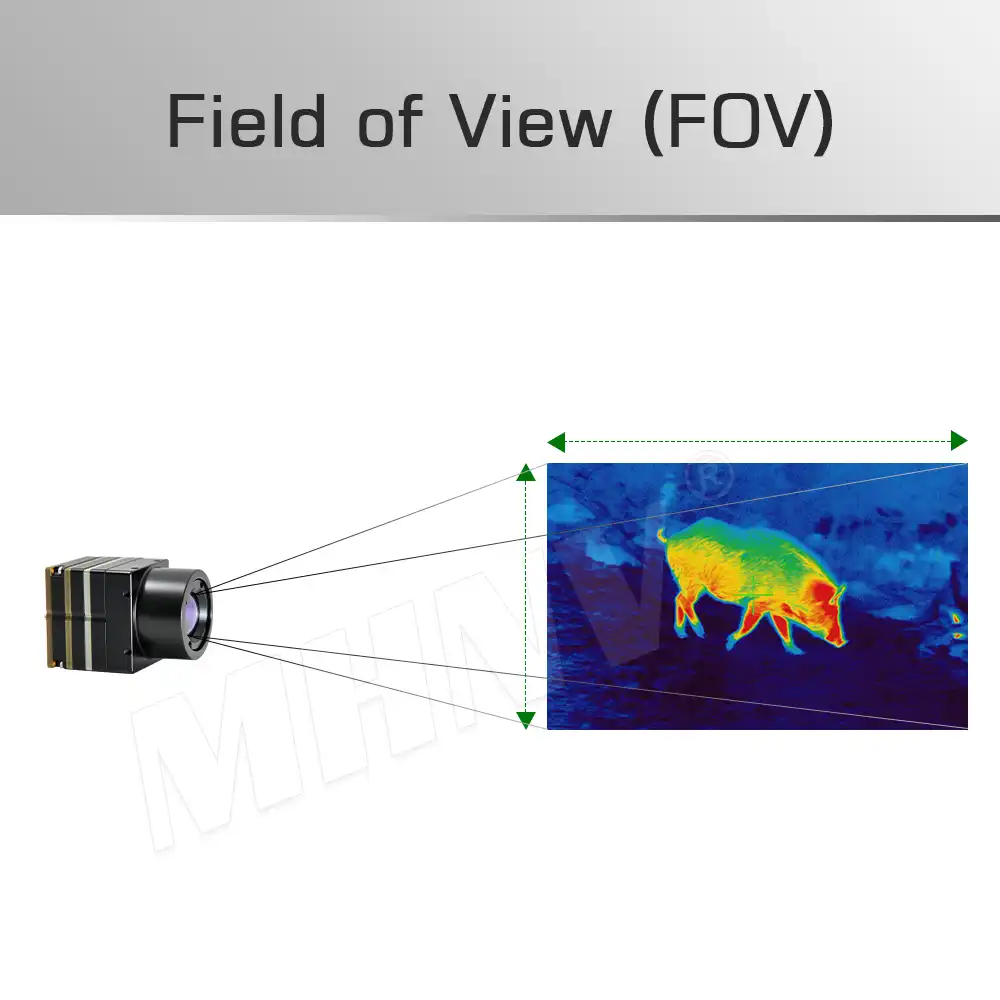
What are the algorithms for determining the field of view (FOV) and minimum spatial resolution of an infrared thermal imager?
<p><span style="color: rgb(38, 38, 38); font-size: 16px; font-family: "Arial Regular";">Compared to infrared thermometers, infrared thermal imagers are favored by many research institutions and manufacturing enterprises due to their outstanding performance. However, this does not mean that all infrared thermal imagers can meet the requirements of temperature measurement. The requirements for infrared thermal imagers will vary depending on different environmental factors and the target being measured. So, what are the algorithms for the field of view and minimum resolution of infrared thermal imagers? MHNV will provide a detailed explanation below !</span></p><p><br></p><p><span style="color: rgb(38, 38, 38); font-size: 19px; font-family: "Arial Bold Italic";"><em><strong> Spatial resolution definition</strong></em></span></p><p><span style="color: rgb(38, 38, 38); font-size: 16px; font-family: "Arial Regular";">Spatial resolution refers to the minimum distance between two adjacent targets that an infrared thermal imager can identify. It can also be considered as the side length of a pixel on the thermal imager's detector, magnified by the optical lens, representing an angular density in actual space—that is, the spatial density of thermal detection. Because the lens provides optical magnification, the unit of spatial resolution is radians; given a fixed infrared thermal imager detector, spatial resolution depends only on the lens.</span></p><p><span style="color: rgb(38, 38, 38); font-size: 16px; font-family: "Arial Regular";">1. It is usually expressed in milliradians (mrad) as the field of view (IFOV) of an instantaneous thermal imager. This represents the smallest angular resolution unit of the thermal imager. That is, one temperature point on the thermal imager represents the side length of a square area in actual space.</span></p><p><span style="color: rgb(38, 38, 38); font-size: 16px; font-family: "Arial Regular";">2. This determines the sharpness of the image from the infrared thermal imager and is the smallest size that the thermal imager can measure. It is related to the optical image quality, the focal length of the optical convergence system, and the linear dimensions of the infrared sensor.</span></p><p><br></p><p><span style="color: rgb(38, 38, 38); font-size: 19px; font-family: "Arial Regular";"> </span><span style="color: rgb(38, 38, 38); font-size: 19px; font-family: "Arial Bold Italic";"><em><strong>Spatial resolution algorithm:</strong></em></span></p><p><span style="color: rgb(38, 38, 38); font-size: 16px; font-family: "Arial Regular";">Spatial resolution</span></p><p><span style="color: rgb(38, 38, 38); font-size: 16px; font-family: "Arial Regular";">=Pixel Size (Array Pitch) / Lens focal length. Since pixel size is generally unmeasurable, in actual calculations, it is measured as the lens's field of view / the detector's resolution in the corresponding direction, converted to radians.</span></p><p><span style="color: rgb(38, 38, 38); font-size: 16px; font-family: "Arial Regular";">The formula for calculating the spatial resolution of an infrared thermal imaging system is:</span></p><p><span style="color: rgb(38, 38, 38); font-size: 16px; font-family: "Arial Regular";">1) Pixel pitch (µm) / focal length (mm) = instantaneous field of view (mrad);</span></p><p><span style="color: rgb(38, 38, 38); font-size: 16px; font-family: "Arial Regular";">2) Field of view (mrad) / number of pixels = instantaneous field of view (mrad).</span></p><p style="text-align: left;"><img src="file:///C:\Users\ADMINI~1\AppData\Local\Temp\ksohtml9752\wps1.jpg" alt="" data-href="" width="502" height="167" style=""><span style="color: rgb(38, 38, 38); font-size: 16px; font-family: "Arial Regular";"> </span></p><p style="text-align: center;"><img src="https://www.mhnvnightvision.com/uploads/file-1764551521267-409539675.png" alt="MHNV® | Spatial resolution,Spatial resolution algorithm,Field of view,Field of view algorithm for infrared thermal imagers" data-href="https://www.mhnvnightvision.com/uploads/file-1764551521267-409539675.png" width="" height="" style="width: 50%;"></p><p><span style="color: rgb(38, 38, 38); font-size: 19px; font-family: "Arial Bold Italic";"><em><strong>Field of view definition</strong></em></span></p><p><span style="color: rgb(38, 38, 38); font-size: 16px; font-family: "Arial Regular";">Field of view: also known as total field of view or scanning field of view, it represents the maximum range of spatial angles that a thermal imager can observe when it is in a fixed position.</span></p><p><br></p><p><span style="color: rgb(38, 38, 38); font-size: 19px; font-family: "Arial Bold Italic";"><em><strong> Field of view algorithm for infrared thermal imagers</strong></em></span></p><p><span style="color: rgb(38, 38, 38); font-size: 16px; font-family: "Arial Regular";">The field of view is divided into the horizontal field of view and the vertical field of view.</span></p><p><span style="color: rgb(38, 38, 38); font-size: 16px; font-family: "Arial Regular";">Horizontal field of view = (pixel spacing / lens focal length) * horizontal pixels / 17.45 = instantaneous field of view * horizontal pixels / 17.45</span></p><p><span style="color: rgb(38, 38, 38); font-size: 16px; font-family: "Arial Regular";">Vertical field of view = (pixel spacing / lens focal length) * vertical pixel count / 17.45 = instantaneous field of view * vertical pixel count / 17.45</span></p><p><span style="color: rgb(38, 38, 38); font-size: 16px; font-family: "Arial Regular";">The formula for converting field of view angles to radians is: Field of view angle * pi / 180 degrees * 1000 = Field of view angle / 17.45 (mrad)</span></p><p><br></p><p><span style="color: rgb(38, 38, 38); font-size: 16px; font-family: "Arial Regular";">MHNV is a professional manufacturer specializing in the research and development and production of infrared thermal imagers. We provide customized services to our clients, and we firmly believe that our cooperation with you will be mutually beneficial, efficient, and fruitful.</span></p><p><br></p><p><span style="color: rgb(38, 38, 38); font-size: 16px; font-family: "Arial Regular";">Please feel free to contact our sales engineer at </span><a href=" mailto:jacky@mh-elec.com" target="_blank"><span style="color: rgb(38, 38, 38); font-size: 16px; font-family: "Arial Regular";"><u>jacky@mh-elec.com</u></span></a></p>
2025-12-01

What Factors Affect the Lifespan of Image Intensifier Tubes in Night Vision Devices?
<div data-w-e-type="video" data-w-e-is-void style="text-align: center;">
<iframe width="auto" height="auto" src="https://www.youtube.com/embed/u1KSv9ZGVRo?si=zA2fjTYnNCGkAjEa" title="YouTube video player" frameborder="0" allow="accelerometer; autoplay; clipboard-write; encrypted-media; gyroscope; picture-in-picture; web-share" referrerpolicy="strict-origin-when-cross-origin" allowfullscreen="" style="width: 640px;height: 480px;"></iframe>
</div><p style="text-align: justify; line-height: 1.5;"><br></p><p style="text-align: justify; line-height: 1.5;"><br></p><p><span style="color: rgb(38, 38, 38); font-size: 19px; font-family: Arial;">For outdoor enthusiasts, hunters, security professionals, or tactical operators, night vision devices (NVDs) are indispensable tools that unlock visibility in low-light or total darkness. At the heart of every NVD lies the image intensifier tube—the critical component that converts faint light into a visible image. But like any precision technology, these tubes have a finite lifespan, and understanding the factors that influence their durability is key to maximizing your investment.</span></p><p><span style="color: rgb(38, 38, 38); font-size: 19px; font-family: Arial;">As a leading manufacturer of night vision and thermal imaging equipment, MHNV has engineered industry-trusted devices like the MH-PVS14 Monocular, PVS31 Binocular, and MH-PVS7 Binocular-Monocular with advanced designs to protect image intensifier tubes and extend operational life. Below, we break down the core factors affecting tube lifespan and how MHNV’s products address these challenges.</span></p><p><br></p><p style="text-align: center;"><img src="https://www.mhnvnightvision.com/uploads/file-1764139517930-319211812.jpg" alt="MHNV® | What Factors Affect the Lifespan of Image Intensifier Tubes in Night Vision Devices?" data-href="https://www.mhnvnightvision.com/uploads/file-1764139517930-319211812.jpg" width="" height="" style="width: 50%;"></p><p style="text-align: center;"><br></p><p><span style="color: rgb(38, 38, 38); font-size: 19px; font-family: Arial;"><strong>1. Operational Usage: Frequency, Duration, and Environment</strong></span></p><p><span style="color: rgb(38, 38, 38); font-size: 19px; font-family: Arial;">The most direct factor impacting an image intensifier tube’s lifespan is how and where you use it.</span></p><p><span style="color: rgb(38, 38, 38); font-size: 19px; font-family: Arial;">Usage Frequency & Duration: Image intensifier tubes are rated for a specific number of operational hours (typically 10,000–20,000 hours for Gen 3 tubes). Continuous, prolonged use will naturally wear down the tube’s photocathode and microchannel plate (MCP)—the components responsible for amplifying light. For example, a security team using an NVD 8 hours daily will consume lifespan faster than a hunter who uses it occasionally on weekends.</span></p><p><span style="color: rgb(38, 38, 38); font-size: 19px; font-family: Arial;">Environmental Conditions: Extreme temperatures, humidity, dust, and shock can severely damage the tube. MHNV’s products are built to withstand harsh environments: the MH-PVS14 features a rugged, waterproof housing (IPX67-rated) to resist moisture and dust, while the PVS31 Binocular’s shock-absorbent design protects the tube from impacts during tactical operations. Whether you’re in freezing mountain terrain or humid jungle conditions, our devices shield the intensifier tube from environmental stressors.</span></p><p><br></p><p style="text-align: center;"><img src="https://www.mhnvnightvision.com/uploads/file-1764139559913-569692646.jpg" alt="MHNV® | What Factors Affect the Lifespan of Image Intensifier Tubes in Night Vision Devices?" data-href="https://www.mhnvnightvision.com/uploads/file-1764139559913-569692646.jpg" width="" height="" style="width: 50%;"></p><p style="text-align: center;"><br></p><p style="text-align: left;"><span style="color: rgb(38, 38, 38); font-size: 19px; font-family: Arial;"><strong>2. Light Exposure: Avoid Overexposure to Bright Light</strong></span></p><p><span style="color: rgb(38, 38, 38); font-size: 19px; font-family: Arial;">Image intensifier tubes are designed for low-light environments—direct exposure to bright light (e.g., sunlight, vehicle headlights, flashlights) is one of the fastest ways to shorten their lifespan.</span></p><p><span style="color: rgb(38, 38, 38); font-size: 19px; font-family: Arial;">Bright light overwhelms the tube’s photocathode, causing "blooming" (a whiteout effect) and permanent damage to the MCP. While most NVDs include automatic brightness control (ABC) to mitigate this, improper use (e.g., leaving the device on in daylight) can still harm the tube.</span></p><p><span style="color: rgb(38, 38, 38); font-size: 19px; font-family: Arial;">MHNV takes light protection a step further: the MH-PVS7 Binocular-Monocular integrates a dual-stage ABC system and a manual bright-light cutoff switch, instantly shutting down the tube if exposed to excessive light. This proactive design ensures the intensifier tube is never subjected to damaging brightness, preserving its performance for years.</span></p><p><span style="color: rgb(38, 38, 38); font-size: 19px; font-family: Arial;"><strong>3. Quality of Manufacturing: Components and Craftsmanship</strong></span></p><p><span style="color: rgb(38, 38, 38); font-size: 19px; font-family: Arial;">Not all image intensifier tubes are created equal—the quality of materials, engineering, and assembly directly impacts lifespan.</span></p><p><span style="color: rgb(38, 38, 38); font-size: 19px; font-family: Arial;">Tube Grade: Gen 3 tubes (the gold standard for modern NVDs) offer longer lifespans than Gen 2+, thanks to superior photocathode materials and MCP design. </span></p><p><br></p><p style="text-align: center;"><img src="https://www.mhnvnightvision.com/uploads/file-1764139602855-402351160.jpg" alt="MHNV® | What Factors Affect the Lifespan of Image Intensifier Tubes in Night Vision Devices?" data-href="https://www.mhnvnightvision.com/uploads/file-1764139602855-402351160.jpg" width="" height="" style="width: 50%;"></p><p style="text-align: center;"><br></p><p><span style="color: rgb(38, 38, 38); font-size: 19px; font-family: Arial;"><strong>4. Maintenance and Storage: Proper Care Extends Lifespan</strong></span></p><p><span style="color: rgb(38, 38, 38); font-size: 19px; font-family: Arial;">Even the most durable image intensifier tubes require basic maintenance to maximize lifespan:</span></p><p><span style="color: rgb(38, 38, 38); font-size: 19px; font-family: Arial;">Regular Cleaning: Dust, oil, or debris on the objective lens can cause uneven light distribution, forcing the tube to work harder. MHNV provides a specialized cleaning kit with every device to safely remove contaminants without scratching lenses.</span></p><p><span style="color: rgb(38, 38, 38); font-size: 19px; font-family: Arial;">Proper Storage: Store your NVD in a dry, temperature-controlled environment (15–25°C) when not in use. Avoid storing it with batteries installed, as leakage can corrode internal components near the tube. The MH-PVS14 and MH-PVS7 come with protective carrying cases with foam padding, keeping the device safe during transport and storage.</span></p><p><span style="color: rgb(38, 38, 38); font-size: 19px; font-family: Arial;">Professional Servicing: Avoid disassembling the NVD yourself—internal adjustments require specialized tools. MHNV offers factory servicing for all our products, including tube inspections and calibrations, to ensure your device remains in optimal condition.</span></p><p><br></p><p style="text-align: center;"><img src="https://www.mhnvnightvision.com/uploads/file-1764139636843-637725232.jpg" alt="MHNV® | What Factors Affect the Lifespan of Image Intensifier Tubes in Night Vision Devices?" data-href="https://www.mhnvnightvision.com/uploads/file-1764139636843-637725232.jpg" width="" height="" style="width: 50%;"></p><p style="text-align: center;"><br></p><p><span style="color: rgb(38, 38, 38); font-size: 19px; font-family: Arial;"><strong>Invest in Durability with MHNV’s Night Vision Devices</strong></span></p><p><span style="color: rgb(38, 38, 38); font-size: 19px; font-family: Arial;">The lifespan of an image intensifier tube isn’t just about the tube itself—it’s about how the entire device is engineered to protect it. At MHNV, we prioritize longevity in every design:</span></p><p><span style="color: rgb(38, 38, 38); font-size: 19px; font-family: Arial;">MH-PVS14 Monocular: Compact, lightweight, and built for versatility, it features Gen 3 tube protection, waterproofing, and bright-light cutoff—ideal for hunters, hikers, and law enforcement seeking a reliable, long-lasting monocular.</span></p><p><span style="color: rgb(38, 38, 38); font-size: 19px; font-family: Arial;">PVS31 Binocular: Designed for tactical and professional use, it boasts dual Gen 3 tubes, shock-resistant construction, and advanced ABC technology, delivering clear vision and extended lifespan even in high-intensity operations.</span></p><p><span style="color: rgb(38, 38, 38); font-size: 19px; font-family: Arial;">MH-PVS7 Binocular-Monocular: A balance of portability and performance, it includes a rugged housing, dustproof optics, and manual brightness control—perfect for users who need both single-eye and dual-eye viewing without sacrificing durability.</span></p><p><br></p><p><span style="color: rgb(38, 38, 38); font-size: 19px; font-family: Arial;"><strong>Ready to experience long-lasting, high-performance night vision? Explore our full range of devices, including the MH-PVS14, PVS31, and MH-PVS7, or contact our team for personalized recommendations tailored to your needs.</strong></span></p><p><span style="color: rgb(38, 38, 38); font-size: 19px; font-family: Arial;"><strong> </strong></span></p>
2025-11-26
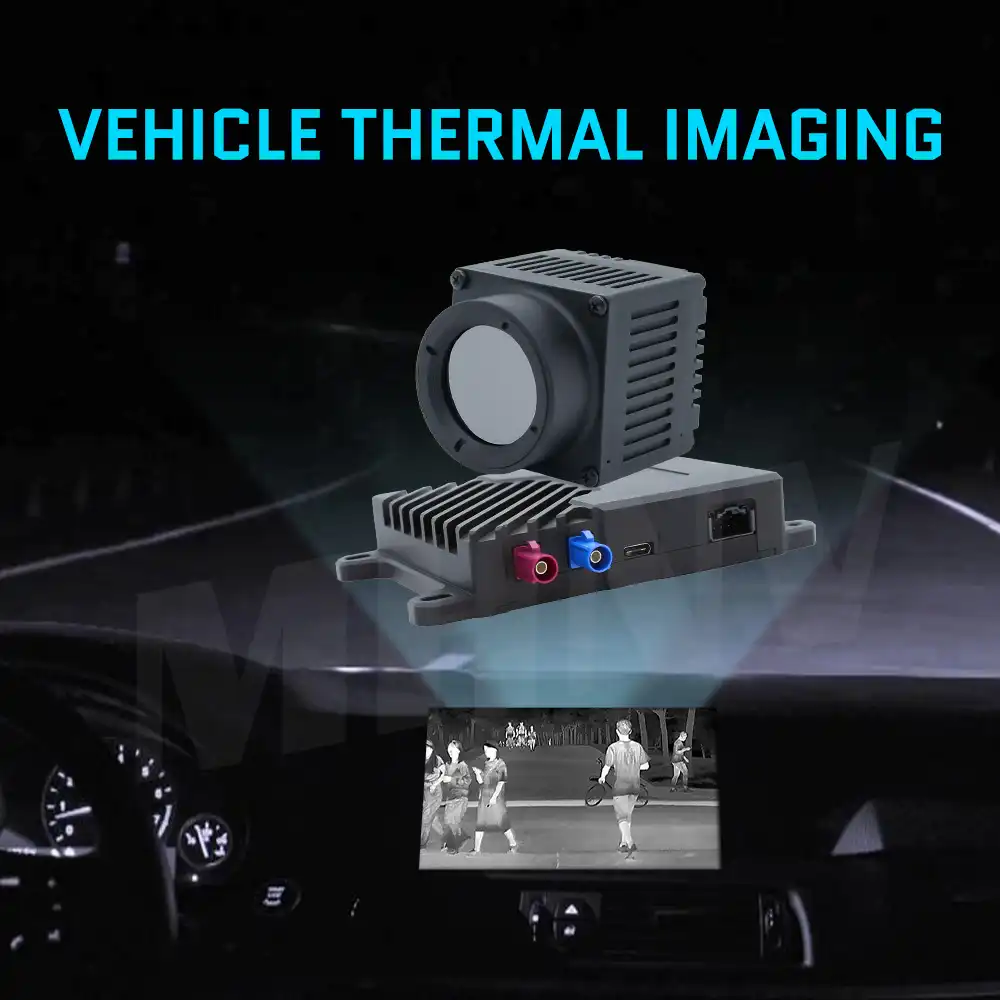
Tired of Blurry Nights & Stormy Roads? MHNV’s Thermal Car Cameras Have the Answer
<p><br></p><div data-w-e-type="video" data-w-e-is-void style="text-align: center;">
<iframe width="400" height="250" src="https://www.youtube.com/embed/KG9fRR-JQd4?si=NayXUo76t59cmuxB" frameborder="0" allowfullscreen="" style=""></iframe>
</div><p style="text-align: justify; line-height: 1.5;"><br></p><p style="text-align: justify; line-height: 1.5;"><br></p><p><span style="color: rgb(38, 38, 38); font-size: 16px; font-family: Arial;">Driving in low-light conditions, heavy rain, thick fog, or snow has always been a nerve-wracking challenge—until now. As a leading manufacturer of night vision and thermal imaging solutions, MHNV introduces our cutting-edge vehicle-mounted cameras, engineered to turn darkness into clarity and harsh weather into a non-issue. Whether you’re navigating rural roads after dusk, commuting through stormy evenings, or traversing snowy mountain passes, our cameras are your reliable co-pilot, ensuring every journey is safer and more confident.</span></p><p><br></p><p style="text-align: center;"><img src="https://www.mhnvnightvision.com/uploads/file-1762494882540-740358030.jpg" alt="MHNV® | Tired of Blurry Nights & Stormy Roads? MHNV’s Thermal Car Cameras Have the Answer" data-href="https://www.mhnvnightvision.com/uploads/file-1762494882540-740358030.jpg" width="" height="" style="width: 50%;"></p><p style="text-align: center;"><br></p><p><span style="color: rgb(38, 38, 38); font-size: 16px; font-family: Arial;"><strong>Tailored Resolution for Every Need</strong></span></p><p><span style="color: rgb(38, 38, 38); font-size: 16px; font-family: Arial;">Different driving scenarios demand different levels of detail, so our vehicle cameras come in three high-performance resolution options—all optimized for real-time imaging and low-light sensitivity:</span></p><p><span style="color: rgb(38, 38, 38); font-size: 16px; font-family: Arial;">256×192px: The compact yet powerful entry-level choice, delivering crisp thermal/night vision for daily commutes and urban driving, where core obstacle detection is key.</span></p><p><span style="color: rgb(38, 38, 38); font-size: 16px; font-family: Arial;">384×288px: The balanced all-rounder, striking the perfect blend of detail and efficiency—ideal for long-distance highway travel and suburban roads, capturing clear outlines of vehicles, pedestrians, and road signs.</span></p><p><span style="color: rgb(38, 38, 38); font-size: 16px; font-family: Arial;">640×512px: The premium precision option, offering ultra-high-definition imaging for professional drivers, off-road enthusiasts, or anyone who demands maximum clarity. Even in pitch-black conditions, every detail is rendered with stunning accuracy.</span></p><p><br></p><p style="text-align: center;"><img src="https://www.mhnvnightvision.com/uploads/file-1762494909508-63426789.jpg" alt="MHNV® | Tired of Blurry Nights & Stormy Roads? MHNV’s Thermal Car Cameras Have the Answer" data-href="https://www.mhnvnightvision.com/uploads/file-1762494909508-63426789.jpg" width="" height="" style="width: 50%;"></p><p style="text-align: center;"><br></p><p style="text-align: center;"><span style="color: rgb(38, 38, 38); font-size: 16px; font-family: Arial;"><strong>AI control box: Beyond Basic Vision</strong></span></p><p><span style="color: rgb(38, 38, 38); font-size: 16px; font-family: Arial;">Take your driving safety to the next level with our optional AI control box integration. This game-changing add-on transforms our camera into a smart detection system, automatically identifying oncoming vehicles, pedestrians, cyclists, and potential hazards in real time. The AI algorithm processes visual data instantly, alerting you to risks before they’re visible to the naked eye—whether it’s a car emerging from a blind curve or a pedestrian crossing a dark road. It’s not just vision; it’s proactive protection.</span></p><p><span style="color: rgb(38, 38, 38); font-size: 16px; font-family: Arial;"><strong>Built for the Toughest Conditions: IP67 Waterproof </strong></span></p><p><span style="color: rgb(38, 38, 38); font-size: 16px; font-family: Arial;">Mother Nature doesn’t hold back, and neither do our cameras. With an IP67 waterproof rating, they’re fully sealed against dust, heavy rain, snow, and even temporary submersion. No more worrying about water damage during downpours or ice buildup in freezing temperatures—our cameras operate flawlessly in -40°C to 85°C (-40°F to 185°F) environments, ensuring consistent performance in every climate. From humid summer storms to snowy winter drives, MHNV cameras are built to last.</span></p><p><br></p><p style="text-align: center;"><img src="https://www.mhnvnightvision.com/uploads/file-1762494959536-48332658.jpg" alt="MHNV® | Tired of Blurry Nights & Stormy Roads? MHNV’s Thermal Car Cameras Have the Answer" data-href="https://www.mhnvnightvision.com/uploads/file-1762494959536-48332658.jpg" width="" height="" style="width: 50%;"></p><p style="text-align: center;"><br></p><p><span style="color: rgb(38, 38, 38); font-size: 16px; font-family: Arial;"><strong>Effortless Installation: Get Started in Minutes</strong></span></p><p><span style="color: rgb(38, 38, 38); font-size: 16px; font-family: Arial;">You don’t need to be a tech expert to upgrade your vehicle’s safety. Our cameras feature a plug-and-play design with universal mounting brackets, compatible with most cars, trucks, SUVs, and commercial vehicles. Simply attach the camera to your front grille or windshield, connect it to your vehicle’s power supply, and sync it with your infotainment system or a dedicated display—no complex wiring or professional installation required. Within minutes, you’ll be ready to experience the difference of clear, reliable night and thermal vision.</span></p><p><span style="color: rgb(38, 38, 38); font-size: 16px; font-family: Arial;"><strong>Why Choose MHNV?</strong></span></p><p><span style="color: rgb(38, 38, 38); font-size: 16px; font-family: Arial;">For years, MHNV has been a trusted name in night vision and thermal imaging technology, with a commitment to innovation, quality, and user-centric design. Our vehicle cameras combine advanced optics, durable construction, and smart features to solve the biggest pain points of nighttime and bad-weather driving. Whether you’re a daily commuter, a professional driver, or a family looking for extra peace of mind, MHNV empowers you to see what others miss—so you can drive with confidence, no matter the conditions.</span></p><p><span style="color: rgb(38, 38, 38); font-size: 16px; font-family: Arial;">Don’t let darkness or weather limit your journey. Upgrade to MHNV’s vehicle-mounted night vision and thermal imaging cameras today—because safety shouldn’t depend on the light of day.</span></p><p><span style="color: rgb(38, 38, 38); font-size: 16px; font-family: Arial;">Contact us now to find the perfect resolution and configuration for your car, and take the first step toward safer driving, day and night.</span></p><p style="text-align: justify; line-height: 1.5;"><br></p>
2025-11-07
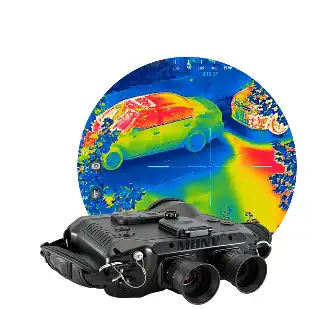
How to Choose Multi-Functional Thermal Binoculars?
<p><br></p><div data-w-e-type="video" data-w-e-is-void style="text-align: center;">
<iframe width="400" height="300" src="https://www.youtube.com/embed/UsExzel9dn0?si=A-x7b3h7W85te0kx" frameborder="0" allowfullscreen="" style=""></iframe>
</div><p style="text-align: justify; line-height: 1.5;"><br></p><p style="text-align: justify; line-height: 1.5;"><br></p><p><span style="color: rgb(38, 38, 38); font-size: 16px; font-family: Arial;">When you are in the market for multi-functional thermal binoculars, you might ask: </span></p><p><span style="color: rgb(38, 38, 38); font-size: 16px; font-family: Arial;">Which one can adapt to all scenarios? How do I avoid compromising on clarity, connectivity, or practicality? </span></p><p><span style="color: rgb(38, 38, 38); font-size: 16px; font-family: Arial;">MH-900 Handheld Multifunctional Thermal Binocular is not just a product—it is the answer to every key question you should ask when choosing the right tool. </span></p><p><br></p><p style="text-align: center;"><img src="https://www.mhnvnightvision.com/uploads/file-1761029228166-220124366.jpg" alt="MHNV® | How to Choose Multi-Functional Thermal Binoculars?" data-href="https://www.mhnvnightvision.com/uploads/file-1761029228166-220124366.jpg" width="" height="" style="width: 50%;"></p><p style="text-align: center;"><br></p><p><span style="color: rgb(38, 38, 38); font-size: 16px; font-family: Arial;">Let’s break down the essential factors, and see how MH-900 delivers.</span></p><p><span style="color: rgb(38, 38, 38); font-size: 16px; font-family: Arial;"><strong>1. First Question: Can It See Clearly in Any Environment?</strong></span></p><p><span style="color: rgb(38, 38, 38); font-size: 16px; font-family: Arial;">A top-tier thermal binocular needs to handle light changes and bad weather:</span></p><p><span style="color: rgb(38, 38, 38); font-size: 16px; font-family: Arial;">Daytime: You need sharp, true-color vision for sunny hikes or well-lit job sites. MH-900’s Visible Light Mode serves up crisp details (from tree bark to equipment edges), so you never miss small cues during daytime use.</span></p><p><span style="color: rgb(38, 38, 38); font-size: 16px; font-family: Arial;">Low-Light & Bad Weather : Darkness, fog, or smoke shouldn’t block your view. MH-900’s Infrared Mode detects heat signatures, making hidden targets (like a lost hiker at dusk or overheating machinery) stand out—perfect for night patrols or rescue missions in harsh conditions.</span></p><p><span style="color: rgb(38, 38, 38); font-size: 16px; font-family: Arial;">Precise Distance Measurement: Guessing distances risks mistakes. Look for built-in laser ranging. MH-900’s Laser Ranging Mode gives accurate readings (up to hundreds of meters), ideal for planning hunts, mapping terrain, or aligning industrial gear—no extra tools needed.</span></p><p><br></p><p style="text-align: center;"><img src="https://www.mhnvnightvision.com/uploads/file-1761029246330-835258952.jpg" alt="MHNV® | How to Choose Multi-Functional Thermal Binoculars?" data-href="https://www.mhnvnightvision.com/uploads/file-1761029246330-835258952.jpg" width="" height="" style="width: 50%;"></p><p><br></p><p><span style="color: rgb(38, 38, 38); font-size: 16px; font-family: Arial;"><strong>2. Second Question: Does It Keep Me Connected & On Track?</strong></span></p><p><span style="color: rgb(38, 38, 38); font-size: 16px; font-family: Arial;">Multi-functionality means more than vision—it needs smart features to simplify work. Here’s what matters, and how MH-900 delivers:</span></p><p><span style="color: rgb(38, 38, 38); font-size: 16px; font-family: Arial;">Reliable Positioning: Getting lost or losing track of targets is a risk. Prioritize built-in GPS. MH-900’s Built-In GPS lets you mark target coordinates, track routes, and share your position with teams—critical for remote hikes, search-and-rescue, or military ops where accuracy is non-negotiable.</span></p><p><span style="color: rgb(38, 38, 38); font-size: 16px; font-family: Arial;">Instant Data Sharing: You shouldn’t have to wait to share visuals. Look for WIFI connectivity. </span></p><p><span style="color: rgb(38, 38, 38); font-size: 16px; font-family: Arial;">MH-900’s WIFI Module connects to phones/tablets, so you can stream live footage or send photos/videos in seconds—great for security teams coordinating responses or educators demonstrating fieldwork.</span></p><p><br></p><p style="text-align: center;"><img src="https://www.mhnvnightvision.com/uploads/file-1761029268260-720744138.jpg" alt="MHNV® | How to Choose Multi-Functional Thermal Binoculars?" data-href="https://www.mhnvnightvision.com/uploads/file-1761029268260-720744138.jpg" width="" height="" style="width: 50%;"></p><p style="text-align: center;"><br></p><p><span style="color: rgb(38, 38, 38); font-size: 16px; font-family: Arial;"><strong>3. Third Question: Can It Capture & Share Critical Moments?</strong></span></p><p><span style="color: rgb(38, 38, 38); font-size: 16px; font-family: Arial;">A good binocular should help you document, not just see. Here’s what to check—and how MH-900 delivers:</span></p><p><span style="color: rgb(38, 38, 38); font-size: 16px; font-family: Arial;">High-Quality Recording: You need to save key visuals for reviews or reports. MH-900’s Photo/Video Recording captures high-res images/videos, whether it’s wildlife behavior, equipment issues, or rescue scenes.</span></p><p><span style="color: rgb(38, 38, 38); font-size: 16px; font-family: Arial;">Easy Video Output: Sharing visuals shouldn’t require huddling around a small screen. Look for real-time output. MH-900’s Real-Time Video Output hooks up to external displays, making on-site briefings or training sessions seamless.</span></p><p><br></p><p style="text-align: center;"><img src="https://www.mhnvnightvision.com/uploads/file-1761029286945-605739770.jpg" alt="MHNV® | How to Choose Multi-Functional Thermal Binoculars?" data-href="https://www.mhnvnightvision.com/uploads/file-1761029286945-605739770.jpg" width="" height="" style="width: 50%;"></p><p style="text-align: center;"><br></p><p><span style="color: rgb(38, 38, 38); font-size: 16px; font-family: Arial;"><strong>4. Fourth Question: Does It Have Extra Tools for Confidence?</strong></span></p><p><span style="color: rgb(38, 38, 38); font-size: 16px; font-family: Arial;">Small, practical features make a big difference. Here’s what to look for—and how MH-900 delivers:</span></p><p><span style="color: rgb(38, 38, 38); font-size: 16px; font-family: Arial;">Precise Target Location: Finding objects in dense areas (like forests or crowds) is tough. MH-900’s Target Location function pinpoints targets accurately, ideal for border patrol or finding missing persons.</span></p><p><span style="color: rgb(38, 38, 38); font-size: 16px; font-family: Arial;">Reliable Navigation: GPS can weaken in remote spots. Look for an electronic compass. MH-900’s Electronic Compass keeps you oriented in thick forests or canyons, so you never lose direction.</span></p><p><span style="color: rgb(38, 38, 38); font-size: 16px; font-family: Arial;"> </span></p><p><span style="color: rgb(38, 38, 38); font-size: 16px; font-family: Arial;"><strong>For outdoor adventurers, search-and-rescue teams, industrial inspectors, or security pros—MH-900 isn’t just a binocular. It’s the all-in-one vision solution you’ve been looking for.</strong></span></p><p style="text-align: justify; line-height: 1.5;"><br></p>
2025-10-21
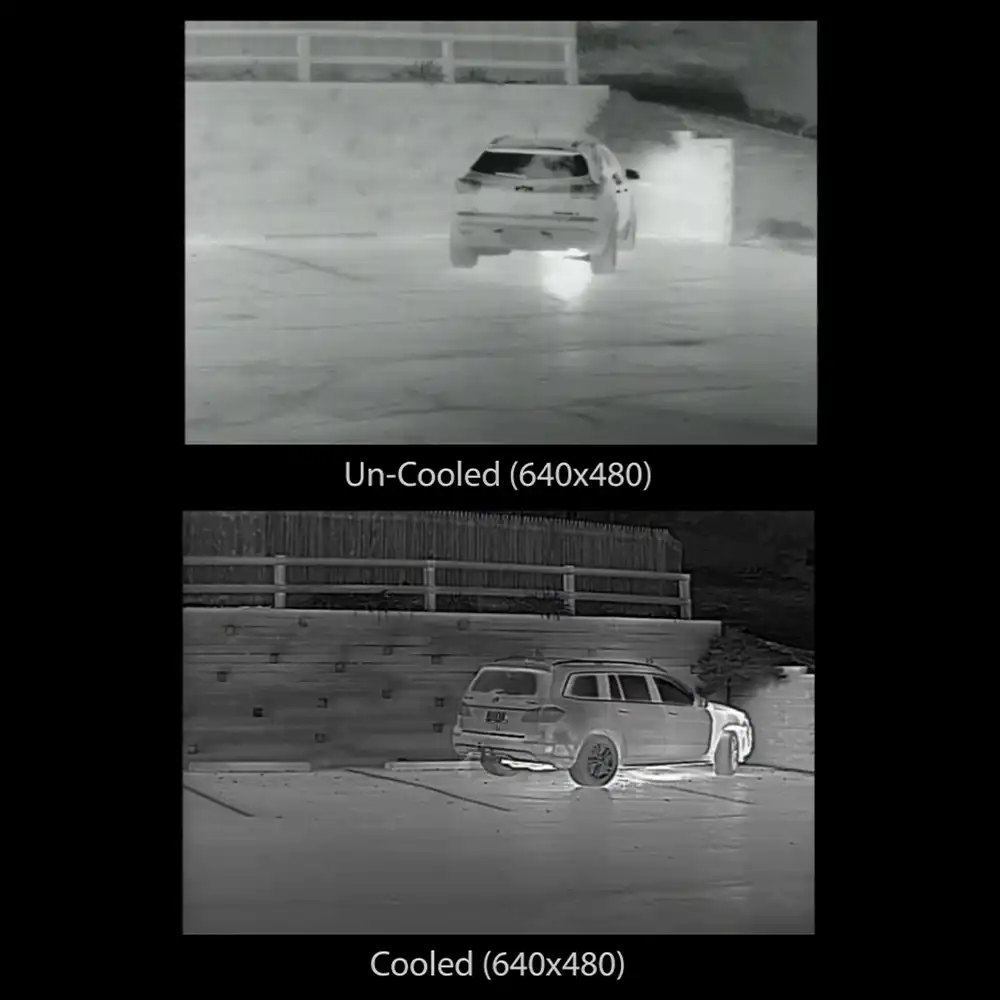
Differentiation Of Cooled And Uncooled Thermal Imager
<p style="line-height: 1.15;"><span style="color: rgb(38, 38, 38); font-size: 19px; font-family: Roboto-Regular;">There are several factors that differentiate the cooled thermal imager and the uncooled thermal imager which are downlisted as follows.</span></p><p style="line-height: 1.15;"><span style="color: rgb(38, 38, 38); font-size: 19px; font-family: Roboto-Regular;"> </span></p><p style="line-height: 1.15;"><span style="color: rgb(38, 38, 38); font-size: 22px; font-family: BarlowCondensed-Bold;"><strong>Cooler </strong></span><span style="color: rgb(38, 38, 38); font-size: 19px; font-family: Roboto-Regular;"><strong>- </strong></span><span style="color: rgb(38, 38, 38); font-size: 19px; font-family: Roboto-Regular;">The uncooled thermal imager does not constitute the Cryocooler, whereas the cooled thermal imager consists of the cryocooler to reduce the temperature of the sensor to produce an imaging.</span></p><p style="line-height: 1.15;"><span style="color: rgb(38, 38, 38); font-size: 19px; font-family: Roboto-Regular;"> </span></p><p style="line-height: 1.15;"><span style="color: rgb(38, 38, 38); font-size: 22px; font-family: BarlowCondensed-Bold;"><strong>Sensitivity</strong></span><span style="color: rgb(38, 38, 38); font-size: 19px; font-family: Roboto-Regular;"><strong> - </strong></span><span style="color: rgb(38, 38, 38); font-size: 19px; font-family: Roboto-Regular;">The sensitivity of uncooled thermal imager is 50mK which is higher than that of the cooled thermal imager sensitivity of 20mk ranging.</span></p><p style="line-height: 1.15;"><span style="color: rgb(38, 38, 38); font-size: 19px; font-family: Roboto-Regular;"> </span></p><p style="line-height: 1.15;"><span style="color: rgb(38, 38, 38); font-size: 22px; font-family: BarlowCondensed-Bold;"><strong>Imaging type</strong></span><span style="color: rgb(38, 38, 38); font-size: 19px; font-family: Roboto-Regular;"><strong> -</strong></span><span style="color: rgb(38, 38, 38); font-size: 19px; font-family: Roboto-Regular;">The cooled thermal imager is well suited for the high dynamic range of low contrast type imaging whereas uncooled thermal imager is not suited for this type of imaging.</span></p><p style="line-height: 1.15;"><span style="color: rgb(38, 38, 38); font-size: 19px; font-family: Roboto-Regular;"> </span></p><p style="line-height: 1.15;"><span style="color: rgb(38, 38, 38); font-size: 22px; font-family: BarlowCondensed-Bold;"><strong>Surveillance </strong></span><span style="color: rgb(38, 38, 38); font-size: 19px; font-family: Roboto-Regular;"><strong>-</strong></span><span style="color: rgb(38, 38, 38); font-size: 19px; font-family: Roboto-Regular;">These two long ranging thermal imagers are perfect over the surveillance of the borders and properties over the large environmental space.</span></p><p style="line-height: 1.15;"><span style="color: rgb(38, 38, 38); font-size: 19px; font-family: Roboto-Regular;"> </span></p><p style="line-height: 1.15;"><span style="color: rgb(38, 38, 38); font-size: 22px; font-family: BarlowCondensed-Bold;"><strong>Bolometer</strong></span><span style="color: rgb(38, 38, 38); font-size: 19px; font-family: Roboto-Regular;"><strong> -</strong></span><span style="color: rgb(38, 38, 38); font-size: 19px; font-family: Roboto-Regular;">The uncooled thermal imager does not constitute any cryogenic cooler which is based on the principle of the micro bolometer design whereas cooled thermal imager does not works based on this micro bolometer design.</span></p><p style="line-height: 1.15;"><span style="color: rgb(38, 38, 38); font-size: 19px; font-family: Roboto-Regular;"> </span></p><p style="line-height: 1.15;"><span style="color: rgb(38, 38, 38); font-size: 22px; font-family: BarlowCondensed-Bold;"><strong>The thermal isolation</strong></span><span style="color: rgb(38, 38, 38); font-size: 19px; font-family: Roboto-Regular;"><strong> -</strong></span><span style="color: rgb(38, 38, 38); font-size: 19px; font-family: Roboto-Regular;">The uncooled thermal camera includes the good thermal isolation over the lower range of heat capacity whereas the cooled thermal camera is not fitted with the low heat capacity.</span></p><p style="line-height: 1.15;"><span style="color: rgb(38, 38, 38); font-size: 19px; font-family: Roboto-Regular;"> </span></p><p style="line-height: 1.15;"><span style="color: rgb(38, 38, 38); font-size: 22px; font-family: BarlowCondensed-Bold;"><strong>Range</strong></span><span style="color: rgb(38, 38, 38); font-size: 19px; font-family: Roboto-Regular;"><strong> -</strong></span><span style="color: rgb(38, 38, 38); font-size: 19px; font-family: Roboto-Regular;">The cooled thermal imager is more cost effective than the uncooled thermal imager since the standoff range of the cooled thermal imager is above 5km. The lens of the uncooled thermal imager is much cost effective due to the increase in the necessary effective ranging condition when compared to that of the cooled thermal imager.</span></p><p style="line-height: 1.15;"><span style="color: rgb(38, 38, 38); font-size: 19px; font-family: Roboto-Regular;"> </span></p><p style="line-height: 1.15;"><span style="color: rgb(38, 38, 38); font-size: 22px; font-family: BarlowCondensed-Bold;"><strong>Lens</strong></span><span style="color: rgb(38, 38, 38); font-size: 19px; font-family: Roboto-Regular;"><strong> -</strong></span><span style="color: rgb(38, 38, 38); font-size: 19px; font-family: Roboto-Regular;">The uncooled thermal imager uses the bulky and expensive range of lens whereas the cooled thermal imager makes use of the cheaper camera lens which is similar to the focal length lenses.</span></p><p style="line-height: 1.15;"><span style="color: rgb(38, 38, 38); font-size: 19px; font-family: Roboto-Regular;"> </span></p><p style="line-height: 1.15;"><span style="color: rgb(38, 38, 38); font-size: 22px; font-family: BarlowCondensed-Bold;"><strong>Sensor</strong></span><span style="color: rgb(38, 38, 38); font-size: 19px; font-family: Roboto-Regular;"><strong> - </strong></span><span style="color: rgb(38, 38, 38); font-size: 19px; font-family: Roboto-Regular;">The cooled thermal imaging camera constitutes the imaging sensor for reducing the sensor temperature to produce perfect imaging whereas the uncooled thermal imaging camera does not constitute of this imaging sensor.</span></p><p style="line-height: 1.15;"><span style="color: rgb(38, 38, 38); font-size: 19px; font-family: Roboto-Regular;"> </span></p><p style="line-height: 1.15;"><span style="color: rgb(38, 38, 38); font-size: 22px; font-family: BarlowCondensed-Bold;"><strong>Spectral filtering</strong></span><span style="color: rgb(38, 38, 38); font-size: 19px; font-family: Roboto-Regular;"><strong> - </strong></span><span style="color: rgb(38, 38, 38); font-size: 19px; font-family: Roboto-Regular;">The cooled thermal imaging camera is more capable for spectral filtering technique that takes the revealed measurement details for imaging which is impossible with the uncooled thermal imager.</span></p><p style="line-height: 1.15;"><span style="color: rgb(38, 38, 38); font-size: 19px; font-family: Roboto-Regular;"> </span></p><p style="line-height: 1.15;"><span style="color: rgb(38, 38, 38); font-size: 22px; font-family: BarlowCondensed-Bold;"><strong>Magnification</strong></span><span style="color: rgb(38, 38, 38); font-size: 19px; font-family: Roboto-Regular;"><strong> - </strong></span><span style="color: rgb(38, 38, 38); font-size: 19px; font-family: Roboto-Regular;">The capability of magnification feature in the cooled thermal imager is higher than the uncooled thermal imaging camera which is possible to detect the shorter wavelength of infrared imaging.</span></p><p style="line-height: 1.15;"><span style="color: rgb(38, 38, 38); font-size: 19px; font-family: Roboto-Regular;"> </span></p><p style="line-height: 1.15;"><span style="color: rgb(38, 38, 38); font-size: 22px; font-family: BarlowCondensed-Bold;"><strong>Imaging speed</strong></span><span style="color: rgb(38, 38, 38); font-size: 19px; font-family: Roboto-Regular;"><strong> - </strong></span><span style="color: rgb(38, 38, 38); font-size: 19px; font-family: Roboto-Regular;">The imaging speed of the cooled thermal imager is higher with the ranging of 62000 fps when compared to that of the uncooled thermal imager.</span></p><p style="line-height: 1.15;"><span style="color: rgb(38, 38, 38); font-size: 19px; font-family: Roboto-Regular;"> </span></p><p style="line-height: 1.15;"><span style="color: rgb(38, 38, 38); font-size: 22px; font-family: BarlowCondensed-Bold;"><strong>Thermal signature</strong></span><span style="color: rgb(38, 38, 38); font-size: 19px; font-family: Roboto-Regular;"><strong> - </strong></span><span style="color: rgb(38, 38, 38); font-size: 19px; font-family: Roboto-Regular;">The cooled thermal imaging camera remains with the thermal signature of the handprints whereas the uncooled thermal imaging camera tends to remain the partial signature of the handprints.</span></p><p style="line-height: 1.15;"><span style="color: rgb(38, 38, 38); font-size: 19px; font-family: Roboto-Regular;"><strong> </strong></span></p><p style="line-height: 1.15;"><span style="color: rgb(38, 38, 38); font-size: 22px; font-family: BarlowCondensed-Bold;"><strong>Picture cauterizatio</strong></span><span style="color: rgb(38, 38, 38); font-size: 19px; font-family: Roboto-Regular;"><strong>n - </strong></span><span style="color: rgb(38, 38, 38); font-size: 19px; font-family: Roboto-Regular;">The uncooled thermal imaging camera tends to capture the lower image whereas the cooled thermal imaging camera captures the upper range of an image.</span></p><p style="line-height: 1.15;"><span style="color: rgb(38, 38, 38); font-size: 19px; font-family: Roboto-Regular;"> </span></p><p style="line-height: 1.15;"><span style="color: rgb(38, 38, 38); font-size: 19px; font-family: Roboto-Regular;">These are the most common differences between both the detector types. Purchase the one according to your necessities.</span></p><p style="line-height: 1.15;"><span style="color: rgb(38, 38, 38); font-size: 19px; font-family: Roboto-Regular;"> </span></p>
2025-10-20
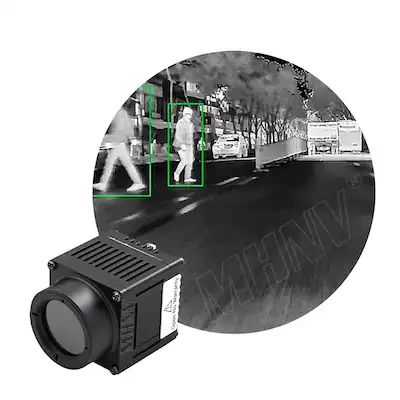
MHNV Thermal Cameras: Spot Hidden Risks, Boost Night Safety
<p style="text-align: justify;"><br></p><div data-w-e-type="video" data-w-e-is-void style="text-align: center;">
<iframe width="400" height="250" src="https://www.youtube.com/embed/aGypkrd8kxY?si=OslXnozhi5zlMZxG" frameborder="0" allowfullscreen="" style=""></iframe>
</div><p style="text-align: justify;"><br></p><p style="text-align: justify;"><span style="color: rgb(38, 38, 38); font-size: 19px;">Ever wondered how thermal car cameras spot hidden hazards at night or in storms? They use heat detection: "seeing" infrared radiation to turn invisible risks into clear warnings. Cameras capture this in three steps: lens collects radiation, detector turns heat to signals, processor makes a display (warm objects stand out). No visible light needed—indispensable for low light, fog, rain or snow.</span></p><p style="text-align: justify;"><br></p><p style="text-align: center;"><img src="https://www.mhnvnightvision.com/uploads/file-1757929349290-39842667.jpg" alt="file-1757929349290-39842667.jpg" data-href="https://www.mhnvnightvision.com/uploads/file-1757929349290-39842667.jpg" width="" height="" style="width: 50%;"></p><p style="text-align: justify;"><br></p><p style="text-align: justify;"><span style="color: rgb(38, 38, 38); font-size: 19px;">Traditional car headlights, reliant on reflected light, are limited to about 150 meters and struggle in adverse weather due to scattering. Thermal cameras, however, detect heat directly, extending their range to over 300 meters and penetrating obscurity. They can identify pedestrians, animals, or disabled vehicles far beyond headlight reach—for example, highlighting a cyclist in shadows or a deer hidden in mist—giving drivers critical extra seconds to react when human vision falls short.</span></p><p style="text-align: justify;"><br></p><p style="text-align: center;"><img src="https://www.mhnvnightvision.com/uploads/file-1757673504842-466923851.jpg" alt="file-1757673504842-466923851.jpg" data-href="https://www.mhnvnightvision.com/uploads/file-1757673504842-466923851.jpg" width="" height="" style="width: 50%;"></p><p style="text-align: justify;"><br></p><p style="text-align: justify;"><span style="color: rgb(38, 38, 38); font-size: 19px;">At the forefront of this innovation is MHNV, a brand specializing in high-performance thermal imaging solutions for vehicles. MHNV’s cameras feature military-grade sensors that detect temperature differences as subtle as 0.1°C, delivering sharp, reliable images across extreme temperatures (-40°C to 80°C). Their compact, aerodynamic design ensures easy installation on any vehicle without modifications, while the integrated AI-driven obstacle avoidance system elevates safety further. Beyond displaying real-time heat maps, this system uses advanced algorithms to instantly alert drivers via audio alarms and visual warnings when it detects moving pedestrians, animals, or stationary hazards, turning passive observation into proactive protection.</span></p><p style="text-align: justify;"><br></p><p style="text-align: center;"><img src="https://www.mhnvnightvision.com/uploads/file-1757673514348-182227758.jpg" alt="file-1757673514348-182227758.jpg" data-href="https://www.mhnvnightvision.com/uploads/file-1757673514348-182227758.jpg" width="" height="" style="width: 50%;"></p><p style="text-align: justify;"><br></p><p style="text-align: justify;"><br></p><p style="text-align: justify;"><br></p>
2025-09-12
Total 11
- 1
- 2